Energy bills across the United Kingdom have continued to soar through 2026, igniting an intense political and economic debate about how to bring household and industrial costs down. In October 2026, the regulatory cap on household energy bills reached its highest level in three years, jumping by £60 amid high gas prices driven by the conflict involving Iran. Furthermore, industry forecasts indicate that the price cap could climb by as much as another quarter in January 2027, pushing average annual household energy bills toward the £2,200 mark.
Such levels have not been witnessed since the height of the energy crisis in 2022, when the fallout from Russia’s invasion of Ukraine forced the UK government to spend more than £60 billion supporting consumers through extraordinary market turbulence. While expensive gas remains the primary driver behind the lion’s share of bill increases since 2020, rising policy costs and essential investments in gas and electricity transmission networks are also placing upward pressure on prices.
This financial strain has sparked conflicting policy demands. Some groups advocate doubling down on the clean-energy transition to escape what they call the "fossil-fuel rollercoaster," while others argue for moving more slowly or even abandoning climate goals altogether in favor of increased domestic gas production. Analysts and industry bodies continue to examine the real drivers behind these high bills, what measures have been implemented to date, and what further options are available to cut consumer costs moving forward, including shifting policy levies off electricity bills, boosting system flexibility, and accelerating the adoption of efficient technologies such as heat pumps and electric vehicles.
What is Driving High Energy Bills?
In October 2026, UK household energy bills hit their highest point since 2022, with the typical price cap reaching £1,723 per year—a 47% increase in real terms compared to October 2020 levels. Industrial energy users have faced similarly punishing costs, particularly regarding their electricity consumption. Another sharp increase is now all but guaranteed for January 2027, with predictions pointing toward a 25% surge.
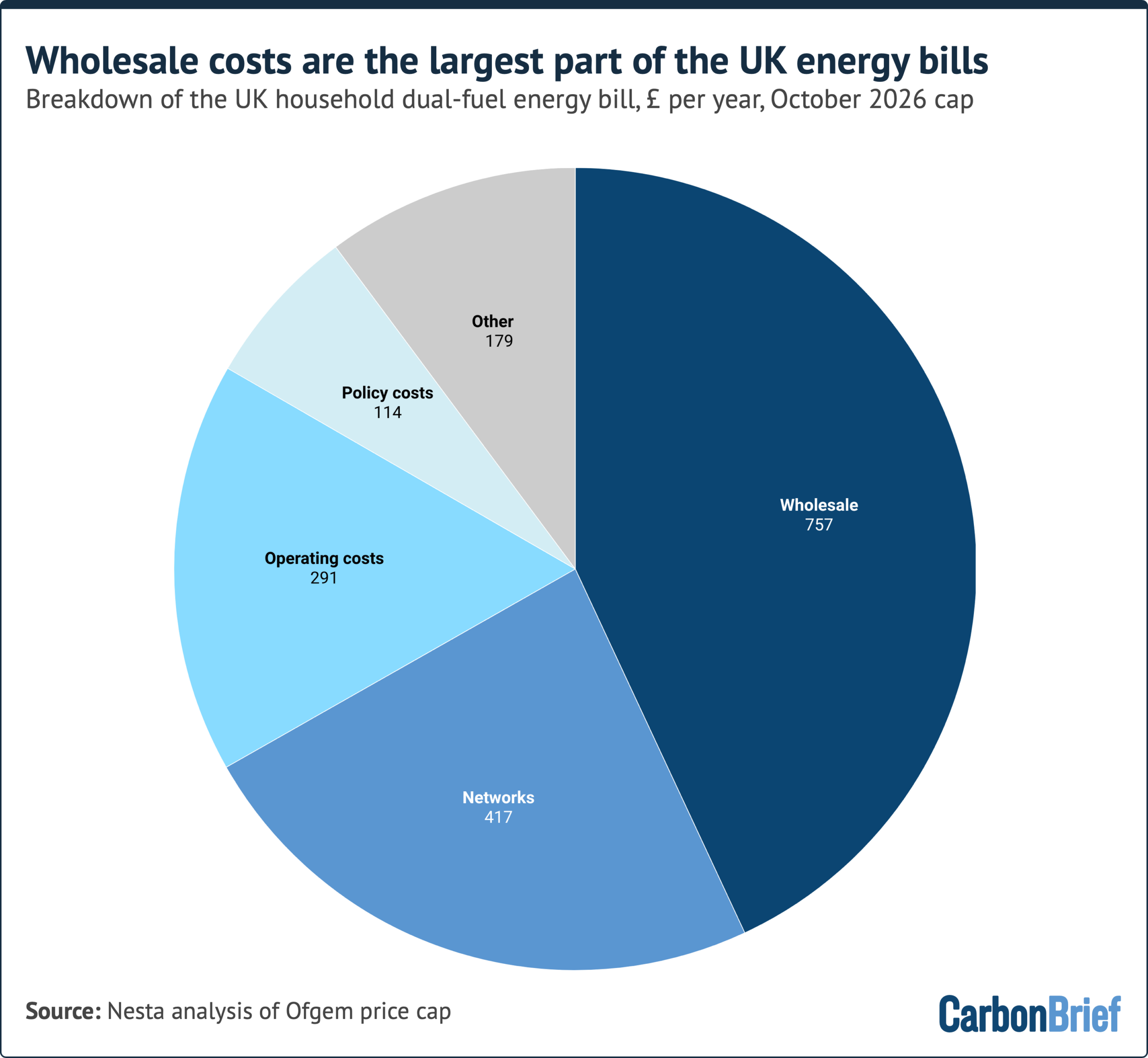
According to analysis from Carbon Brief based on data from the think tank Nesta, wholesale costs for electricity and gas make up 44% of the current £1,723 price cap. Because of the marginal pricing system used in power markets across the UK and most Western nations, the wholesale costs of both electricity and gas remain tightly bound to natural gas prices. Network charges account for another 24% of bills, operating costs represent 17%, and policy costs make up just 7% of the total.
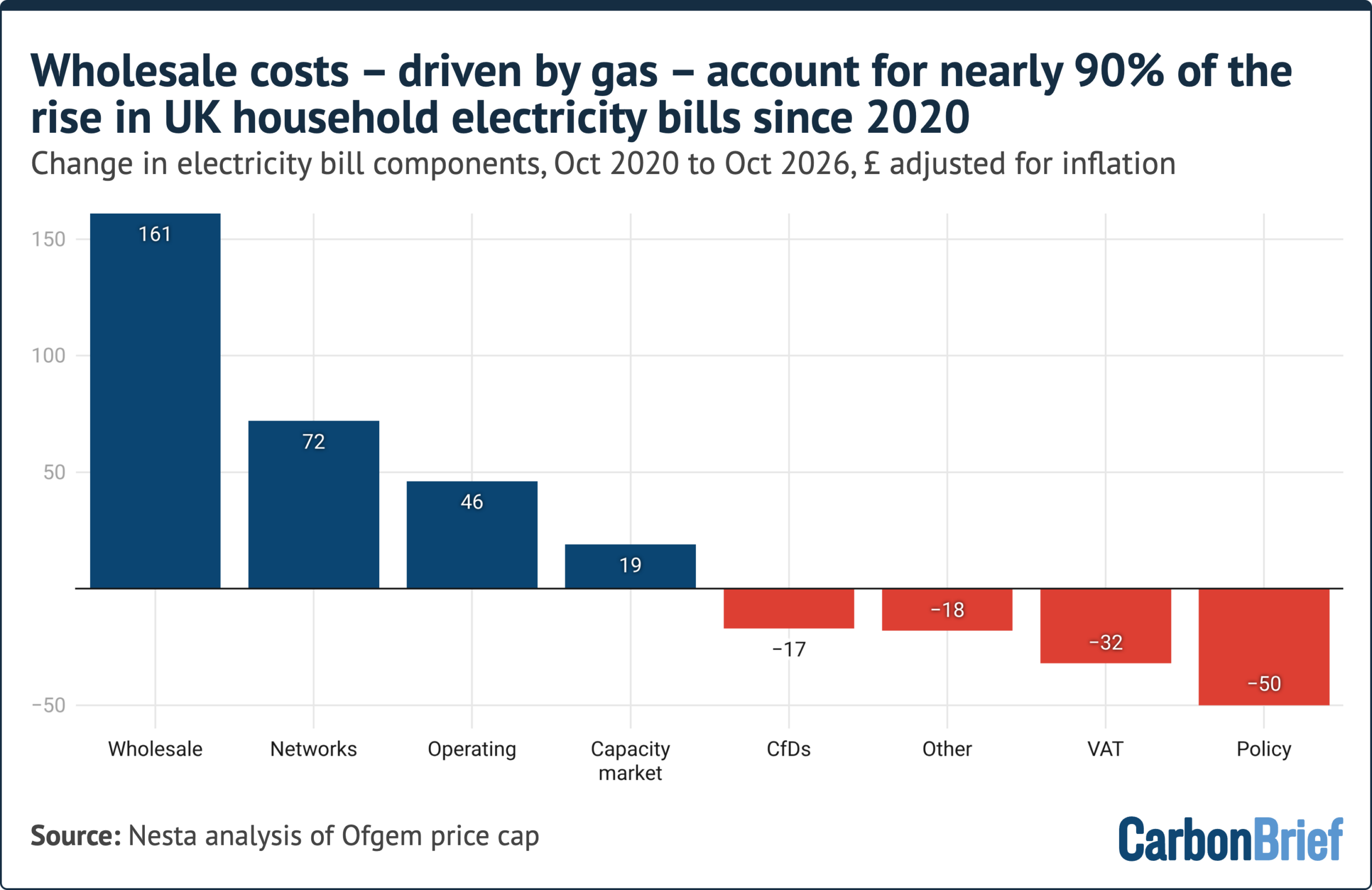
Although non-commodity costs—those independent of wholesale energy prices—have attracted significant parliamentary and public interest, they are not the primary culprits behind recent surges. Nesta’s findings reveal that surging wholesale costs driven by expensive gas account for more than 80% of the increase in dual-fuel household bills since 2020.
The second-largest driver of rising costs over this period stems from the expense of operating, maintaining, and expanding the nation’s energy grids. At the end of 2025, the energy regulator Ofgem approved £29 billion in upfront investments for national gas and electricity networks, part of a wider £90 billion package extending out to 2031. Consequently, network charges are projected to rise by roughly 50% between 2025 and 2030, increasing from £222 to £330 annually for a typical dual-fuel household. A further investment package covering electricity distribution for 2028 to 2033 is slated for Ofgem approval by late 2027.
While network cost increases are frequently attributed to the integration of geographically dispersed renewable generation such as wind power, a significant portion actually reflects the urgent need to update ageing infrastructure following decades of under-investment. Ofgem head Tim Jarvis described the package at a recent conference as a "once-in-a-generation renewal of our energy infrastructure." Ofgem data indicates that roughly three-fifths of the projected £108 per household yearly rise in network charges to 2030 is driven by business-as-usual maintenance, with only £30 attributed to expanding the transmission grid. The Energy Networks Association similarly reports that up to 80% of electricity grid investment is required simply to maintain existing assets.
Constraint costs—where wind farms are switched off due to transmission capacity bottlenecks and gas plants are dispatched instead—have also drawn scrutiny. Although they represent a small fraction of bills at around £35, or 4% of typical annual electricity costs, these balancing charges have risen due to high gas prices and historical policy decisions from the 2010s. Trade associations emphasize that grid investment is critical to avoid these inefficiencies as clean generation capacity expands. Furthermore, years of elevated energy bills have driven up the cost of "bad debt," where unpaid consumer bills are recovered via charges on all households. These debt-related costs add approximately £60 to typical bills, marking an increase of about £40 since 2020.
What Has Been Done to Limit Bills So Far?
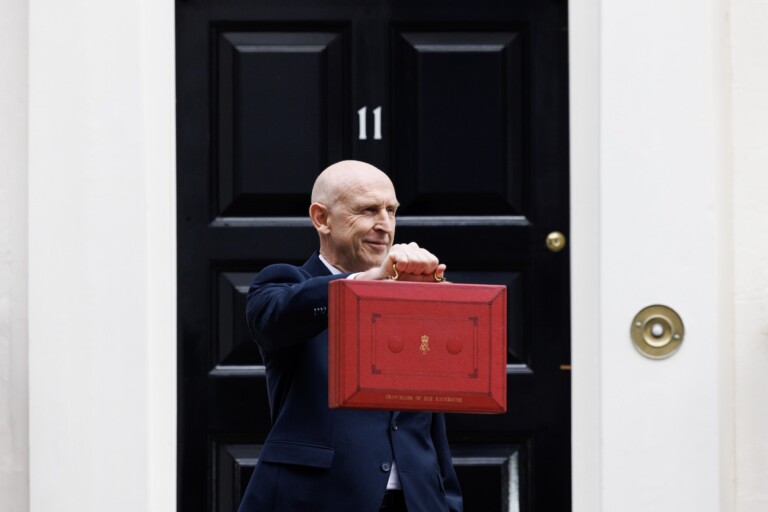
The Labour government elected in 2024 campaigned on a manifesto pledge to reduce bills by £300 per year by 2030 relative to late 2023 levels. To meet this objective, ministers have pursued targeted structural interventions. During the 2025 budget, the government closed the Energy Company Obligation efficiency scheme and shifted 75% of the legacy Renewables Obligation support scheme into general taxation, saving a typical household an estimated £134 annually.
Furthermore, Prime Minister Andy Burnham announced a temporary removal of VAT from domestic electricity bills for six months starting in October 2026, cutting roughly £45 from consumer costs. However, researchers like Dr. Richard Carmichael of the UK Energy Research Centre and Imperial College London note that the tangible benefits of these reductions have been largely masked by soaring wholesale energy prices.
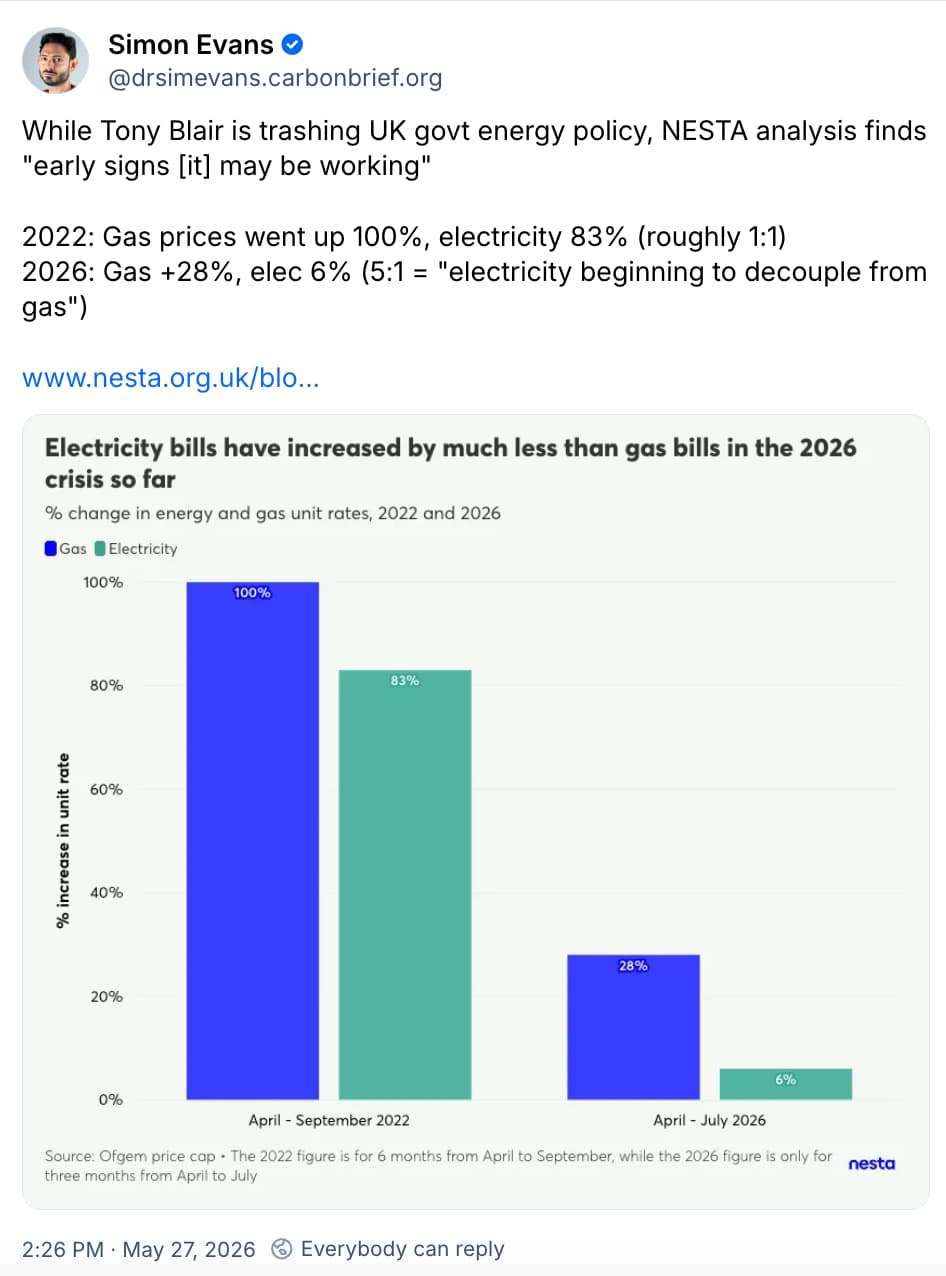
At the same time, clean-power sources have begun exerting a moderating influence on the broader energy system. Nesta research suggests that electricity bills are rising much more slowly than gas bills, signaling an early decoupling of electricity prices from gas markets. Record wind and solar output helped the UK avoid approximately £5.9 billion in gas imports during the crisis triggered by the Iran war. Moreover, studies by University College London indicate that UK wind energy saved consumers a net total of £104 billion between 2010 and 2023 through the merit-order effect and reduced gas demand.
What Options Are There for Bringing Down Bills?
With consumer prices remaining high for over half a decade, policymakers and analysts have proposed a wide array of remedies ranging from immediate adjustments to radical market overhauls.
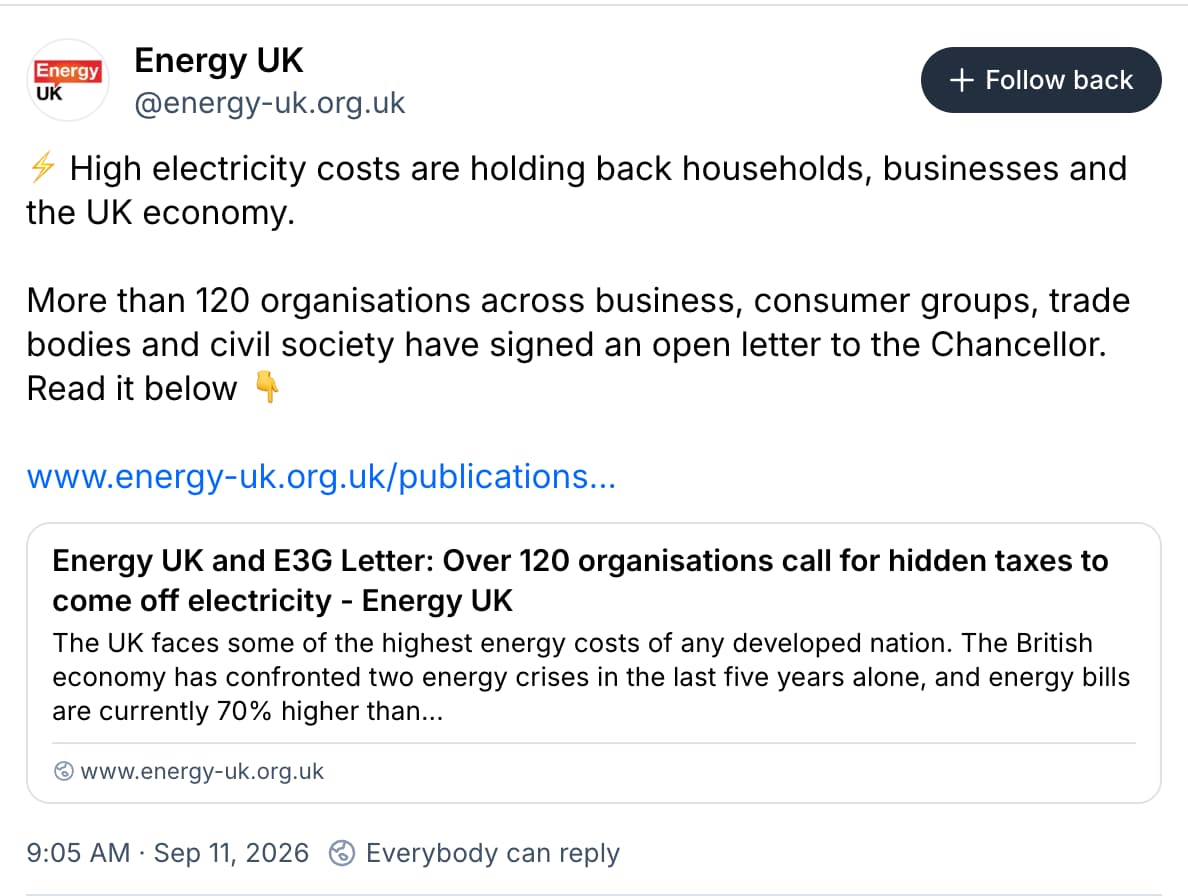
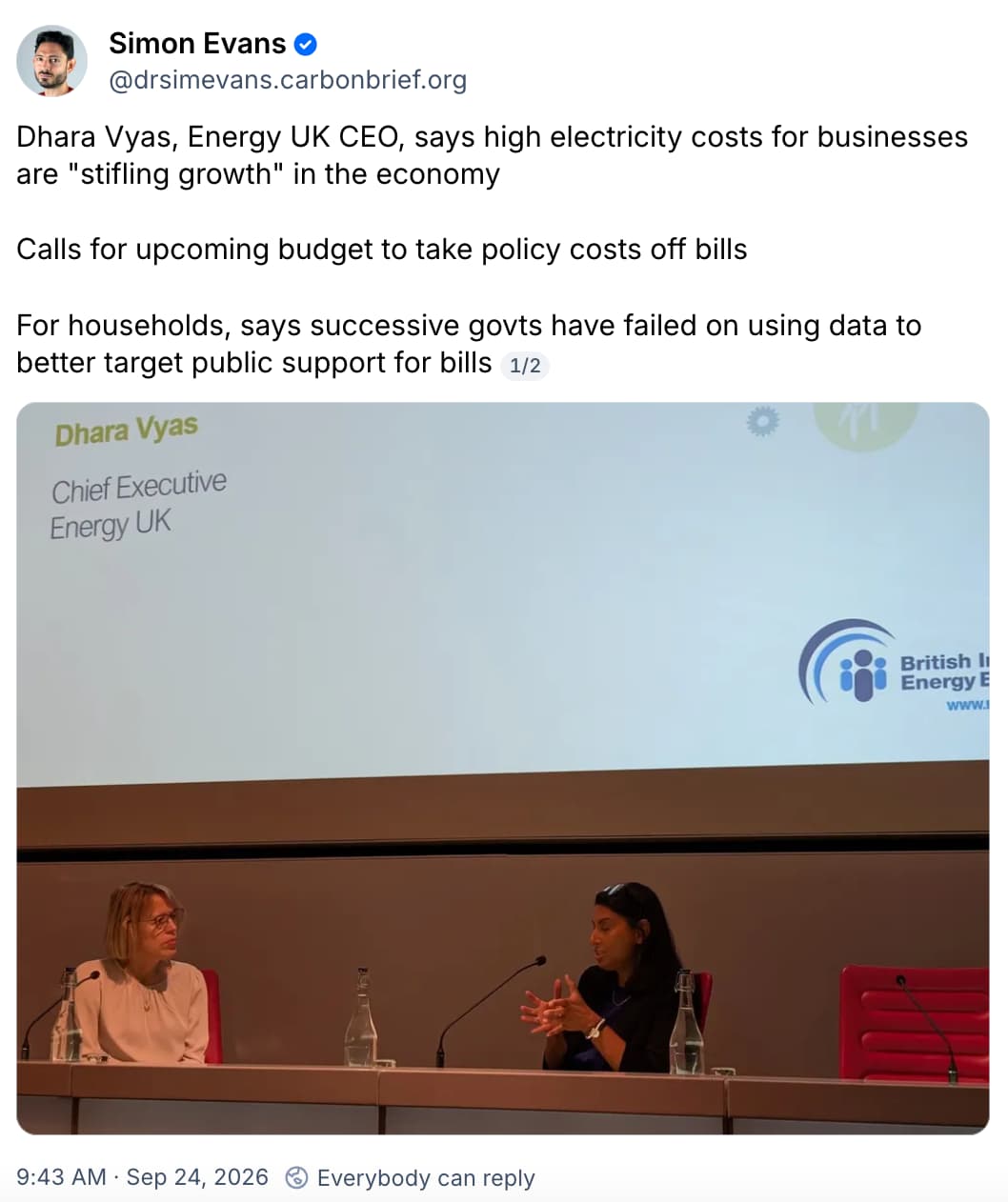
A prominent proposal backed by more than 120 trade bodies, businesses, and charities is to remove remaining policy levies—such as funding for the Sizewell C nuclear project, the Warm Home Discount scheme, and legacy feed-in tariffs—from energy bills entirely and fund them through general taxation. Supporters argue this could slash an additional £250 per year from domestic bills, curb inflation, and incentivize industrial electrification.
Other suggestions include the government absorbing household energy debt, maintaining zero VAT on electricity permanently, and enhancing system flexibility. Experts note that flexibility options allow consumers to participate in demand management while lowering overall system costs. Parliament’s Energy Security and Net Zero Committee has similarly advocated shifting policy costs from electricity onto gas bills to narrow the "spark gap" and encourage the adoption of heat pumps and electric vehicles.
Political debates have also touched on targeted support mechanisms, such as social tariffs for fuel-poor households or rising block tariffs that charge lower rates for essential energy use. However, analysts caution that such systems risk creating complex eligibility cliffs or discouraging electrification. Additionally, proposals from municipal and advisory groups suggest removing gas standing charges entirely to provide immediate relief and encourage clean heating transitions.
Is There a "Cheap Power" Alternative If the UK Slows Down?
Amid ongoing cost pressures, critics of the current strategy argue that the UK’s target for clean power by 2030 is overly rushed and that slowing the transition would reduce expenses. The Institute for Fiscal Studies published a report in 2024 and 2026 suggesting that rapid decarbonisation carries cost risks, citing earlier modeling from the National Energy System Operator that explored scenarios relying more heavily on gas. Other organizations, including the Tony Blair Institute, have previously advocated for prioritizing "cheaper power" over rigid 2030 deadlines, pointing toward alternative technologies like nuclear and carbon capture.
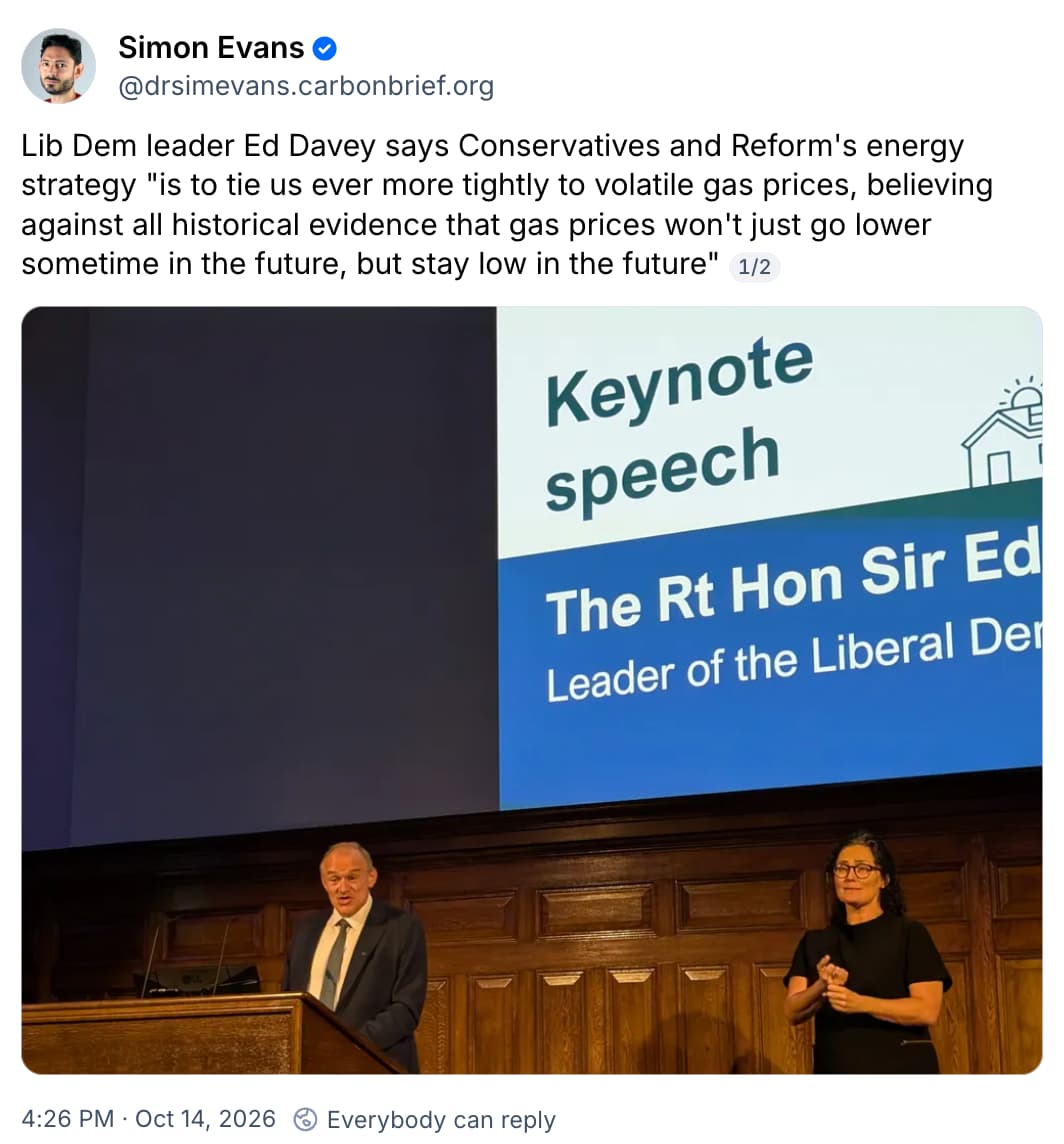
Opposition parties have similarly argued for abandoning existing climate targets in pursuit of short-term cost savings, referencing independent modeling projections. However, energy executives and industry analysts have frequently criticized these alternative scenarios for relying on overly optimistic assumptions regarding future gas and nuclear prices. Given that the UK has weathered repeated gas price shocks over the past decade, analysts warn that any strategy retaining heavy reliance on gas leaves the economy vulnerable to international market volatility and geopolitical conflict.
Proponents of the clean energy transition maintain that long-term energy security and price stability depend on expanding domestic renewables. Research into past policy rollbacks, such as the 2015 decision to scale back green levies, indicates that such pauses ultimately cost consumers billions by leaving the nation exposed to fossil fuel fluctuations. Government officials have reiterated that while clean energy targets remain central, policies will be continuously evaluated to ensure they deliver tangible savings for consumers.
Can Electrification of Homes and Businesses Help Cut Bills?
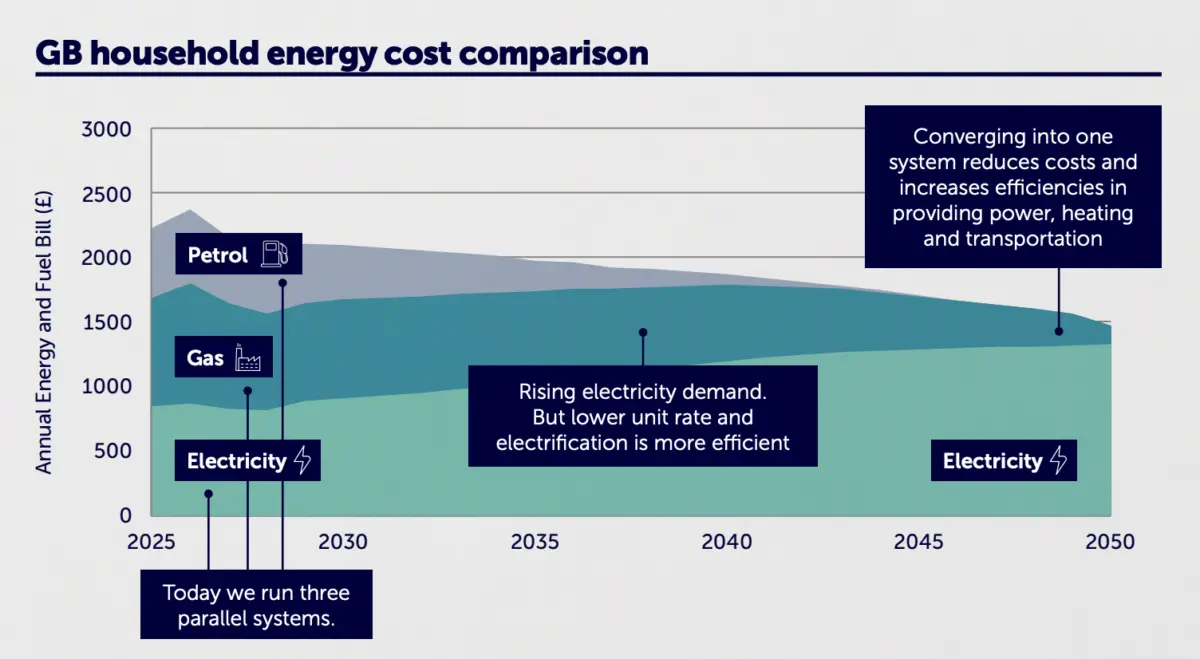
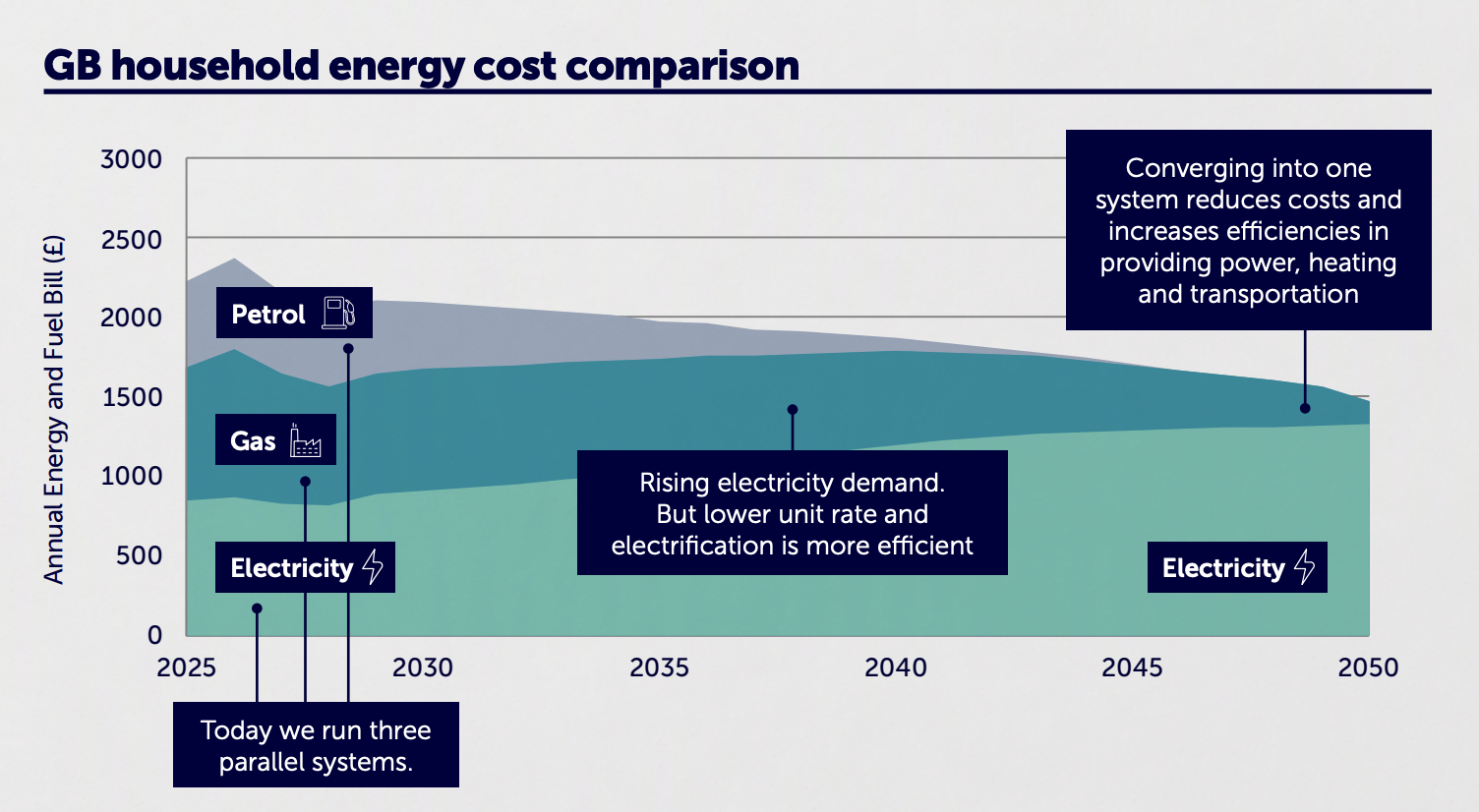
Despite ongoing political debate surrounding power generation, there is widespread agreement regarding the necessity of electrifying heat and transport. Households currently maintain separate expenditure streams for gas, electricity, and petrol. Consolidating these parallel systems into a single, highly efficient electricity network allows fixed infrastructure costs to be shared across a much broader base of demand.
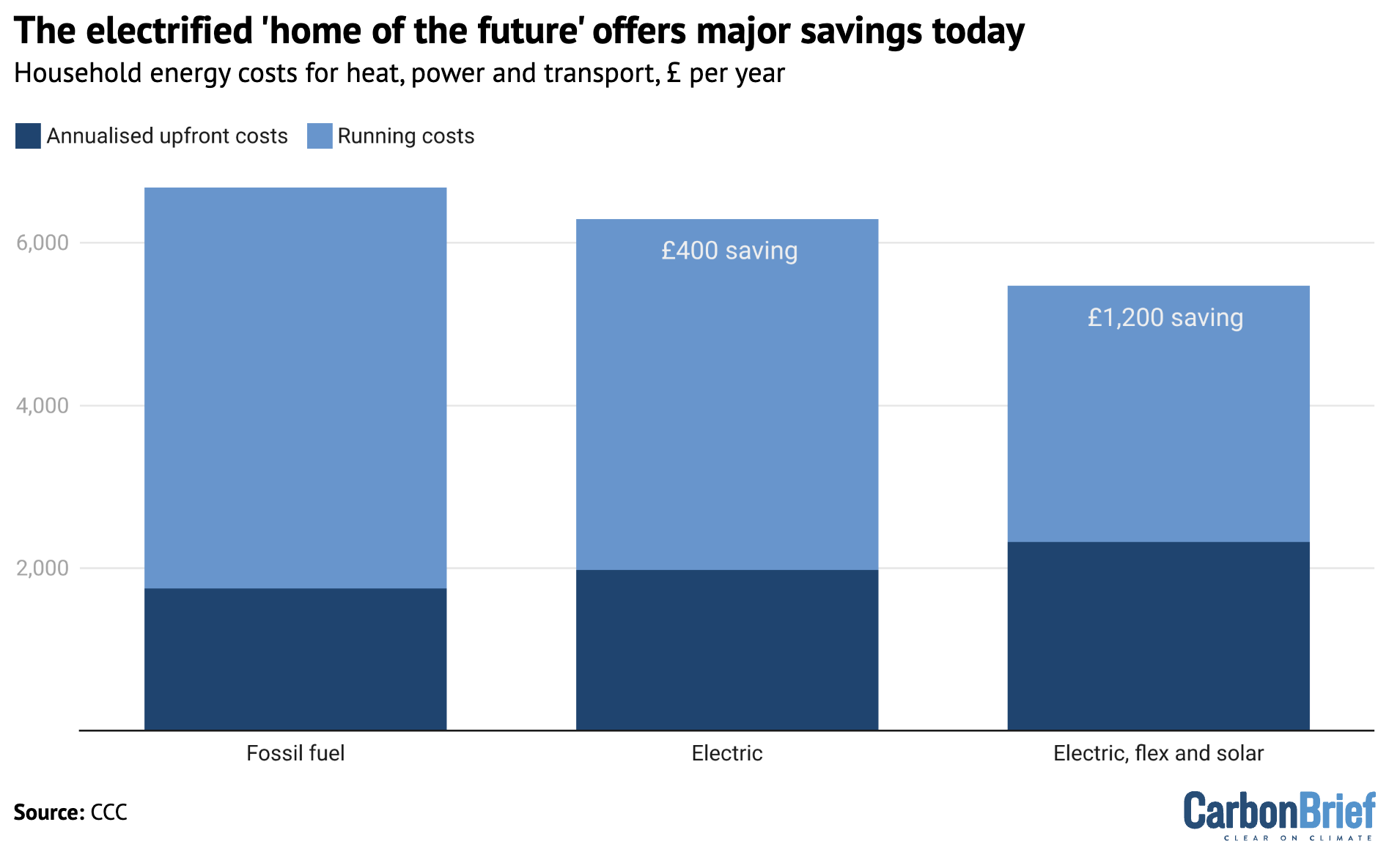
The Climate Change Committee, the International Energy Agency, and major energy firms like SSE emphasize that accelerated electrification will reduce overall system costs over time. Electric vehicles are already significantly cheaper to run per mile than petrol or diesel vehicles, while heat pumps offer vastly superior efficiency compared to traditional gas boilers. Through initiatives like the Warm Homes Plan, the government aims to support energy efficiency upgrades that can lower household energy outlays substantially, aligning industrial decarbonisation with tangible financial relief for consumers across the country.