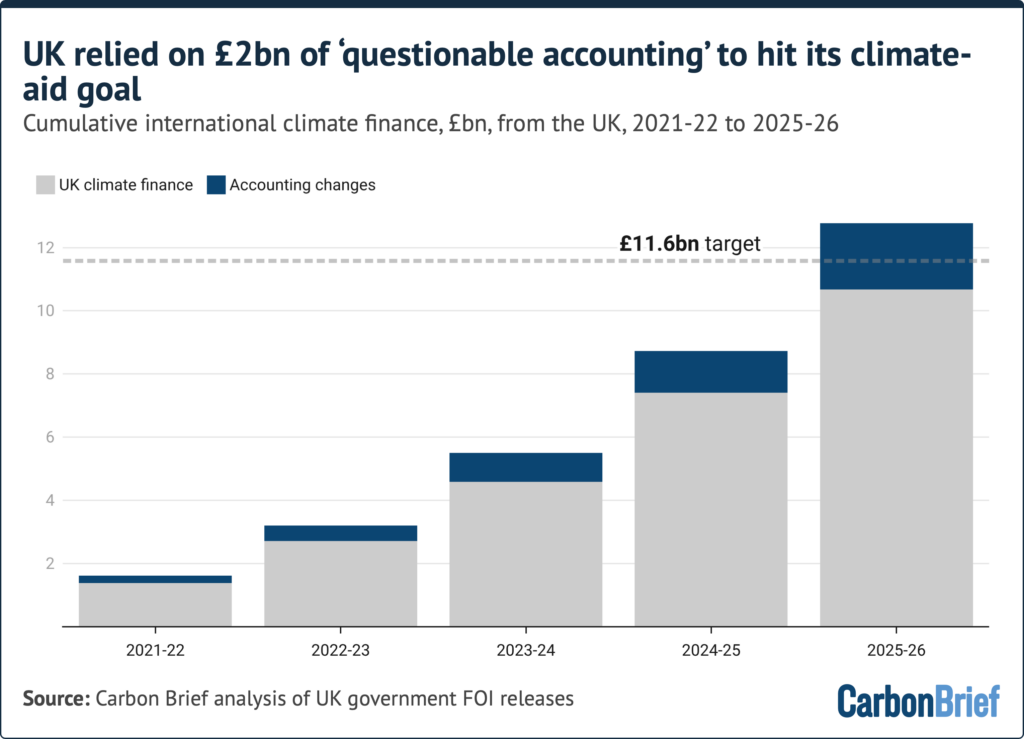
The United Kingdom has successfully met its high-profile target to provide £11.6bn in international climate aid to developing countries by 2026, but a comprehensive new analysis reveals that the milestone was only achieved by relying heavily on controversial accounting adjustments rather than fresh spending.
Under the landmark framework of the Paris Agreement, the UK made a legally binding and politically significant pledge to deliver at least £11.6bn in overseas climate finance between the financial years 2021-22 and 2025-26. Originally announced in 2019 by the Conservative administration as a symbolic "doubling" of its previous five-year climate commitment, the target became a cornerstone of Britain’s international environmental diplomacy.
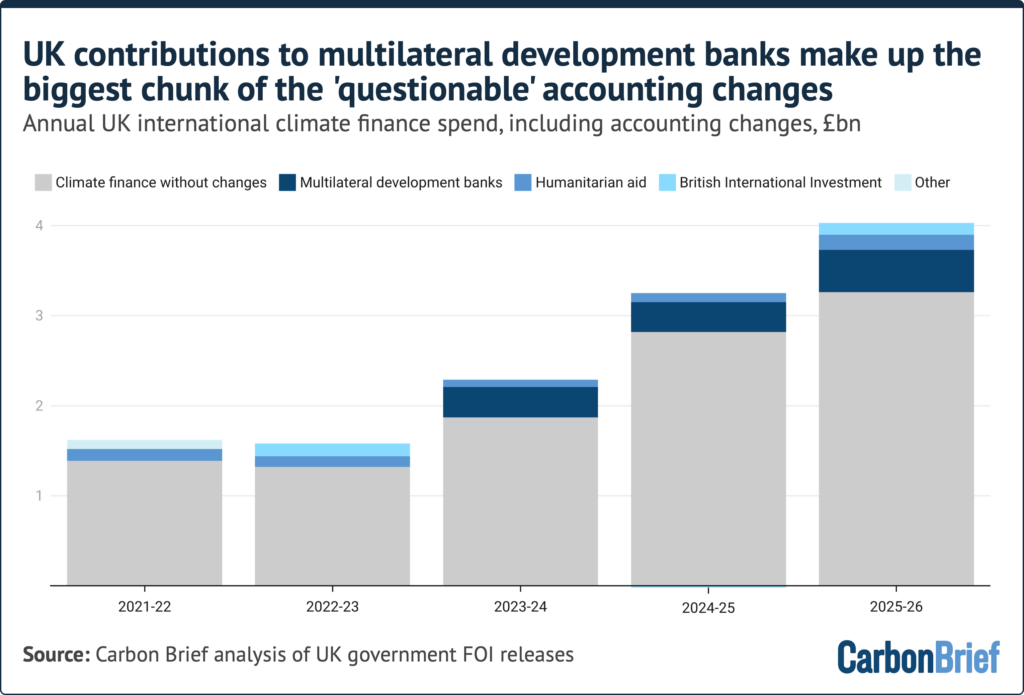
However, detailed analysis conducted by Carbon Brief based on a series of Freedom of Information (FOI) requests has uncovered that approximately £2.1bn of the funds counted toward this goal did not represent new financial commitments. Instead, successive governments systematically reclassified existing funds, including core allocations for multilateral development banks, private-sector investment vehicles, and humanitarian aid earmarked for conflict-ravaged regions such as Afghanistan, Sudan, and the Democratic Republic of the Congo, categorizing them retroactively as "climate finance."
Without these significant accounting maneuvers, the UK would have fallen short of its mandated objective by nearly £1bn, leaving a cumulative total of approximately £10.7bn.

The findings have intensified a growing political and humanitarian debate. Campaigners, members of parliament, and the UK’s official aid watchdog argue that the reliance on creative accounting exposes a troubling pattern of cutting corners to maintain headline-grabbing climate pledges while simultaneously implementing unprecedented reductions in the broader foreign aid budget.
Moving the Goalposts
The principle of additionality lies at the heart of international climate agreements under the United Nations Framework Convention on Climate Change (UNFCCC). Developed nations are obligated to provide "new and additional" financial resources to help vulnerable, low-income nations adapt to rising temperatures, transition to clean energy, and address severe ecological damage. These obligations run alongside broader global commitments to mobilize $100bn annually through 2025, scaling up to at least $300bn annually by 2035.
As domestic economic pressures mounted and successive administrations faced fiscal constraints, the UK foreign aid budget experienced severe reductions. Ministers increasingly diverted development funds toward domestic priorities and defense spending, placing intense pressure on the ring-fenced £11.6bn climate finance target, which draws directly from the shrinking aid envelope.
Rather than injecting new cash into international climate projects, the government in 2023 opted to broaden the definition of what qualified as climate-related spending. This adjustment allowed the UK to honor the £11.6bn headline figure on paper without scaling up expenditures. Following a change in administration, the current Labour government has maintained this accounting methodology while signaling even deeper cuts to overall aid spending in the coming years.
The strategy has drawn blistering criticism from oversight bodies. The Independent Commission for Aid Impact (ICAI), the UK’s official aid watchdog, alongside the International Development Committee (IDC), has repeatedly condemned the practice, characterizing it as moving the goalposts and eroding the credibility of Britain’s international commitments.
The £1bn Shortfall
While the government has publicly declared victory in meeting and exceeding the £11.6bn target—with total reported climate finance over the five-year period reaching £12.8bn, including a record £4bn in the final financial year alone—the underlying mechanics tell a different story.
FOI data indicates that the £2.1bn derived from reclassifications accounts for nearly a fifth of the entire reported portfolio. This figure outstrips previous forecasts made by the ICAI, which estimated in 2024 that reclassified funds would total around £1.7bn.
Government officials have defended the practice, asserting that their accounting methodologies are entirely consistent with internationally agreed-upon frameworks utilized by other major donor nations. Supporters of the approach argue that multilateral institutions and private investment vehicles incorporate substantial environmental safeguards and climate-focused initiatives into their broader operations.
Nevertheless, experts emphasize that the UK historically maintained a reputation for a more rigorous and transparent approach to tracking climate finance within an international system long criticized for opacity.
Sarah Champion, chair of the International Development Committee, noted that the newly uncovered data sheds critical light on previous parliamentary inquiries. She warned that utilizing accounting adjustments to bypass what would have been a £1bn shortfall demonstrates that the government prioritized maintaining political optics over driving genuine, measurable climate and environmental outcomes in the developing world.
These accounting practices remain a pressing concern as the UK transitions into its next phase of international climate commitments. The government has pledged £6bn in foreign aid for climate projects over the subsequent three-year period, making Britain one of the few major donors to establish a formal post-2025 target. Yet, this new allocation represents a steep decline, halving average yearly spending from the £4bn peak recorded in the final year of the previous target down to roughly £2bn annually. Previous analyses indicate that questionable accounting could comprise as much as a third of this upcoming target as well.
A UK government spokesperson defended the record, stating that officials are proud to have exceeded their third international climate finance target and emphasizing that climate change and nature loss remain critical threats to global security and prosperity that warrant prioritization within the aid budget.
Anatomy of the Accounting Changes
The £2.1bn expansion in reported climate finance stems primarily from three distinct policy shifts implemented during the five-year spending window.
The largest contributor involves the decision to count a proportionate share of core, un-earmarked funding provided to multilateral development banks as climate finance. This shift added approximately £1.1bn to the final tally, with the funds directed predominantly through institutions like the World Bank and the African Development Bank.
While proponents argue these institutions maintain strict internal targets for dedicating portions of their overall portfolios to green projects, critics have raised alarm bells regarding transparency and the heavy reliance on loans rather than grants. Furthermore, shifts in international politics—including pressure from the United States administration on multilateral banks to abandon specific climate lending targets—have introduced a high degree of volatility and unpredictability into these funding streams.
The second-largest adjustment accounted for nearly £600m by automatically classifying 30% of humanitarian aid delivered to countries deemed highly vulnerable to climate change as climate finance. This mechanism applied broadly to deeply impoverished and conflict-affected nations, including Afghanistan, Sudan, and the Democratic Republic of the Congo.
Critics from organizations such as the Center for Global Development have labeled this approach arbitrary, noting that it captures humanitarian assistance directed at projects with no direct connection to environmental mitigation or adaptation, such as supporting conflict-displaced populations in Yemen or vulnerable orphans in Zimbabwe.

The third major component involves the recalibration of private-sector investments channeled through British International Investment (BII), a publicly owned, for-profit development finance institution partially capitalized with UK aid money. Instead of applying a flat 30% default share, the government began calculating climate-related spending based on the actual composition of individual BII investments.
Internal government forecasts estimated this change would add roughly £266m to the total target over five years. While BII has increased its investments in clean energy infrastructure, reaching over £1bn in climate-labeled investments in 2025, the institution has faced ongoing scrutiny from civil society groups regarding legacy fossil fuel holdings and the distribution of financial benefits.
Smaller additions, including the inclusion of £99m in administrative and operational expenses associated with hosting the COP26 climate summit in Glasgow, further padded the final totals.
Advisers and aid organizations have urged greater fiscal transparency moving forward. Shruti Agarwal, senior climate finance adviser at Save the Children UK, called on the government to halt the pattern of declining financial effort, urging authorities to publish timely data and abandon the practice of retrospectively classifying administrative and general expenditures as climate finance.