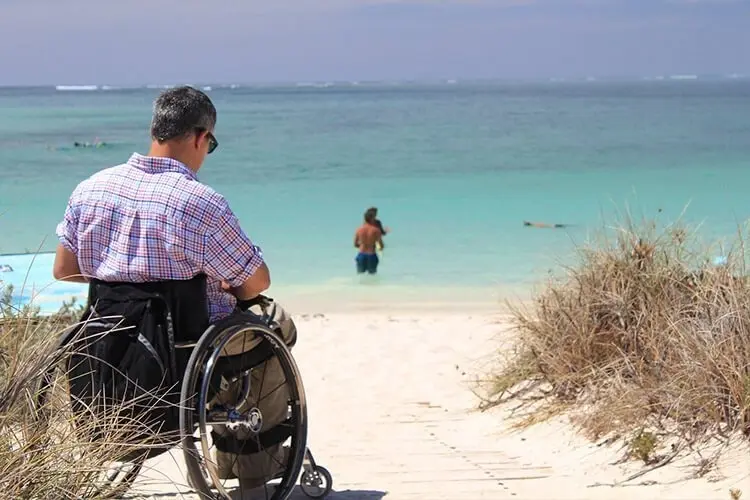
For wheelchair users and individuals living with mobility impairments, the simple act of planning a vacation has historically presented a formidable obstacle course. While navigating one’s hometown can already pose daily challenges, translating that experience to an unfamiliar foreign country often introduces a staggering array of barriers, turning what should be a relaxing getaway into an exercise in logistics and frustration. However, the global tourism landscape is undergoing a profound transformation. Over the past decade, a growing number of governments, urban planners, and hospitality leaders have prioritized accessible and barrier-free policies, ensuring that the world’s cultural and historical treasures can be enjoyed by all travelers regardless of physical capability.
This progressive shift has seen hotels, restaurants, and public transport networks redesigned to accommodate individuals with disabilities. Public spaces such as municipal parks, world-class museums, and transit hubs are increasingly incorporating elevators, ramps, and auditory or visual sensory aids into their core infrastructure. Traveling today is noticeably more streamlined than it was a decade ago, opening up a world of possibilities for mobility-impaired tourists ready to design their dream itineraries. From the historic canals of Europe to the sprawling modern skylines of Asia and North America, several key global destinations stand out for their comprehensive approach to accessibility.
Venice, Italy
At first glance, Venice might appear intimidating to the mobility-impaired visitor. Known famously for its intricate network of canals and architecturally stunning arched bridges, the floating city seems inherently challenging for wheelchairs. Yet, beneath this romantic surface lies a surprisingly wheelchair-friendly environment rich in historic sites that have successfully adapted to modern accessibility standards.
The Doge’s Palace serves as a prime example of this integration. Inside the historic landmark, nearly all the rooms are either entirely step-free or equipped with functional ramps. To navigate to the upper floor where many of the primary exhibits are housed, the palace features a dedicated elevator system. The primary hurdle visitors face is located at the ticket office, which lacks wheelchair accessibility; travelers typically require a companion to secure tickets on their behalf or assist them through the entry process. Once inside, however, the palace interior offers a seamless experience for wheelchair users.
Singapore
While numerous nations around the world are still in the developmental phases of establishing barrier-free infrastructure, Singapore addressed these urban planning challenges two decades ago. This foresight has earned Singapore the well-deserved reputation as the most wheelchair-accessible country in Asia, boasting an infrastructure widely regarded as among the best globally.
The backbone of this accessibility is Singapore’s Mass Rapid Transit (MRT) system. Every MRT station is fully outfitted with essential barrier-free amenities, including operational lifts, wheelchair-accessible restrooms, and smooth ramps. To assist passengers with sensory impairments, arrival and departure schedules are prominently displayed on digital screens and announced audibly through station speakers. With more than 100 stations currently featuring these comprehensive updates and additional expansion projects underway, the city’s transit network prioritizes inclusivity.
Major cultural institutions and attractions, such as Gardens by the Bay, the ArtScience Museum, and the National Museum of Singapore, feature barrier-free pathways and modern facilities. Furthermore, many of these popular sites provide complimentary wheelchair rentals at their main entrances on a first-come, first-served basis, reinforcing the nation’s commitment to accessible tourism.
Berlin, Germany
For travelers whose ideal vacation involves urban exploration rather than traditional sightseeing, Berlin presents an exceptional option. The German capital’s progressive disability policies have driven extensive structural adaptations across the municipality, cultivating an environment that accommodates both international tourists and local residents with diverse mobility needs.
Berlin’s modern public transit network features nearly 100 subway stations equipped with reliable elevator access, establishing it as one of the most navigable transport systems in Europe. Sidewalks and street pathways throughout the city have been carefully graded and maintained to ensure wheelchair users can easily traverse the urban landscape and experience the rich cultural diversity of the region.
Additionally, the city’s vast array of museums and theaters are overwhelmingly wheelchair accessible. A distinct logistical advantage for visitors to Berlin is the close proximity of major tourist attractions, which significantly minimizes travel times and conserves the physical energy of mobility-impaired guests.
Loutraki, Greece
As home to one of the world’s oldest civilizations, Greece remains a perennial favorite for international holidaymakers. Benefiting from a warm climate year-round, the coastal town of Loutraki provides an inviting retreat in any season. A key highlight for travelers with limited mobility is the Sirens Resort, an accommodation facility designed specifically to meet the needs of disabled guests.
The resort features specialized amenities including roll-in showers, accessible kitchen spaces, comprehensive laundry services, and on-site rental equipment. Crucially, the property provides a fully accessible ramp that extends directly from the hotel grounds across the sand and down to the edge of the ocean, allowing wheelchair users to experience the beach environment firsthand.
To facilitate broader exploration, the Sirens Resort also operates specialized tours and on-site wheelchair-accessible taxis, enabling visitors to venture out and discover nearby historical landmarks with ease.
Vancouver, Canada
Renowned for its friendly and culturally diverse population, Vancouver extends its welcoming ethos directly to mobility-impaired visitors through rigorous municipal barrier-free policies that rank among the strictest in the world.
A significant majority of the city’s premier tourist destinations are fully accessible to wheelchair users. Landmarks such as Stanley Park, the Vancouver Art Gallery, the bustling downtown district, the Vancouver Aquarium, and historic Chinatown can all be navigated without physical obstruction. During the winter months, organizations like the Whistler Adaptive Sports Program extend these opportunities outdoors, offering specialized equipment that allows individuals with physical disabilities to participate in skiing and snowboarding.
Paris, France
While historically charming and immensely popular, Paris can present complex logistical challenges for travelers with mobility limitations, yet it remains a compelling destination for European exploration. The iconic Eiffel Tower accommodates wheelchair users up to its first two levels, and numerous historic sites across the capital have introduced modern modifications.
The Palace of Versailles, situated just outside the city center, stands out as a prime example. Recognized as one of Europe’s grandest historical residences, all three primary palace buildings are fully accessible. Elevators facilitate movement to the upper levels, while ground-floor buildings are connected via integrated ramps. For visitors who prefer not to walk extensive distances, discounted golf cart rentals are available specifically for guests with disabilities.
Additionally, the "Another Paris Tourist Train" offers a fully wheelchair-friendly city tour. Visitors can also take in panoramic views of the Eiffel Tower and the surrounding urban landscape from the observation deck of the Montparnasse Tower, view the Mona Lisa at the Louvre Museum, or explore the city’s numerous accessible public parks.
Sydney, Australia
Australia and its most populous metropolis, Sydney, exemplify modern urban accessibility, offering visitors stunning views and world-class attractions that have been meticulously adapted for wheelchair users.
The Sydney Tower Eye provides a comprehensive bird’s-eye view of the metropolitan area from a fully accessible observation deck. Similarly, Sydney’s Sea Life Aquarium and the Wild Life Sydney Zoo offer close encounters with indigenous Australian wildlife through barrier-free viewing areas. Rounding out the city’s accessible offerings are the Royal Botanical Gardens and the internationally acclaimed Sydney Opera House, both of which feature infrastructure designed to accommodate all visitors.
Washington, DC, USA
The United States capital provides extensive accessibility across its most famous monuments and federal institutions. Landmarks such as the Washington Monument, the Lincoln Memorial, the White House, and the National Air and Space Museum all feature accommodations tailored to mobility-impaired tourists.
Washington features an abundance of wheelchair-accessible dining and lodging options, supported by sidewalks and public transit systems designed with inclusivity in mind. Within the White House, visitors of all physical abilities participate in identical tour routes, supported by available ramps, elevators, and complimentary loaner wheelchairs. Similarly, the Lincoln Memorial provides accessible entry without requiring visitors to navigate staircases, utilizing ground-floor lobby elevators and basement-level ramps to ensure seamless access to the interior.
Los Angeles, CA, USA
Affectionately known as the City of Angels, Los Angeles combines a warm climate and cinematic glamour with robust accessibility standards throughout its major attractions.
Universal Studios Hollywood incorporates numerous wheelchair-accessible rides alongside auxiliary services such as language interpreters. The Aquarium of the Pacific similarly offers a completely accessible layout, allowing visitors to experience the entire marine tour without leaving their seats. Cultural institutions like The Getty Center and retail destinations such as The Grove provide well-maintained, accessible environments for shoppers and sightseers alike. Furthermore, multiple beaches throughout the Los Angeles area offer free rentals of specialized beach wheelchairs, ensuring that the coastline remains open to all.
Philadelphia, PA, USA
As one of the United States’ most historically significant urban centers, Philadelphia maintains a strong commitment to welcoming wheelchair users to its revolutionary-era sites and cultural institutions.
The Liberty Bell Center, Independence Hall, the National Constitution Center, the Betsy Ross House, and The Franklin Institute are fully equipped to accommodate visitors with mobility impairments. Beyond these historical landmarks, the Reading Terminal Market serves as a popular destination for food and shopping. Because the entire enclosed market is situated on a single level, visitors using wheelchairs can easily navigate the aisles to sample local cuisine and browse vendor stalls.