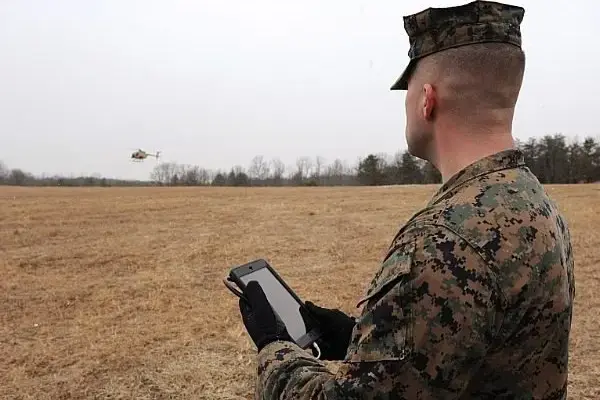
The U.S. Army is significantly broadening opportunities for commercial drone manufacturers and technology developers to test their unmanned systems under realistic, highly contested electronic warfare conditions. As modern conflicts increasingly demonstrate the vulnerability of unshielded hardware to sophisticated jamming and signal disruption, the military’s new testing framework aims to provide private developers with direct access to specialized military facilities to evaluate how their platforms perform when GPS navigation fails and communications face heavy interference.
In a formal announcement detailing its ongoing defense modernization strategy, the Army outlined three dedicated testing events scheduled throughout 2027. These upcoming sessions are specifically designed to support companies developing advanced aerial drones, counter-drone systems, long-range precision fires, and low-cost interceptors. Unlike traditional military procurement programs that often involve high-stakes competitive evaluations, down-selects, or immediate supplier selection pressures, these new testing windows are entirely noncompetitive. Instead, they are structured as collaborative environments where developers can rigorously identify technical weaknesses, implement rapid engineering fixes, and return to testing to validate their improvements.
Testing Drones in Contested Environments
The upcoming electronic warfare testing events form a core component of the Army’s Permissive Test Range Initiative, which was initially launched in August 2026. The overarching goal of this program is to lower historical administrative and logistical barriers, giving private-sector companies smoother, more direct access to premier military testing facilities and specialized, high-fidelity threat environments that are otherwise virtually impossible for commercial entities to replicate independently.
The initiative is led by the Army Test and Evaluation Command (ATEC), which collaborated closely with the Army’s Threat Systems Management Office to design and execute the specialized electronic warfare scenarios. Testing under this program focuses heavily on conditions where electronic signals are denied, degraded, intermittent, or severely limited. These specific operational challenges directly reflect the harsh realities observed in contemporary conflicts, most notably the extensive use of electronic warfare in the ongoing war in Ukraine, where radio frequency jamming and GPS spoofing have fundamentally transformed tactical reconnaissance and strike operations.
"By opening our premier test facilities and providing access to realistic threat environments, we are directly enabling industry to refine their systems against the challenges of the modern battlefield," said Maj. Gen. Pat Gaydon, commanding general of ATEC.
The military put this collaborative philosophy into practice by hosting its first dedicated electronic warfare event at Camp Grayling, Michigan, in September 2026. Four commercial drone companies participated in that initial pilot deployment. According to feedback compiled by the Army, participating developers found immense value in the opportunity to identify technical vulnerabilities in their navigation and guidance systems and make critical engineering modifications within a strictly noncompetitive, risk-free setting.
This iterative approach—allowing developers to test a prototype, identify operational bottlenecks or failure points, make hardware or software adjustments, and return to the test range without the looming threat of a government contract termination or a failed procurement bid—has been widely praised by industry observers as a vital shift in how the Department of Defense engages with commercial technology sectors.
Three Testing Events Scheduled for 2027
Building on the early momentum and valuable lessons learned from the pilot deployment at Camp Grayling, the Army has officially scheduled three additional testing events for 2027.

Crucially, the scope of these upcoming events is expanding beyond traditional unmanned aerial vehicles and counter-drone defense platforms. During the scheduled February testing session, participating companies will also have expanded opportunities to test long-range fires and low-cost interceptor technologies under realistic electronic warfare constraints. These advanced capabilities were intentionally excluded from the initial Camp Grayling event as ATEC focused strictly on foundational drone resilience, making the 2027 schedule a significant step forward in the multi-domain scope of the Permissive Test Range Initiative.
Lowering Barriers for Drone Developers
The expansion of the Permissive Test Range Initiative reflects a broader, strategic institutional effort by the U.S. Army to make military testing infrastructure vastly more accessible to commercial technology companies, particularly non-traditional defense contractors and Silicon Valley-style startups that traditionally find the labyrinthine defense acquisition process difficult to navigate.
Under the rules established when the program was unveiled in August, companies do not need to possess an existing government contract, a prime contractor partnership, or any prior federal relationship to request testing opportunities at these specialized military facilities. This policy shift is expected to provide disproportionate benefits to smaller drone manufacturers and specialized software or hardware technology developers who lack the capital resources required to build large proprietary testing ranges or purchase expensive, military-grade electronic warfare simulation equipment.
By granting these developers early access to high-end jamming and signal degradation environments, the Army is giving them an invaluable opportunity to mature their products, harden their electronics, and optimize their software architectures long before they formally pursue major military procurement contracts.
Despite the open-access nature of the program, the Army has clarified that participation does not guarantee a future defense contract, nor does it secure a preferred testing date on demand. Military test ranges remain active, high-demand assets, meaning range availability is strictly subject to institutional capacity limits and scheduling priorities.
Commercial companies and technology developers interested in evaluating their systems against realistic electronic warfare threats can submit formal scheduling requests through the official U.S. Army Test Range Portal. To help shepherd applicants through the technical and administrative requirements, the Army has also designated a specific point of contact to assist prospective participants in navigating the application and scheduling process.
This ongoing initiative underscores the rapidly growing importance of electronic warfare resilience as military modernization programs expand across the globe. As unmanned systems increasingly become the backbone of tactical reconnaissance and strike operations, reliable navigation, robust data links, and assured communications in heavily contested electromagnetic environments are no longer optional features—they are fundamental prerequisites for survival on the modern battlefield.