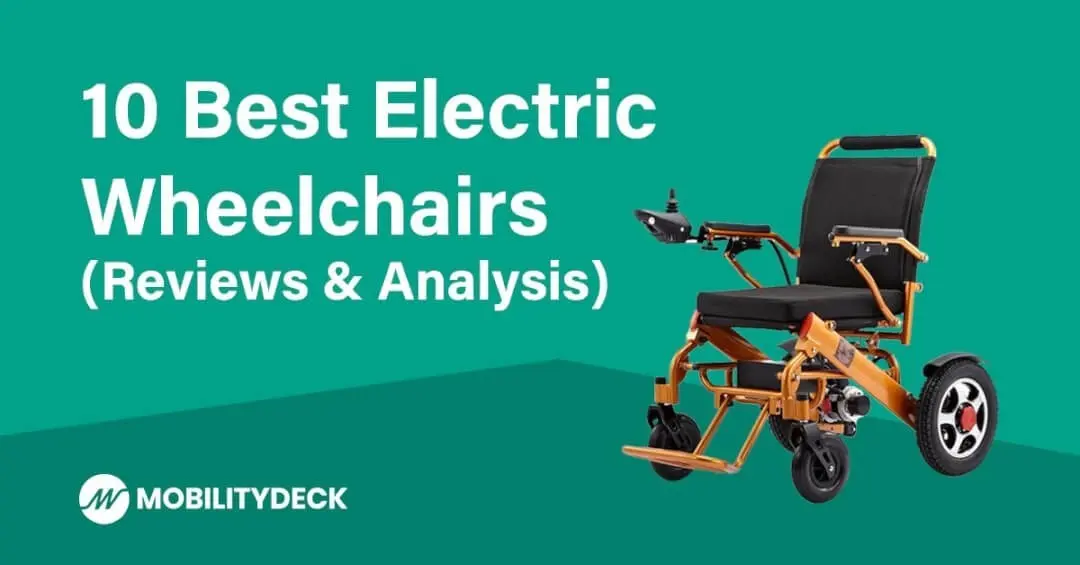
Choosing an electric wheelchair represents a significant turning point for individuals seeking to enhance their personal mobility, independence, and daily quality of life. Whether the goal is to navigate tight indoor spaces with ease or regain the freedom to travel and explore the outdoors without physical exhaustion, making the right choice depends heavily on individual circumstances and specific physical requirements. Over the past few years, the market for electric wheelchairs has experienced substantial growth, expanding into a vast landscape featuring hundreds of options tailored to diverse budgets, lifestyle needs, and medical requirements.
While this market expansion ensures that an ideal power chair exists for virtually every user, it simultaneously complicates the selection process. Navigating the sheer volume of available models can quickly become overwhelming for consumers attempting to separate marketing claims from actual performance. To address this challenge, industry experts have reviewed dozens of electric wheelchairs, rigorously evaluating their attributes to identify the absolute best models across various categories. From lightweight designs and options tailored for the elderly to heavy-duty power chairs and foldable travel companions, the resulting analysis compares key performance metrics to help consumers identify the most reliable choices currently available.
The 5 Top-Rated Electric Wheelchairs
Market analysis and consumer feedback have consistently highlighted several standout models across different operational categories. Leading the field as the best overall choice is the EZ Lite Cruiser Deluxe DX12, which earned a strong rating of 4.4 out of 5 for its balanced combination of quality, weight, and mid-range pricing. Close behind as the runner-up is the Porto Mobility Ranger D09, achieving a perfect 5 out of 5 rating for its exceptional comfort and versatility. For travelers prioritizing ultra-portability, the Forcemech Voyager R2 emerged as the top pick for travel with a 4.4 out of 5 rating. Users requiring robust structural integrity and higher weight capacities frequently turn to the Sentire Med Forza D09 Deluxe, which secured a 4.7 out of 5 rating as the best heavy-duty option. Finally, the Drive Medical Cirrus Plus claimed the title of best budget pick, earning a solid 4.5 out of 5 rating for consumers looking for dependable performance without a high price tag.
Who Should Buy an Electric Wheelchair?
Generally speaking, electric wheelchairs are designed primarily for individuals who lack the necessary upper body strength required to independently propel and control a manual wheelchair. However, there are no rigid rules governing mobility choices. Many power wheelchair users maintain sufficient strength to use a manual chair comfortably indoors but prefer a motorized option to assist them with longer distances or outdoor excursions outside their homes.
For those contemplating the purchase of an electric wheelchair, visiting a local medical supply store to test-drive various models is often a valuable first step. Motorized chairs are not universally suitable for everyone, and some users ultimately find that they feel more independent using manual mobility devices. Conversely, individuals who enjoy spending time outdoors, visiting public parks, or taking vacations often find that a quality electric wheelchair transforms their experience. With battery capacities capable of lasting for hours, users can explore new cities and environments without succumbing to physical exhaustion.
Nevertheless, fully benefiting from an electric wheelchair requires careful deliberation before committing to a purchase. Because these devices represent a substantial financial investment and must accommodate specific physical needs, selecting the right model demands a thorough assessment of multiple operational and environmental factors.
Important Features to Consider
Purchasing an electric wheelchair is rarely a casual decision, given the high cost and daily reliance users place on the equipment. Several critical features demand careful evaluation during the selection process.
Indoor mobility is a primary concern for anyone intending to use their power chair primarily inside a residence. Buyers must carefully examine the turning radius of the chair, a metric typically provided by manufacturers but best verified through independent user reviews to ensure real-world accuracy. Additionally, seat height and width must align with the user’s living environment; ideally, the wheelchair seat should match the height of the user’s bed, and the overall width of the chassis must comfortably navigate every hallway and doorway within the home.
Getting in and out of the chair is another vital consideration. Individuals who retain the ability to walk short distances typically experience little difficulty transferring in and out of most electric wheelchairs without assistance. However, users with more limited mobility must evaluate how easily they can access the seat, determining whether features like swiveling chair legs or rotating armrests are necessary. Furthermore, those who rely on a mechanical patient hoist to transfer into their wheelchair must verify that the chosen model is fully compatible with their lifting equipment.
Outdoor mobility requirements dictate whether a wheelchair can successfully handle diverse terrains such as grass, gravel, or uneven pavement. While some power chairs perform admirably across various outdoor surfaces, others are strictly suited for smooth, paved environments. For individuals who plan to travel frequently, a lightweight, compact, and easily foldable design is essential. Fortunately, modern engineering has produced numerous foldable models that combine portability with robust performance.
Cushioning and comfort are paramount given the extended periods users spend seated in their wheelchairs. Most reputable manufacturers offer a variety of cushioning materials, backrest configurations, and seating styles, ranging from standard captain’s chairs to solid pan and rehab-style seats. The choice between contoured foam and air foam largely depends on personal preference and the prevention of pressure sores.
Battery power and motor performance directly influence how far and how fast a wheelchair can travel. While some models feature high-capacity dual batteries capable of lasting for days on a single charge, users must balance this extended range against the additional weight that heavy batteries add to the frame. Similarly, motor power dictates the wheelchair’s ability to negotiate steep ramps and rough terrain. Although a stronger motor provides better hill-climbing capabilities, it tends to drain the battery faster than a more conservative motor paired with a smooth ride.
Weight capacity is another crucial safety parameter. Most standard electric wheelchairs are engineered to support at least 240 pounds, but users exceeding this weight class require specialized heavy-duty models with reinforced frames and high-torque motors, such as the Sentire Med Forza D09 Deluxe. Finally, prospective buyers should investigate potential aftermarket modifications, accessory compatibility, and overall aesthetic style to ensure the chosen device meets both functional and personal preferences over years of daily use.
Frequently Asked Questions
Navigating the financial and technical aspects of acquiring a motorized mobility device often raises several common questions regarding insurance coverage, operational range, pricing, and sizing.
Health insurance providers frequently cover the cost of electric wheelchairs when they are deemed medically necessary, though coverage terms vary widely depending on the specific insurance policy and provider guidelines. Many insurers enforce strict specifications regarding the brands and models they are willing to fund, making direct consultation with the insurance provider essential. Similarly, Medicare maintains specific criteria for subsidizing motorized mobility devices, requiring patients to verify eligibility through official channels.
In terms of operational range, users can generally expect a fully charged electric wheelchair battery to last for at least eight hours, delivering a minimum travel range of 12 miles. However, actual performance fluctuates based on the specific wheelchair model, battery health and quantity, terrain conditions, and the total weight of the user.
Pricing for standard, unmodified electric wheelchairs typically ranges between $2,000 and $3,000. Entry-level models can sometimes be found for around $1,000, while highly specialized power chairs equipped with advanced rehabilitation features, custom seating, and heavy-duty motors can command prices up to $12,000. The high cost of these devices is largely attributed to the extensive research, clinical testing, engineering precision, and high-grade materials required to produce safe and reliable medical equipment.
Sizing depends primarily on the user’s body weight and required seat dimensions. The vast majority of electric wheelchairs feature standard seat widths ranging from 16 to 20 inches, though wider specialty frames are readily available for larger individuals.
Detailed Overview of Top-Rated Models
An in-depth examination of the market’s leading electric wheelchairs reveals distinct strengths and ideal use cases for each model. The EZ Lite Cruiser Deluxe DX12 emerges as a versatile mid-range option, combining tight indoor maneuverability with a lightweight, foldable aluminum frame that weighs only 58 pounds without the battery, or 64 pounds with it. Supported by large rubber wheels and a responsive suspension system, the DX12 handles grassy fields, sidewalks, public transit, and grocery stores with notable stability while accommodating users weighing up to 305 pounds. Its modular design permits numerous accessory additions, and a simple lever flip engages a freewheeling mode.
The Porto Mobility Ranger D09 shares many similarities with the top pick, offering effortless folding, solid turning performance, and dual batteries that maintain steady operation even when running low on power. While its comfort cushioning slightly increases its bulk when folded and its joystick controls require a brief adjustment period, the Ranger D09 enjoys strong consumer acclaim for its overall build quality and reliability.
For dedicated travelers, the Forcemech Voyager R2 stands out as an ultra-portable solution. Weighing a mere 43 pounds without its battery, it ranks among the lightest electric wheelchairs available, making it exceptionally well-suited for air travel, cruise ships, and public transportation. Its lightweight construction is achieved by prioritizing efficiency over raw power, meaning it performs exceptionally well on smooth airport floors and paved surfaces but struggles on rough outdoor terrain like thick grass. Rotating armrests simplify transfers, though users note minor drawbacks such as non-detachable footrests and a lightweight charging plug.
Users requiring maximum structural strength and high weight capacities find an ideal solution in the Sentire Med Forza D09 Deluxe. Engineered to safely support users weighing up to 396 pounds, this heavy-duty power chair features robust dual motors, long-lasting batteries, and advanced suspension that smooths out rough outdoor inclines and uneven terrain. Although its solid tires can occasionally leave marks on indoor flooring and its controls can feel slightly responsive, its exceptional build quality makes it a premier choice for heavier individuals.
For budget-conscious consumers, the Drive Medical Cirrus Plus offers a reliable alternative priced around $1,500. While heavier than ultra-portable folding chairs, its sturdy frame supports a top speed of 5.5 mph and handles hills and off-road conditions effectively. Equipped with swing-away footrests, a comfortable seat cushion, and an adjustable joystick, the Cirrus Plus provides essential full-featured performance without exceeding moderate financial limits.
Other noteworthy models evaluated by industry reviewers include the Horizon Mobility Electric Wheelchair, which offers an affordable budget option around $1,000, though its tires can stiffen in cold weather and it lacks a manual freewheeling mode. The Innuovo Model N5513A serves as a lightweight, FDA-approved travel chair that fits easily into car trunks and airplane cabins, though its tires face some resistance on thick indoor carpeting. The Forcemech Navigator XL provides heavy-duty portable performance for urban environments, while the Golden Technologies Scooter Powered-Wheelchair GP162 offers a compact, functional design well-suited for older homes with narrow hallways. Finally, the Pride Mobility Jazzy 600 ES utilizes a six-wheel configuration incorporating dual rear stabilizers to deliver exceptional stability, quiet operation, and robust performance across both indoor and outdoor settings.