The United Kingdom has spent £12.8bn on climate aid for developing countries since 2021, comfortably exceeding its formal five-year financial target. However, newly revealed government figures show that the milestone was achieved partly through controversial accounting practices, while future international climate funding faces the prospect of a dramatic reduction.
Detailed freedom-of-information (FOI) requests obtained by Carbon Brief offer an unprecedented look into how the UK has deployed its international climate finance over the past five years. The funding has supported roughly 500 individual aid projects, multilateral climate funds, and private-investment initiatives across the globe, scaling up to a record £4bn this fiscal year.
Despite the sheer volume of capital deployed—ranging from solar energy initiatives in Mozambique and drought relief in Kenya to carbon offset programs in the Amazon—the government does not routinely release transparent, year-by-year progress data regarding its climate obligations. By compiling and publishing the comprehensive dataset for the first time, researchers have brought to light the intricate distribution networks, regional priorities, and underlying policy shifts governing British climate diplomacy.
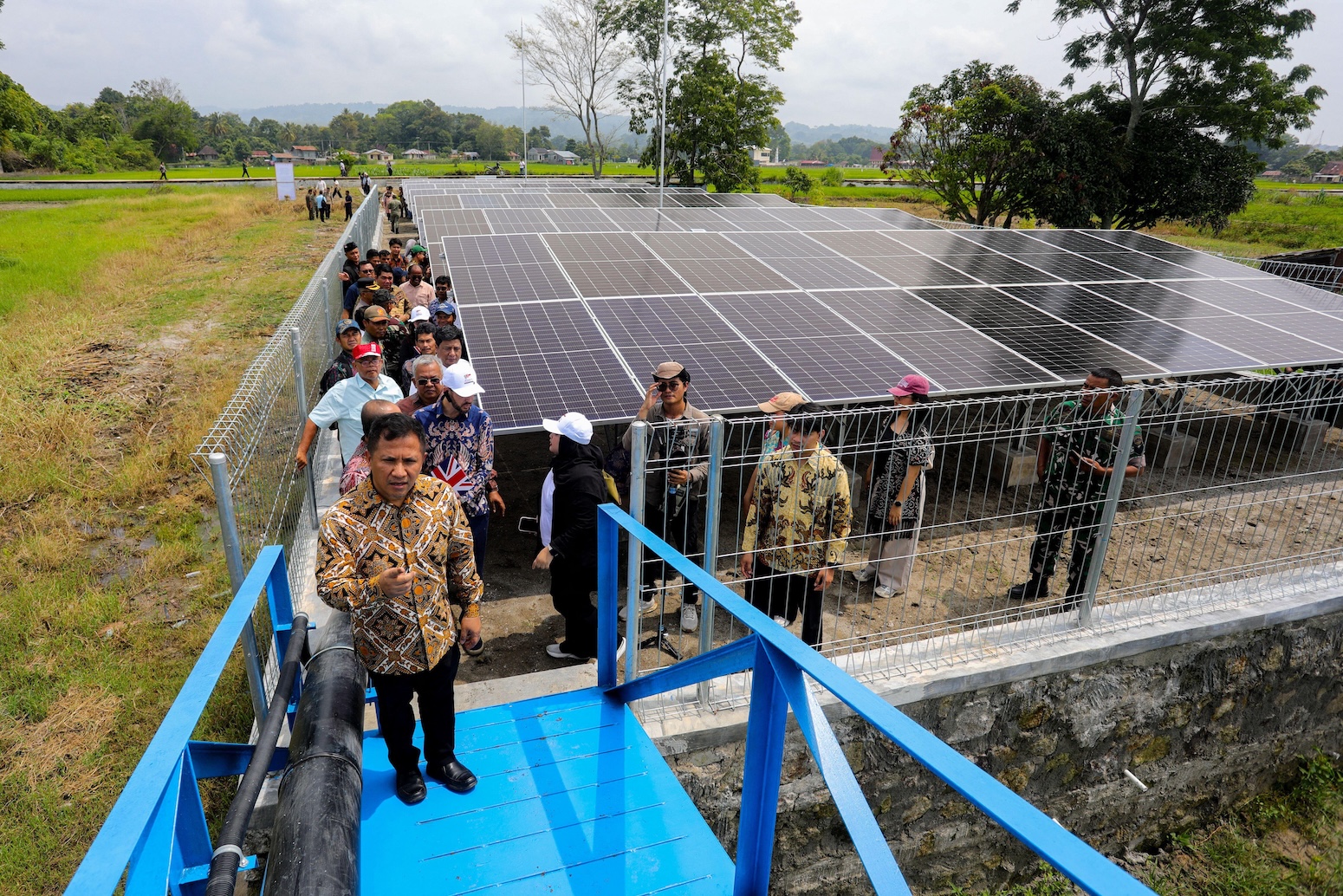
The UK Has Supported Around 500 Climate Projects Since 2021
Between the 2021-22 and 2025-26 financial years, at least 493 projects, international funds, and institutional mechanisms received direct support from the UK’s climate finance allocations. These interventions varied widely in scope, scale, and geographic focus, reflecting the complex realities of assisting nations vulnerable to environmental degradation and economic shifts.
Among the smaller, targeted bilateral interventions, the UK allocated £45m to help Ukraine curb its reliance on fossil fuels amid ongoing geopolitical conflict, £40m in direct cash transfers to vulnerable populations affected by severe drought in Kenya, and £30m dedicated to bolstering flood resilience infrastructure in Nepal.
However, a significant portion of the capital was channeled into large-scale, multi-country initiatives designed to leverage and mobilize private-sector capital. For instance, the UK channeled £198m into a World Bank-backed program aimed at helping nations such as Colombia and Cambodia generate, market, and sell high-integrity carbon offsets. An additional £229m was directed to a specialized development finance group that uses public aid to attract private capital for sustainable infrastructure, resulting in ventures such as a solar farm in Uganda and a sustainable aviation fuel facility in Pakistan.
While these projects illustrate the diverse applications of British funding, the lack of regular, granular public reporting has long frustrated transparency advocates, parliamentarians, and independent watchdogs. Although the government routinely submits aggregate climate-finance figures to the United Nations framework convention on climate change, it typically does so with a multi-year delay and without breaking down expenditures by financial year. This reporting gap has historically made it difficult for independent analysts to accurately track progress toward national targets without relying on freedom-of-information channels.
UK Climate Aid Has Reached Record Levels – But Is Set to Drop
The financial commitments scrutinized in the data stem from a 2019 pledge by the UK government to spend £11.6bn of its foreign aid budget on international climate finance between 2021-22 and 2025-26. This pledge was designed to form the nation’s contribution to a broader, collective global goal among developed economies to mobilize $100bn annually to assist developing nations in reducing emissions and adapting to the accelerating impacts of climate change.
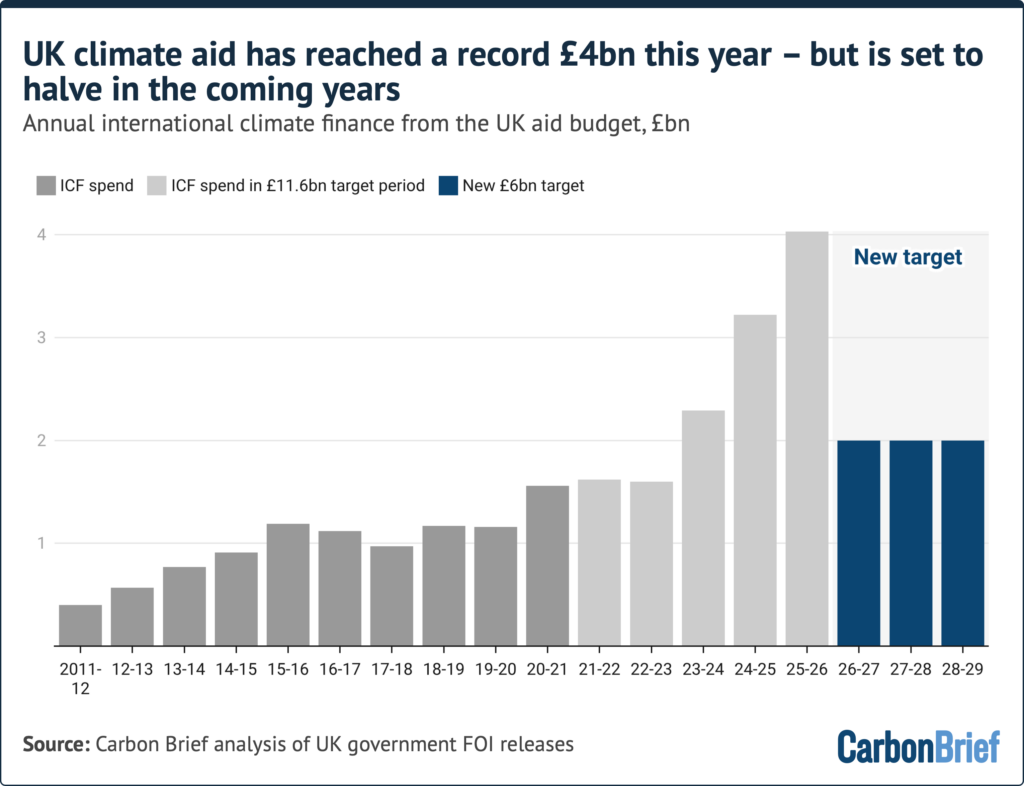
Against the backdrop of broader cuts to the overall UK foreign aid budget—mirrored by similar contractions among other major donor nations like the United States—the climate finance allocation nonetheless surged to a record peak of £4bn in the 2025-26 financial year. Without adjusting for inflation, this represents a tenfold increase compared to 2011-12, when the UK first began tracking and reporting climate-specific aid.
Consequently, the headline five-year target was surpassed, culminating in the total expenditure of £12.8bn. Yet, separate policy analyses have revealed that this financial threshold was met largely because the government reclassified roughly £2.2bn of pre-existing foreign aid expenditures as climate finance, without providing fresh capital injections.
Furthermore, the trajectory of future spending is shifting downward. Rather than establishing a renewed, equivalent five-year target, the Labour government committed in March 2026 to spending approximately £6bn of official aid on climate finance over the succeeding three-year period. This translates to an average of roughly £2bn annually—representing a halving of the peak annual funding achieved in 2025-26. When accounting adjustments, shifting priorities, and inflation are factored into the equation, experts warn that the UK’s long-term international climate contribution is facing a significant contraction.
To supplement the reduced aid-budget allocation, the government has announced plans to invest an additional £6.7bn from outside the traditional aid budget through private investments, export credits, and development bank guarantees intended to drive positive climate and nature outcomes. While the UK has historically deployed such financial instruments, they have not previously been counted directly toward meeting official international climate-finance targets.
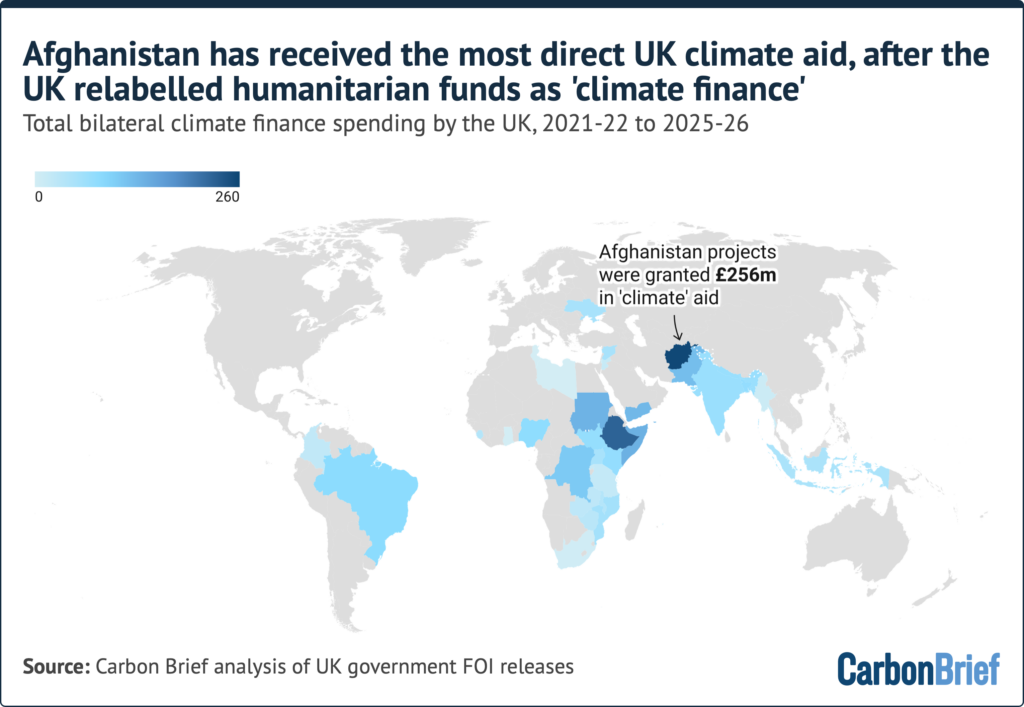
Afghanistan Received More Bilateral Climate Aid Than Any Other Country
The mechanics of how these funds are distributed reveal a strong preference for multilateral channels. More than 80% of the UK’s climate finance since 2021 has been distributed multilaterally, supporting broad global funds or institutions operating across entire regions rather than individual countries.
For the roughly 17% of funds (£2.1bn) distributed bilaterally—where the UK directly finances projects within a specific sovereign nation—the vast majority of resources targeted least-developed countries across East Africa and South Asia. For years, Ethiopia remained the leading recipient of bilateral climate aid, sustained by long-standing ecosystem restoration and drought resilience projects.
However, over the course of the £11.6bn spending period, Afghanistan surpassed Ethiopia, receiving £256m in aid labeled as climate-related, compared to Ethiopia’s £226m. Because the UK does not disburse funds through the Taliban administration, this money was channeled securely via international partners, including various United Nations agencies.
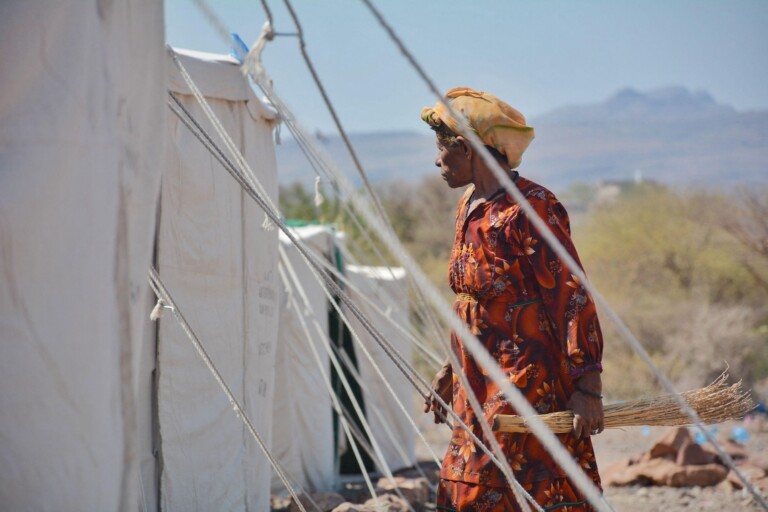
Despite Afghanistan facing severe humanitarian crises, flooding, and acute electricity shortages, the surge in climate-labeled aid was not driven by the launch of new, specialized environmental projects. Instead, the increase was the mathematical byproduct of an accounting change that automatically reclassified 30% of all humanitarian aid delivered to war-torn and climate-vulnerable countries as climate finance. This administrative shift similarly elevated other conflict-affected nations among the top recipients of climate aid, including Somalia at £139m, Sudan at £136m, and Yemen at £130m.
Where substantial sums of climate finance were directed toward middle-income nations, the primary objective shifted from direct humanitarian relief to mobilizing private-sector investment. Prominent examples include £83m allocated to support Brazil’s Amazon Fund and £43m committed to boosting low-carbon infrastructure investments in India.
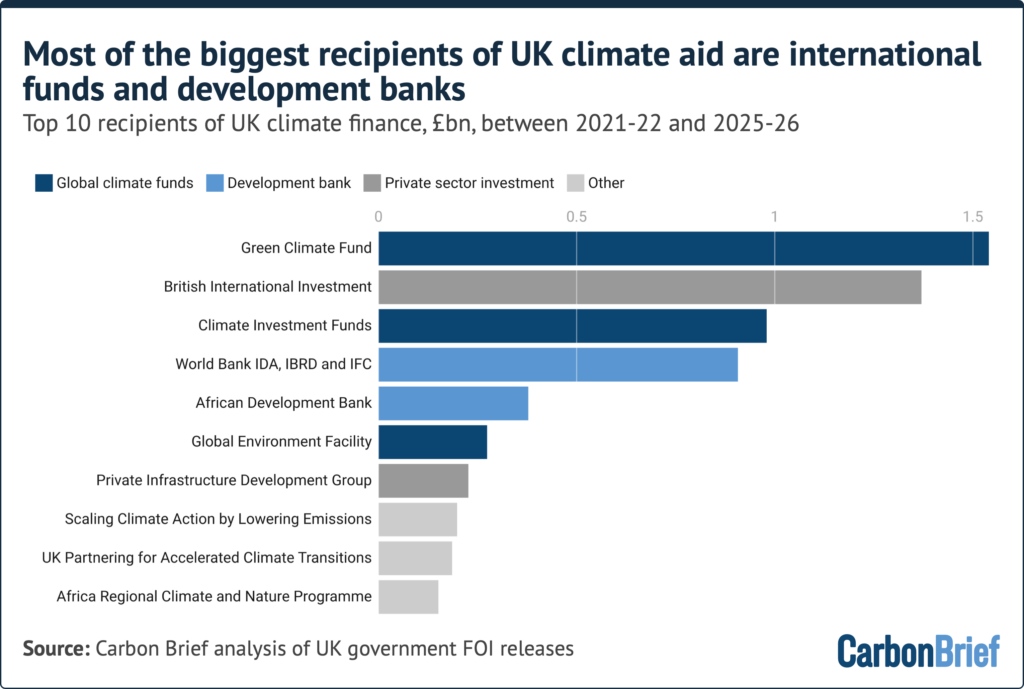
Development Banks and Private-Sector Funders Are Among the Biggest Beneficiaries
Institutional architecture dictates the flow of the largest tranches of British climate finance. International climate funds and multilateral development banks absorbed the bulk of the expenditures, acting as intermediaries to deploy projects on the ground.

Even following reductions in its funding allocations for the 2024-27 replenishment cycle, the UK provided £1.5bn to the Green Climate Fund, the flagship multilateral mechanism established under the UN climate convention. Meanwhile, British International Investment (BII)—a publicly owned, for-profit corporate entity that invests in developing-country businesses using partial aid funding—received nearly £1.4bn. Increased reliance on BII has helped the government meet its climate-spending targets, aligning with the institution’s strategic pivot toward clean-energy investments and away from legacy fossil fuel portfolios.
Multilateral development banks, including various operational arms of the World Bank group and the African Development Bank, also absorbed substantial portions of the funding. This reflects a deliberate policy decision by the UK to count core institutional contributions to these global financial bodies as eligible climate finance. These accounting practices, which elevate the role of development banks and corporate investment arms in climate accounting, have faced sustained scrutiny and criticism from independent aid watchdogs, parliamentary committees, and policy experts concerned about transparency and the precise additionality of climate funds.
The underlying data compiled for these findings was secured across multiple government departments, with the Foreign, Commonwealth and Development Office responsible for approximately three-quarters of the total climate aid budget. Additional contributions originated from the Department for Energy Security and Net Zero, the Department for Environment, Food and Rural Affairs, and the Department for Business, Innovation, Science and Trade. Because government departments routinely update and refine their internal financial tracking, these figures remain subject to future administrative revisions.