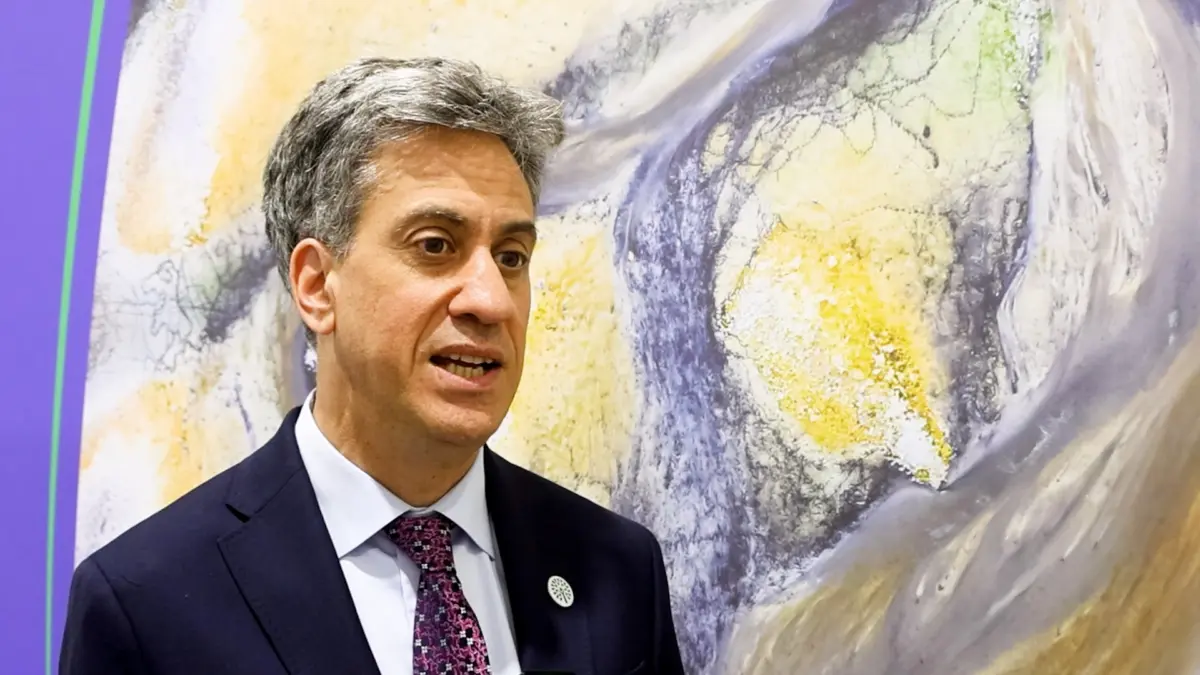
Speaking at the COP31 climate summit in Antalya, Turkey, UK Foreign Secretary and veteran climate negotiator Ed Miliband sat down for an exclusive interview with Carbon Brief to address a wide range of reader-submitted questions. Ranging from domestic policy controversies and international climate finance to the viability of the overarching COP process itself, Miliband defended the United Kingdom’s environmental record while outlining the government’s strategic priorities on the global stage.
The discussion, conducted by Dr. Simon Evans on 12 November 2026, captured a pivotal moment for British climate diplomacy. Carbon Brief readers had submitted inquiries via the CB Connect platform, focusing heavily on whether the UK can genuinely claim "climate leadership" amidst contentious domestic decisions, the implementation of vital electrification targets, and the future of global roadmaps designed to transition away from fossil fuels and halt deforestation.
Defending UK Climate Leadership Amid Domestic Controversies
The interview opened with a pointed question regarding the UK’s standing as an international climate leader. Specifically, Carbon Brief pressed Miliband on how the government’s recent approval of the Jackdaw gas field and rumoured rollbacks on electric vehicle (EV) targets might undermine its moral authority abroad.
Miliband forcefully pushed back against the premise, arguing that international observers view the UK through the lens of its overarching trajectory rather than isolated policy friction. He pointed to the government’s "Clean Power 2030" target as a world-leading initiative, alongside the country’s nationally determined contributions (NDCs) which he described as among the most ambitious net-zero targets of any nation globally. Furthermore, he noted that the administration is actively legislating against new oil and gas licenses.
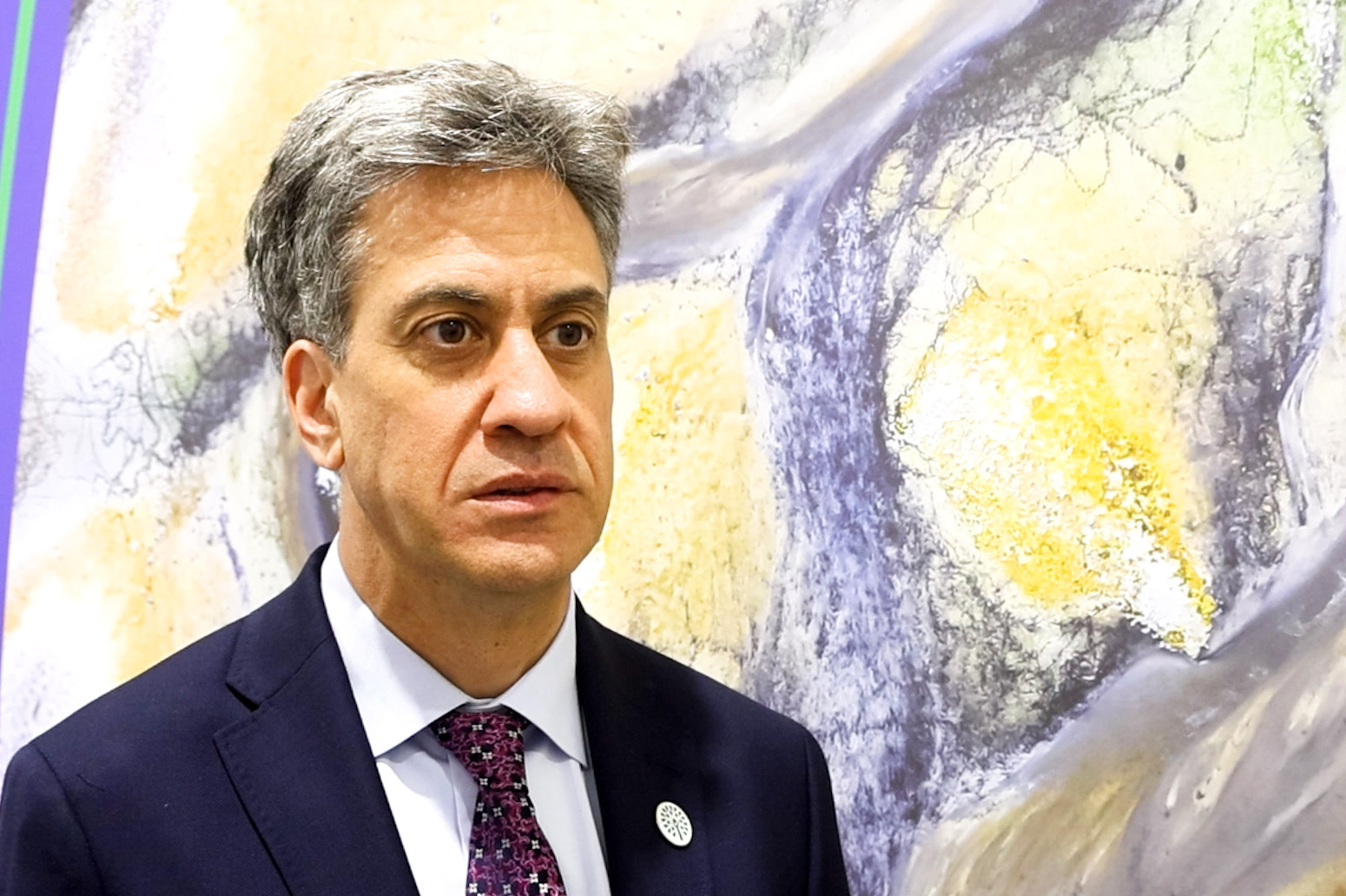
Beyond traditional environmental arguments, Miliband introduced a broader geopolitical framework to anchor his defence: national security. He asserted that a serious approach to national security is inherently intertwined with serious climate action, warning that governments failing to address climate change are neglecting their foundational security duties in an increasingly volatile world. Looking ahead, Miliband suggested that international partners are already anticipating the UK’s upcoming presidency of the G20 in 2027, where climate resilience and debt development will take centre stage.
When questioned about whether the UK remains confident in meeting its 2030 NDC target—which aims to slash emissions by 68% below 1990 levels—Miliband was unequivocal. He stated that the government would "go all out" to meet the goal, acknowledging that while the target is stretching and the administration inherited a challenging baseline from the previous government in 2024, the fundamental purpose of an NDC is to drive relentless ambition.
Addressing Fiscal Pressures and Multilateral Development Bank Reform
With developed nations across the globe facing tight fiscal constraints, Carbon Brief raised a critical challenge regarding how the UK and its economic peers can ensure that developing countries receive the necessary financial and technical support.
Miliband acknowledged the very real fiscal pressures facing developed economies, including Britain, but insisted that these constraints do not preclude meaningful international impact. The primary vehicle for addressing this funding gap, according to the Foreign Secretary, lies in reforming multilateral development banks (MDBs). Miliband argued that MDBs can do significantly more to leverage their existing balance sheets—potentially unlocking hundreds of billions of dollars or pounds to assist developing nations with climate resilience and debt relief.
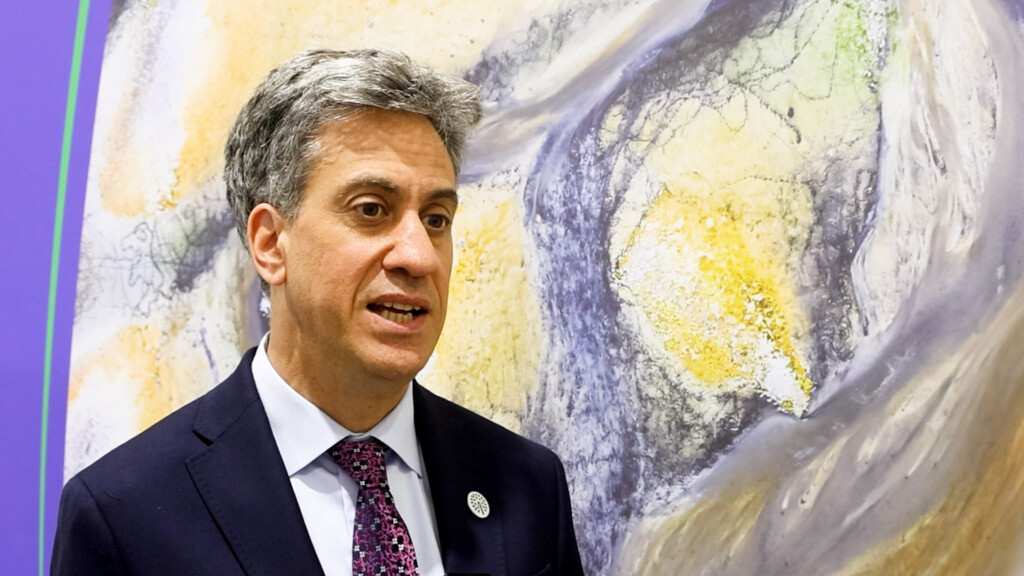
Highlighting his recent discussions at the World Bank annual meetings, Miliband noted that the UK plans to use its upcoming G20 presidency to convene these financial institutions. The goal will be to highlight best practices from top-performing banks and push lagging institutions to scale up their support, proving that international climate leadership can be exercised effectively even amid domestic budgetary tightness.
The Future of the COP Institution and "Coalitions of the Willing"
As cynicism grows in some circles over whether the annual UN climate summits have run their course—with critics suggesting that attention should pivot entirely toward smaller, agile mini-coalitions of middle powers—Miliband offered a robust defence of the COP framework.
Distinguishing between the bureaucratic process and the institution itself, Miliband declared himself "quite pro the institution of the COP." He reflected on the historical sweep of climate negotiations, recalling the acrimonious 2009 Copenhagen summit when the world was tracking toward a catastrophic 4C warming trajectory. By contrast, he noted that recent United Nations Environment Programme emissions gap reports indicate the world is now tracking closer to 2.5C or 2.6C of warming. While conceding that 2.6C remains dangerously high and demands vastly more ambition, he credited multilateralism and the COP institution with driving essential global progress.
At the same time, Miliband pointed out that the COP serves as the vital ecosystem where "coalitions of the willing" are formed and energized. During his time in Antalya, he participated in focused events addressing forest protection under the Forest Leaders’ Partnership, green industrial policy, methane reduction, and climate security. These summits, he argued, are far from mere talking shops; they are practical marketplaces where nations forge actionable alliances to tackle specific economic and environmental vectors.
Embracing the Electrification Pledge and the Fossil-Fuel Rollercoaster
A major focal point of COP31 has been the "35×35" electrification pledge spearheaded by the Turkish presidency, which aims to accelerate clean energy adoption globally. When asked if the UK had signed onto the initiative, Miliband expressed strong verbal support, calling electrification the fundamental pathway to escaping the volatile "fossil-fuel rollercoaster."
Miliband connected the necessity of clean energy directly to recent global conflicts, including Russia’s invasion of Ukraine and the war involving Iran. He argued that true energy security can never be built on fossil fuels, noting that even massive producers like the United States are vulnerable to price shocks, while fossil-fuel-importing nations—representing 75% of the global population, including the UK—remain helpless price takers whose cost of living is battered by volatile energy markets.
(Note: Just three hours after Carbon Brief’s interview concluded, the UK government officially confirmed its endorsement of the 35×35 electrification pledge.)
Public Information, Climate Misinformation, and Brazilian Roadmaps
Turning to the domestic implementation of international agreements, Carbon Brief questioned why the UK lacks a comprehensive national programme for climate education, training, and public awareness—obligations enshrined in both the UN climate convention and the Paris Agreement—especially in an era inundated with climate misinformation.
Miliband conceded that the government must do more on public information. He highlighted incremental steps taken by his administration, such as the introduction of the first annual climate and nature statement in 2025, which was subsequently repeated by Environment Secretary Mary Creagh in the House of Commons. However, he admitted that communication efforts must expand to not only inform citizens about the grim realities of climate change and nature loss but also to present concrete solutions, framing the narrative around honesty and hope rather than despair.
Finally, addressing the Brazil-led roadmaps focused on transitioning away from fossil fuels and halting deforestation, Miliband praised the Brazilian government for producing such rigorous frameworks. He addressed the diplomatic reality that consensus-based UN negotiations inevitably face obstruction from a subset of fossil-fuel-producing nations, meaning these roadmaps may not universally secure formal adoption within the central COP text. Nevertheless, Miliband argued that the existence of a coalition of 80 or more willing countries provides a powerful enough bloc to drive the agenda forward independently.
Concluding the interview, Miliband summarized his overarching objective for COP31: tangible action in the real economy. Whether through securing methane reduction commitments on the official agenda or demonstrating the unbreakable global commitment of more than 190 nations reaffirming the Paris Agreement, Miliband emphasized that the true measure of success lies in collective momentum and real-world results brought back home to the UK.