Carbon dioxide emissions originating from fossil fuels and cement production are projected to experience a slight decline of approximately 0.4% in 2026, bringing total emissions down to 38.2 billion tonnes of CO2. According to newly released figures from the Global Carbon Project, this anticipated downward tick marks a rare moment of respite in the decades-long upward trajectory of global greenhouse gas outputs.
However, this minor reduction does not yet signal a permanent turning point for the global climate. The 21st edition of the annual global carbon budget report indicates that the small decline is predominantly the result of a 1.9% drop in emissions derived from oil. This oil-specific reduction was heavily influenced by a broader energy shock triggered by the conflict involving Iran and the subsequent closure of the vital shipping lane through the Strait of Hormuz. Meanwhile, emissions generated from coal combustion continue to register slight increases globally.

Because these projections for fossil fuel and cement emissions are preliminary, the Global Carbon Project notes that the final tally could span anywhere from a 1.5% decrease to a 0.6% increase. Consequently, a small net rise in emissions for the year cannot be completely ruled out until definitive end-of-year data is processed.
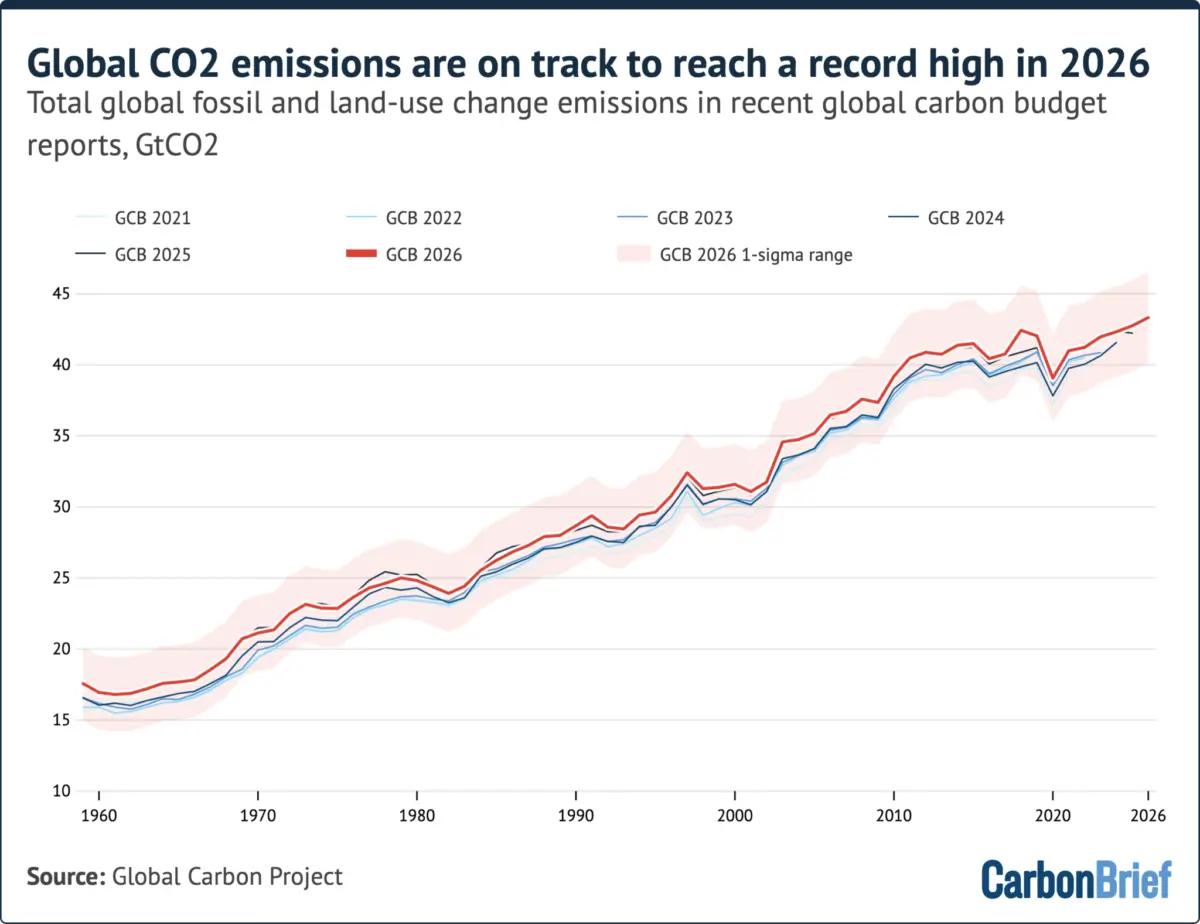
At the same time, emissions stemming from land-use changes, such as widespread deforestation and forest degradation, are projected to climb in 2026. This increase is primarily driven by peat fires and forest degradation across south-east Asia, phenomena closely tied to the development of a powerful El Niño event this year. As a result of these combined factors, total global CO2 emissions—incorporating both fossil sources and land-use changes—are projected to reach a record high of 43.3 billion tonnes of CO2 in 2026, edging marginally above the 42.8 billion tonnes recorded in 2025.
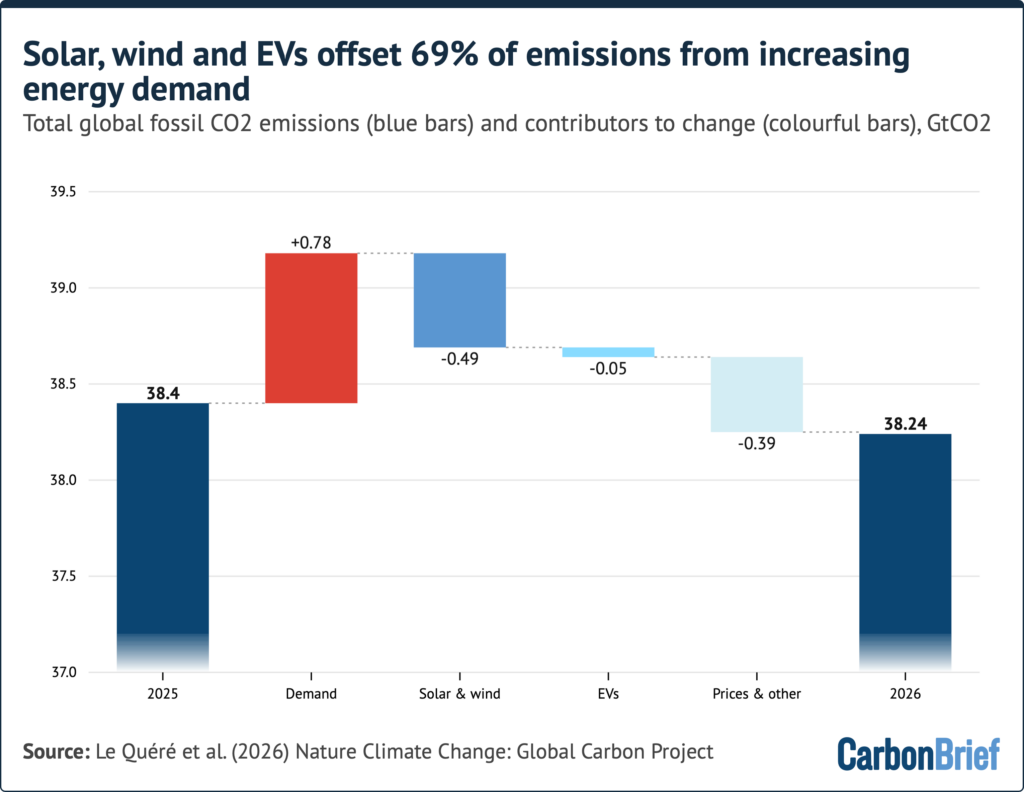
Parallel research published in Nature Climate Change by the same scientific team reveals that the rapid global expansion of solar power, wind energy, and electric vehicles now successfully offsets roughly two-thirds of the emissions that would otherwise materialize from rising global energy demand. Despite this substantial mitigation effect, the current scale of clean technology deployment remains insufficient to drive global emissions into a sustained, long-term decline.
Total Emissions Edge Up as Land-Use Pressures Mount
Combining fossil fuels and land-use change, total global CO2 emissions are on track to hit an unprecedented high of 43.3 billion tonnes of CO2 in 2026. The entire net increase for the year stems from projected rises in land-use emissions, which inherently carry a higher degree of measurement uncertainty than fossil-based figures. Had land-use emissions remained strictly at their 2025 levels, overall global emissions would have registered a slight decline down to approximately 42.6 billion tonnes.
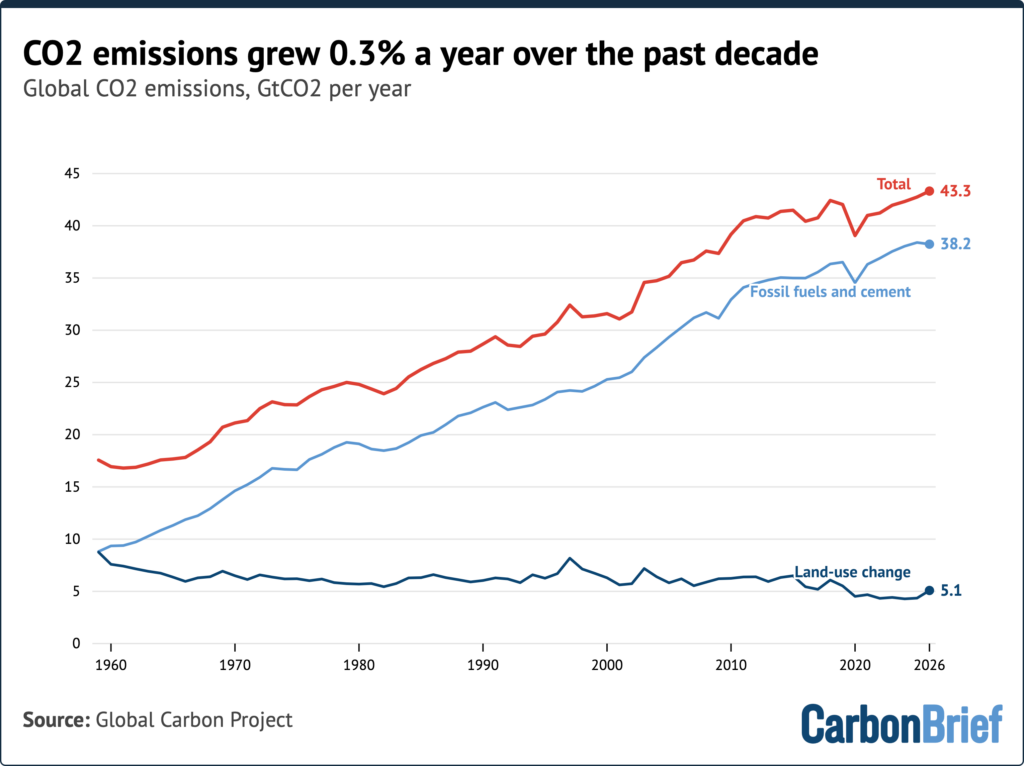
Each successive edition of the global carbon budget updates historical records as fresh data and refined methodologies become available. Historical fossil emissions estimates have been adjusted upward by roughly 0.3 billion tonnes per year compared to previous reports. This adjustment is largely driven by updated findings regarding the "cement carbonation" sink, which indicate that aging cement structures slowly reabsorb less atmospheric carbon over their lifespans than scientists previously estimated. Similarly, land-use calculations have undergone revisions, including a notable upward adjustment in 2018 figures due to updated cropland data originating from Colombia.
These updated long-term numbers demonstrate that total global emissions have grown at an average rate of just 0.3% per year over the past decade spanning from 2016 to 2025. This represents a significant deceleration when compared to the 1.7% annual growth rate recorded between 2006 and 2015. Fossil emissions grew by about 0.9% annually over the past decade, down from 1.9% in the preceding ten-year block, while land-use emissions experienced a general decline.
Despite this deceleration, a mere plateau in emissions falls far short of the rapid, steep reductions required to achieve net-zero targets and stabilize global temperatures. With human-caused warming having reached 1.37 degrees Celsius above pre-industrial levels by 2025, researchers estimate that the remaining carbon budget to limit warming to 1.5 degrees Celsius with a 50% probability stands at just 150 billion tonnes of CO2 as of early 2027. This remaining allowance represents less than four years of total emissions at 2026 levels. By contrast, the carbon budgets for limiting warming to 1.7 degrees and 2.0 degrees Celsius stand at 510 billion tonnes and 1,035 billion tonnes, respectively, equating to roughly 12 and 24 years of current emissions.
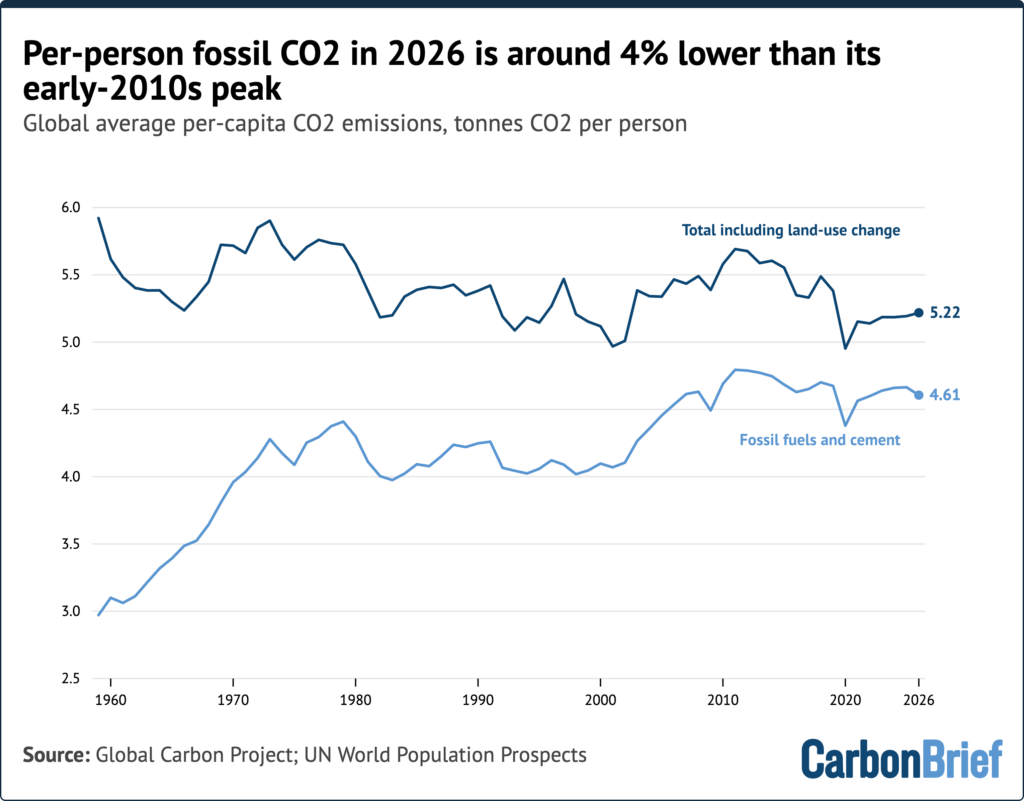
Over the past decade, fossil emissions accounted for approximately 88% of total global CO2 output, with land-use changes making up the remaining 12%. This proportion represents a dramatic shift from the early 20th century, when land-use emissions vastly outweighed those generated by fossil fuels. Furthermore, global per-capita fossil emissions peaked in the early 2010s and have since experienced a modest decline. Sitting at approximately 4.6 tonnes per person in 2026, per-capita emissions remain about 4% below their historical peak, though this global average masks stark disparities between industrialized and developing nations, such as a per-capita output of 2.2 tonnes in India compared to 14.5 tonnes in the United States.
Land-Use Emissions Rise Amid Regional Pressures
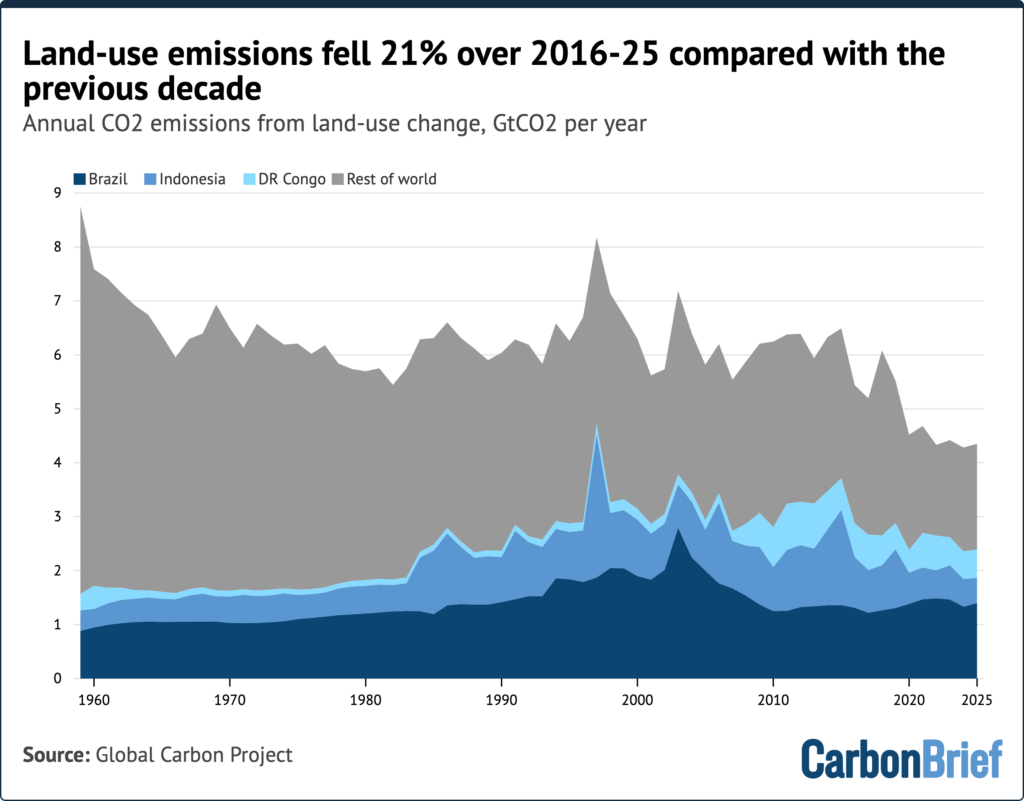
Land-use emissions encompass activities such as deforestation, forest degradation, wood harvesting, peatland drainage, and agricultural fires, which are partially counterbalanced by natural forest regrowth and afforestation initiatives. Net land-use emissions averaged 4.9 billion tonnes annually between 2016 and 2025, marking a 21% decrease from the 6.2 billion tonnes per year recorded in the previous decade. This downward trend is consistently captured across all primary bookkeeping models utilized by the Global Carbon Project.
For 2026, however, net land-use emissions are projected to rebound to 5.1 billion tonnes, up from 4.4 billion tonnes in 2025. The report links this uptick primarily to human-ignited peat fires and accelerated forest degradation in south-east Asia, where unusually dry conditions fostered by the ongoing El Niño cycle have severely degraded forest resilience.
Geographically, Brazil, the Democratic Republic of the Congo, and Indonesia collectively accounted for 2.6 billion tonnes of land-use emissions annually between 2015 and 2025, representing roughly 54% of the global total. While tracking these land-based sources remains inherently more challenging than monitoring fossil fuel supply chains, the projected 2026 increase remains close to the average levels observed over the past ten years.
Fossil Emissions Fall Across Most Major Economies
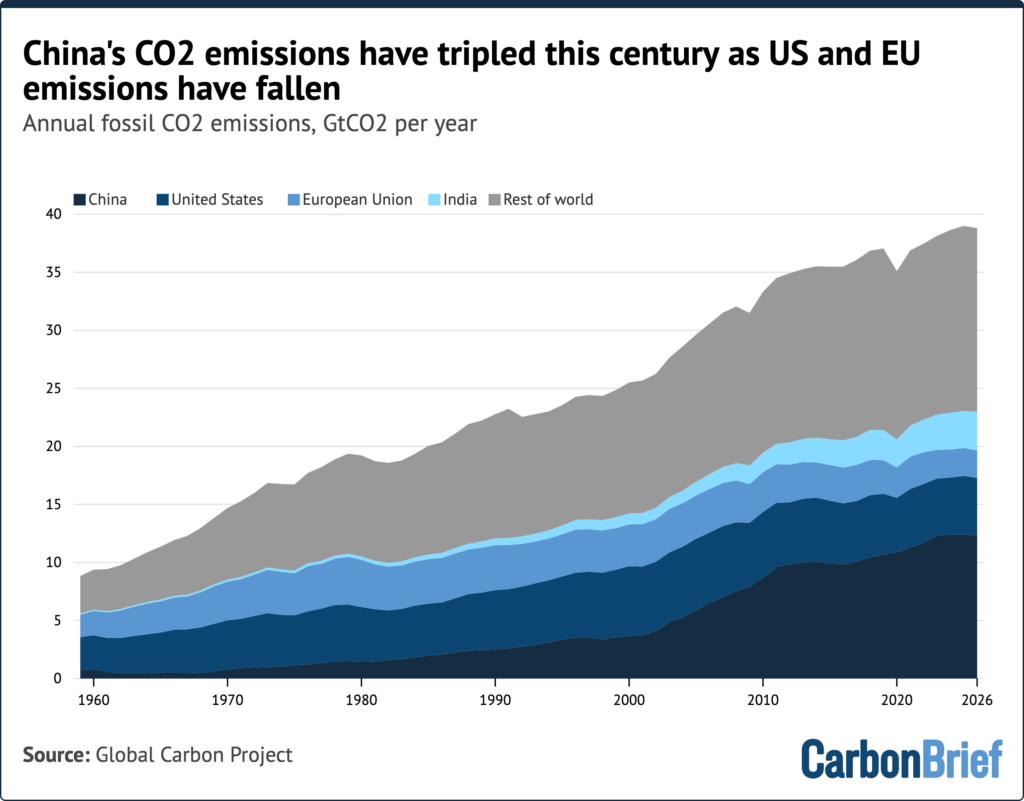
Global fossil CO2 emissions are projected to drop by approximately 0.4% in 2026, though analytical uncertainties leave a projected range running from a 1.5% decrease to a 0.6% increase. Major economies display divergent trends for the year.
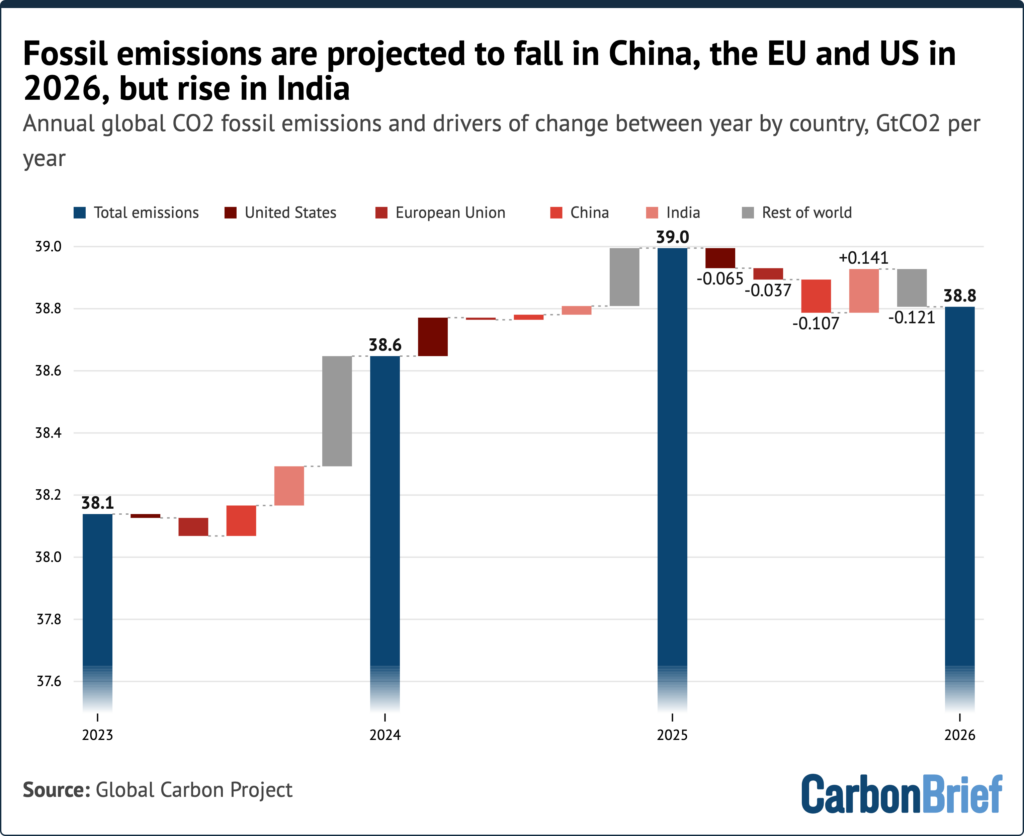
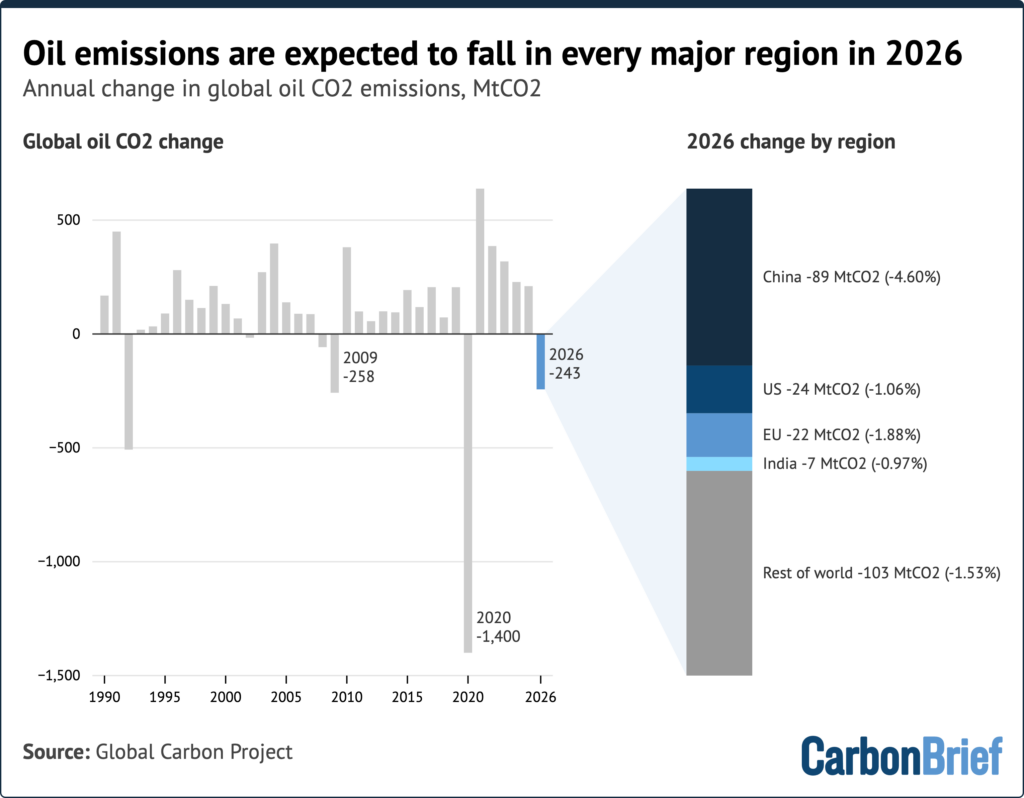
In China, which accounts for 32% of global fossil emissions, outputs are projected to fall by 0.9% following two years of relatively sluggish growth. Sharp reductions of 4.6% in oil consumption and 0.9% in gas use, alongside a marginal 0.3% increase in coal, drove this trend. These figures were influenced by robust expansion in renewable energy capacity and milder summer temperatures compared to the record-breaking heatwaves of 2025, which lowered cooling-related electricity demand.
The United States, responsible for 13% of global emissions, is projected to see a 1.3% decline. This drop is largely anchored by a 6.7% reduction in coal emissions, which follows an anomalous spike in 2025 driven by high natural gas prices and cold winter weather. U.S. oil consumption fell by 1.1%, while gas usage rose by 0.5%.
India, accounting for 8% of global emissions, is projected to experience a 4.4% increase, outpacing its ten-year average growth rate of 3.5%. This rise is driven by a 5.9% increase in coal emissions, which was only slightly offset by a 0.9% dip in oil usage. Meanwhile, the European Union, representing 6% of global emissions, is on track for a 1.5% decline, with both coal and oil consumption dropping by 2.9% and 1.8%, respectively. Japan anticipates a 1.0% reduction driven by ongoing transport electrification, an aging population, and the phased restart of nuclear power infrastructure. International aviation and shipping emissions are each projected to decline by 1%, influenced partly by reduced commercial traffic in the Middle East.
Crucially, the global transition demonstrates that economic growth and emissions reductions are increasingly decoupled. The report highlights that 40 countries, representing 26% of global fossil emissions, successfully lowered their carbon outputs while expanding their economies between 2016 and 2025, an increase from 22 countries during the prior decade.
Oil Emissions Decline as Coal Outputs Remain Resilient
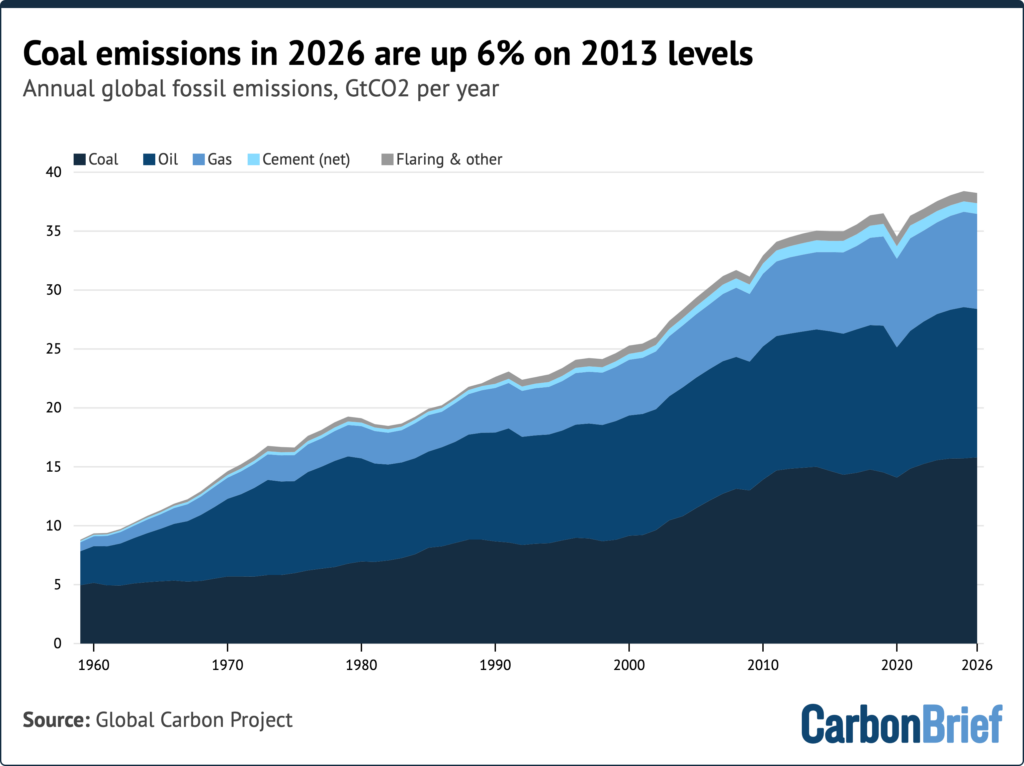
Coal accounts for approximately 41% of global fossil CO2 emissions in 2026, with oil making up 33%, gas 21%, and cement accounting for the remaining 2% after accounting for carbonation sinks. Oil serves as the primary catalyst for the overall global decline in fossil emissions for 2026, with consumption projected to fall by 1.9%, or 243 million tonnes of CO2.
Historically, annual drops of this magnitude are rare, with comparable declines occurring only during major global disruptions such as the 2020 COVID-19 pandemic lockdowns, the 2009 global financial crisis, and the dissolution of the Soviet Union in 1992. The global carbon budget attributes the bulk of the 2026 oil contraction to elevated fuel prices and supply constraints resulting from the closure of the Strait of Hormuz. Retail petrol and diesel prices across major markets surged significantly compared to the previous year. Parallel analyses indicate that the ongoing expansion of electric vehicles accounted for approximately one-fifth of the total reduction in oil-derived emissions.
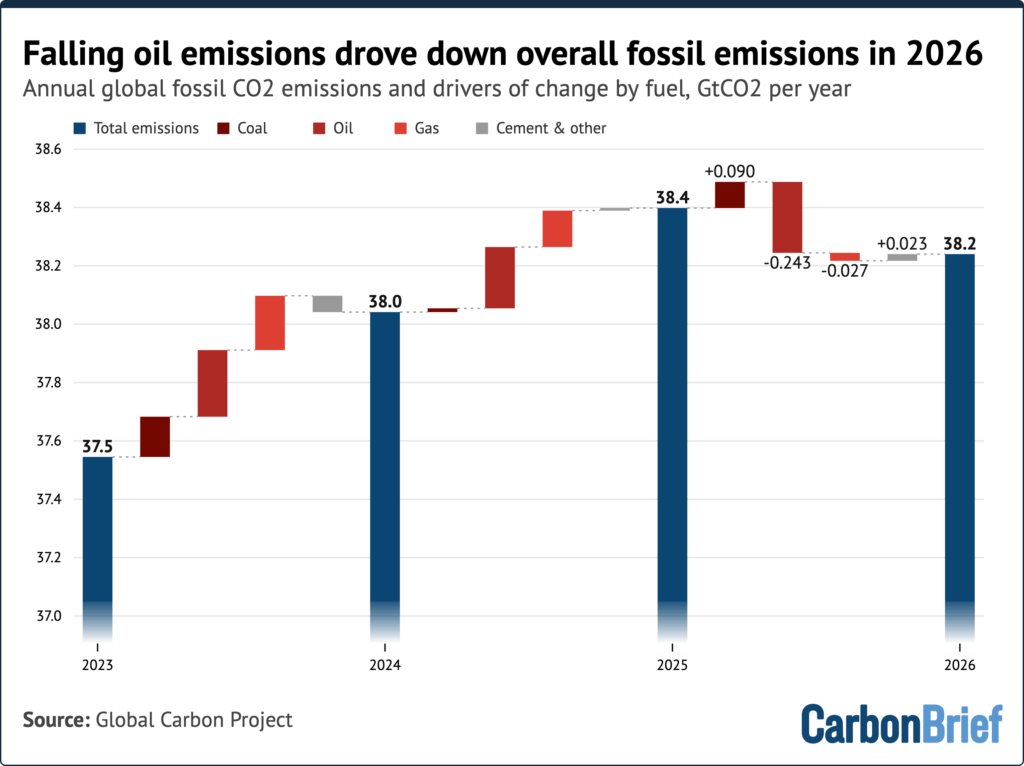
By contrast, global coal emissions are projected to rise by 0.6%, as substantial increases in India compensate for sharp contractions in the United States and the European Union. Natural gas emissions are projected to fall by 0.3%, effectively remaining flat. Although coal emissions expanded rapidly during the 2000s at roughly 4% annually, growth has flattened considerably since 2013, leaving 2026 coal emissions only about 6% higher than their 2013 levels.
Natural Sinks Absorb Half of Human Emissions
The global carbon budget framework evaluates both anthropogenic emissions sources and the natural carbon sinks that absorb them: the oceans, the terrestrial biosphere, and the atmosphere. Between 2016 and 2025, the world’s oceans absorbed approximately 27% of total emissions, equivalent to 11.1 billion tonnes per year, while land ecosystems captured roughly 22%, or 9.2 billion tonnes annually. The remaining 48% accumulated directly in the atmosphere.
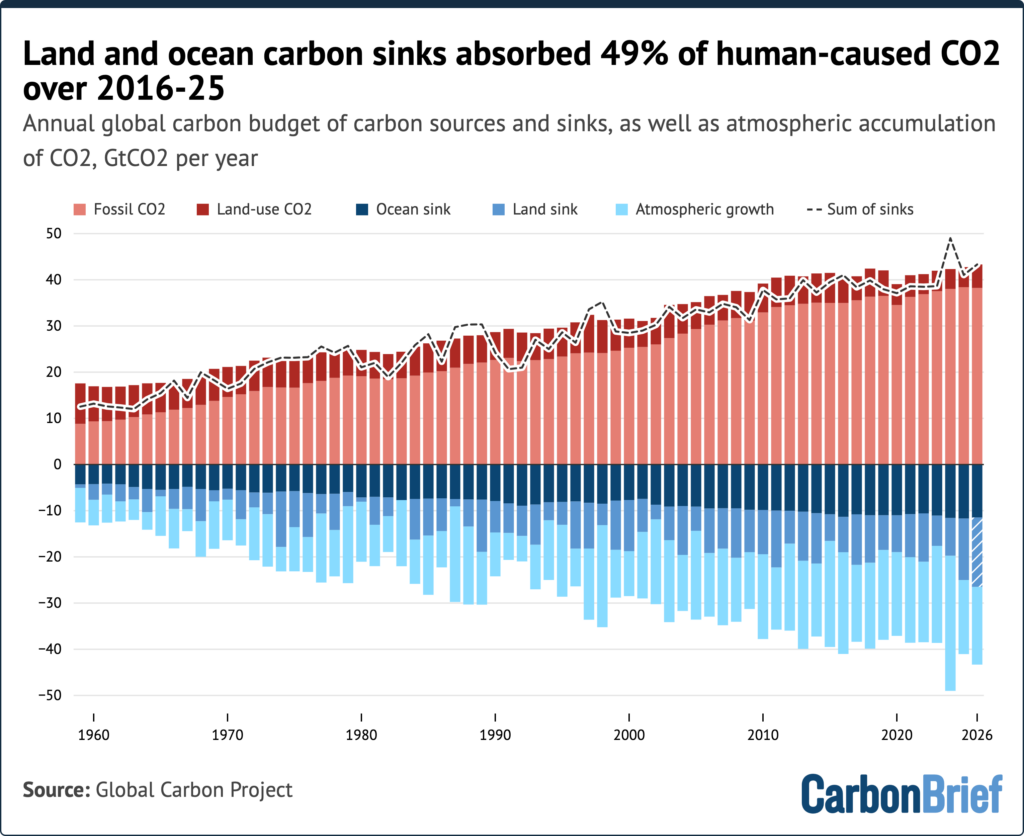
The Global Carbon Project estimates that the terrestrial land sink reached an all-time high in 2025, absorbing roughly 13.3 billion tonnes of CO2—about 50% larger than the sink capacity recorded in 2024. This surge reflected a robust ecological recovery across tropical forests following the suppression caused by the 2023–2024 El Niño event, alongside the gradual fertilization effect of rising atmospheric carbon concentrations.
While natural carbon sinks continue to capture nearly half of all human-generated emissions, ongoing climate change is gradually degrading their absorption capacity. Researchers estimate that land and ocean sinks were 19% and 8% smaller, respectively, over the 2016–2025 decade than they would have been in the absence of climate change and natural climatic variability. Atmospheric carbon dioxide concentrations are projected to increase by 2.2 parts per million in 2026, bringing global average concentrations to approximately 427.7 parts per million—roughly 54% above pre-industrial levels.
Clean Energy Deployment and Future Trajectories
While the projected 2026 dip in fossil emissions is a positive development, researchers emphasize that it does not yet represent a definitive structural peak in global carbon outputs. Counterfactual modeling published alongside the budget report indicates that without the rapid scaling of solar, wind, and electric vehicles—which offset an estimated 0.54 billion tonnes of potential emissions growth in 2026 alone—global fossil emissions would have continued to rise.
The authors conclude that the 2026 downturn is primarily a short-term response to energy market shocks and high oil prices rather than an immediate consequence of the clean energy transition. However, they note that if the current acceleration in clean technology deployment is sustained and reinforced over the coming years, a permanent peak and subsequent decline in global carbon emissions could materialize within the decade. Achieving that milestone remains only the first step toward the steep, sustained reductions required to prevent severe long-term climate warming.