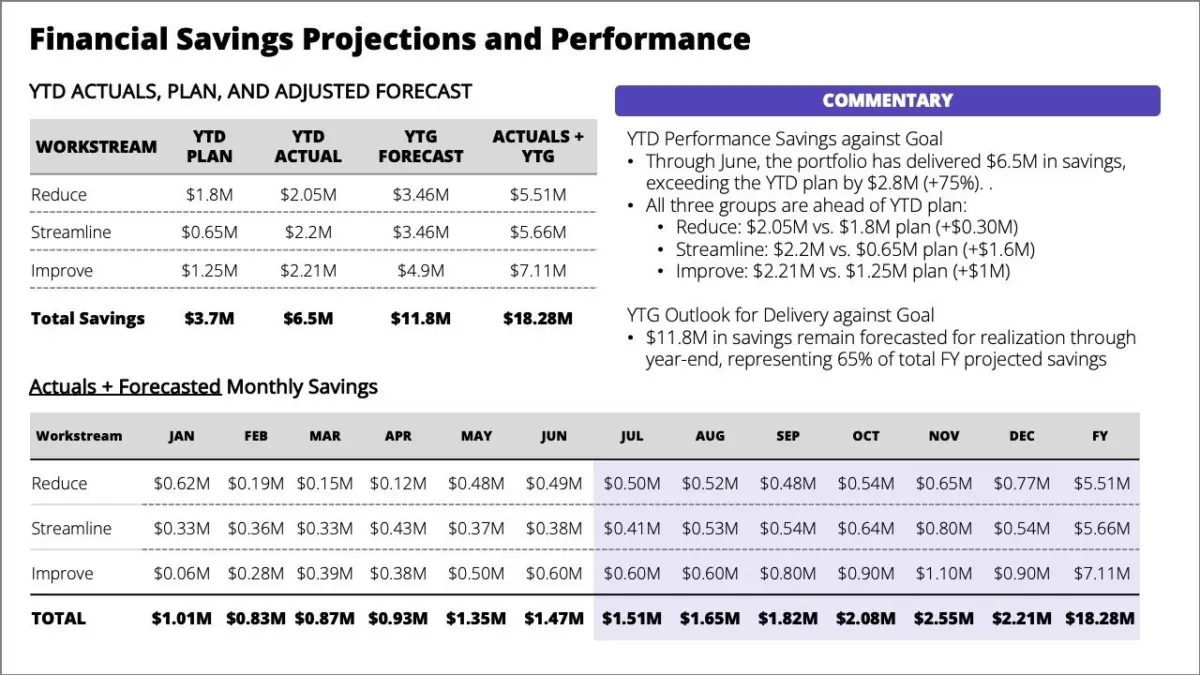
According to workplace communication experts, a strong pre-read document should ideally help leaders arrive at a meeting fully informed and ready to engage in meaningful dialogue. Instead, many traditional corporate decks leave executives scanning through cluttered tables and dense paragraphs just moments before a critical discussion begins. This friction-heavy approach carries over directly into live meeting settings, where busy visual layouts and excessive bulleted text force audiences to split their attention awkwardly between reading the screen and listening to the speaker. Even when attendees have thoroughly reviewed the materials in advance, they inevitably spend valuable meeting time hunting for specific details while the presentation is underway, completely missing the opportunity to genuinely engage with the overarching message.
Communication professionals emphasize that a live delivery is infinitely more effective when audience attention is deliberately guided by revealing one clear idea at a time, rather than dumping an entire data landscape onto the screen all at once.
Start with the purpose
To solve this widespread presentation challenge, experts argue that being specific about the operational situation helps dramatically improve visual and narrative design. Presenters are urged to ask fundamental questions about what a specific slide actually needs to achieve, who will be using it, and in what precise setting it will be deployed. Once those operational parameters are firmly determined, it becomes significantly easier to shape a compelling corporate story and choose the right format for the message.
This analytical approach was recently underscored in a corporate messaging review involving a client struggling to communicate a complex performance update. The overall message the client originally wanted to convey was that, while the organization’s year-to-date performance remained ahead of plan, a substantial amount of work still needed to be accomplished to successfully achieve the final forecast. The primary operational action required by the leadership team was to reiterate core strategic priorities to ensure that everyone remained rigorously focused on three distinct workstreams, while simultaneously establishing a clear mechanism to quickly escalate any operational blockers that threatened projected cost savings.
Articulating this fundamental goal before designing any visuals helps organizers determine what information stays, what gets discarded, and how to structure the narrative to fit each unique situation.
When evaluating these communication challenges, workplace strategists suggest considering live delivery scenarios first. When presenting information in person, a speaker does not need to cram every single operational detail onto a single, overwhelming view because the presenter ultimately controls the pacing of the room. Instead of showing everything at once, communicators can break complex content down into a logical sequence where each individual slide supports one specific, digestible point.
Demonstrating this philosophy in professional settings involves examining how a team might progress through a dense set of performance metrics for a live audience. Rather than confronting executives with an exhaustive wall of figures and bullet points, a well-paced presentation transitions the audience smoothly through the current financial reality, the remaining operational hurdles, the specific workstreams requiring attention, and the immediate escalation pathways for project blockers. By pacing the delivery this way, the presenter retains absolute command of the room, ensuring that leaders absorb the critical strategic takeaways without getting lost in the administrative weeds of the underlying data.