The experience has become a familiar rite of passage for many developers and technology enthusiasts. An evening is spent poring over online roundups detailing the "best local large language models," a consensus name is settled upon, and the file is downloaded to personal hardware. The model is then deployed to tackle an immediate task, perhaps refactoring a complex Python script. Yet, the output feels stubbornly mediocre. It is not necessarily broken or entirely dysfunctional, but rather unimpressive in the precise way a generalist tool often falls short of a specialist’s demands. The model itself was never inherently bad; it simply was never designed to be a coding engine, and the glowing roundup that recommended it failed to make that distinction clear.
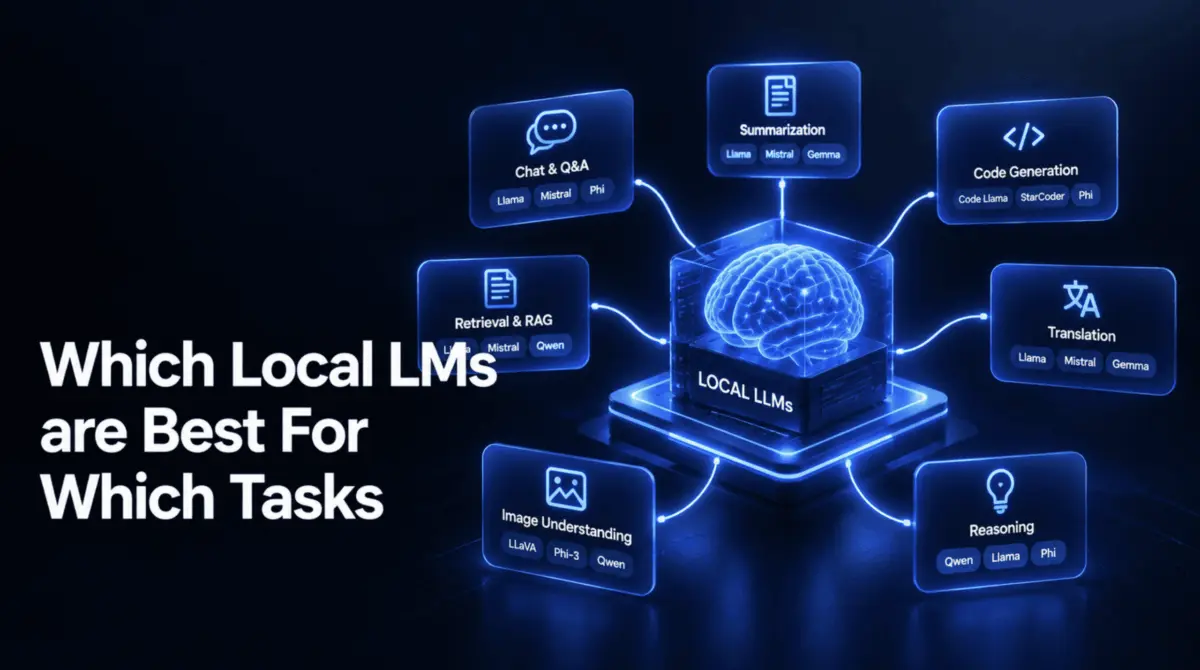
This persistent mismatch highlights a fundamental flaw in how local artificial intelligence is evaluated. The concept of "best" has never been a single, linear ranking, and treating it as such frequently results in genuinely capable systems feeling disappointing through no fault of their own. Understanding the true utility of local language models requires shifting the perspective away from aggregate leaderboards and toward a functional assessment of what these models actually are, why running them locally on consumer or enterprise hardware is advantageous, and how specific models perform across distinct operational domains.
At its core, a language model is a computational system trained to predict text based on context. Given a sequence of prior text in a conversation or a document, the model calculates the most plausible subsequent piece of text. Applied at massive scale, this simple predictive mechanism enables systems to answer questions, write code, draft summaries, and maintain multi-turn dialogues. Prominent cloud-hosted artificial intelligence products, whether proprietary or open, are fundamentally built on top of this exact architecture.
However, the designation of "local" refers entirely to the infrastructure of access rather than the underlying nature of the model itself. A local language model is defined by the physical possession of its weights—the massive file of learned parameters generated during training—which are downloaded and executed entirely on local hardware. Under this architecture, no application programming interface calls leave the host machine, no user accounts are mandated for operation, and no corporate server ever intercepts user prompts. This establishes an entirely distinct relationship with the technology compared to hosted alternatives accessed via web browsers or API keys, where requests travel to external infrastructure and the underlying model remains an intangible service rather than a locally owned asset.
The motivation to run these systems locally extends beyond privacy considerations, encompassing performance reliability, cost control, and offline accessibility. Tools such as Ollama have emerged as de facto standards for managing these local deployments, hosting public libraries of ready-to-pull GGUF builds for a wide array of architectures. Real-world adoption metrics underscore this shift, with download volumes for popular open-weight models frequently reaching into the tens of millions.
Despite this robust ecosystem, the prevailing tendency to rely on single aggregate benchmark scores or raw parameter counts often misleads users. An aggregate score tells surprisingly little about whether a specific architecture will excel at a targeted operational requirement. A model might achieve high marks in general academic knowledge while producing subpar programming syntax. Conversely, a smaller, highly optimized model might lead its weight class in tool-calling capabilities while lagging significantly behind in creative writing output. Treating any single metric as the definitive ranking creates a recipe for user frustration.
To contextualize these variations, it is helpful to examine what standard benchmarks actually measure, as they are far from interchangeable. Massive Multitask Language Understanding evaluates broad general knowledge across dozens of academic disciplines, serving as a reliable proxy for the sheer volume of factual data a model has absorbed. HumanEval tests whether a model can generate correct, functional code for specific algorithmic problems, offering a direct measurement of programming competence rather than general intelligence. Meanwhile, conversational benchmarks measure instruction-following accuracy and multi-turn coherence, capturing the qualitative experience of interacting with the system. A high ranking in one category provides no guarantee of success in another.
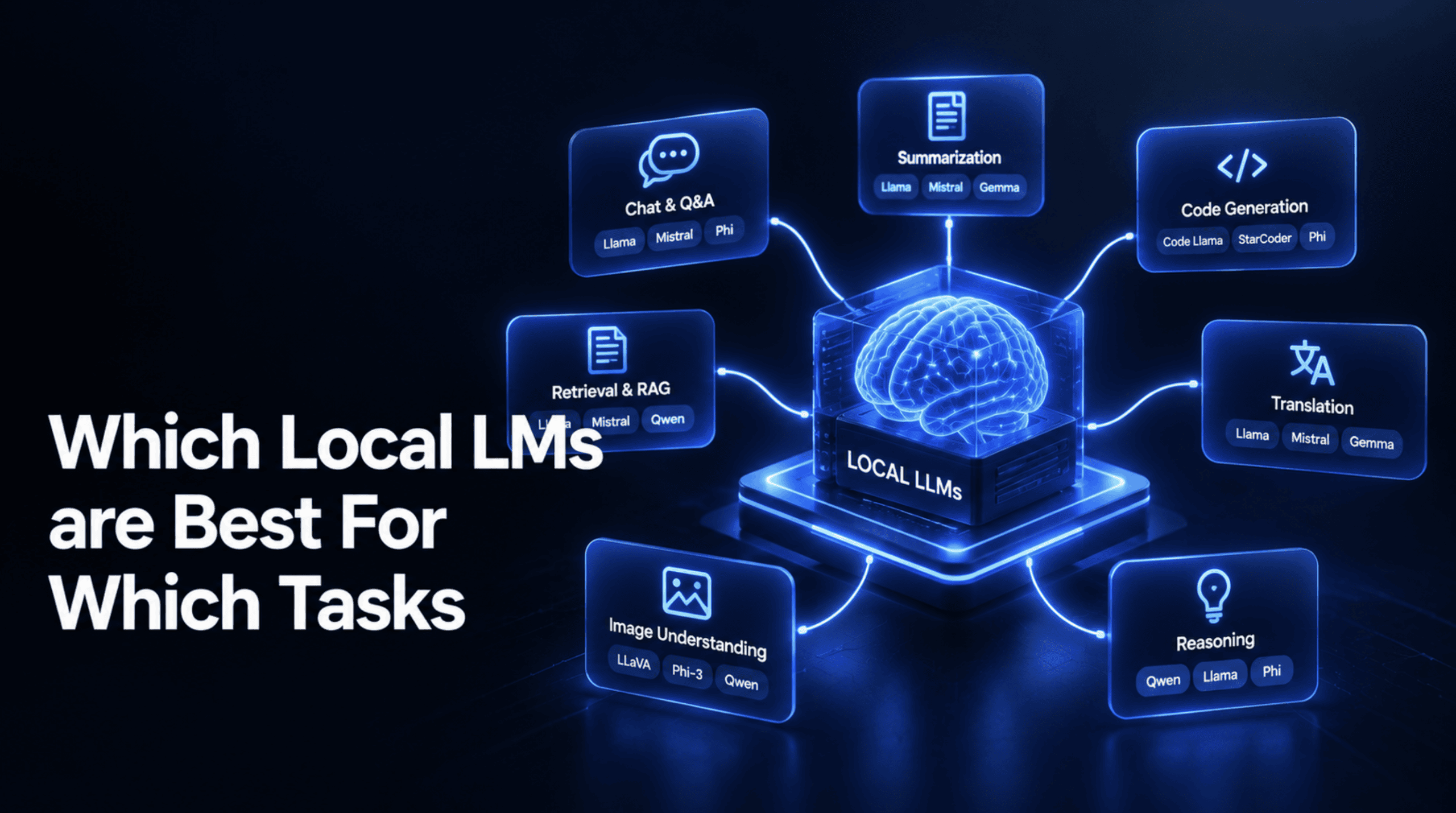
Examining the current landscape of open-weight models reveals a diverse array of options tailored to distinct computational profiles and functional roles. Microsoft’s Phi-4-mini represents an exploration into maximizing capability within a heavily constrained parameter footprint. Technical documentation indicates competitive performance on general knowledge and reasoning benchmarks, holding its own against competitors several times its size. Independent evaluations of reasoning consistency across foundation models have highlighted its proficiency in step-by-step logical accuracy, suggesting that its internal reasoning pathways remain stable despite its compact scale, making it well-suited for users operating on severely limited hardware budgets.
Google DeepMind’s Gemma 4 generation, including the E2B and E4B variants, introduces native multimodality to smaller architectures. Designed to process text, images, and, in these smaller iterations, audio inputs natively rather than through cobbled-together pipelines, these models integrate function-calling support directly into their weights and maintain substantial context windows. This makes them versatile options for edge devices requiring cross-modal processing and clean textual output.
Within the coding and multilingual domain, the Qwen2.5 series has established a strong foothold. The Qwen2.5-7B-Instruct variant delivers robust general knowledge and programming metrics, while the dedicated Qwen2.5-Coder-7B-Instruct version pushes performance further on independent programming evaluations. These architectures excel in generating functional code and navigating multilingual datasets due to extensive and diverse training methodologies. Building upon this lineage, the Qwen3.5-9B model introduces a natively multimodal architecture designed around a massive native context window and a Mixture-of-Experts framework utilizing Gated Delta Networks. This design optimizes inference efficiency relative to the model’s total parameter count, positioning it as a strong general-purpose candidate with specialized capabilities in agentic tool utilization under an open commercial license.
Mistral 7B maintains its status as a foundational open-weight architecture heavily favored for community fine-tuning. Its primary advantage lies not in raw benchmark dominance, but in the clarity and reliability of its instruction-following capabilities. The model produces clean, structured outputs with minimal prompt engineering, making it a reliable choice for general drafting and administrative writing tasks.
Meta’s Llama 3.1 8B continues to serve as an industry baseline at this parameter scale, supported by the largest community fine-tuning ecosystem in the open-weight landscape. While subsequent iterations in the Llama family have shifted toward massive parameter tiers, the 8B variant remains a heavily optimized reference point for developers seeking niche, highly specialized community-trained variants tailored to specific vertical applications.
Beyond conversational models, embedding architectures play an essential yet distinct role in local retrieval-augmented generation pipelines. Models such as nomic-embed-text operate with a minimal parameter footprint and a compact memory profile while supporting extensive native context windows. With tens of millions of documented pulls on distribution platforms, such embedding models provide the foundational vector representation necessary for local document retrieval and semantic search systems.
Ultimately, the utility of a local language model is determined by how closely its specific strengths align with the task at hand. Whether the objective is executing precise reasoning on low-power hardware, generating functional code, deploying agentic tool-calling workflows, drafting administrative prose, or powering a retrieval-augmented generation pipeline, matching the architectural profile to the operational requirement eliminates the friction that characterizes generalized evaluations. By anchoring expectations in verified capabilities rather than generalized leaderboards, users can successfully integrate local artificial intelligence into their daily workflows.