Proposed sweeping changes to the 2030 Census could significantly alter how communities across the United States are counted, potentially triggering severe undercounts that would impact local city planning, federal funding allocations, and congressional apportionment. That is the urgent warning being issued by the National League of Cities, which has raised deep concerns over a series of newly published federal proposals that would fundamentally overhaul the nation’s once-a-decade population count.
The proposals, which were officially published in the Federal Register, would amend two separate sets of federal regulations governing the decennial census. According to Dante Moreno, a legislative manager for finance, administration, and intergovernmental relations at the National League of Cities, one of the most significant proposed shifts involves altering the core criteria of who is actually counted in the population. For generations, the foundational principle of the census has been counting everybody living in a community. Under the new proposals, however, that standard could pivot toward only counting American citizens and lawful permanent residents.
The rationale behind this proposed shift is laid out explicitly within the text of the regulatory documents published in the Federal Register. The proposed changes state that undocumented individuals, among others, should not be included in the official apportionment count because they are not considered true inhabitants, members of the body politic, or persons with a traditional "usual residence" in the United States. The text argues that such populations lack a sufficient tie and allegiance to the country. Furthermore, the Census Bureau could potentially introduce a direct question regarding legal status onto the short-form decennial census questionnaire itself.
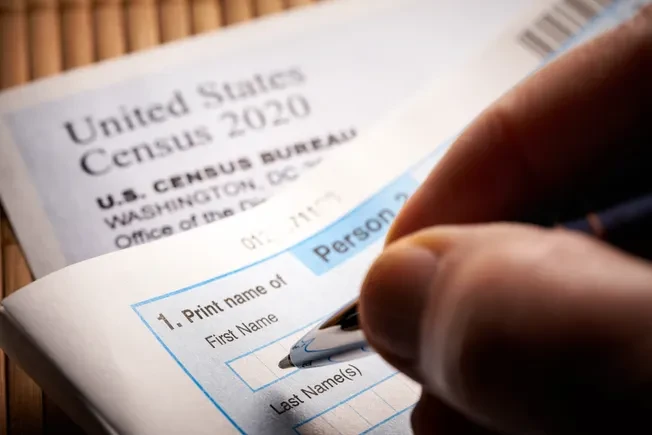
In addition to restricting who is counted based on citizenship and legal status, the Census Bureau is pursuing another major structural change regarding the types of demographic data collected. A second proposal put forward by the bureau would eliminate questions concerning race, ethnicity, and sexual orientation from the census questionnaire entirely. Bureau officials have suggested that collecting these specific categories of information could place sensitive data at an unnecessary risk of exposure and create an undue administrative burden on respondents who are legally required to complete the census forms. Questions regarding race and ethnicity have been a continuous fixture of the decennial count since the very first census was conducted in 1790.
For local leaders and municipal organizations, these concurrent proposals represent a troubling departure from established statistical practices. Moreno stated that the organization does not view any of these proposed modifications as beneficial to the integrity or accuracy of the census. Instead, municipal advocates argue that the changes threaten to blind local governments to the true composition of their populations, creating cascading negative effects that will be felt at every level of governance.
If these proposals are ultimately adopted, Moreno pointed out that at least three distinct types of communities would experience uniquely severe impacts. Among the most vulnerable are university and college towns that host substantial populations of international students. Under the newly proposed rules, students residing in the country on visas would not be officially counted in the local population totals. This exclusion would occur despite the daily reality that these students are fully integrated into the local infrastructure. Moreno emphasized that these students drive on municipal roads, consume municipal water and utility services, and frequently require public safety and emergency response services from local municipalities, yet they would be entirely erased from the demographic calculations used to plan for those very services.
Another area of acute concern for the National League of Cities is the Census Bureau’s proposal to rely more heavily on administrative records—including specific tax-return information sourced from various other governmental agencies—to fill information gaps. The bureau has framed this move as a way to reduce response burdens and lower operational costs. However, Moreno warned that this strategy could disproportionately harm fast-growing communities. Rapidly expanding cities and towns might completely lack the robust historical administrative data needed by federal agencies to accurately verify who is currently living within their borders during a given census cycle.
Compounding these structural and methodological concerns is a proposed shift in the operational timeline of the count itself. The Census Bureau is proposing to officially define the relevant census enumeration period as running from January 3 to April 1 during decennial census years. Moreno explained that this specific winter-to-spring window could severely impact northern states that feature large populations of seasonal residents, commonly referred to as snowbirds, who temporarily migrate to warmer climates during the colder months. Because these residents might be physically located in places like Florida or even outside the country in the Caribbean during the precise enumeration window, they run a high risk of being missed entirely by the census takers.
The repercussions of a systemic population undercount extend far beyond the immediate statistics, touching nearly every aspect of civic life and local governance. Accurate and comprehensive census data provides local municipal officials with the essential insights they need to understand their communities’ changing demographics and to effectively plan for public services and infrastructure investments. Moreno noted that the public service needs of young children and preschoolers are vastly different from those of an aging senior citizen population, making precise demographic mapping indispensable for local resource allocation.
Furthermore, an undercount directly impacts political representation and federal financial support. The data gathered through the decennial census is the foundational metric used to determine the constitutional apportionment of seats in the United States House of Representatives. Beyond political power, these population figures dictate the distribution of billions of dollars in federal spending across numerous vital programs, including Medicaid and Community Development Block Grants, which help fund local infrastructure, housing, and social services.
Without accurate census data, local governments are left navigating blind spots that cannot be filled by any other statistical instrument. Moreno stressed that municipal leaders rely entirely on the decennial count because no other dataset exists that fulfills that specialized need. Once the official census numbers are finalized, cities are forced to live with the financial, planning, and political ramifications of those figures for an entire decade.
With so much at stake for municipal planning and federal resource allocation, the national debate over the future of the census has entered a critical phase. The general public, local government officials, and interested stakeholders have been given a specific window to make their voices heard regarding the administration’s plans. The federal comment period on the Census Bureau’s controversial proposals remains open until November 2, giving communities across the country until that deadline to submit formal feedback to the federal government.