The study, which has been published in the peer-reviewed Journal of Climate, offers a compelling and long-sought explanation for how growing northern ice sheets could systematically influence ocean circulation and sea ice dynamics in the Southern Hemisphere. For generations, paleoclimatologists have known that these southern shifts play a critical role in drawing down atmospheric carbon dioxide, marking a vital mechanism in the development and intensity of glacial periods. Until now, however, researchers have struggled to bridge the massive geographic divide, lacking a clear, physically driven mechanism to explain how processes occurring at opposite ends of the planet could be so intimately and efficiently connected.
One of the primary thermodynamic and geochemical forces behind Earth’s historical ice ages was a dramatic reduction in atmospheric carbon dioxide as vast quantities of carbon were pulled from the skies and permanently sequestered deep within the world’s oceans. Much of this complex sequestration process was governed by dynamic shifts in the physical and biological characteristics of the Southern Ocean surrounding Antarctica. Yet, a major question remained stubbornly unanswered: How could the initial expansion of continental ice sheets in the Northern Hemisphere—processes primarily triggered by natural, periodic variations in Earth’s orbital geometry, known as Milankovitch cycles—cause the distant Southern Ocean to absorb significantly more carbon dioxide?
How Northern Ice Sheets Could Trigger Changes Near Antarctica
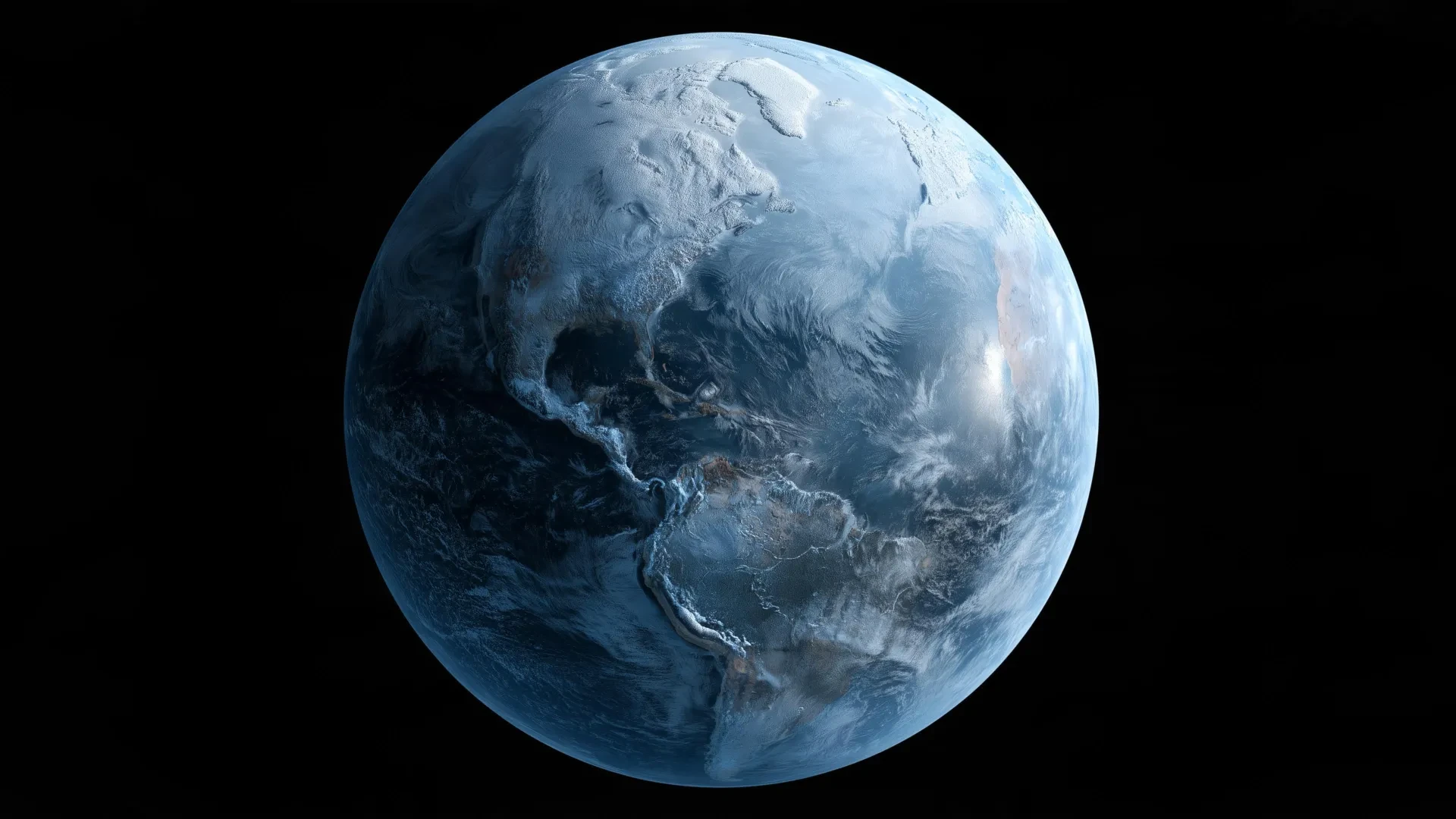
To answer this complex interhemispheric puzzle, the St Andrews researchers propose that the critical missing link lies in the global conveyor belt of ocean water moving between the planet’s hemispheres. As massive continental ice sheets spread relentlessly across northern landmasses, they fundamentally alter local environmental conditions, significantly cooling nearby marine waters in the North Atlantic. Over extended periods, these heavy, frigid waters begin to sink and circulate southward, embarking on a monumental journey through the abyssal depths of the global ocean before eventually reaching the turbulent waters of the Southern Ocean.
If this southward-bound cooling is sufficiently robust, the researchers argue, it could alter ocean stratification and circulation around Antarctica in profound ways. These adjustments would enhance the ocean’s capacity to isolate and store carbon dioxide deep beneath the surface waters, locking it away from the atmosphere for centuries or millennia. As atmospheric concentrations of carbon dioxide steadily decline in response to this enhanced oceanic uptake, the greenhouse effect weakens, the planet cools further, and a full-scale ice age is intensified.
To rigorously investigate this theoretical possibility, the research team deployed advanced computer simulations of global ocean circulation. Rather than applying a broad, generalized cooling across the entire globe—which would have masked the specific regional causes and effects—they isolated the experiment. They cooled only the northernmost latitudes of the model, precisely mimicking the localized climatic footprint of a massive continental ice sheet, and then closely monitored how the Southern Ocean responded to this distant stimulus.
The results of these sophisticated climate simulations were nothing short of striking. Cooling the far northern regions alone produced an astonishing 74 percent as much carbon dioxide drawdown as a separate, comprehensive simulation in which the entire planet’s surface was artificially cooled. This powerful empirical outcome strongly suggests that temperature variations originating exclusively in the Northern Hemisphere could exert a dominant, far-reaching influence on the Southern Ocean, fundamentally dictating its marine carbon-storage capabilities.
A Missing Link in Earth’s Ice Age Mystery
The new simulation data provide robust scientific support for the long-suspected, yet previously unproven, connection between expanding northern ice sheets and remote changes in the Southern Ocean. They indicate that colder water masses originating in the North Atlantic do not simply dissipate harmlessly; rather, they eventually influence the complex upwelling and overturning circulation around Antarctica. In doing so, they actively help scrub carbon dioxide out of the atmosphere, contributing directly to the sweeping global cooling associated with Earth’s ancient glacial periods.
For decades, the vast majority of research into ice age climate dynamics has concentrated heavily on the Southern Ocean due to its undeniable, oversized role in regulating the planet’s atmospheric carbon budget. Only more recently have climatologists and oceanographers begun to appreciate the intricate teleconnections that link disparate ocean basins, recognizing how alterations in distant northern marine regions might heavily drive and modulate these southern processes.
Dr. Madison Shankle, lead author of the study from the University of St Andrews School of Earth and Environmental Science, emphasized the theoretical significance of the team’s findings within the broader context of paleoclimatology.
"Essentially, we’ve produced evidence of a plausible mechanism connecting these two far-flung puzzle pieces—Northern Hemisphere ice sheets and Southern Hemisphere ocean circulation changes leading to carbon dioxide drawdown—which has been a tricky thing to explain in our theory of Earth’s past ice ages," Dr. Shankle explained. "Our study takes the step of actually demonstrating them working in model simulations, which is a big step forward for this field."
What Ancient Ice Ages Reveal About Today’s Climate
Unraveling the exact physical mechanisms of how past ice ages developed and waned offers contemporary scientists an invaluable methodological framework for studying Earth’s natural, long-term carbon cycle. These ancient climatic chapters provide a grand, natural laboratory that reveals how carbon dioxide dynamically cycles between the atmosphere, the terrestrial biosphere, and the deep ocean basins, and how subtle shifts in that delicate equilibrium can profoundly dictate global temperatures.
By successfully identifying and demonstrating another critical mechanism that likely helped reduce atmospheric carbon dioxide during ancient glacial epochs, researchers are now equipped to develop a much more complete, high-resolution picture of how the intricate machinery of Earth’s climate system operates over millennia.
This deep historical knowledge is far more than an academic exercise in Earth history; it carries profound relevance for the modern era. As contemporary scientists and policymakers work tirelessly to understand how the planet’s oceans, ice sheets, and other vital natural systems will respond to the unprecedented volumes of anthropogenic carbon dioxide currently entering the Earth system, insights drawn from ancient climate shifts provide an indispensable baseline for predicting our collective ecological future.