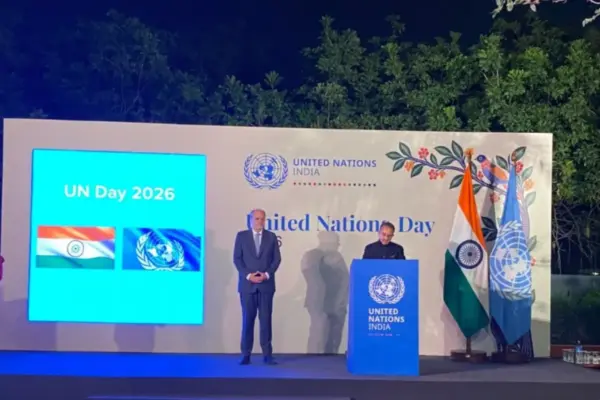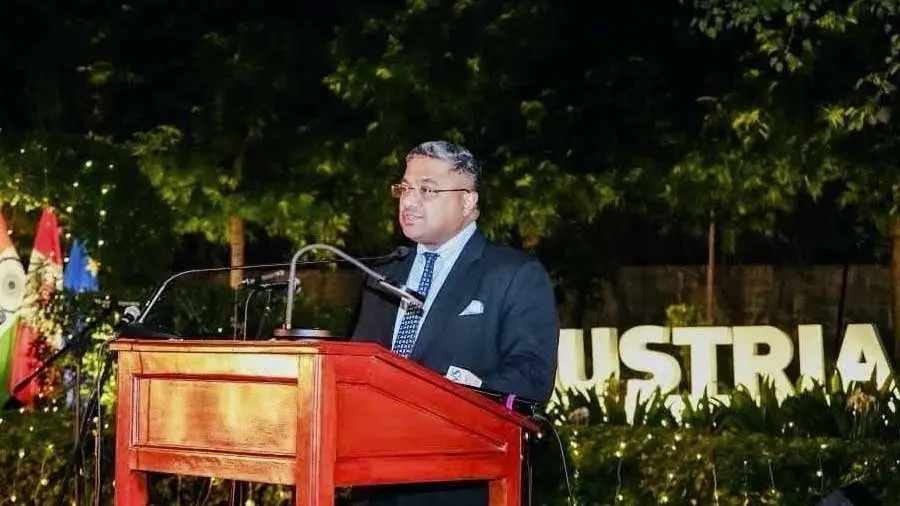
New Delhi — Demonstrating a shared commitment to democratic values, multilateralism, and robust economic cooperation, India and Austria have underscored the remarkable momentum of their bilateral relations. The sentiment was articulated vividly at Austria’s National Day reception in New Delhi, where senior diplomats and dignitaries gathered to celebrate more than seven decades of diplomatic friendship between the two nations.
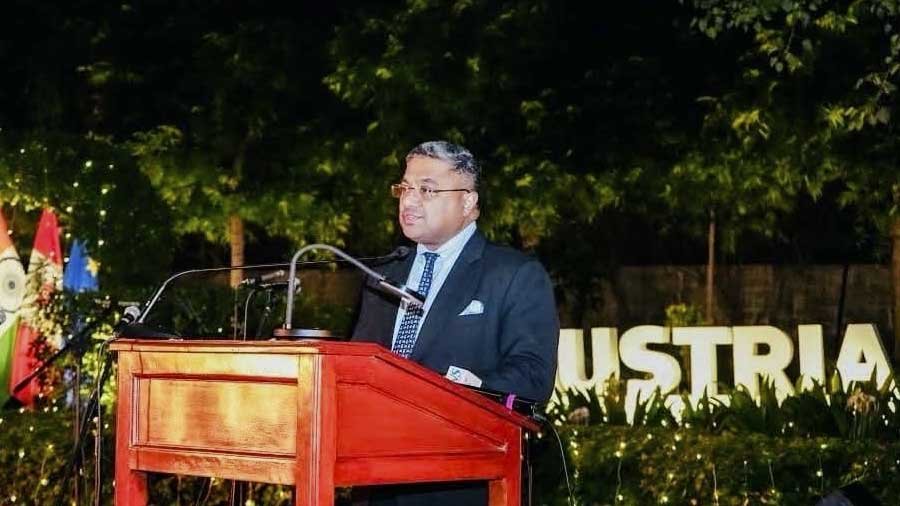
Attending the reception as the Chief Guest, Ambassador Sibi George, Secretary (West) at the Ministry of External Affairs (MEA) of the Government of India, delivered an address highlighting the expanding breadth of the partnership. Addressing Austrian Ambassador Dr. Robert Zischg, his diplomatic team, and the attending guests, George extended warm greetings on behalf of the Government and people of India, celebrating Austria’s national milestone while looking forward to an increasingly collaborative future.
Describing the bilateral relationship as one that has matured significantly over the past seventy years, George emphasized that the partnership is firmly anchored in mutual respect and shared democratic principles. What began decades ago as conventional diplomatic ties has now evolved into a forward-looking, multifaceted relationship brimming with economic, technological, and strategic potential.
A New Momentum in Bilateral Relations
The growing warmth and frequency of high-level diplomatic exchanges between New Delhi and Vienna have served as a primary catalyst for this evolving partnership. Reflecting on recent diplomatic milestones, George drew special attention to Prime Minister Narendra Modi’s historic visit to Austria in July 2024. That landmark visit—the first by an Indian Prime Minister in 41 years—coincided with the 75th anniversary of the establishment of diplomatic relations between the two countries. It marked a crucial turning point, resulting in the official elevation of bilateral ties to an Enhanced Partnership.
This upward trajectory in diplomatic engagement continued into 2026, when India welcomed Austrian Federal Chancellor Dr. Christian Stocker in April. Chancellor Stocker’s visit carried immense symbolic and practical significance, marking the first time an Austrian Chancellor has traveled to India in more than four decades. The high-level discussions held during the visit reaffirmed the profound importance both nations attach to their bilateral agenda, focusing intensely on expanding cooperation across critical sectors such as trade, investment, advanced technology, green energy, and innovation.
According to the MEA Secretary (West), these high-level political exchanges have successfully translated into tangible avenues for cooperation. They have laid a solid, diversified groundwork that allows both governments to address global challenges together while unlocking new opportunities for their respective business communities.
Economic Cooperation and Investment Opportunities
Economic engagement remains an essential pillar of the India-Austria relationship, driven largely by complementary economic strengths that create ripe conditions for mutually beneficial partnerships. George emphasized that India’s rapidly expanding market, burgeoning manufacturing capabilities, and dynamic start-up ecosystem offer vast opportunities for Austrian enterprises.
During his address, he specifically acknowledged the active participation of Austrian businesses in India’s ambitious infrastructure development projects. Austrian expertise and technology have played a visible role in supporting major domestic initiatives, including urban metro systems, complex tunnel engineering, and general infrastructure modernization across various regions of India. These collaborative projects stand as practical examples of how European technological capabilities can successfully align with India’s domestic growth targets, generating commercial partnerships and long-term investment returns.
To sustain this momentum, George encouraged businesses, corporations, and investors from both sides to make full and effective use of existing bilateral mechanisms. These institutional frameworks are designed specifically to facilitate bilateral trade, ease commercial exchanges, and address any investment-related challenges that stakeholders might encounter. With targeted opportunities spanning clean energy, advanced manufacturing, infrastructure, and emerging technologies, the economic partnership is well-positioned for sustained expansion.
The India-EU Partnership: A Strategic Opportunity
Beyond strictly bilateral engagements, a significant focus of George’s address centered on the broader, evolving relationship between India and the European Union. Regional and multilateral economic integration plays an instrumental role in shaping how India and Austria interact on the global stage.
Highlighting recent multilateral achievements, George pointed to the outcomes of the 16th India-EU Summit, which was hosted in New Delhi in January 2026. At the summit, both sides officially announced the successful conclusion of negotiations regarding the landmark India-EU Free Trade Agreement. This milestone was complemented by an advanced comprehensive strategic agenda charting course toward 2030, marking a major leap forward in Europe-South Asia economic relations.
The January summit also yielded substantial progress on a dedicated Security and Defence Partnership, alongside the establishment of a comprehensive framework for mobility cooperation. George welcomed Austria’s steadfast support for strengthening India-EU engagement, expressing confidence that these sweeping multilateral agreements will unlock new frontiers for trade, investment, technological collaboration, and cultural exchanges. For businesses operating in both India and Austria, closer economic integration between India and the broader European bloc provides an indispensable platform for long-term commercial prosperity and strategic alignment.
Innovation, Technology, and People-to-People Connections
As both nations look toward the future, science, technology, and innovation have emerged as vital domains for bilateral cooperation. George pointed out that critical and emerging technologies hold immense collaborative potential, particularly given the vibrant and fast-growing start-up ecosystems thriving in both countries.
A key instrument in this technological synergy is the India-Austria Start-up Bridge, which was officially launched in 2024. The platform serves as a vital conduit connecting innovative entrepreneurs, fostering cross-border technological partnerships, and supporting joint ventures between the innovation hubs of both nations.
In parallel with economic and technological ties, cultural, academic, and intellectual exchanges continue to form the emotional core of the bilateral relationship. Facilitating smooth mobility for students, academic researchers, skilled professionals, and young people remains a priority, allowing citizens from both societies to experience and appreciate each other’s unique cultures, languages, and social landscapes.
The Comprehensive Partnership for Migration and Mobility, signed between India and Austria in 2023, continues to provide a dependable legal and institutional framework for cooperation in this area. George expressed deep confidence that these growing exchanges—encompassing students, academic professionals, researchers, tourists, and artists alike—will further consolidate the deep bonds of friendship shared by the two countries, fostering enduring mutual understanding at the grassroots level.
Shared Commitments in a Changing World
Addressing the geopolitical landscape, George reaffirmed that multilateral cooperation remains a cornerstone of India-Austria relations. He underscored the vital importance of coordinating positions through international organizations and reiterated India’s unwavering stance on combating terrorism in all its forms and manifestations.
Furthermore, he linked India’s ambitious domestic development goals—including the vision of Viksit Bharat 2047—with the expansive opportunities generated by stronger international partnerships, technological advancements, and sustainable global growth. As Austria prepares to assume responsibilities as a non-permanent member of the United Nations Security Council for the 2027–2028 term, cooperative efforts between New Delhi and Vienna are expected to encompass broader global priorities, including international peace, regional security, and effective multilateral governance.
Looking Ahead
Concluding his remarks, George expressed firm confidence that under the active leadership of Austrian Ambassador Dr. Robert Zischg, India and Austria will continue to elevate their partnership to new heights. He noted that sustained political dialogue, expanding economic engagement, technological collaboration, and robust people-to-people ties will remain the driving forces behind the relationship.
Reiterating India’s dedication to working closely with Austria to translate mutual opportunities into meaningful, real-world outcomes, George closed his address with a sincere wish for the continued prosperity and endurance of the alliance: “May the friendship between India and Austria grow ever stronger.”