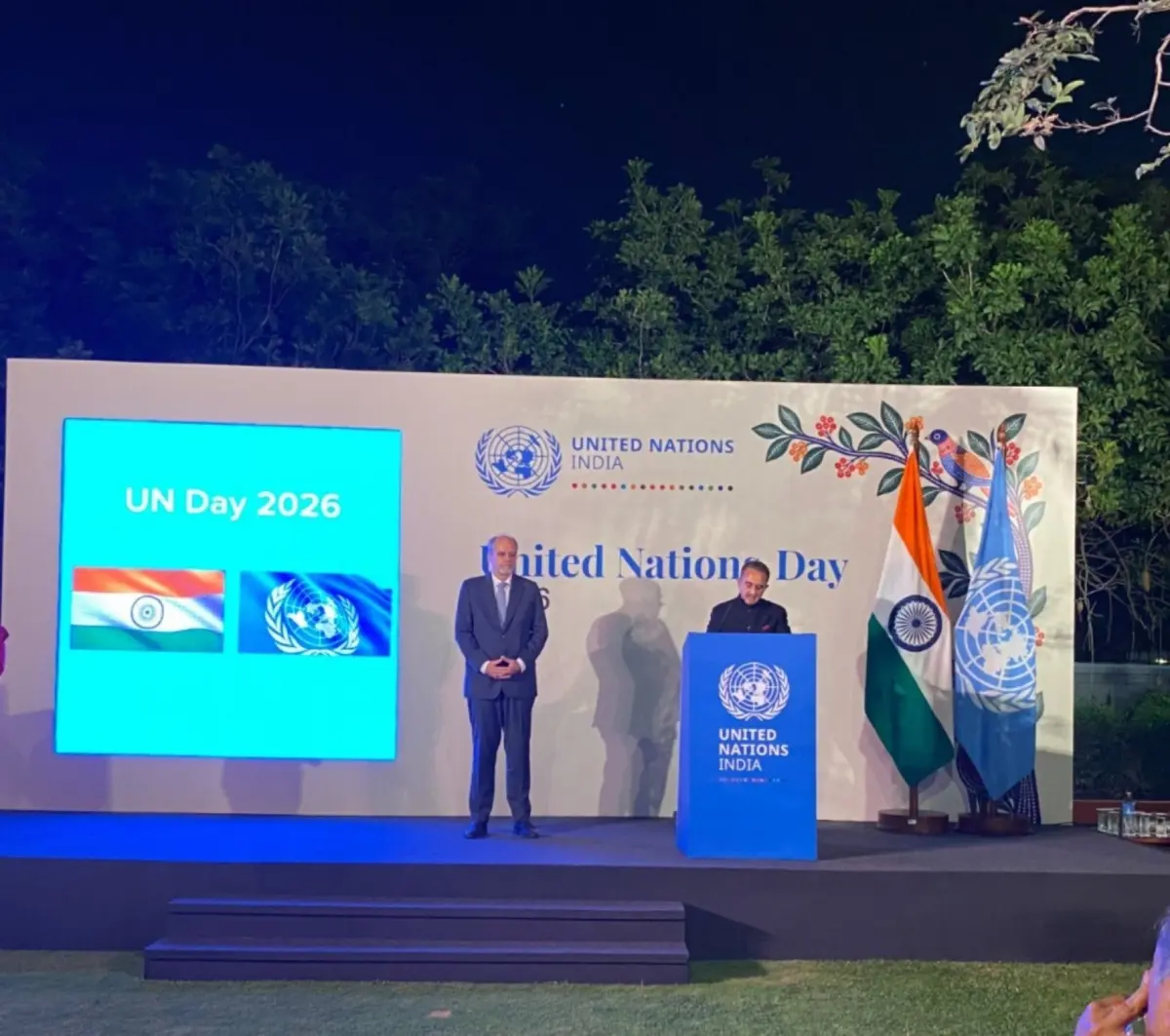
NEW DELHI — India has forcefully reiterated its long-standing demand for a more representative, responsive, and effective United Nations, emphasizing the urgent need for an expanded Security Council that truly reflects contemporary geopolitical realities and the aspirations of the Global South.
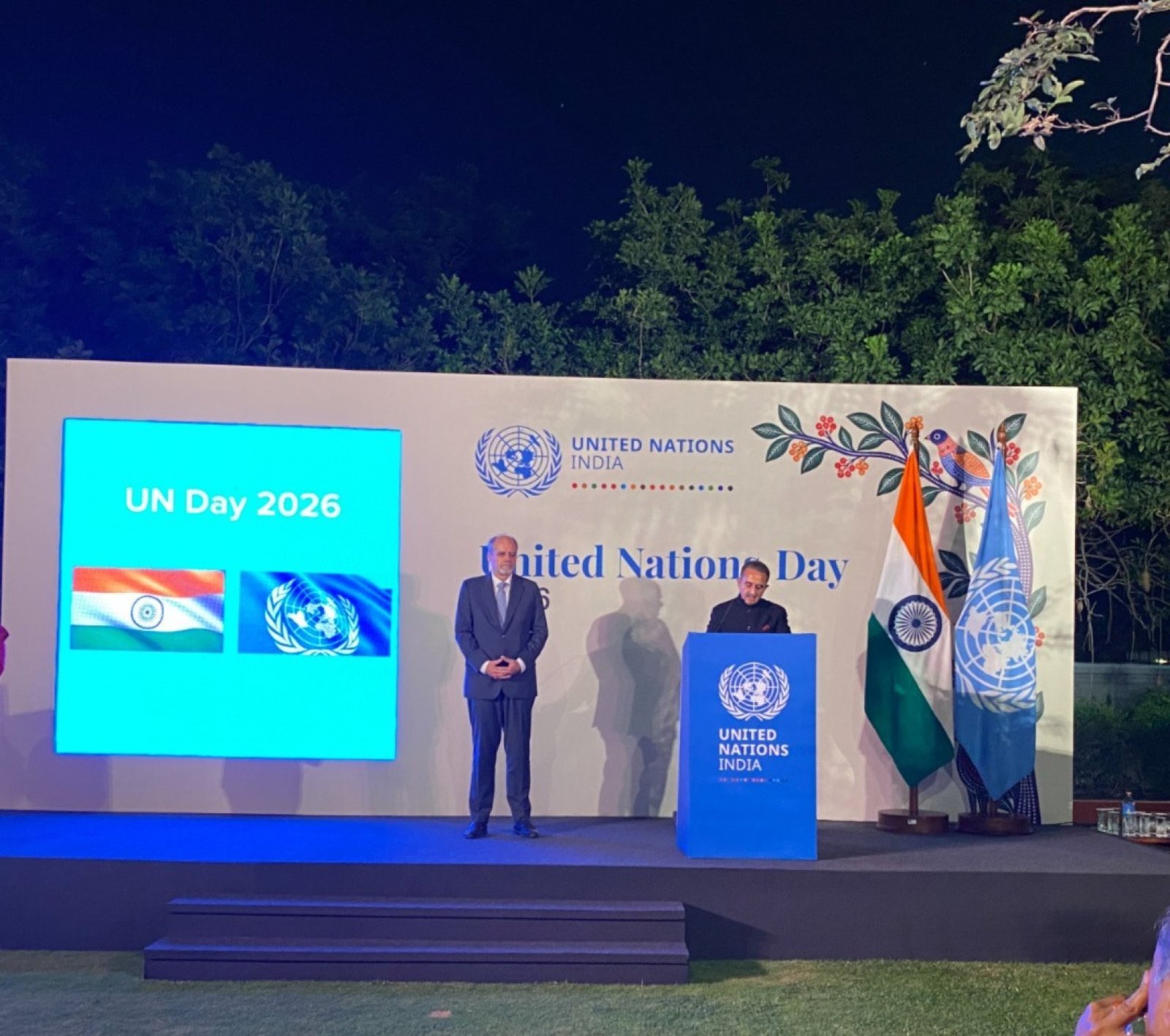
Speaking as the Chief Guest at the United Nations Day reception hosted at UN House in New Delhi, Kirti Vardhan Singh, Minister of State for External Affairs and Environment, Forest and Climate Change, reaffirmed New Delhi’s steadfast commitment to the UN Charter, the peaceful resolution of international disputes, and robust multilateral cooperation.
The high-profile gathering brought together a diverse assembly of senior government representatives, members of the diplomatic corps, heads and representatives of various UN agencies, private-sector leaders, and key development partners. Hosted by the United Nations in India ahead of United Nations Day on October 24, the occasion marked the 81st anniversary of the global organization, which was established in the wake of the Second World War to preserve international peace, security, and cooperation among nations.
In his keynote address, Singh recalled the organization’s foundational and enduring commitment to "save succeeding generations from the scourge of war." He underscored that India, as a proud founding member of the United Nations, remains firmly dedicated to this promise and to the pursuit of a more peaceful, just, and equitable international order.
Multilateralism Must Reflect Contemporary Realities
Emphasizing the vital need to revitalize multilateral cooperation, Singh argued that the complex shared challenges facing the world today can only be successfully addressed through open dialogue, mutual respect, and practical collaboration. Invoking the ancient Indian philosophy of Vasudhaiva Kutumbakam—the concept that the world is one family—he seamlessly connected this timeless principle with India’s modern vision of "One Earth, One Family, One Future," which was prominently articulated during its presidency of the G20.
Singh noted that over more than eight decades, the United Nations has played a crucial role in advancing international law, fostering sustainable development, and providing life-saving humanitarian assistance to populations devastated by conflicts and natural disasters. Highlighting India’s immense contributions to global peace, he added that the country has contributed more than a quarter of a million personnel to UN peacekeeping operations over the years. He paid solemn tribute to the brave peacekeepers who made the supreme sacrifice while serving under the UN flag, while also acknowledging the profound sacrifices made by their families.
Referring to India’s principled position on global governance, Singh stressed that major decisions affecting sovereign nations must be shaped through broad, inclusive consultations rather than through narrow or exclusive groupings. He pointed to the theme of the 2026 BRICS Summit, which was held in New Delhi in September—"Building for Resilience, Innovation, Cooperation and Sustainability"—as a clear reflection of India’s overarching approach to international cooperation. The summit’s concluding declaration also underscored the pressing need for a fairer, more representative, and comprehensively reformed multilateral system.
India, he affirmed, will continue to champion a multilateral order in which developing countries command a stronger voice and where international cooperation produces tangible, real-world results. This advocacy is especially critical at a time when escalating conflicts, the persistent threat of international terrorism, and rising geopolitical fragmentation continually threaten global stability and economic progress.
Condemning terrorism in all its forms and manifestations, Singh maintained that there can never be any justification or double standards in confronting this grave global threat. He further drew the audience’s attention to the wider, cascading consequences of armed conflicts, which inevitably extend far beyond the immediate battlefield to severely disrupt livelihoods, undermine food security, and fracture international trade. These disruptions, he noted, frequently place a disproportionate and unfair burden on developing nations.
Reiterating India’s core foreign policy stance, he stated that the country’s approach remains firmly rooted in the peaceful settlement of disputes through active dialogue and diplomacy, unwavering respect for international law, and strict adherence to the foundational principles enshrined in the UN Charter.
Reforming the Security Council and Strengthening the Global South
A central pillar of Singh’s address was the imperative need to reform international multilateral institutions to ensure their continued relevance, credibility, and operational effectiveness in a rapidly changing world.
Singh argued forcefully that the United Nations must reflect the geopolitical realities of the present day rather than remaining frozen in the balance of power that prevailed when the organization was first established in the mid-20th century. Pointing out that India is home to approximately one-sixth of all humanity and is now widely recognized as the world’s fourth-largest economy, he issued a direct call for a substantial expansion of both the permanent and non-permanent categories of the UN Security Council.
Such comprehensive reform, he emphasized, is absolutely essential to securing equitable and fair representation for the Global South, thereby responding meaningfully to the legitimate aspirations of the contemporary international community.
Explaining the rationale behind the nation’s aspirations, Singh stated that India’s claim to permanent membership rests securely on its unwavering commitment to the UN Charter, its historic and ongoing contributions to the organization’s core work and operational capabilities, and the invaluable perspective it brings through its lived experience of unity in diversity.
This ongoing call reflects India’s longstanding, consistent position that a reformed Security Council must become significantly more representative, transparent, and effective if it is to retain its global legitimacy.
Development Partnerships and South-South Cooperation
Highlighting India’s expansive footprint in international development partnerships, Singh noted that the country’s pioneering experience in building robust digital public infrastructure offers valuable, scalable lessons for making public services far more accessible, transparent, and inclusive for citizens.
India, he observed, remains deeply committed to sharing its home-grown development experiences strictly in accordance with the self-identified priorities of partner countries, while fully respecting their national ownership and independent development choices.
He cited India’s impressive development cooperation portfolio, which currently encompasses more than 600 major projects spanning across 78 countries worldwide. This is complemented by initiatives such as the India-UN Development Partnership Fund and various specialized capacity-building programs. These collaborative mechanisms, he said, play an instrumental role in strengthening South-South cooperation and enabling developing nations to exchange vital knowledge, technical expertise, and practical solutions.
Singh also expressed deep appreciation for the dedicated work carried out by various UN agencies operating within India, praising their close collaboration with the Government of India in advancing the broader agenda of sustainable development.
This strong emphasis on partnership reflects a cooperative philosophy where international development is driven by mutual benefit, locally identified priorities, and the sharing of adaptable solutions, rather than being dictated by top-down, one-size-fits-all models.
Responsible Artificial Intelligence for Inclusive Growth
Shifting his focus to the frontier of emerging technologies, Singh underscored the transformative role that artificial intelligence (AI) plays in shaping future development outcomes and dramatically improving the delivery of public services.
He specifically referenced the India AI Impact Summit, which was successfully convened in New Delhi in February 2026. That summit examined critical pathways through which artificial intelligence can be harnessed to support inclusive economic growth and effectively address persistent development challenges.
While readily acknowledging the vast opportunities presented by AI, Singh cautioned that its governance must be strictly guided by responsibility, robust human oversight, and a steadfast respect for human rights. Preventing the malicious or careless misuse of AI, he argued, is just as important as accelerating technological progress itself to ensure that innovations ultimately benefit society as a whole.
The fundamental challenge, therefore, is not merely to drive rapid innovation, but to ensure that the resulting benefits remain widely accessible, equitable, and entirely consistent with human dignity.
For India, responsible AI governance must form an integral component of a broader international effort to bridge the widening technological divides between nations, thereby enabling developing countries to participate meaningfully and securely in the global digital economy.
Climate Resilience and Sustainable Development
Addressing environmental concerns, Singh highlighted India’s proactive efforts to advance ecological sustainability and strengthen global resilience against the impacts of climate change through focused international partnerships.
He specifically cited the International Solar Alliance (ISA), the International Big Cat Alliance (IBCA), and the Coalition for Disaster Resilient Infrastructure (CDRI) as prime examples of successful initiatives that bring diverse nations together to tackle shared ecological and environmental challenges.
The International Solar Alliance actively promotes the wider adoption of solar energy across the globe through international cooperation, targeted capacity-building, and mobilized investments. Meanwhile, the International Big Cat Alliance seeks to foster robust cooperation among range countries dedicated to the conservation of seven distinct big-cat species and their vital natural habitats. Additionally, the CDRI supports global efforts to make critical infrastructure significantly more resilient to natural disasters and climate-related risks.
Together, these forward-looking initiatives demonstrate the profound importance of collaborative, multi-country approaches to effective climate action, biodiversity conservation, and comprehensive disaster preparedness.
Singh further detailed India’s steady domestic progress toward achieving the Sustainable Development Goals (SDGs) through sweeping policy reforms and large-scale public programs spanning healthcare, education, affordable housing, clean drinking water, and rural electrification. These concerted efforts, he noted, reflect the critical importance of translating high-level global development commitments into tangible improvements in the everyday lives of ordinary people.
A More Effective United Nations
Concluding his comprehensive address, Singh turned his attention to the UN80 Initiative, which was launched by the UN Secretary-General to meaningfully improve the organization’s overall operational efficiency, institutional effectiveness, and capacity to deliver on its core mandates amid mounting financial and operational pressures.
He described the initiative as a timely and vital opportunity to strengthen institutional transparency, fiscal prudence, and organizational accountability, all while modernizing the broader UN system to better serve the international community.
Marking United Nations Day, Singh issued a powerful call for a renewed collective commitment to global peace, sustainable development, and the establishment of a much stronger, more influential voice for the Global South. India, he affirmed, will continue to work hand in hand with the United Nations to build a safer, more peaceful, inclusive, and equitable world for all nations.
He closed by expressing his deep gratitude to the broader UN family operating within India, warmly acknowledging their ongoing partnership with the Government of India and their enduring contribution to uplifting people’s lives across the country.