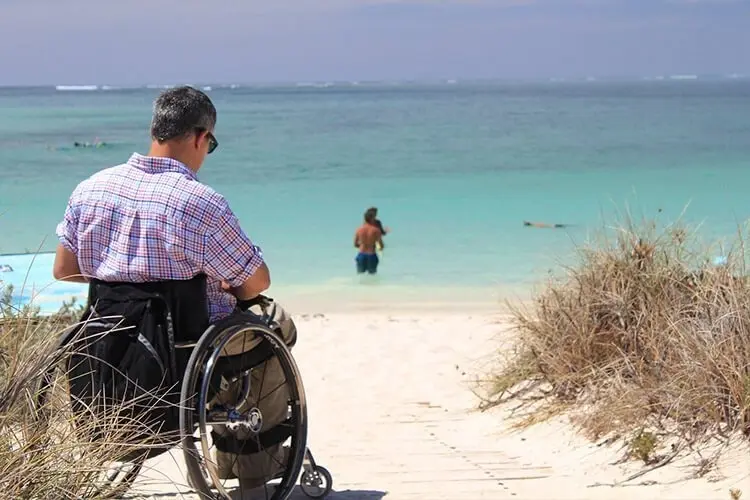
For millions of wheelchair users and individuals with mobility impairments, the simple act of planning a vacation has historically been fraught with logistical hurdles that extend far beyond the typical stresses of travel. Navigating unfamiliar streets, securing barrier-free accommodations, and encountering unexpected architectural obstacles can turn a long-awaited holiday into an exhausting ordeal. While navigating one’s hometown already presents daily challenges, venturing abroad introduces an entirely new layer of complexity. However, a significant shift is currently underway across the global tourism sector.
Over the past decade, numerous municipal governments, transport authorities, and hospitality providers have introduced progressive barrier-free policies designed to ensure that destinations are open to all travelers. Public infrastructure—ranging from sprawling urban parks and world-class museums to intricate public transit networks—is increasingly being remodeled to accommodate visitors with disabilities. Hotels and restaurants are actively encouraged, and in many cases mandated, to provide wheelchair-accessible services. As a result of these concerted modernization efforts, international travel for mobility-impaired individuals is significantly more manageable today than it was ten years ago.
To highlight the progress being made in barrier-free tourism, a comprehensive look at ten global destinations reveals how cities around the world are successfully welcoming wheelchair users to their historic sites, cultural landmarks, and natural wonders.
1. Venice, Italy
At first glance, Venice might appear intimidating to the mobility-impaired. Famed for its intricate network of canals, narrow alleyways, and architecturally magnificent bridges, the historic floating city is often presumed to be entirely inaccessible. Yet, beneath its medieval exterior, Venice has made substantial strides in accommodating wheelchair users.
Aside from the numerous bridges that require navigation, a surprising number of historic sites throughout the city are fully wheelchair accessible. A prime example is the iconic Doge’s Palace, where nearly all the rooms are either step-free or equipped with ramps. To facilitate access to the upper-floor chambers, the palace features a modern elevator system. The primary obstacle visitors face is the ticketing office, which currently lacks wheelchair accessibility, meaning travelers generally need a companion to secure tickets on their behalf. Once inside, however, the palace interior offers a seamless and enriching historical experience.
2. Singapore
While many nations are still actively developing their barrier-free policies, Singapore established itself as a pioneer in accessibility two decades ago. Widely recognized as the most wheelchair-accessible country in Asia, the island nation has integrated universal design into the very fabric of its urban planning.
Singapore’s Mass Rapid Transit (MRT) system stands as a global benchmark for accessible public transportation. Every single MRT station is fully equipped with essential barrier-free facilities, including operational lifts, wheelchair-accessible restrooms, and standardized ramps. For passengers with sensory impairments, arrival and departure times are displayed clearly on digital screens and announced through audio speakers. With more than one hundred stations featuring these advanced amenities—and additional infrastructure currently under development—getting around the city-state is exceptionally straightforward.
Major cultural and recreational landmarks, such as Gardens by the Bay, the ArtScience Museum, and the National Museum of Singapore, feature entirely barrier-free pathways and accessible restrooms. Furthermore, many of these premier attractions provide complimentary wheelchairs at their main entrances on a first-come, first-served basis, reinforcing Singapore’s reputation for housing some of the most advanced accessible infrastructure in the world.
3. Berlin, Germany
For travelers whose ideal vacation involves urban exploration rather than traditional sightseeing, Berlin presents an exceptional European option. Driven by progressive municipal disability policies, the German capital has heavily adapted its urban environment to create an inclusive atmosphere for both international tourists and local residents.
Berlin’s modern public transit network features nearly one hundred subway stations outfitted with elevator access, positioning it among the most wheelchair-friendly public transport systems in Europe. The city’s sidewalks and pedestrian pathways are meticulously maintained and easily navigable for wheelchair users, ensuring that visitors do not miss out on experiencing the rich history and cultural diversity of the metropolis.
Museums and theaters across the city are almost universally wheelchair accessible. An added logistical advantage for visitors is that many of Berlin’s major historical and cultural tourist attractions are situated within very short distances of one another, significantly reducing transit time and physical fatigue.
4. Loutraki, Greece
As home to one of the world’s oldest civilizations, Greece remains a perennially popular holiday destination. Benefiting from year-round warm weather, the coastal town of Loutraki stands out as an inviting destination across all seasons. A significant driver of its accessibility is the Sirens Resort, an accommodation facility designed exclusively to cater to travelers with limited mobility.
The resort provides specialized amenities including roll-in showers, accessible kitchens, comprehensive laundry services, and on-site equipment rentals. Notably, the property features a fully accessible ramp that extends directly from the hotel grounds down to the ocean, allowing wheelchair users to experience the sand and sea firsthand. To facilitate broader exploration, the Sirens Resort also operates localized tours and on-site wheelchair-accessible taxis, enabling guests to easily visit regional historical landmarks.
5. Vancouver, Canada
Renowned for its friendly and diverse population, Vancouver demonstrates a strong commitment to making all visitors feel welcome. Driven by some of the strictest barrier-free regulatory policies in the world, the Canadian coastal city has evolved into a global leader in urban accessibility.
The vast majority of Vancouver’s primary tourist destinations are fully accessible to wheelchair users. Key sites such as Stanley Park, the Vancouver Art Gallery, the bustling downtown core, the Vancouver Aquarium, and historic Chinatown are equipped with smooth pathways and modern accessibility features. During the winter months, the Whistler Adaptive Sports Program extends these opportunities outdoors, offering physically disabled individuals the specialized equipment and support needed to experience snowboarding and skiing.
6. Paris, France
While historically rich and immensely popular, Paris is occasionally viewed as challenging for travelers with mobility needs, yet it remains a premier destination when approached with the right planning. The iconic Eiffel Tower is fully equipped to accommodate wheelchair users up to its first two levels, and numerous other historic sites across the capital have integrated modern accessibility solutions.
The Palace of Versailles serves as a prominent example of these improvements. As one of the grandest palaces in Europe, its three primary buildings are entirely wheelchair-friendly. Elevators transport visitors to the upper floors, while specially constructed ramps connect the ground-level structures. For visitors who prefer not to walk the extensive grounds, golf carts are available for rent at discounted rates for individuals with disabilities.
Additional inclusive options include the "Another Paris Tourist Train," which offers a fully wheelchair-friendly comprehensive city tour. Panoramic views of the Eiffel Tower and the broader urban landscape can be enjoyed from the Montparnasse Tower, while cultural treasures such as Leonardo da Vinci’s Mona Lisa remain accessible within the Louvre Museum, complemented by numerous accessible public parks throughout the city.
7. Sydney, Australia
Australia maintains a strong reputation for national accessibility, with its most populous city, Sydney, serving as a prime model of inclusive urban design. Many of the city’s most famous landmarks and vantage points combine stunning natural and architectural views with robust accessibility infrastructure.
The Sydney Tower Eye offers visitors a panoramic bird’s-eye view of the metropolitan area from a fully accessible observation deck. Educational and recreational attractions, including Sydney’s Sea Life Aquarium and the Wild Life Sydney Zoo, provide barrier-free pathways to observe native Australian wildlife and marine creatures. Furthermore, the historic Sydney Opera House and the sprawling Royal Botanical Gardens both feature comprehensive wheelchair access.
8. Washington, D.C., USA
In the capital of the United States, visitors encounter a high concentration of historically significant monuments and museums that prioritize universal access. Landmarks such as the Washington Monument, the Lincoln Memorial, the White House, and the National Air and Space Museum have all been adapted to accommodate travelers with mobility impairments.
Washington, D.C. features a wide array of wheelchair-friendly hotels and dining establishments, supported by thoughtfully engineered sidewalks and public transit systems. Inside the White House, public tours are designed to be equitable for all participants, with elevators, ramps, and complimentary loaner wheelchairs available upon request. Similarly, the Lincoln Memorial allows barrier-free entry, utilizing ground-floor elevators and basement ramps to bypass the monumental staircases seen in traditional photographs.
9. Los Angeles, California, USA
Known globally for its sunny climate and Hollywood glamour, Los Angeles offers numerous accessible attractions for visitors touring the American West. Universal Studios Hollywood features extensive wheelchair accessibility across many of its premier rides, alongside specialized services such as language interpreters.
Additional cultural and recreational sites, including the Aquarium of the Pacific, the Getty Center, and the open-air shopping district known as The Grove, are fully navigable without requiring visitors to leave their wheelchairs. Furthermore, several beaches throughout the Los Angeles area offer free beach wheelchair rentals, ensuring that mobility-impaired visitors can access the shoreline and experience the Pacific coast.
10. Philadelphia, Pennsylvania, USA
As one of the United States’ most historically significant cities, Philadelphia has made deliberate efforts to ensure its heritage sites are accessible to all travelers. Key landmarks such as the Liberty Bell Center, Independence Hall, the National Constitution Center, the Betsy Ross House, and The Franklin Institute feature modern accessibility infrastructure that allows wheelchair users to explore American history with ease.
In addition to these historic institutions, the Reading Terminal Market stands as a major draw for culinary and retail tourists. Because the entire enclosed market operates on a single, continuous level, visitors utilizing wheelchairs can easily navigate the bustling aisles to shop and dine without encountering architectural barriers.