Artificial intelligence agents have rapidly evolved from simple conversational novelties into sophisticated tools capable of complex reasoning, environment navigation, and multi-step task execution. However, a fundamental limitation has continued to plague the developer and user ecosystem alike: the ephemeral nature of standard session environments. Once a chat session closes, the vast majority of autonomous agents wipe their slates clean, forcing users to constantly re-establish context, preferences, and operational parameters from scratch with every new interaction.
This persistent amnesia has driven a push toward native memory architectures within the developer community. By integrating specialized memory layers, developers can empower AI systems to retain critical information across disparate sessions, including individual user preferences, historical decisions, project goals, and high-level context. Recent developments in the space demonstrate how combining frameworks like the OpenAI Agents SDK with dedicated memory layers such as Mem0 can bridge this gap, enabling persistent state retention for both bespoke Python agents and developer environments like OpenCode.
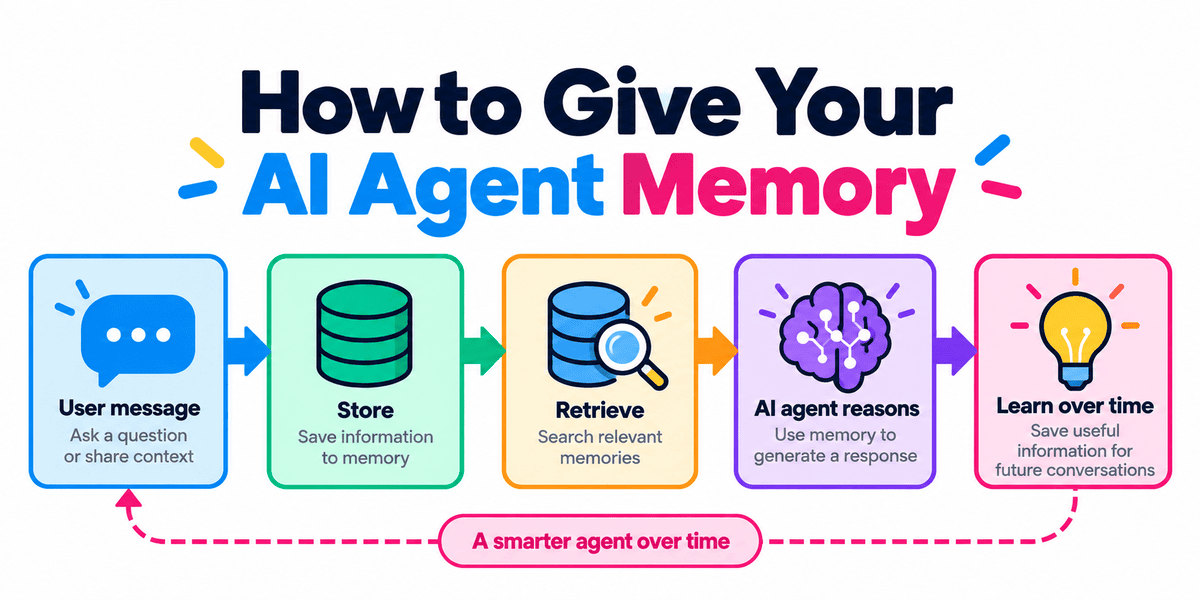
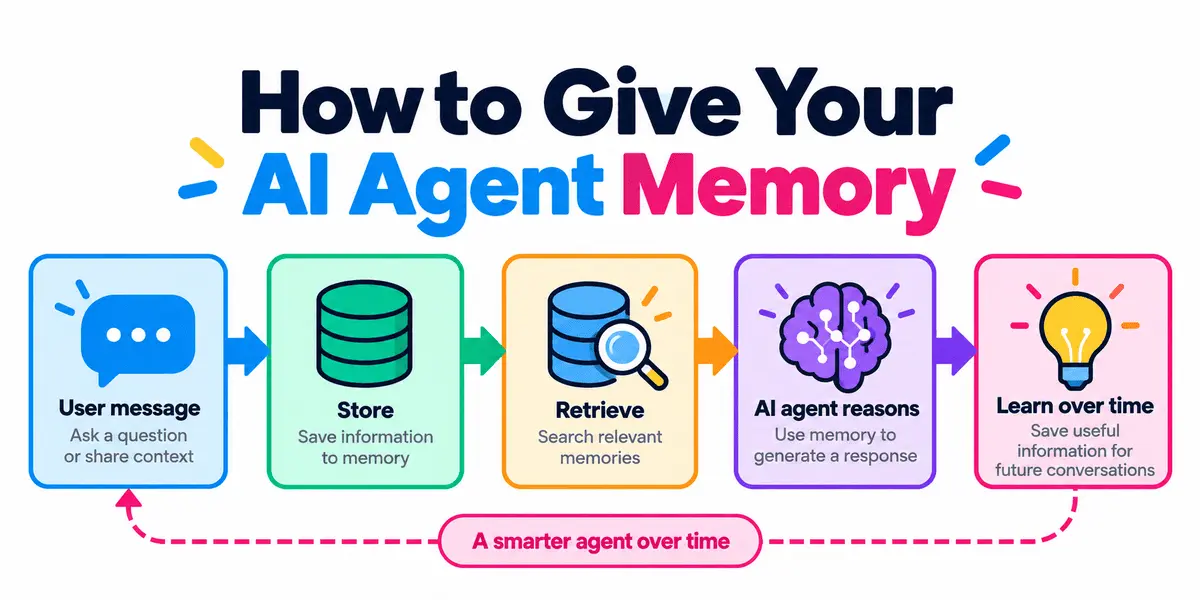
At the core of an effective memory system lies a straightforward yet powerful retrieval loop. When a user transmits a message, the agent does not merely process the immediate text against a static prompt. Instead, it queries an external, persistent memory store for relevant background context, integrates those historical fragments into its active reasoning process, and subsequently captures any new, durable details worth preserving for future exchanges.
The primary technical challenge in designing such systems is managing context window limitations. Rather than dumping an entire chat history into a prompt—a method that quickly becomes computationally expensive and degrades model performance—modern memory architectures rely on targeted retrieval. The agent actively searches its stored database and pulls back only the specific data points relevant to the current request. This selective recall allows the system to maintain a lean, highly efficient context while behaving as though it possesses a continuous, unbroken memory of past interactions.
To implement this capability programmatically, developers typically rely on dedicated client libraries that interface with vector-backed or semantic storage layers. By setting up standardized environment variables for API authentication and instantiating memory clients tagged with unique user identifiers, applications can securely isolate individual memories. This separation ensures that distinct users maintain private, uncompromised context pools within shared or multi-tenant agent deployments.
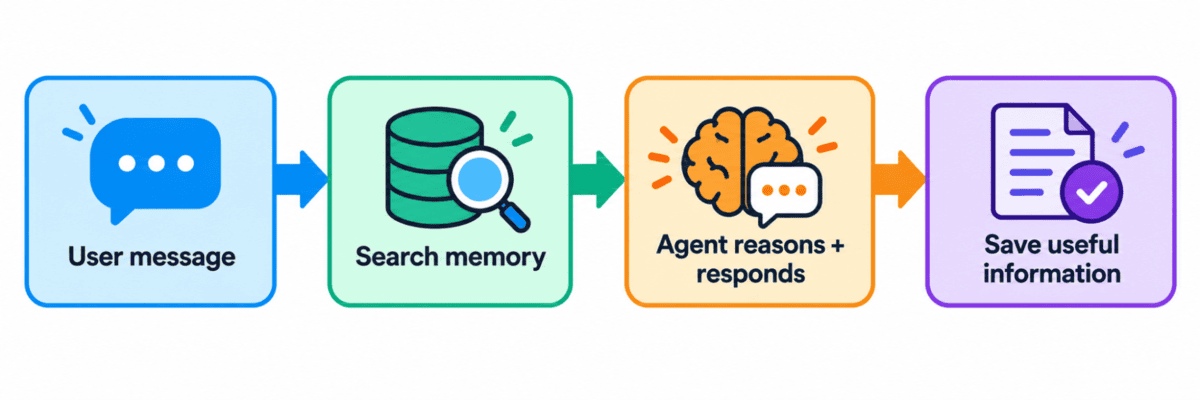
Within an agent framework, memory functionality is typically exposed through dedicated tool functions. A search tool allows the system to query the memory database using natural language, leveraging semantic search capabilities to retrieve relevant information even when exact keywords do not match. Similarly, a writing tool enables the agent to evaluate incoming conversations and distill critical facts, preferences, or technical requirements into concise entries for long-term storage. Rather than saving massive, unstructured blocks of raw chat transcripts, these systems process the interaction to extract durable nuggets of information.
System instructions play a critical role in governing how an agent interacts with its memory tools. By embedding specific behavioral directives into the agent configuration, developers can dictate when memory searches should occur—such as mandating a retrieval query prior to answering even general questions—and how retrieved information should be acknowledged in conversation. Furthermore, these instructions guide the agent on what information is worth retaining, such as long-term goals and technical preferences, while instructing it to ignore transient greetings, temporary data points, and redundant duplicates.
Testing these configurations reveals immediate improvements in conversational continuity. When an agent is informed of specific user preferences—such as a favored programming language or a specialized project management tool—it stores that data securely. In subsequent sessions, even after the underlying application has been completely restarted, the agent retrieves the stored preference via its search mechanism, seamlessly tailoring its subsequent technical recommendations to match the user’s established workflow.

This persistent memory paradigm extends well beyond custom-built Python scripts, finding natural application in developer environments and coding assistants. Through standardized communication protocols like the Model Context Protocol, hosted memory servers can be integrated directly into advanced coding interfaces such as OpenCode. This integration equips development assistants with a full suite of memory management operations, including addition, semantic search, retrieval, updating, and deletion.
By adding these remote memory servers to a development environment, coding agents gain the ability to remember a developer’s preferred frameworks, project rules, and architectural habits across different coding sessions and project workspaces. When a developer initializes a new repository in a later session, the coding assistant can autonomously access the stored preferences to configure project structures and dependencies in alignment with past instructions, eliminating the repetitive friction of manual configuration.
The demand for persistent context mirrors the user experience popularized by mainstream consumer platforms like ChatGPT, which leverage built-in memory features to recall useful historical details across multiple conversations. Replicating this capability in custom applications unlocks significant value across various domains, ranging from personalized customer support assistants and internal corporate knowledge bases to specialized developer tooling.

By shifting away from stateless interactions and embracing persistent memory layers, developers can create AI systems that evolve alongside their users, delivering increasingly relevant, consistent, and personalized experiences without requiring constant re-explanation of foundational context.