New flight software reduces modeled sound exposure by 68%, addressing a growing concern as drone delivery expands into residential areas.
Drone delivery company Zipline has announced the rollout of a major new flight technology initiative designed to make its autonomous aircraft significantly quieter during operations. The software update arrives at a critical juncture for the commercial unmanned aerial vehicle industry, as various drone delivery operators face growing community pushback concerning persistent noise, privacy intrusions, and the overall disruption of residential neighborhoods.
According to internal modeling provided by the company, Zipline’s newly developed sound-optimized dynamic flying technology has successfully reduced overall sound exposure per flight by a striking 68 percent. Furthermore, peak sound levels have fallen by 24 percent when compared directly against the company’s 2025 aircraft fleet. Both of these figures are derived entirely from Zipline’s internal acoustic and aerodynamic modeling programs.
The proprietary technology, which has already been deployed across Zipline’s active operational fleet, relies heavily on advanced onboard sound modeling to adjust aircraft flight paths in real time. Rather than adhering rigidly to a fixed, predetermined track, the aircraft intelligently responds to fluctuating environmental factors such as wind resistance, local altitude, and ground speed to actively minimize acoustic output as it navigates populated airspace.
How Zipline’s Noise Reduction Technology Works
Unlike conventional multirotor delivery drones—which typically rely on multiple spinning rotors operating simultaneously to maintain lift and maneuverability—Zipline’s aircraft feature a distinctive fixed-wing design. Once the aircraft successfully launches and transitions into cruising altitude, it is capable of flying efficiently with only a single motor running, thereby dramatically cutting down the ambient mechanical and aerodynamic noise traditionally associated with powered aerial flight.
The newly introduced flight software assists these aircraft in executing smoother, more energy-efficient transitions between powered flight phases and fixed-wing cruising maneuvers. Sophisticated onboard sensors continuously measure changing wind conditions and atmospheric variables, while an integrated sound model instantly calculates the optimal adjustments required for the aircraft’s speed and altitude. For instance, the drone may subtly lower its nose to pick up momentum using gravity alone, or it may execute a controlled climb to slow its forward progress much more quietly than traditional throttling would allow.
Beyond the clear acoustic benefits, Zipline reports that these algorithmic updates have yielded tangible improvements in overall operational efficiency. Deliveries now take an average of 53 seconds less time to complete, while the aircraft spend approximately 50 percent more of their flight duration engaged in quiet, fixed-wing cruising. Consequently, the company has documented a 21 percent reduction in total energy consumption per flight mission.
“Zipline is building a future with less noise, less traffic, and less pollution,” said Keenan Wyrobek, Zipline Co-Founder and Chief Technology Officer. “We want people to love having Zipline available, not just tolerate it, and that starts with making it the quietest way to get a delivery. We’ve spent years pushing the limits of engineering to make that true.”
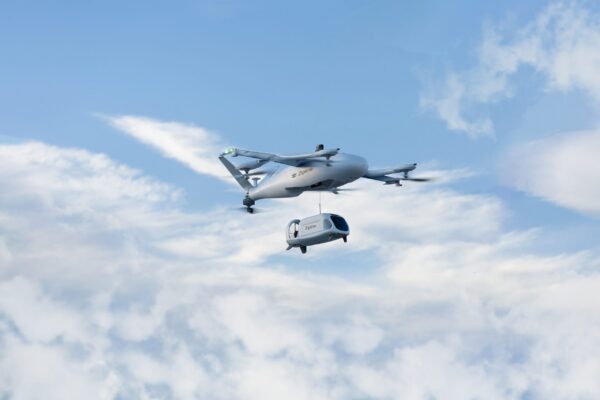
Zipline emphasizes that this latest software-driven update builds naturally upon a foundation of earlier physical design enhancements. These previous milestones include the development of quieter, acoustically optimized propellers and a specialized delivery system that keeps the main body of the aircraft hovering approximately 330 feet above the ground while a tether lowers packages gently and quietly down to customers.
Noise Concerns Challenge Drone Delivery Expansion
Despite these engineering strides, noise pollution and community friction have rapidly evolved into central policy issues as commercial drone delivery companies scale their operations into densely populated residential communities.
In Westborough, Massachusetts, local residents have voiced vocal objections regarding Amazon Prime Air’s proposed drone delivery operations in the area. Community anxieties span a broad spectrum of concerns, including intrusive aircraft noise, visual privacy violations, and the potential disruption caused by high frequencies of low-altitude commercial flights passing directly over residential properties.
The local dispute has also ignited broader regulatory questions concerning municipal oversight and state-level authority. In an official letter dated October 22, the Massachusetts Department of Transportation’s Aeronautics Division informed Amazon that its proposed delivery operations legally require a formal state certificate of approval. The state agency explicitly noted at the time that it had not yet received a formal application for the project.
Although Zipline’s recent technology announcement is entirely separate from the ongoing regulatory disputes in Massachusetts, the development speaks directly to one of the most pervasive systemic challenges facing the broader unmanned aviation industry. Drone noise is rarely defined by a single metric; flight frequency, operational altitude, flight duration, and the distinct tonal character of the acoustic signature all heavily influence how human residents experience daily drone operations overhead. While reducing the sound output of individual flights represents an important technical victory, long-term community acceptance will ultimately depend on how expansive delivery networks manage their logistics as operations scale.
Industry observers note that Zipline’s reported improvements are currently supported exclusively by internal corporate modeling. To date, the company has not published independent acoustic testing results alongside its announcement to verify the exact real-world sound reduction figures in diverse suburban environments.
For all commercial drone delivery operators, mastering quieter aircraft design and intelligent routing will likely remain a paramount priority. As companies look to expand their service footprints into new municipal markets, satisfying local acoustic expectations will be essential to securing public trust and regulatory clearance from the communities they aim to serve.