After eight months of intense hostilities, the war in Iran has settled into what many strategic analysts are calling a comprehensive failure for all principal parties involved. Both the United States and Israel have demonstrated their capacity to execute targeted military objectives, such as neutralizing portions of Iran’s naval forces. Yet, despite nearly three quarters of a year of relentless fighting and escalating economic pressure, Washington and Jerusalem have repeatedly proven incapable of achieving their primary, high-stakes political ambitions. Regime change remains a distant illusion, Iran’s nuclear program continues to advance, and the critical Strait of Hormuz—a vital maritime energy corridor that was notably not closed when the conflict first erupted—remains severely disrupted and beyond allied control.
The Islamic Republic, for its face-saving measures and resilience, has shown that it can endure severe aerial bombardments and sustained campaigns. However, Tehran has proven equally incapable of breaking the economically suffocating naval blockade enforced by the United States. Furthermore, the Iranian leadership has thus far failed to achieve its core wartime objective: permanently putting an end to the perpetual, indefinite threats of military intervention and war leveled against its sovereign borders.
In theory, the war’s descent into a painful and mutually destructive stalemate should naturally open the diplomatic floodgates toward a negotiated settlement. Instead, both sides have proven chronically incapable of making the difficult, foundational concessions necessary to forge a lasting deal. Rather than pursuing a sustainable peace, Washington and Tehran appear trapped in a self-destructive status quo. This posture allows leaderships on both sides to maintain the dangerous illusion of an achievable total victory, a delusion they continually justify to their domestic constituencies through the ongoing suffering they inflict upon their adversaries. Consequently, rather than moving purposefully toward a diplomatic settlement, both Washington and Tehran are increasingly resorting to rhetoric threatening renewed and intensified military strikes.
Yet, a practical, face-saving mechanism exists for both Iran and the United States to gracefully extricate themselves from this intractable quagmire: a formalized cease-fire brokered, guaranteed, and actively managed by the Gulf Arab states. The architecture of such a deal would begin with Gulf nations providing immediate, targeted economic relief to Iran in explicit exchange for Tehran lifting its severe restrictions on commercial and maritime traffic through the Strait of Hormuz. This initial breakthrough would, in turn, provide the necessary conditions for the United States to lift its own economically crippling blockade. Simultaneously, the Gulf states would need to commit to robust diplomatic and strategic steps designed to deter Washington from resuming military strikes against Iran in the future.
Crucially, under this framework, neither the United States nor Iran would be forced to make direct, humiliating concessions to the other, allowing each nation to bypass its most politically painful compromises. Washington, for instance, would not be required to formally dismantle its signature "maximum pressure" sanctions campaign, while Tehran would successfully avoid immediate demands to cap or limit its nuclear enrichment program. In the interim, the mediating Gulf states could leverage their unique position to sustain the fragile cease-fire until broader geopolitical conditions eventually permit a comprehensive, long-term agreement.
Serving as the primary guarantor of such a precarious cease-fire comes with genuine financial and security costs for the Gulf monarchies. Nevertheless, these regional actors possess overwhelming incentives to accept these risks. They find themselves directly situated on the physical battlefield of the ongoing Iran war. Should the conflict continue indefinitely along its current trajectory, it poses an existential threat to the very economic and political development models upon which modern Gulf states are built. The region’s stability depends almost entirely on uninterrupted oil and gas exports to sustain state budgets, and there is simply no logistical way for these nations to completely bypass the Strait of Hormuz when shipping vital energy resources to international markets. Meanwhile, their ambitious national visions to diversify their economies away from hydrocarbon dependency remain acutely vulnerable to renewed military escalation and attacks originating from Iran.
Securing such a delicate cease-fire will undeniably prove difficult. It requires that the Gulf monarchies temporarily overcome their own historical lack of strategic cohesion, that Tehran prioritize domestic economic recovery over explicit guarantees concerning future U.S. behavior, and that Washington affords its regional partners the necessary diplomatic space to successfully broker a deal. Even under the best-case scenario, the resulting agreement will not solve the deep, underlying geopolitical drivers of the war. But with scant alternative diplomatic options visible on the horizon, it remains the best—and perhaps the only—viable pathway to ease the mounting economic and human pain for all involved.
Saving Face
In theory, a direct bilateral agreement between the United States and Iran should be straightforward. Historical precedents exist for transactional deals between Tehran and Washington—arrangements where Tehran agrees to constrain or halt a specific provocative behavior in exchange for financial resources and international recognition. This template could apply neatly to the current conflict. In the Algiers Accords of 1981, for instance, Iran agreed to release American diplomats held hostage in exchange for the unfreezing of national funds and a commitment by the United States not to intervene in Iran’s internal affairs. Similarly, in the landmark 2015 nuclear deal, Tehran accepted strict, verifiable limits on its nuclear program in return for comprehensive sanctions relief and an implicit international acceptance of its right to peaceful uranium enrichment.
Today, a modernized version of this template is technically feasible: Iran could halt its interference with maritime traffic transiting the Strait of Hormuz—and eventually negotiate concessions regarding its nuclear program—while Washington could grant a combination of targeted sanctions relief, cash infusions, and official acknowledgment of Tehran’s legitimate security and economic role within the waterway.
In practice, however, reaching this mutual understanding has proven exceptionally difficult. One major barrier is technical: Iran is unwilling to enact the sweeping nuclear concessions demanded by U.S. President Donald Trump, while the United States remains steadfastly opposed to providing the upfront, irreversible financial incentives that Tehran explicitly demands.
Yet, the far greater obstacle is reputational. To justify his original decision to withdraw from the 2015 nuclear agreement and launch the current campaign, President Trump seeks sweeping, unconditional capitulation from Tehran. Iran, conversely, is deeply reluctant to settle for fewer benefits than it believed it had secured from Washington during their ill-fated June memorandum of understanding, which had previously promised significant economic relief. As a result, both governments feel politically compelled to sustain a confrontation that is demonstrably detrimental to their broader national interests.
While the Gulf states cannot single-handedly resolve the deeply entrenched global dispute over Iran’s nuclear ambitions, they possess the unique capacity to secure relative regional peace by addressing other essential friction points. The United States may be politically unwilling to pay Iran merely to reopen the Strait of Hormuz, but its Gulf partners possess both the necessary financial capital and the urgent motivation to offer the Iranian regime immediate economic concessions. These regional partners could, for example, provide Iran with essential humanitarian aid and reconstruction funding.
In exchange, Iran would immediately halt its attacks on commercial vessels transiting the strait and on the territory of the Gulf states themselves. Responding to the cessation of Iranian attacks, the United States would lift its naval blockade. Concurrently, the Gulf states and Iran would establish a temporary deconfliction mechanism for commercial shipping. This mechanism would acknowledge Iran’s geographic and practical role in managing the waterway without establishing unacceptable legal precedents for international commerce. Such an arrangement could require vessels to follow Iran’s preferred traffic separation schemes without formalizing sovereign Iranian legal control over the international passage.
Addressing Iran’s other core objective—securing ironclad guarantees prohibiting the United States and Israel from launching future military campaigns—presents a far greater challenge. While Washington currently lacks a credible military endgame and the war remains deeply unpopular among the American public, this domestic sentiment has not deterred President Trump from occasionally considering aggressive military options.
However, the Gulf states can offer Iran credible assurances by leveraging their deep security ties with Washington to help deter future attacks. A recent historical precedent underscores this capability: in May, Kuwait and Saudi Arabia temporarily restricted U.S. access, basing, and overflight privileges—the crucial administrative approvals that allow the American military to project power using Gulf territory and airspace—due to profound concerns over U.S. plans to escort merchant shipping through the strait. The diplomatic pressure tactic succeeded, prompting Washington to temporarily pause the operation.
From a diplomatic standpoint, U.S. officials could ultimately frame this Gulf-brokered arrangement as a major strategic victory. President Trump could exit the military entanglement while assuring the American public that he successfully safeguarded global energy markets from hyper-inflation without making the sweeping economic and nuclear concessions to Iran that characterized the 2015 Obama-era agreement. He could similarly boast about the sustained damage inflicted upon Iran’s military infrastructure and, in the absence of a comprehensive nuclear accord, point out that his signature "maximum pressure" sanctions remain firmly in place.
In many ways, a Gulf-brokered settlement aligns closely with the tenets of an "America First" foreign policy, shifting the heavy burden of managing a difficult regional actor onto local allies who bear the immediate consequences. Trump would effectively stumble into a favorable geopolitical outcome, leaving office with an empowered coalition of regional partners far more capable of managing their own collective security.
For Iran, the advantages extend beyond substantial economic relief. The arrangement could advance Tehran’s long-term strategic goal of diminishing unchecked American influence across the Middle East. If Israel or the United States were to undermine the cease-fire agreement down the road, it would accelerate the erosion of Washington’s remaining credibility and diplomatic capital with its Gulf partners. The United States has already placed its historic relationships with these nations under severe strain by dragging them into an unwanted war that has caused immense regional suffering. A Gulf-negotiated settlement would allow Tehran to subtly leverage any future U.S. military missteps to permanently drive a wedge between Washington and its traditional regional allies.
Iran has consistently maintained that its paramount wartime priority is to conclude hostilities on terms that structurally minimize the likelihood of future conflict. To a significant degree, Tehran has already achieved this benchmark through the sheer economic pain it has inflicted on the global trade and energy markets. Once the current phase of the war finally concludes, any future Israeli prime minister urging an American president to approve fresh military strikes against Iran will face a sobering political reality: balancing speculative security interests against the immediate threat of profound global economic instability. Barring a sudden nuclear breakout or a massive terrorist event, the perceived risk posed by Iran may no longer outweigh the catastrophic potential damage to the global economy. While Israel could theoretically act independently, doing so would risk fracturing the U.S.-Israeli alliance and inviting unchecked Iranian retaliation without American military backing.
Yet, this implicit deterrence remains effective only once the current iteration of the war is formally brought to a close. If the conflict drags on indefinitely, Iran will forfeit the de facto security guarantees naturally provided by the Strait of Hormuz and its formidable geography. The longer the war continues, the more it empowers hardliners in Washington and Jerusalem who advocate for open-ended military campaigns and regime change. Unless a viable solution to soaring energy prices emerges that allows President Trump to politically disengage from Iran, the administration may ultimately grasp at unproven, highly aggressive kinetic options that have wisely been avoided thus far.
The Best Bad Option
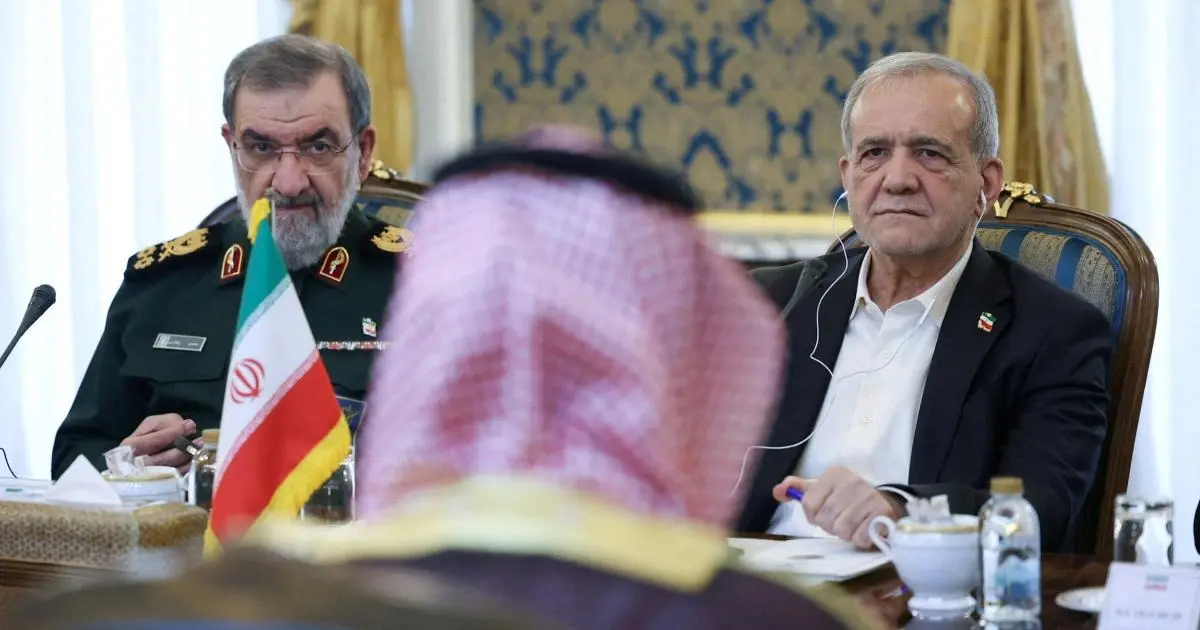
Diplomatic momentum toward regionally led solutions is already underway. Late last month, Saudi officials traveled to Tehran to conduct high-level talks with their Iranian counterparts, joined by diplomatic leaders from Pakistan and Turkey. Additional multilateral gatherings, such as a planned ministerial meeting in Salalah, Oman, underscore a quiet regional appetite for de-escalation surrounding the Strait of Hormuz.
However, unless these discussions coalesce into a broader, formalized regional architecture, Gulf countries will likely default to pursuing private, bilateral backroom deals with Tehran to protect their own shipping and territory from future attacks. While such piecemeal agreements might offer temporary relief for individual Gulf capitals, they ultimately fail to address the overarching risk of renewed Iranian escalation or resolve the systemic global economic fallout tied to the contested strait. Furthermore, fragmented bilateral deals allow Tehran to stoke internal divisions and mutual distrust among the Gulf monarchies while continually raising its own political demands.
To achieve a durable and workable settlement, the Gulf states must first improve their internal diplomatic cohesion. Achieving this unity is undeniably challenging, particularly given lingering historical tensions between key Gulf heavyweights such as Saudi Arabia and the United Arab Emirates. Yet, bridging these divides remains entirely within the power of regional leaders, and past diplomatic initiatives demonstrate a genuine willingness to engage. Crucially, improving Gulf cohesion does not require resolving every deep-seated bilateral rivalry across the region; it simply requires a pragmatic consensus to temporarily isolate the Iran crisis from broader geopolitical competitions and collectively address a shared existential threat.
The Gulf monarchies must collectively establish clear redlines regarding acceptable Iranian behavior and coordinate joint enforcement mechanisms. If Tehran attempts to test the boundaries of the agreement or demand excessive concessions, regional governments must present a united front by temporarily pausing economic aid or cooperative ventures—even if doing so carries the calculated risk of temporary retaliation.
A further complication involves the alignment between Tehran and the Houthi movement in Yemen. Riyadh understandably holds Iran directly accountable for Houthi drone and missile attacks on Saudi territory, given that Tehran helped construct the group’s military capabilities, provides ongoing technical and material support, and facilitated the re-escalation of the Yemen conflict. However, because Iran does not maintain absolute operational command over the Houthis, the militant group will not halt its campaign against Saudi Arabia simply because Tehran issues a directive.
To overcome this hurdle, Tehran must extend a credible olive branch to Riyadh by demonstrating a willingness to constrain its direct enabling of regional proxies. For instance, Iran could offer verifiable guarantees that Tehran-backed Iraqi militias will cease operations targeting the kingdom. It was, after all, cross-border drone strikes originating from Iraqi territory that previously knocked Saudi Arabia’s vital East-West oil pipeline offline, and defending against simultaneous threats from both northern and southern borders severely strains the kingdom’s air defense capabilities.
These diplomatic efforts to forge a regional deal may still ultimately fall short. Even if the Gulf states successfully bridge their internal divisions and sideline concerns regarding Houthi activities, Tehran and Washington could still refuse to sign on. Iran might calculate that maintaining a stranglehold over energy markets through the strait remains its ultimate security guarantee, while Washington may struggle to quietly acknowledge that its stated wartime goals will go unfulfilled.
Even if a cease-fire agreement holds, the final outcome will be far from ideal for either the United States or its regional partners. It could theoretically embolden Iran to assert greater administrative control over the strait and potentially weaken traditional security partnerships between Washington and the Gulf. Most concerningly, it fails to resolve the fundamental, underlying drivers of the broader U.S.-Iranian conflict and regional sectarian tensions: Tehran’s advancing nuclear ambitions and its continued sponsorship of armed non-state actors.
Yet, a comprehensive, grand bargain with Iran remains fundamentally unfeasible in the current political climate. A pragmatic, Gulf-brokered arrangement focused on reopening and securing the Strait of Hormuz is achievable. In fact, it may be the single remaining mechanism capable of halting a mutually destructive stalemate that threatens to drag on for years, inflicting mounting damage on global markets.
The temporary strategies and national reserves that states have utilized to blunt the economic impact of global oil and gas shortages are projected to wear thin, as governments deplete strategic petroleum reserves, Chinese energy demand increases, and alternative supply pipelines face potential security threats. Unchecked economic fallout could ultimately undermine the domestic political stability of vulnerable Gulf states or reignite dormant regional conflicts.
A Gulf-brokered diplomatic off-ramp, therefore, stands out as the least bad outcome available. Such is the profound irony of this modern conflict: the regional bystanders that have already sustained the heaviest losses must now step forward to save the primary belligerrents from themselves.