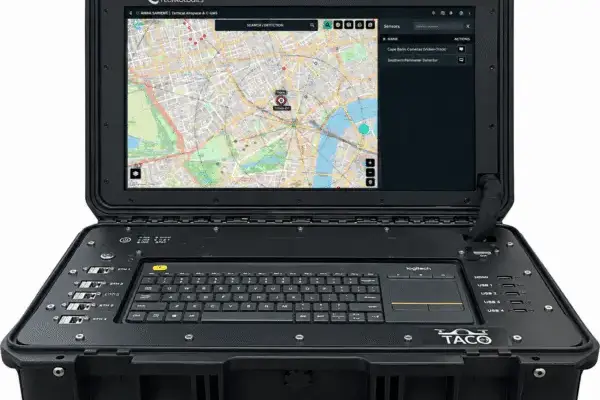
New rules remove a decades-old restriction on airborne use of the 800 MHz Cellular band.
In a landmark regulatory shift aimed at modernizing the nation’s airwaves for emerging aviation technologies, the Federal Communications Commission (FCC) has officially voted to remove a longstanding restriction that barred unmanned aircraft systems from utilizing the 800 MHz Cellular band. The decisive vote, taken on October 29, unlocks 50 megahertz of valuable licensed spectrum for the rapidly expanding drone industry, paving the way for more reliable, widespread, and sophisticated commercial and industrial unmanned operations across the United States.
Under the newly adopted rules, commercial and industrial drone operators are now legally permitted to harness this substantial block of spectrum for a wide variety of vital functions. These include critical command and control (C2) links, essential communications pathways, and complex payload operations. By granting access to an established and robust licensed band, the Commission has effectively eliminated a major regulatory bottleneck that has constrained drone telecommunications architectures for years, providing operators with a powerful new tool to enhance connectivity, safety, and operational efficiency in the National Airspace System.
The origins of the restriction date back more than three decades to 1991, long before commercial drones were even a conceptual reality for the mainstream aviation sector. At the time, the FCC adopted the airborne ban out of an abundance of caution, primarily designed to prevent potential interference from airborne cellular phones transmitting signals to ground towers from commercial airliners. While the policy successfully safeguarded early cellular networks from localized interference decades ago, it inadvertently created a blanket ban that also encompassed unmanned aircraft systems as they began to emerge and evolve technologically in the modern era.
In its comprehensive review leading up to the October 29 decision, the FCC determined that this historical restriction is fundamentally no longer necessary for UAS operations. According to findings released by the regulatory agency, contemporary wireless networks and modern cellular infrastructure utilize advanced technologies, dynamic power controls, and sophisticated signal processing techniques that easily prevent airborne mobile devices—including drones—from causing harmful interference to ground-based cellular services. This technological evolution rendered the decades-old blanket prohibition obsolete, prompting the Commission to reevaluate the regulatory framework governing the band.
The policy change successfully removes a persistent regulatory barrier that has long hindered optimal drone communications within an existing licensed cellular band. It is important to note, however, that the Commission’s decision does not create a completely new, dedicated spectrum allocation exclusively for drones, nor does it alter or supersede the strict flight authorization and operational requirements overseen by the Federal Aviation Administration (FAA). Drone operators utilizing the newly opened spectrum must still adhere to all existing FAA rules regarding airspace access, visual line-of-sight operations, waivers, and remote identification mandates.
Part of Broader FCC Spectrum Modernization
This decisive regulatory action does not stand in isolation; rather, it forms a central component of a much broader, ongoing FCC initiative focused on the comprehensive modernization of several aviation-related spectrum rules. Just a day prior to the October 29 vote, on October 28, the Commission announced a series of far-reaching proposals designed to address the unique and rapidly evolving communication needs of modern aviation, including advanced air mobility (AAM) platforms, electric vertical takeoff and landing (eVTOL) aircraft, and sophisticated counter-UAS technologies intended to protect sensitive infrastructure from unauthorized or malicious drone activity.
Unlike those preliminary proposed actions, which are still winding their way through the lengthy public notice and comment rulemaking procedures, the October 29 decision represents a definitive final vote to formally adopt new rules. The Commission formally enacted these regulatory updates through Report and Order FCC 26-72, securing unanimous bipartisan support with Chairman Brendan Carr and Commissioners Anna Gomez and Olivia Trusty all casting affirmative votes in favor of the measure.
Beyond these immediate regulatory steps, the FCC has also launched an even broader, forward-looking proceeding specifically examining innovative ways to further expand spectrum access for unmanned aircraft systems. This larger inquiry is strategically designed to support the long-term growth and competitiveness of domestic drone technology, ensuring that American manufacturers and service providers have the necessary wireless infrastructure to lead the global market in autonomous aviation.
The official regulatory proceedings associated with this major policy shift are cataloged under GN Docket No. 26-74, alongside WT Docket Nos. 22-323 and 24-629, where industry stakeholders, telecommunications providers, and aviation experts continue to monitor the ongoing implementation of the new framework.