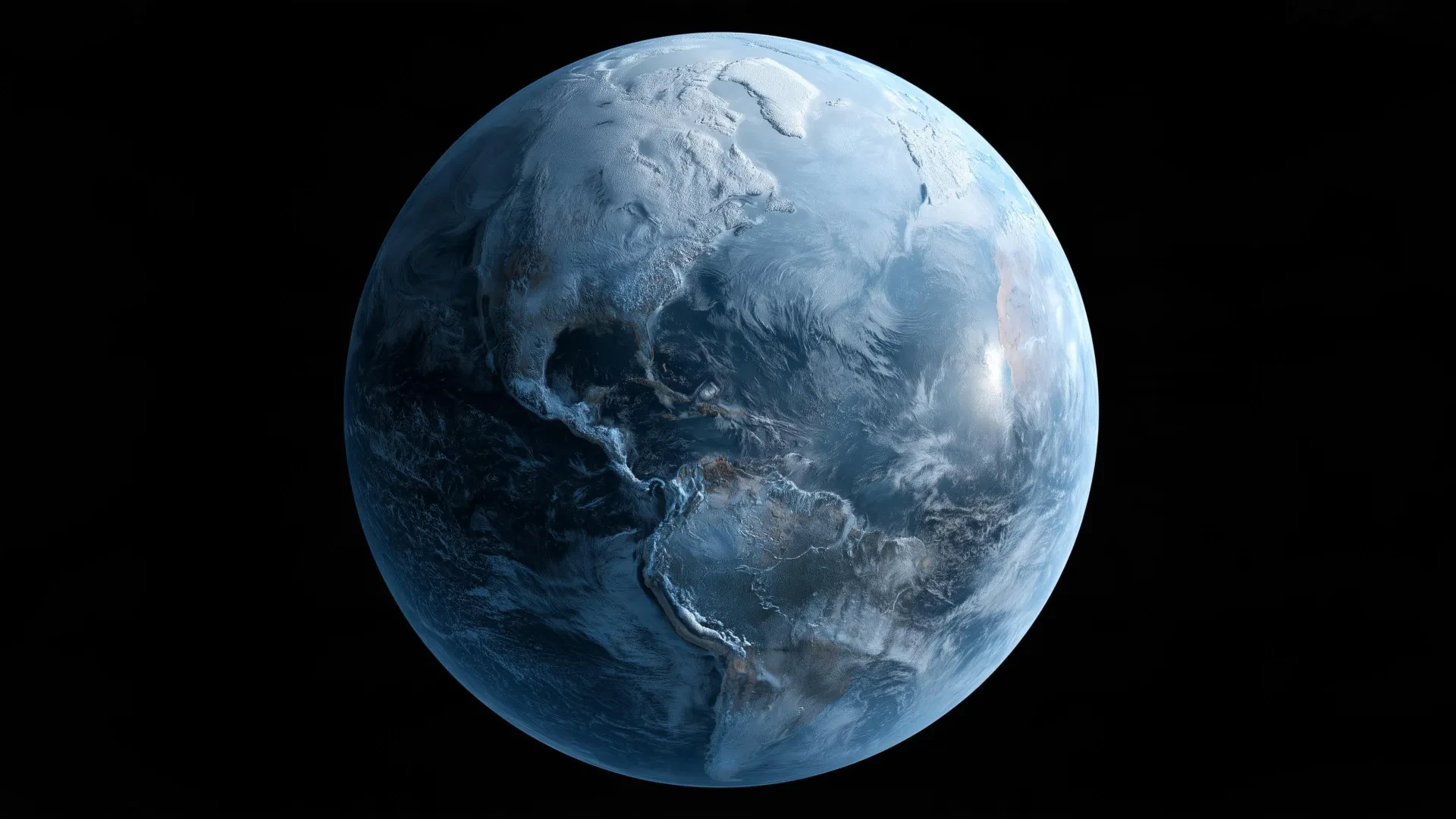
Scientists at the University of St Andrews have identified a previously unknown process that may help resolve one of the most enduring mysteries of Earth’s climate history: how the planet plunged into past ice ages. Their new findings reveal a surprising and robust connection between massive ice sheets in the Northern Hemisphere and dramatic ocean changes near Antarctica. This teleconnection suggests that significant cooling in one isolated part of the world could trigger a sprawling, planet-wide chain reaction, fundamentally altering global climate dynamics.
The study, which has been published in the Journal of Climate, offers a compelling and long-sought-after explanation for how growing northern ice sheets could systematically influence ocean circulation and sea ice patterns in the Southern Hemisphere. For generations, paleoclimatologists have known that these southern oceanic changes play a pivotal role in drawing down atmospheric carbon dioxide (CO2), serving as a crucial engine in the onset and intensification of ice ages. Until now, however, researchers have struggled to piece together a clear physical mechanism explaining how processes occurring at such vast, opposite ends of the planet could remain so tightly and consequentially connected.
For decades, the central driver behind Earth’s recurring glacial cycles was understood to be a reduction in atmospheric CO2, as immense volumes of carbon were pulled from the air and safely locked away in the deep ocean basins. Much of this complex sequestration process was governed by physical and biological shifts within the turbulent, wind-swept waters of the Southern Ocean surrounding Antarctica. Yet, a fundamental question remained stubbornly unanswered: How could expanding continental ice sheets in the high latitudes of the Northern Hemisphere—initially seeded and modulated by subtle, natural variations in Earth’s orbital geometry—cause the distant Southern Ocean to pull down significantly more carbon dioxide?
How Northern Ice Sheets Could Trigger Changes Near Antarctica
To solve this spatial puzzle, the research team at St Andrews proposes that the answer lies in the deep, continuous conveyor belt of global ocean water moving between the hemispheres. As colossal ice sheets spread across northern continental regions, they dramatically chill the adjacent marine environments, particularly cooling surface waters in the North Atlantic. Over vast spans of time, these newly chilled, dense waters sink and circulate southward through the abyss of the global ocean conveyor, eventually upwelling or otherwise influencing water masses in the distant Southern Ocean.
If this wave of northern-derived cooling is sufficiently strong when it arrives in the south, it could fundamentally alter ocean circulation patterns around Antarctica. These alterations can facilitate increased storage of CO2 trapped deep beneath the ocean’s surface, safely sequestered away from the atmosphere. As atmospheric concentrations of carbon dioxide subsequently decline, the greenhouse effect weakens, the planet cools further, and a feedback loop is established that helps intensify a full-scale ice age.
To thoroughly investigate this theoretical possibility, the scientific team turned to sophisticated computer simulations of global ocean circulation. Rather than applying a blanket drop in temperatures across the entire globe—which would mask regional cause-and-effect relationships—they deliberately restricted their cooling experiments to the northernmost latitudes. By chilling only the far north to mimic the physical impact of a massive continental ice sheet, the researchers were able to observe precisely how the Southern Ocean and the broader global marine network would respond to this isolated northern impetus.
The results of these computational experiments were striking. Cooling the far northern regions alone produced an astonishing 74% as much CO2 drawdown as a separate, control simulation in which the entire planet was simultaneously cooled. This high percentage strongly indicates that temperature fluctuations and ice accumulation in the Northern Hemisphere hold a remarkably powerful, disproportionate influence over the Southern Ocean and its capacity to act as a planetary carbon sink.
A Missing Link in Earth’s Ice Age Mystery
The newly published simulations provide robust, model-based support for the long-suspected physical bridge between expanding northern ice sheets and distant shifts in Southern Ocean dynamics. They demonstrate that colder water masses originating in the North Atlantic can indeed travel through the deep ocean to eventually influence circulation patterns around Antarctica. This transit assists in stripping carbon dioxide from the atmosphere, directly contributing to the profound global cooling signature associated with Earth’s historical ice ages.
For many decades, the vast majority of academic research into ice age climate mechanisms has focused heavily on the Southern Ocean, largely due to its undeniable, dominant role in controlling atmospheric carbon dioxide budgets over geological timescales. Only in more recent years have climate scientists begun to fully recognize and evaluate how distant, seemingly disconnected ocean regions interact with these southern processes, creating a more integrated view of paleoclimate systems.
Lead author Dr. Madison Shankle, a researcher from the University of St Andrews School of Earth and Environmental Science, elaborated on the broader significance of the discovery and the methodological leap it represents for the field.
"Essentially, we’ve produced evidence of a plausible mechanism connecting these two far-flung puzzle pieces—Northern Hemisphere ice sheets and Southern Hemisphere ocean circulation changes leading to CO2 drawdown—which has been a tricky thing to explain in our theory of Earth’s past ice ages," Dr. Shankle explained. "Our study takes the step of actually demonstrating them working in model simulations, which is a big step forward for this field."
What Ancient Ice Ages Reveal About Today’s Climate
Gaining a clearer understanding of how ancient ice ages developed and progressed offers modern scientists an invaluable framework for studying Earth’s natural carbon cycle. These historical periods serve as natural laboratories, revealing the complex ways carbon dioxide continually cycles between the atmosphere and the deep oceans, and demonstrating how subtle shifts in that delicate balance can dictate global temperatures.
By identifying and validating another concrete mechanism that likely helped reduce atmospheric CO2 levels during ancient ice ages, researchers are now equipped to construct a much more complete, comprehensive picture of how Earth’s intricate climate system operates under stress.
This accumulated knowledge of past climate states is especially vital today. As contemporary scientists and policymakers work urgently to understand how the planet’s oceans, ice sheets, and other natural carbon sinks will respond to the unprecedented volumes of additional carbon dioxide currently being introduced into the Earth system by human activities, historical analogues provide crucial insights into the planet’s future trajectory.