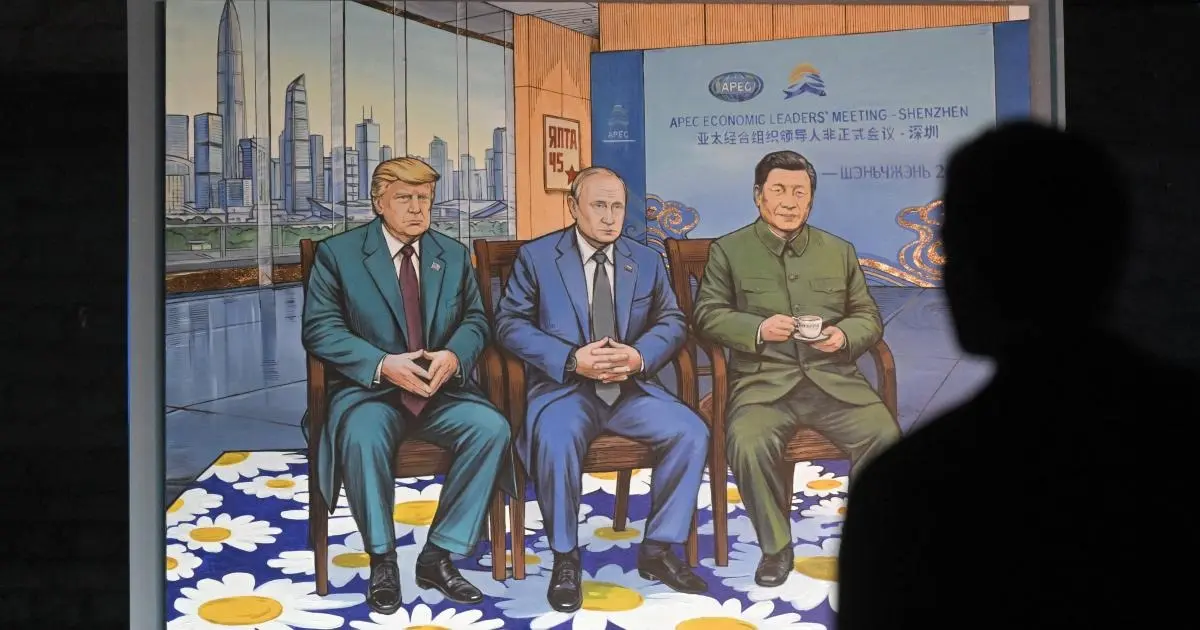
In just a few days’ time, U.S. President Donald Trump, Chinese leader Xi Jinping, and Russian President Vladimir Putin could convene for an unprecedented three-way summit on the sidelines of the upcoming Asia-Pacific Economic Cooperation (APEC) meeting in Shenzhen, China. According to The Wall Street Journal, the trialogue was initially floated by Putin last month as a potential diplomatic channel to discuss bringing an end to the ongoing war in Ukraine.
While no formal or firm plans have been officially announced by the participating governments, the mere prospect of such a gathering has already sent shockwaves through international diplomatic circles, provoking widespread consternation among Western allies and U.S. lawmakers alike.
Polish Foreign Minister Radoslaw Sikorski has publicly warned against the dangers of repeating the historical mistakes of the 1945 Yalta Conference, where U.S. President Franklin Roosevelt and British Prime Minister Winston Churchill ultimately capitulated to Soviet leader Joseph Stalin, cementing Soviet domination over Eastern Europe. Domestically, the proposed talks have drawn sharp criticism from Capitol Hill. U.S. Senator Chris Coons took to social media to voice his strong opposition, writing on X that there can be no discussions regarding the future of Ukraine without Ukrainian representation at the negotiating table, and arguing that meaningful negotiations are impossible so long as Trump projects an image of weakness and appeasement toward Xi and Putin.
These anxieties are rooted in a legitimate apprehension regarding Trump’s well-documented historical pattern of cozying up to authoritarian rulers while frequently distancing himself from traditional democratic allies. Should the U.S. president proceed with sitting down alongside Xi and Putin, he faces intense pressure to avoid selling out European and Asian partners who will not have a seat at the table. Furthermore, given the notoriously headstrong personalities of the three leaders and their deeply competing national interests—which pit Washington directly against what Xi has famously described as a "no limits" partnership between Beijing and Moscow—the meeting risks yielding little to no tangible progress on major geopolitical issues.
Nevertheless, supporters of the diplomatic initiative argue that Trump would be entirely justified in joining a summit with Xi and Putin. No U.S. president has ever convened a trilateral meeting with the leaders of China and Russia. Such a summit would effectively break the diplomatic ice and initiate a much-needed dialogue between rival superpowers. Authoritarianism is an enduring reality of the modern global landscape, meaning that autocracies and democracies must learn not only to coexist comfortably alongside one another, but also to collaborate in taming dangerous geopolitical rivalries and tackling pressing global challenges within an increasingly interdependent world.
For many Americans, getting along with adversarial states like Russia and China—whose governance models directly challenge the United States’ core commitment to spreading democracy—will not be an easy pill to swallow. Yet proponents suggest that by engaging directly with the heads of the world’s leading autocracies, Trump is taking a bold and pragmatic step in the right direction.
If the meeting in Shenzhen materializes, diplomats suggest Trump should keep his ambitions measured and pragmatic, focusing strictly on achieving limited, meaningful progress across a narrow band of core issues that stand to benefit from a direct three-way conversation. These focal points include critical flashpoints such as the Korean Peninsula, Ukraine, and Iran, alongside vital discussions on arms control and broader strategic stability. Even if the summit ultimately fails to produce groundbreaking, concrete results, many foreign policy analysts argue it will still have served a valuable purpose by paving the way for future successors to advance great-power cooperation across deep ideological divides and help stabilize a fragmented world.
CONCERTED EFFORT
The concept of great-power coordination is not entirely new. Analysts have long argued that a global concert—envisioned as an informal steering group of major powers modeled loosely on the nineteenth-century Concert of Europe—offers the most viable framework for curbing geopolitical competition and enabling collective action in a multipolar world. In addition to the United States, China, and Russia, such a construct would ideally incorporate India, Japan, the European Union, and key representatives from Africa, Latin America, the Middle East, and Southeast Asia.
The core philosophy of a concert model relies on sacrificing broad representation in exchange for practical efficacy, ensuring that only geopolitically influential states critical to global stability are given a seat at the table. By deliberately setting aside ideological differences, these frameworks bring democracies and autocracies together to prioritize international cooperation. Because concerts eschew rigid, binding procedures in favor of informal consensus-building, they possess the unique capacity to succeed even when formal international institutions, such as the UN Security Council, remain deadlocked, or when the United States wavers in its steadfast commitment to rules-based multilateralism.
Despite the theoretical appeal of such a framework, the current global climate is arguably unsuited for a global concert. Concerts function effectively only when their participating members share a genuine commitment to maintaining the territorial status quo, demonstrate a willingness to exercise strategic restraint, pursue mutual benefits, and remain ready to settle disputes through diplomatic channels. Putin’s 2022 invasion of Ukraine and Xi’s subsequent decision to diplomatically and economically back Moscow have temporarily shattered any realistic hopes that the great powers are prepared to normalize restraint and the peaceful resolution of disputes. Meanwhile, Trump’s characteristic "America first" statecraft has historically favored unilateralism over joint action and mutual gain.
Yet, even if Trump, Xi, and Putin currently represent the wrong group of leaders at the wrong time to establish a permanent great-power steering group that other major international players would willingly join, Trump’s iconoclastic approach to diplomacy establishes a uniquely useful precedent. His high-profile Alaska summit with Putin in the previous year and his dual summits with Xi earlier this year were admittedly heavy on diplomatic pageantry and light on substantive policy outcomes.
Nonetheless, by taking the highly controversial step of pursuing joint talks with both leaders, Trump is actively widening the diplomatic Overton window and expanding what will be politically permissible for future U.S. presidents. Preventing catastrophic great-power conflict and managing a world descending into deeper disarray requires the United States to forge constructive working relations with both Beijing and Moscow. In that regard, Trump arguably deserves credit for initiating a trialogue that future administrations can build upon.
WAR AND PEACE
Should the trilateral meeting take place in Shenzhen, Trump, Xi, and Putin should prioritize easing geopolitical tensions across several critical flashpoints. Among them, the Korean Peninsula presents the most immediate and viable opportunity for genuine trilateral collaboration.
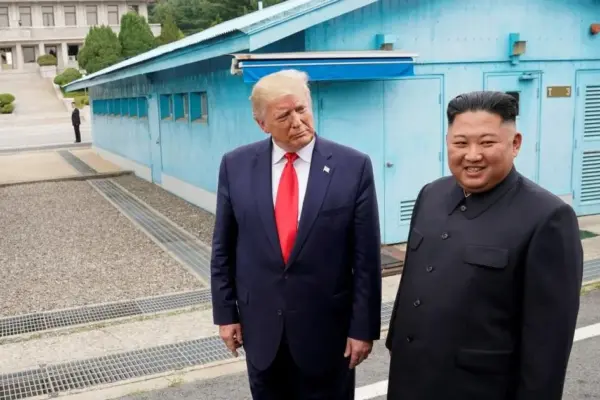
During the UN General Assembly session in September, South Korean President Lee Jae Myung laid out an ambitious, forward-looking plan aimed at normalizing relations with Pyongyang. His proposal included replacing the peninsula’s long-standing 1953 armistice with a formalized "peace regime" designed to promote mutual respect for each other’s governing systems and acknowledge existing differences. As part of this comprehensive strategy, Lee advocated for a phased approach to North Korean denuclearization, starting with an initial freeze on further weapons development, followed by gradual, verified reductions in Pyongyang’s nuclear weapons and ballistic missile stockpiles until the entire peninsula is completely denuclearized.
This bold proposal from Seoul has the potential to align the diverging interests of the United States, China, and Russia. Trump has repeatedly expressed a desire to de-escalate tensions on the Korean Peninsula and is reportedly open to meeting once again with North Korean leader Kim Jong Un. Meanwhile, while Beijing and Moscow remain locked in a subtle competition for influence over Pyongyang, both ultimately desire a stable relationship between North and South Korea. This shared interest could make them uniquely willing to cooperate on initiatives aimed at halting nuclear weapons production and encouraging formal dialogue between Seoul and Pyongyang. Consequently, Trump, Xi, and Putin should aim to emerge from their trilateral discussions with a unified plan to advance President Lee’s peace agenda, starting with joint backing for a freeze on North Korean nuclear development.
By contrast, the prospects for achieving meaningful progress toward ending the war in Ukraine remain significantly dimmer, though not entirely impossible. Ideally, Trump should be actively striving to erode Russia’s financial and logistical capacity to sustain the war. However, he has historically resisted tightening economic sanctions against Moscow. In fact, Trump has frequently spoken favorably about potential business ventures with Russia and, in recent weeks, even struck a private arrangement with Putin to channel more Russian diesel into global markets while waiving a fresh round of congressional sanctions. These actions suggest that Trump has often prioritized domestic economic concerns, such as lowering fuel prices, over systematically restricting Russia’s ability to finance its military campaign in Ukraine.
A trilateral summit offers Trump a timely opportunity to reverse course and pressure Xi into reining in Putin. Trump has frequently vowed to bring the war in Ukraine to a swift conclusion, and the Chinese leader possesses the precise leverage required to help achieve that goal. Xi provides vital diplomatic cover for the Kremlin, serves as the single largest buyer of Russian oil and gas, and acts as the primary international supplier of critical dual-use items—such as advanced semiconductors and heavy machine tools—that are indispensable to Russian weapons manufacturing.
Thus far, Xi has largely enabled Putin’s war in Ukraine, presumably because the protracted conflict serves Beijing’s broader strategic interests by successfully diverting U.S. political attention and military resources away from the Indo-Pacific region, deepening divisions within NATO, and allowing both Xi and Putin to project themselves as leaders of a global resistance against Western hegemony. However, during their bilateral meeting this May, Trump and Xi formally agreed to pursue "a constructive relationship of strategic stability" between the United States and China. Xi could actively advance this stated goal by using his considerable influence to press Putin toward de-escalation.
As the grinding realities of the war take a heavier toll on the Russian population, the Kremlin may find itself increasingly receptive to such pressure. Continuous Ukrainian drone strikes are inflicting severe damage on Russia’s critical oil sector and domestic logistics networks, leaving ordinary Russian citizens facing mounting shortages of fuel and essential commodities. Furthermore, an estimated 35,000 Russian soldiers are killed or severely injured every month on the front lines in eastern Ukraine, forcing Putin to weigh the politically perilous option of escalating domestic military mobilization. With no clear battlefield victory in sight, Putin faces mounting incentives to consider a diplomatic off-ramp.
During the summit, Trump and Xi could jointly press Putin to accept a set of limited yet highly consequential de-escalation steps. These measures could include a formal, monitored agreement between Moscow and Kyiv—brokered and guaranteed jointly by Washington and Beijing—to immediately halt attacks on critical energy installations, civilian infrastructure, and commercial shipping lanes. Furthermore, Trump and Xi could exert joint pressure on Putin to refrain from provocative actions that risk broadening the conflict into a wider regional war, such as violating NATO airspace with stray drones, sabotaging European infrastructure, and issuing veiled threats regarding the use of nuclear weapons. Combined with the overarching incentive of improving diplomatic and commercial ties with the United States, this coordinated pressure could convince Putin to relent on at least some of these fronts.
STRAIT TALK
Trump could additionally utilize the trilateral summit to seek strategic assistance in extricating the United States from its ongoing military involvement in the Middle East, where a persistent conflict with Iran has generated widespread regional instability and volatile oil markets. As Tehran continues to issue maximalist demands and ongoing hostilities disrupt commercial shipping through the strategic bottlenecks of the Strait of Hormuz and the Bab al-Mandeb Strait, Washington finds itself in urgent need of a diplomatic exit strategy.
Thus far, neither Beijing nor Moscow has shown any inclination to assist the United States in this arena. China continues to import Iranian oil while providing Tehran with critical military intelligence and dual-use components utilized in Iranian drones and missiles. Meanwhile, Russia supplies Iran with advanced satellite targeting data, munitions, sophisticated drone technology, and logistical backing. Both Beijing and Moscow derive strategic satisfaction from seeing the United States bogged down in a costly regional conflict that exacerbates partisan divisions within the American electorate and strains cohesion within NATO.
As a major global energy exporter, Russia directly benefits from the sharp spikes in international oil prices triggered by the conflict, making any effort to convince Putin to curtail his support for Iran a likely lost cause. China, however, occupies a vastly different position. As the world’s largest importer of crude oil, Beijing possesses a clear, vested economic interest in lowering global energy prices by stabilizing exports from the Middle East. Although China’s substantial strategic oil reserves have historically buffered its domestic economy against rising fuel costs, those reserves have experienced significant depletion. China’s crude oil imports have resumed an upward trajectory, leaving its broader economy acutely vulnerable to prolonged high energy prices if the Middle Eastern conflict drags on. Furthermore, as the world’s foremost exporter of manufactured goods, China suffers directly from the dampening effect that soaring energy costs exert on global economic growth.
Consequently, Xi may prove surprisingly receptive to helping Trump find a diplomatic resolution to the conflict. Trump should explicitly ask Xi to halt, or at least substantially restrict, the ongoing flow of Chinese dual-use technology and components to Iran. Existing U.S. naval blockades, financial restrictions, and commercial sanctions have already taken a severe toll on Iran’s domestic economy and military supply chains. By choking off critical technology shipments from China, Beijing could deepen Tehran’s economic isolation and help convince the Iranian leadership to negotiate a genuine end to the hostilities.
Moreover, Xi is uniquely positioned to press Iran to drop its unrealistic pre-conditions for ending the war, which have included demands that the United States immediately withdraw all military forces from the Persian Gulf, release frozen Iranian assets, and lift all economic sanctions unconditionally. While Washington might ultimately be willing to offer selective economic relief, such concessions must be part of a broader postwar negotiation aimed at permanently curbing Iran’s nuclear ambitions. Xi can help clear the path toward such talks by urging Tehran to accept credible, realistic terms for concluding the immediate conflict.
A NEW START
Beyond addressing active geopolitical flashpoints, Trump should use the trilateral platform to lay the groundwork for future strategic stability by initiating arms control negotiations alongside Putin and Xi. Virtually every major arms control agreement previously negotiated between Washington and Moscow has now expired; their final remaining nuclear pact, the New START treaty, officially lapsed in February. As a result, there are currently zero binding caps restricting American and Russian strategic nuclear arsenals, alongside a complete absence of regular on-site inspections, data exchanges, or formal notifications regarding planned military exercises.
This regulatory vacuum creates a dangerous nuclear free-for-all, a situation made acutely perilous by Moscow’s frequent nuclear saber-rattling throughout the war in Ukraine and the Kremlin’s persistent penchant for military provocations, such as dispatching explosive-laden drones across NATO airspace.
Recognizing these risks, Trump appropriately proposed in October that any trilateral summit must include a substantive discussion on nuclear arms control. Historically, China has fiercely resisted engaging in formal arms control talks, arguing that it should not be subjected to nuclear limitations when its overall arsenal remains vastly smaller than those of the United States and Russia. However, Beijing is currently in the midst of rapidly expanding and modernizing its nuclear forces. Pentagon projections indicate that China will possess more than 1,000 operational nuclear warheads by 2030, bringing its capabilities nearly on par with the United States and Russia, which maintain stockpiles of roughly 1,800 operational warheads each. Given the uncertain trajectory of bilateral U.S.-China relations, ongoing instability on the Korean Peninsula, and escalating tensions across the Taiwan Strait, Beijing can no longer remain outside high-level nuclear arms control discussions.
Realistically, Trump can do little more at this stage than initiate this critical conversation, inviting Xi and Putin to carry the dialogue forward through future trilateral negotiations led by specialized teams of diplomats and arms control experts. In subsequent talks, the three nations should explore not only numerical caps on strategic nuclear stockpiles, but also expanded military-to-military communication channels, crisis management protocols, advance notifications of major military exercises, counterproliferation efforts, and other institutional safeguards designed to reinforce global strategic stability.
HOLD THE LINE
While Trump could theoretically introduce a host of additional topics to the summit agenda—ranging from international trade and energy security to the regulation of artificial intelligence—he must guard against overcomplicating the agenda with a sprawling, unfocused conversation that risks achieving nothing. Instead, he could easily secure a modest, symbolic diplomatic win by proposing a focused, three-way cooperative initiative in an area where practical collaboration remains relatively straightforward. Examples include launching a joint medical mission to the Democratic Republic of the Congo to help combat an Ebola outbreak, or coordinating a joint humanitarian relief operation to deliver aid to populations in Yemen or Gaza. A concrete, highly visible effort of this nature would tangibly demonstrate that trilateral dialogue can yield viable, real-world cooperation.
At the same time, Trump must remain vigilant against his own eagerness for a diplomatic breakthrough, ensuring that neither Xi nor Putin is able to manipulate the situation to their advantage. The timing of the APEC summit is particularly sensitive, arriving just two weeks after American voters delivered a historic rebuke to Trump and his party in the U.S. midterm elections. The notoriously sensitive U.S. president might feel undue temptation to offer sweeping concessions to Beijing and Moscow simply to secure a much-needed foreign policy triumph.
Specifically, Trump must avoid striking any behind-the-scenes compromises on the future of Ukraine that he subsequently attempts to force upon Kyiv and its European supporters. Similarly, he must hold a firm line on the defense of Taiwan, even as he actively courts Xi’s assistance regarding North Korea, Ukraine, and Iran. Failing to maintain these boundaries would risk confirming the darkest fears of critics who foresee a modern-day Yalta unfolding. Capitulating to Xi and Putin would deeply alienate Washington’s core democratic allies, project an unmistakable image of American weakness, and severely erode global deterrence.
Furthermore, Trump must carefully manage the delicate optics surrounding a trilateral summit. Putin remains an indicted international war criminal actively prosecuting a brutal war of aggression against a sovereign European neighbor, meaning it is far too premature to welcome him back into the international diplomatic mainstream. And while Washington is entirely right to seek a functional working relationship with Beijing, it is equally vital that Trump’s proclaimed friendship with Xi yields concrete, positive results for American security interests.
Trump must approach the upcoming talks with sobriety and pragmatic resolve, striving to demonstrate that Washington, Beijing, and Moscow can ultimately find ways to work together to promote international peace and stability. While a summit in Shenzhen will not magically usher in a new golden era of great-power collaboration, and may not even produce immediate, concrete deliverables, the meeting itself would establish a profoundly valuable historical precedent. Simply by stepping into the room and sitting down face-to-face with Xi and Putin, Trump will succeed in launching a much-needed trilateral conversation.