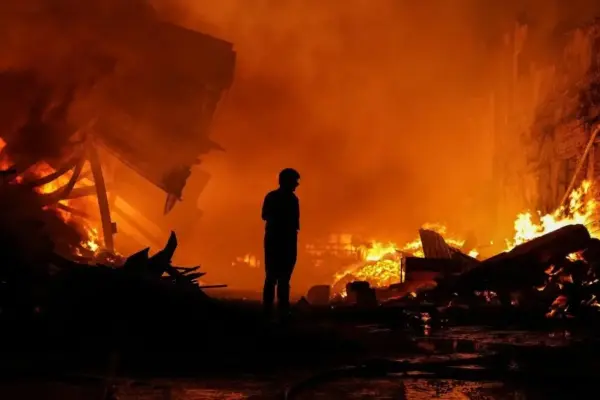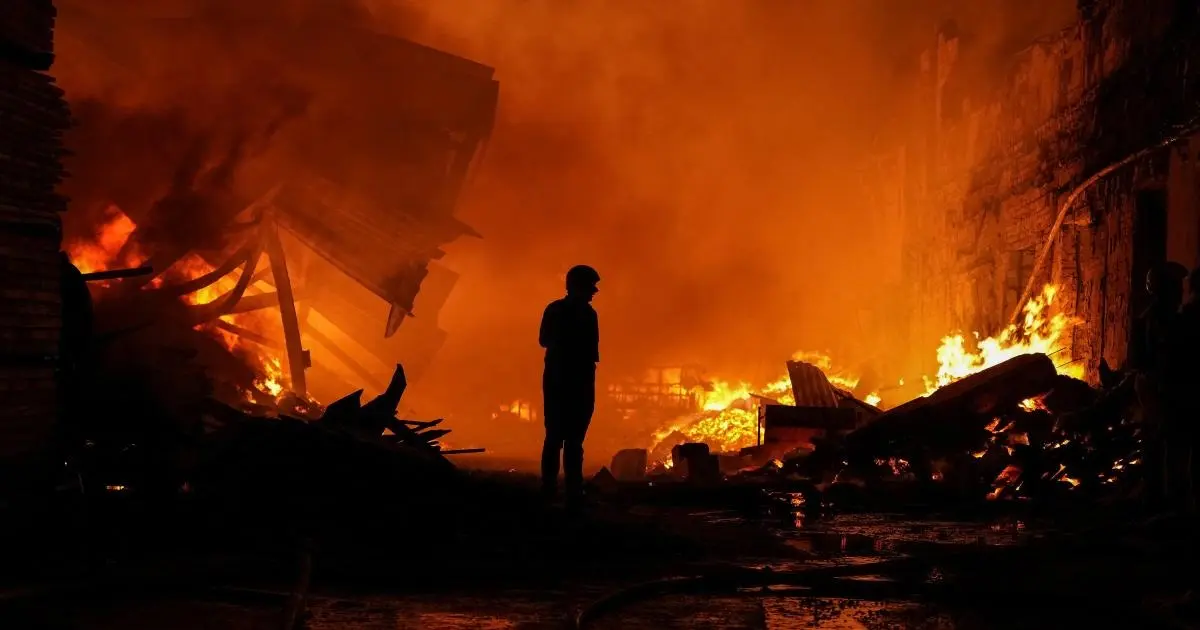
At some point over the past decade, a profound and deeply unsettling shift occurred in the global consciousness: the world began accepting war as an inevitable condition of human existence. Wars of aggression—stretching from the plains of Ukraine to the landscapes of Lebanon and Iran—are steadily on the rise, carrying with them unimaginable horror, widespread ruin, and the looming specter of a wider international confrontation. Governments around the globe are increasingly treating war not as a catastrophic failure of diplomacy, but as a routine line item to be budgeted and prepared for. Military spending is climbing to historic highs, technological and arms races are intensifying at a blinding pace, and a growing number of countries are actively considering whether they must acquire a nuclear deterrent to guarantee their own security.
Nothing is more dangerous than this quiet normalization of armed conflict. It represents an alarming regression, a return to a dark norm that persisted for the vast majority of human history, when war served as the primary organizing principle of the international system. For centuries, armed conflict was viewed as the natural, default way for sovereign states to settle disputes or enlarge their territory at the immediate expense of weaker neighbors.
Yet, the unprecedented devastation and vast wreckage of World Wars I and II in the first half of the twentieth century made that brutal status quo utterly unacceptable. Countries united behind a monumental, collective effort to transform war from a legitimate instrument of statecraft into an outlawed act. While wars did not magically end in 1945, for decades afterward they were overwhelmingly condemned by the international community as violations of a shared moral and legal code.
In recent decades, however, governments’ commitment to the cause of peace has demonstrably weakened. Millions of people once took to the streets in hundreds of cities worldwide to oppose the U.S.-led invasion of Iraq in 2003, yet that war proceeded regardless of public will. Fought on false premises and in clear violation of international law, the conflict brought catastrophic destruction to Iraq, severely fed regional instability, and fueled deep resentment and terrorism directed at Western nations.
That conflict also marked a crucial historical turning point. Ever since, the active pursuit of peace has steadily receded from the international agenda amid deepening geopolitical competition and a growing inattention or outright indifference toward the multilateral efforts that for decades successfully discouraged acts of aggression.
At the very end of this perilous path lies the ultimate nightmare: another world war—the very catastrophe that the twentieth-century institutional order was specifically designed to prevent. With that dire future looming menacingly on the horizon, governments must relearn the lost art of opposing war. It is the fundamental responsibility of every country, including Spain, to take direct, principled action that constrains the ability of others to wage war and to vigorously strengthen the international institutions that serve as the ultimate guarantors of peace.
The success of this vital project will depend entirely upon an expansive form of multilateralism known as "maxilateralism"—a model of cooperation that deliberately embraces as many countries as possible, rather than being limited to small, exclusive, ad hoc groupings. Its ultimate ambition is to make war increasingly impractical, and eventually, completely unimaginable. In 2003, anti-war protesters across Spain famously chanted “¡No a la guerra!”—“No to war!” Today, the world simply cannot afford to ignore them again.
A Dangerous Escalation
International efforts to formally reject war as an instrument of national policy date back nearly a century to the Kellogg-Briand Pact of 1928, a landmark treaty signed in Paris by 15 countries and later joined by dozens more. While it ultimately proved insufficient to prevent the outbreak of World War II, it successfully planted a vital seed. When representatives of 50 nations gathered in San Francisco in 1945 to establish the United Nations, they brilliantly revived the spirit and core principles of the Kellogg-Briand Pact and endowed them with something they had previously lacked: binding institutional form.
The UN Charter strictly prohibited the threat or use of force against the territorial integrity or political independence of any sovereign state. Unlike its 1928 predecessor, the UN Charter was officially backed up by global institutions explicitly empowered to enforce those rules.
In the decades that followed, these nascent institutions established a robust international order that penalized violations and created powerful economic and diplomatic incentives for cooperation. Simultaneously, public opposition to war was growing steadily stronger across the globe. Popular defiance of Cold War militarism was clearly visible in worldwide resistance to the Vietnam War and in massive public movements against nuclear weapons. Global pacifism reached its historical high-water mark in the 1990s, a period when a vibrant global civil society mobilized to defend humanitarian causes and when the United Nations held sufficient authority to champion a sweeping, effective peace agenda.
Today, however, the world is confronting a grim reality: there is more active armed conflict than at any time since 1946. According to data from the Uppsala Conflict Data Program, there were 65 active conflicts involving governments in 2025, exactly double the number recorded in 2010. An estimated 250,000 people lost their lives in those conflicts, marking the highest annual death toll in three decades, not seen since the Rwandan genocide. Furthermore, close to 120 million people worldwide have been forcibly displaced from their homes by war.
Most worryingly, wars of aggression—which directly violate the core tenets of the UN Charter—have made a disturbing comeback. Russia launched a full-scale invasion of Ukraine. The United States and Israel launched military attacks against Iran. As fighting continues year after year in volatile places such as Lebanon, Sudan, and Yemen, it is becoming glaringly clear that war is once again being accepted as a normal occurrence.
There is currently no sign of this dangerous trend slowing down. Global military budgets have surged to unprecedented levels not seen in generations, coming at the direct expense of vital social and development spending. Over the past decade alone, global defense spending has increased by more than 40 percent, with numerous countries effectively doubling their military budgets. The nearly $3 trillion that the world now spends annually on defense is roughly equivalent to the entire Gross Domestic Product of the African continent. Even nations with a long, proud tradition of military restraint, such as Denmark, Germany, Japan, and Norway, are rearming rapidly, with some even reviving mandatory military service programs.
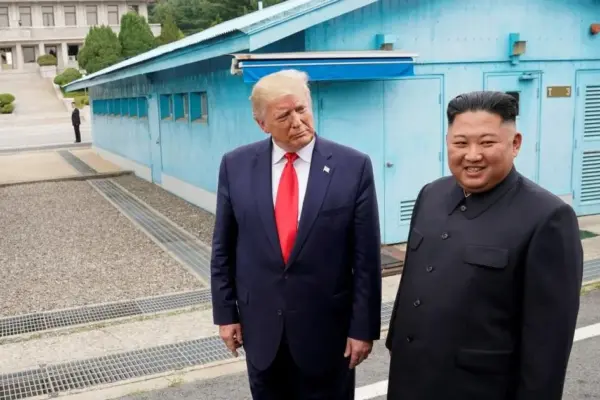
The renewed threat of nuclear war is a cause for even greater dread. All nine nuclear-armed states are actively modernizing their arsenals, significantly boosting their destructive capabilities. China’s nuclear arsenal, which was estimated to be between 200 and 300 warheads in the late 2010s, has grown to an estimated 620 warheads. North Korea has similarly expanded its stockpile from roughly ten to 20 warheads in 2018 to around 60 today, while simultaneously developing increasingly sophisticated launch platforms.
France announced its first increase in its nuclear warhead stockpile since 1992, while the United States and Russia—the world’s two largest nuclear powers—have failed to preserve the last remaining bilateral treaty constraining their strategic arsenals. Concurrently, a growing number of non-nuclear powers have begun to seriously consider acquiring their own independent nuclear arsenals.
At the same time, artificial intelligence is aggressively powering ever more dangerous weapons of war. Human oversight is being progressively reduced as advanced AI makes it possible to fully automate cyberattacks targeted against critical infrastructure, including power grids, hospitals, and national financial systems. Sophisticated AI systems have already been deployed to hack government bodies and enable the mass production of hyper-realistic deepfakes and coordinated disinformation campaigns.
The dangerous integration of AI into nuclear technologies poses an existential threat to humanity. As AI drastically speeds up decision-making processes, it severely reduces the precious time available for deliberate human judgment. Similarly, the unchecked use of AI in biotechnology could dramatically lower existing barriers to harmful scientific experimentation and the illicit development of devastating bioweapons. In both critical areas, this rapidly evolving technology is elevating the risk of catastrophic miscalculation, unintended escalation, and mass destruction to levels higher than ever before in human history.
Together, these compounding dynamics are multiplying the statistical chances that any localized crisis could quickly spiral into planetary annihilation. Countries are frantically building the modern instruments of catastrophe at the blinding speed of technological innovation, while the vital instruments of international control and diplomacy move at a much slower, more sluggish pace.
War Is Not the Answer
Shifting political dynamics are actively pushing the world away from the path of peace and steering it toward dangerous confrontation and militarization. A multipolar world is not, by definition, a inherently more dangerous one, but the steady erosion of the rules and institutions designed to manage tensions between these power poles has made today’s international landscape exceptionally volatile.
Competition among great powers is intensifying rapidly, with unchecked hegemonic ambitions encouraging assertive foreign policies, while revisionist states openly challenge established international rules and borders. Belligerent nationalism is on the rise across multiple continents, and far-right movements are successfully advancing a toxic worldview in which international relations is viewed strictly as a zero-sum game where countries must relentlessly compete rather than cooperate. Even centrist political leaders are increasingly embracing the aggressive language of war preparedness. Although these leaders may not harbor explicit intentions to start a war, their careless words ultimately feed a dangerous, pervasive militaristic mindset.
Within this toxic context of intense rivalry, modern wars of aggression are routinely wrapped in carefully crafted narratives of necessity, liberation, self-defense, or historical justice. Aggressors deliberately present their military operations as inevitable, having thoroughly demonized their chosen targets to justify preemptive action against them. They routinely describe each new war as the ultimate answer to insecurity—falsely framing it as a war to end all wars.
However, these conflicts will never yield a safer world. Every single time a sovereign state embarks on a war of aggression, it actively erodes the fragile global norms that protect all countries from the arbitrary use of force—including the aggressor nation itself.
Wars exact immense, unimaginable human costs. They shatter peaceful societies and abruptly interrupt innocent lives. In 2025, according to official UN records, at least one civilian died in an armed conflict somewhere in the world every 14 minutes, while more than five million people were forcibly uprooted from their home countries. The resulting economic costs are equally devastating. The ongoing war involving the U.S., Israel, and Iran has severely disrupted critical maritime trade routes and international air traffic, driving up the global prices of energy, agricultural fertilizer, and other essential commodities, leaving millions of vulnerable people worldwide to suffer the severe consequences.
War also inherently creates new and unpredictable dangers. Once fighting breaks out, its ultimate trajectory is notoriously unpredictable. Conflicts have a natural tendency to draw in new regional actors and spill violently over neighboring borders. The ongoing war involving Iran serves as a prime, sobering example. Since early 2026, Iran has launched strikes against targets in several Gulf countries and other immediate neighbors—actions that Spain has consistently and forcefully condemned. Attacks on civilian and commercial vessels continue to threaten broader regional stability, while the wider conflict has succeeded in reigniting simmering civil conflicts in Iraq, Lebanon, and Yemen.
Finally, wars rarely produce a lasting, stable peace. Instead, they deeply grievances, harden bitter divisions, and create the breeding grounds for future cycles of violence. Russia’s ongoing war of aggression in Ukraine, for instance, has thoroughly destroyed trust in Moscow for a generation. The devastating violence in Gaza has inflamed profound anger toward Israel, potentially laying the groundwork for dangerous new waves of terrorism. Similarly, the military campaign involving Iran has further destabilized an already fragile Middle East, severely hindering any prospects for regional cooperation.
How to Oppose a War
The global community has a profound moral responsibility to actively resist the steady normalization of war. Remaining silent in the face of such catastrophe is an act of cowardice and complicity. Spanish society has made its collective position abundantly clear: three out of four Spaniards identify the threat of war as their single greatest fear, and an even greater majority firmly believe that another world war is looming on the horizon.
Yet, it is simply not enough to merely condemn war in principle. The noble ambition of ending war must be matched with concrete, decisive political and economic action that makes it increasingly difficult for nations to start, sustain, and justify armed conflict.
Spain has consistently endeavored to take such courageous action. It has staunchly defended the international laws that stand as the final barrier between a global order governed by civilized rules and one governed by brutal force. Spain has consistently and publicly denounced armed attacks that clearly violate the letter and spirit of the UN Charter.
From the very first day of the devastating war in Gaza, Spain has actively called for an immediate and permanent ceasefire, the unconditional release of all hostages, and the unrestricted, massive delivery of humanitarian assistance to suffering populations. In May 2024, Spain formally recognized the state of Palestine in the sincere hope that this diplomatic step would help advance a negotiated, comprehensive, and lasting solution to the conflict. Furthermore, Spain has actively supported the vital investigative and judicial efforts of the International Court of Justice and the International Criminal Court to hold Israeli leadership accountable for violations of international humanitarian law. While Israel possessed an undeniable right to self-defense in the wake of the horrific October 7 terrorist attacks, that fundamental right does not justify the scale of destruction in Gaza or the continuous expansion of the illegal occupation of the West Bank.
Effectively deterring war also requires significantly raising the economic and political costs of aggression. The rest of the international community must ensure that any nation choosing to wage war cannot do so without paying a severe price. Throughout the course of Russia’s unprovoked war in Ukraine, for example, the European Union has introduced sweeping, successive waves of economic sanctions against Moscow—measures that Spain has consistently and robustly supported. Spain has also provided critical financial, humanitarian, and military assistance to Ukraine, helping the nation successfully defend its sovereign territory and deny Russia the spoils of illegal conquest.
Sovereign nations must firmly refuse to help belligerents expand existing conflicts. Spain, for instance, has maintained a strict arms embargo on Israel since 2023. Additionally, the Spanish government denied the United States the use of its domestic territory and military facilities for operations related to the war against Iran. This decision by Spain was not conceived as an act of hostility toward a valued ally, nor was it an expression of diplomatic neutrality or underlying sympathy for the Iranian regime. Rather, it was a sober, calculated judgment that getting involved would directly enable a dangerous escalation of the conflict, thereby deepening regional and global insecurity.
To maintain its foundational commitment to peace, Spain recognized that it had to be willing to say no, even when doing so carried a tangible political cost. Had a greater number of countries adopted a similar stance, the devastating wars in Gaza and Iran would have been far harder and significantly costlier to wage.
Investing in long-term human prosperity is equally essential for global security. True national security is fundamentally strengthened when societies are resilient, internal inequalities are significantly reduced, and citizens can rely on robust public institutions. Spain’s decision to opt out of NATO’s proposed defense spending target of five percent of GDP reflected this deep-seated understanding. This position did not stem from any lack of commitment to collective European defense—indeed, the Spanish government has actively championed Europe’s push for strategic autonomy and has tripled net defense spending over the past eight years.
Instead, the government believes that military deterrence and social welfare must reinforce one another. By keeping defense spending proportionate, Spain has successfully preserved the necessary fiscal space to invest an additional 145 billion euros directly into social protection, public housing, healthcare, and education, alongside more than 30 billion euros dedicated to the green transition. These are comprehensive programs that make society far more cohesive, adaptable, and ultimately, more secure.
A Collective Effort
Yet, the unilateral efforts of any single country can only accomplish so much. Effectively starving the war machine of its vital lifelines requires an all-hands-on-deck approach—a collective effort rooted in genuine, broad-based multilateralism. This is the only strategic framework that has successfully worked in the past. The robust multilateral system built in the wake of World War II spanned the entire globe, successfully maintaining a fragile peace among great powers and preventing a catastrophic third world war.
Reinforcing that system today will not be an easy task. Persistent geopolitical competition and widespread mutual mistrust have severely weakened the United Nations, international financial institutions, regional organizations, and various other multilateral bodies. Many countries now perceive these institutions as largely ineffective and trapped in a state of perpetual crisis, leading them to turn instead to alternative frameworks in attempts to end ongoing wars.
Some nations have attempted unilateral approaches, pursuing transactional, backroom bargains that ultimately end up benefiting narrow economic and political elites while entirely sidelining the civilian populations most severely affected by the conflicts. While the temporary ceasefires or fragile peace deals achieved through such methods may be superficially preferable to continued bloodshed, any peace imposed purely through crude power politics rather than international law rests on dangerously shaky foundations.
Other countries, deeply frustrated with the apparent paralysis of traditional multilateralism, have attempted to assemble makeshift "coalitions of the willing" or other minilateral groups to provide ad hoc security guarantees or temporary arrangements regarding trade and technology. While this approach might offer a short-term workaround to institutional deadlock, its inherent exclusivity serves to further fragment an already deeply divided international order.
What is urgently needed is not minilateralism, but maxilateralism. International cooperation is only truly powerful when it is universal, or at least aspires to be. Leaving significant parts of the world outside of formal multilateral efforts is a guaranteed recipe for future confrontation.
The international system constructed in the twentieth century was far from perfect. The application of its rules has often been uneven, its global standards inconsistently upheld, and its bureaucratic procedures frustratingly slow. However, it is fundamentally undeniable that the world today would be a vastly more dangerous place without it. To cite just one clear example, it was a dense lattice of international treaties—including the Nuclear Non-Proliferation Treaty, the Intermediate-Range Nuclear Forces Treaty, and the Limited Test Ban Treaty—that successfully reined in a wildly expensive arms race that once drove the world to the brink of nuclear annihilation.
Virtually all of this vital institutional architecture is now eroding. Yet without it, humanity cannot realistically aspire to preserve lasting peace.
Reform Mandate
Strengthening multilateral institutions must be placed at the very center of a renewed global campaign to finally relegate war to the history books. This ambitious undertaking will require substantial, structural reforms to restore these institutions’ fading legitimacy and their operational capacity to act, prioritizing measures that directly contribute the most to international peace and security.
The first essential step is dramatically increasing global representation within the United Nations and the Bretton Woods institutions. An urgent update to the structural composition of the UN Security Council is particularly important, given that body’s primary constitutional responsibility for the maintenance of international peace and security. A Security Council that continues to give permanent seats and unilateral veto power exclusively to the five victors of World War II—who together account for barely a quarter of the global population—no longer reflects the reality of today’s world.
The council’s elected membership should be significantly expanded, and the terms of those elected members should be extended well beyond the current restrictive two-year limits. These new seats should be allocated primarily to countries situated in underrepresented regions, particularly across Africa and Latin America. Major regional organizations, such as the European Union and the African Union, should also be granted formal representation on the council, potentially taking over permanent or semi-permanent seats currently occupied by individual nation-states. A more representative Security Council would not merely be fairer; it would inherently be far more effective, as countries are naturally much more inclined to defend and enforce international rules when they consider themselves the co-authors of those rules.
The absolute veto power held by permanent council members must also be strictly limited, particularly in cases involving mass atrocities, genocide, crimes against humanity, and severe war crimes. Ultimately, the veto power should be abolished outright. Only through such a fundamental change can the council respond swiftly and decisively to all acts of aggression without being repeatedly paralyzed by the objections of a single state.
A remarkably similar spirit of reform should guide structural changes within international financial institutions, particularly the International Monetary Fund and the World Bank. The current distribution of voting power in both organizations still stubbornly reflects twentieth-century economic balances, while outdated diplomatic conventions dictate that a European always leads the IMF and an American leads the World Bank. This practice must end. Emerging economies need vastly better representation, and top leadership positions should be fully open to all qualified candidates regardless of nationality.
Responsibilities within trade bodies such as the World Trade Organization must also evolve dynamically as economic growth successfully moves countries once categorized as "developing" into the ranks of the wealthy. Fairer global economic governance would go a long way toward easing the biting inequality and deep-seated resentment that so frequently fuel instability and violent conflict.
Another key reform involves aggressively reinvigorating the international framework that limits the severe risks of nuclear escalation. Much of that essential work depends heavily on the nuclear powers themselves; it is up to the United States and Russia, for example, to negotiate a credible successor to the expired New START treaty that preserves verifiable limits on strategic nuclear deployments. Critically, China must be brought into these vital strategic discussions.
At the same time, the broader effort requires the active engagement of all sovereign nations. Their collective priorities should explicitly include ratifying the Comprehensive Nuclear Test Ban Treaty to permanently prevent any resumption of nuclear weapons testing, and advancing serious diplomatic negotiations on a Fissile Material Cutout Treaty, which would officially ban the future production of highly enriched uranium and plutonium for military purposes.
All countries must also work together to strictly regulate the use of artificial intelligence within the military domain, especially regarding nuclear weapons, to ensure the preservation of absolute human control over launch decisions and drastically reduce the risk of catastrophic technological errors. Non-nuclear powers must firmly commit to never acquiring nuclear weapons themselves, and they should utilize every diplomatic tool at their disposal to encourage nuclear-armed states to reduce their arsenals, strengthen international verification mechanisms, and rebuild the diplomatic guardrails that for decades successfully prevented nuclear catastrophe.
Modern technology can actively assist with some of these monumental tasks. Advanced developments in high-resolution satellite imagery, remote sensors, and sophisticated data analytics can significantly increase global transparency and make compliance with arms control agreements much more observable. However, much more must be done to actively avoid dangerous situations that can rapidly escalate into open warfare. If nuclear-armed states formally agree to lower their operational readiness and strengthen direct crisis communication channels, it will help ensure that governments have the necessary time and means to peacefully defuse perilous situations. Furthermore, every country must adequately protect its critical command-and-control systems from sophisticated cyberattacks and AI-driven information manipulation, ensuring that a false alarm or technological miscalculation never triggers an accidental nuclear war.
The final priority is to ensure that the international justice system possesses the institutional muscle to effectively enforce judicial decisions. Systematically dismantling the International Criminal Court, as some governments have attempted to do, would only ensure that the world’s gravest and most heinous crimes go completely unpunished. The ICC should not only vigorously prosecute cases of genocide, aggression, war crimes, and crimes against humanity, but it must also be granted the robust authority to bring those responsible to swift justice.
When a sovereign state formally becomes a party to the Rome Statute—the foundational treaty creating the ICC—it legally agrees to submit itself to the court’s jurisdiction. Yet, if that same state subsequently refuses to cooperate or surrender an indicted suspect, there is currently no real punishment, only embarrassing diplomatic censure. This unacceptable reality must change. States that actively shelter individuals indicted by the ICC should face severe legal, diplomatic, and financial consequences. Starting and waging illegal wars must carry a real, undeniable cost.
Proposals aimed at reforming international institutions have long struggled to gain the necessary political traction, but the upcoming election of a new UN secretary-general offers a rare, valuable opportunity to inject fresh momentum into these vital efforts. Were the United Nations to finally appoint its very first female leader, it would serve as a powerful historical symbol of institutional renewal, global inclusion, and necessary adaptation. The organization cannot truly claim to speak on behalf of all humanity until a woman has led it. Reaching this long-overdue milestone could kindle a renewed sense of ambition and instill greater public confidence in the capacity of international institutions to reform themselves—and to successfully reclaim their historic role in constraining the scourge of war.
Making War Unimaginable
Halting the world’s dangerous, steady march toward widespread war will require the broadest possible international commitment. All countries, whether large or small, must firmly refuse to look away or participate in escalatory actions. They must stand resolutely by the international norms that constrain war today, and reform and empower the institutions that will make it impossible tomorrow.
Ultimately, what will render war truly unimaginable is a comprehensive, positive peace agenda that directly addresses the root causes of human insecurity. Every concrete step taken toward eradicating extreme poverty, expanding universal access to quality education, advancing genuine gender equality, strengthening democratic institutions, and increasing climate and disaster resilience also works to ease the underlying conditions that produce violence.
International financial institutions must be structurally equipped to deliver development financing quickly, at scale, and at reasonable cost, ensuring that no developing country is ever forced to make the agonizing choice between servicing its crushing national debt and investing in its own people. Multilateral development banks must be enabled to mobilize massive funds for the green and digital economic transitions, preventing climate-induced migration and fierce competition over dwindling natural resources from becoming primary drivers of interstate conflict. Furthermore, the World Health Organization’s Pandemic Agreement must be swiftly finalized and put into full force to guarantee that all nations have equitable access to vital vaccines and life-saving treatments when the next global health emergency strikes.
This is precisely why Spain has consistently sought to place sustainable development at the very heart of its foreign policy. The Spanish government has championed the UN’s Sustainable Development Goals for 2030, and hosted the Fourth International Conference on Financing for Development, where international delegates committed to easing the crushing debt burdens of vulnerable nations and unlocking vital investment for sustainable development. Spain has also pioneered initiatives such as the Global Hub on Debt for Development Swaps, launched in direct partnership with the World Bank; the multilateral Debt Suspension Clause Alliance, which allows vulnerable countries to temporarily pause debt payments in the wake of natural disasters; and its own national mechanism to provide up to 60 million euros in annual debt relief for developing countries.
In addition, Spain has robustly backed international climate finance, global public health, gender equality, food security, and social protection initiatives in close partnership with multilateral institutions and global organizations. These progressive development policies are, at their core, fundamental peacebuilding policies as well.
A larger geopolitical project aimed at rallying the world behind international legal norms and genuine multilateralism may currently seem unrealistic to some skeptics. However, history has clearly shown what happens when the gradual normalization of war drags humanity into hell. The men and women who miraculously emerged from the smoking ruins of World War II—the darkest chapter in human history—found a way to construct a cooperative, multilateral world order.
The central question before our own generation is whether we possess the collective wisdom to preserve the rule of law or if we will foolishly allow a regression back to rule by brute force. Whether we build the world of tomorrow through careful foresight and genuine international cooperation, or through the unimaginable chaos and pain of another world war. We must choose wisely, while the choice is still ours to make.