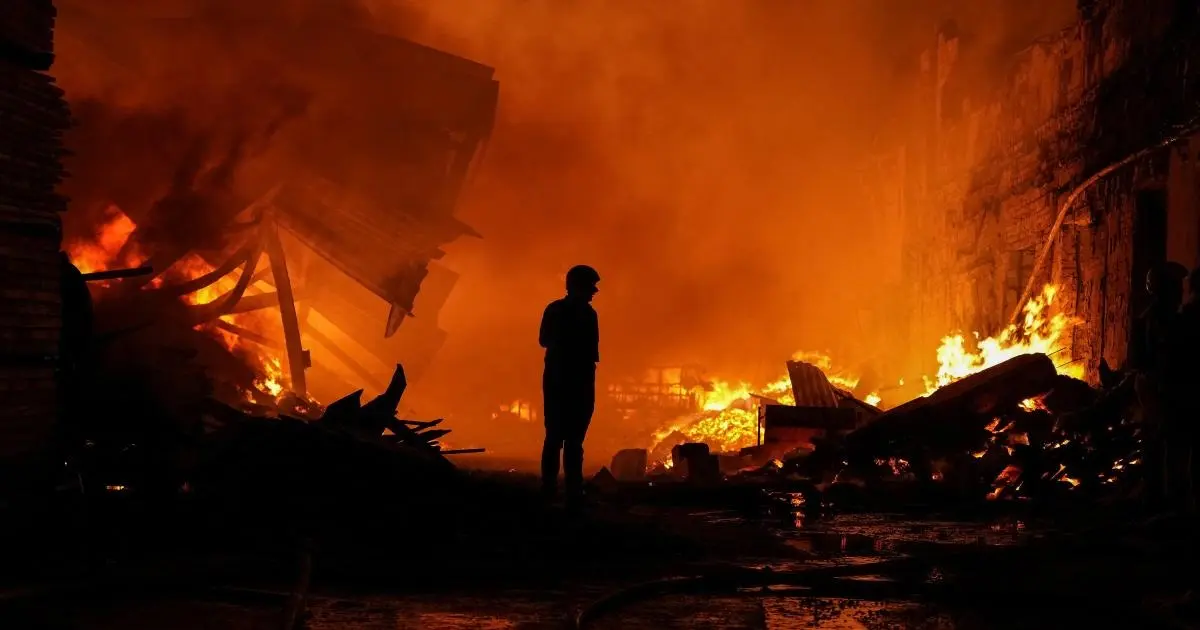
In some moment over the past decade, the world began to accept war as something inevitable. Wars of aggression—such as those witnessed in Ukraine, Lebanon, or Iran—are multiplying, sowing horror, ruin, and the persistent dread of a global confrontation. Governments increasingly view armed conflict as an eventuality for which they must actively prepare and budget. Military spending continues its upward trajectory, technological and arms races are intensifying, and a growing number of nations are quietly or openly contemplating whether they should acquire a deterrent nuclear arsenal to secure their survival.
There is nothing more dangerous than the normalization of war. It represents a regression to a norm that governed the vast majority of human history, an era when warfare served as the primary structuring pillar of the international system. For centuries, conflict was the natural mechanism by which states settled disputes or expanded their territories at the expense of weaker neighbors.
However, the immense devastation wrought by the two world wars during the first half of the twentieth century rendered that status quo entirely unacceptable. Nations banded together in a shared determination to strip war of its status as a legitimate instrument of state policy, transforming it instead into an illegal act. While armed conflicts did not magically cease in 1945, the international community spent decades overwhelmingly condemning them whenever they erupted.
In recent years, however, the commitment of governments to the cause of peace has demonstrably frayed. Back in 2003, millions of citizens flooded the streets across hundreds of global cities to protest the U.S.-led invasion of Iraq. Even so, the war proceeded regardless. Launched upon fabricated premises and in direct violation of international law, the conflict devastated Iraq, deepened regional instability, and stoked resentment and terrorism directed against Western nations. That conflict marked a profound turning point. Since then, the pursuit of peace has steadily receded on the international agenda, marginalized by escalating geopolitical competition and a growing neglect or outright indifference toward the multilateral frameworks that had checked armed conflict for decades.
This dangerous trajectory ultimately leads to a new world war—the exact catastrophe that the post-1945 international order was explicitly designed to prevent. Facing such a grim horizon on the global stage, governments must urgently relearn the art of opposing war. All countries, including Spain, bear a direct responsibility to act: they must limit the capacity of others to wage war while vigorously strengthening the international institutions tasked with guaranteeing global peace.
The success of this crucial endeavor depends upon an expansive form of multilateralism, described as "maxilateralism"—a model of cooperation that embraces the largest possible number of nations rather than relying on exclusive, ad hoc coalitions. Its ultimate ambition is to make war increasingly unviable, and eventually unimaginable. In 2003, protesters across Spain chanted "No to war!" As the world navigates the mid-2020s, global leaders cannot afford to ignore those voices once again.
A Dangerous Escalation
International efforts to banish war as an instrument of national policy date back to the 1928 Briand-Kellogg Pact, a treaty signed in Paris by 15 nations that was later joined by dozens more. While it ultimately failed to prevent the Second World War, it planted an essential ideological seed. When representatives from 50 countries gathered in San Francisco in 1945 to establish the United Nations, they revived the spirit and principles of that earlier pact while adding what it had previously lacked: institutional architecture. The UN Charter explicitly prohibited the threat or use of force against the territorial integrity or political independence of any state. Unlike its 1928 predecessor, this prohibition was backed by tangible institutions empowered to enforce it.
Over the subsequent decades, these institutions constructed an international order that penalized violations of international law while heavily incentivizing cooperation and diplomacy. Concurrently, popular revulsion against war and Cold War militarism gathered powerful momentum worldwide. This resistance became vividly apparent during the opposition to the Vietnam War and through mass global movements demanding nuclear disarmament. Pacifism reached its zenith during the 1990s, when a vibrant global civil society mobilized in defense of humanitarian causes, and the United Nations retained the moral and political authority to champion an ambitious global peace agenda.
Today, however, the world is grappling with more active armed conflicts than at any point since 1946. According to data from the Uppsala Conflict Data Program, 2025 witnessed 65 active conflicts involving state participation, representing double the figure recorded in 2010. It is estimated that these conflicts claimed roughly 250,000 lives—the highest annual death toll since the Rwandan genocide more than three decades ago. Furthermore, approximately 120 million people worldwide remain forcibly displaced by ongoing warfare.
Most disturbingly, wars of aggression that blatantly violate the UN Charter have made a dramatic return. Russia invaded Ukraine, while the United States and Israel carried out military strikes against Iran. As fighting drags on year after year in flashpoints such as Lebanon, Sudan, and Yemen, it has become painfully evident that war is once again being accepted as a normal state of affairs.
There are currently no signs that this alarming trend is slowing down. Military budgets have surged to heights unseen in generations, frequently at the direct expense of vital social and developmental spending. Over the past decade alone, global defense expenditures have climbed by more than 40 percent, with numerous nations effectively doubling their military budgets. The nearly $3 trillion that the world now dedicates annually to defense closely rivals the entire gross domestic product of the African continent. Even countries with a long-standing tradition of military restraint—such as Germany, Denmark, Japan, and Norway—are rearming at a rapid pace, with some actively considering the reinstatement of military conscription.
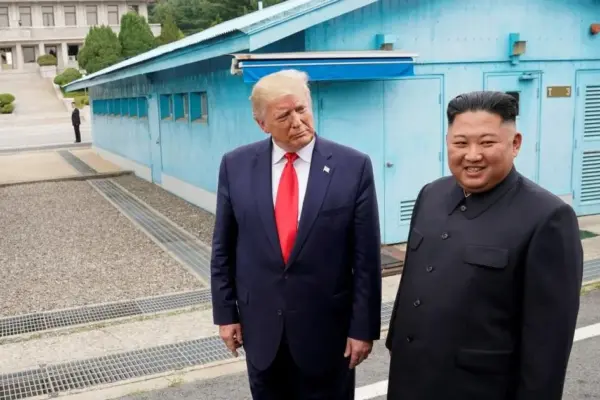
Even more terrifying is the resurgence of the nuclear threat. All nine nuclear-armed states are currently modernizing their arsenals and actively expanding their destructive capacities. Estimates indicate that China’s nuclear stockpile has grown from roughly 200 to 300 warheads at the end of the 2010s to an estimated 620 warheads. North Korea has similarly expanded its nuclear inventory from an estimated 10 to 20 warheads in 2018 to roughly 60, alongside developing increasingly sophisticated launch platforms. Meanwhile, France announced its first increase in nuclear warhead numbers since 1992. The world’s two largest nuclear powers, the United States and Russia, have proven incapable of preserving the final remaining treaty capping their strategic arsenals. Concurrently, a growing number of non-nuclear powers have begun quietly debating the acquisition of independent nuclear capabilities.
At the same time, artificial intelligence is imbuing modern warfare with increasingly lethal and unpredictable tools. Human oversight is steadily eroding as AI systems increasingly automate cyberattacks targeting critical infrastructure, such as electrical grids, hospitals, and financial systems. AI-driven systems have already demonstrated the ability to infiltrate public institutions while facilitating the mass production of deepfakes and sophisticated disinformation campaigns.
The integration of artificial intelligence into nuclear technologies poses an existential threat: by dramatically accelerating decision-making speeds, it severely compresses the time available for human judgment. Similarly, the deployment of AI within biotechnology risks lowering traditional barriers against dangerous experimentation and the development of biological weapons. In both domains, emerging technology elevates the risk of miscalculation, inadvertent escalation, and mass destruction to unprecedented levels.
Collectively, these dangerous dynamics multiply the probability that any isolated crisis could rapidly spiral into planetary annihilation. Tragically, nations are manufacturing the instruments of catastrophe at the blistering speed of technological innovation, whereas the tools of control and diplomacy continue to advance at a sluggish pace.
War Is Not the Solution
Shifting political currents are pushing the international world further away from peace, steering it instead toward generalized militarization and confrontation. A multipolar world is not inherently more dangerous by definition. However, the systematic erosion of the rules and institutions designed to channel tensions between different global poles is rendering the international system exceptionally volatile. Great power competition is intensifying, fueled by hegemonic ambitions that encourage aggressive foreign policies, while revisionist states openly challenge established international norms and borders.
Militant nationalism is on the rise. Far-right movements promote a worldview where international relations operate as a zero-sum game, demanding that nations compete rather than cooperate. Even centrist leaders have increasingly adopted the rhetoric of war. While they may not intend to initiate actual conflicts, their words cultivate a hazardous militaristic mindset.
Within this climate of sharp rivalry, wars of aggression are routinely wrapped in lofty discourses of necessity, liberation, self-defense, or historical justice. Aggressors frequently present their military operations as unavoidable, having systematically demonized their adversaries to justify preventive strikes. They attempt to sell each new war as the ultimate response to insecurity—the mythical war to end all wars.
Yet these conflicts fail to make the world a safer place. Every time a state unleashes a war of aggression, it actively erodes the normative guardrails protecting all nations against the arbitrary use of force, including the aggressor state itself.
The human cost of war is immeasurable, shattering societies and cutting lives short. According to United Nations records, at least one civilian died in an armed conflict every 14 minutes, and more than five million people were forced to flee their homelands. The economic toll is equally punishing. The ongoing conflict involving the United States, Israel, and Iran has severely disrupted maritime commerce and air traffic while sending energy prices, fertilizers, and raw materials skyrocketing, forcing millions around the globe to bear the brunt of the fallout.
Furthermore, war reliably generates entirely new hazards. Once fighting begins, its trajectory is notoriously unpredictable, frequently dragging in neighboring actors and spilling across borders. The conflict involving Iran serves as a glaring example, having witnessed attacks on targets across the Gulf region that Spain has consistently condemned. Assaults on civilian and merchant vessels threaten regional stability while stoking dormant tensions in Iraq, Lebanon, and Yemen.
Finally, wars rarely deliver durable peace. On the contrary, they deepen deep-seated grievances and entrench divisions that plant the seeds of tomorrow’s violence. Russia’s invasion of Ukraine has permanently shattered trust in Moscow, while the humanitarian catastrophe in Gaza has intensified global outrage against Israel, potentially fueling future waves of terrorism. Similarly, the broader conflict involving Iran has further destabilized the Middle East and severely crippled regional cooperation.
How to Oppose War
The international community bears a profound responsibility to resist the dangerous normalization of war. Remaining silent in the face of such aggression is an act of cowardice and complicity. Public sentiment in countries like Spain clearly reflects this anxiety, where three out of four citizens identify war as their greatest fear, and an even larger majority believes another world war is looming on the horizon.
However, merely condemning war in the abstract is wholly insufficient. The ambition to eradicate armed conflict must be paired with concrete, decisive actions that make it increasingly difficult for nations to initiate, sustain, and justify warfare.
Spain has actively sought to chart this course by defending the international rules-based order and consistently denouncing armed attacks that violate the UN Charter. From the very outset of the war in Gaza, Spain has demanded an immediate and permanent ceasefire, the unconditional release of all hostages, and the unhindered delivery of humanitarian aid. In May 2024, Spain officially recognized the State of Palestine in the hope of fostering momentum toward a negotiated, lasting resolution. The country has also actively supported the efforts of the International Court of Justice and the International Criminal Court to hold leaders accountable for violations of international humanitarian law. While Israel possessed the inherent right to self-defense following the terrorist attacks of October 7, that right did not justify the humanitarian catastrophe in Gaza or the ongoing expansion of illegal settlements in the West Bank.
Deterring aggression also requires raising the economic and political costs of war. The international community must ensure that any nation choosing the path of war cannot do so without paying a severe price. Throughout Russia’s invasion of Ukraine, the European Union has approved successive rounds of economic sanctions that Madrid has backed without hesitation, alongside providing financial, humanitarian, and military assistance to help Kyiv defend its territory.
Moreover, nations must refuse to facilitate the expansion of ongoing conflicts. Spain enforced a strict arms embargo on Israel beginning in 2023, and subsequently denied the United States the use of its national territory and military installations for operations related to the conflict with Iran. This decision was neither an act of hostility toward a vital ally nor a display of neutrality or sympathy toward the Iranian regime. Rather, it stemmed from a clear strategic assessment: military entanglement would have fueled regional escalation and heightened global insecurity. Remaining faithful to its commitment to peace required Spain to be willing to say no, regardless of the political cost. If more nations had adopted a similar stance, the wars in Gaza and Iran would have proven far more difficult and costly to wage.
Investing in domestic prosperity and social cohesion is equally essential for long-term security. True security flourishes when societies are resilient, inequalities are actively reduced, and citizens maintain trust in public institutions. Spain’s decision regarding NATO defense spending targets reflects this overarching philosophy. Rather than blindly chasing arbitrary defense spending quotas at the expense of social welfare, the government has prioritized strengthening the European Union’s strategic autonomy while tripling net defense spending over the past eight years. By maintaining balanced defense investments, Spain preserved the fiscal space necessary to channel billions into social protection, public housing, healthcare, education, and the green transition—policies that genuinely bind a society together and render it inherently secure.
A Collective Endeavor
The unilateral efforts of a single country, however, possess a strictly limited reach. Starving war of its oxygen requires the concerted involvement of all nations through genuine, robust multilateralism. This remains the only strategy that has proven successful in the past. The multilateral framework constructed in the wake of the Second World War spanned the entire globe, successfully preserving peace among the major powers and averting a third world war.
Revitalizing that architecture will not be easy. Geopolitical rivalries and widespread mistrust have weakened the United Nations, international financial institutions, regional bodies, and other multilateral frameworks. Frustrated by perceived inefficiencies, many nations have increasingly resorted to alternative frameworks or transactional, unilateral approaches that ultimately benefit political and economic elites while sidelining affected populations.
While temporary ceasefires or ad hoc peace deals achieved outside traditional channels may be preferable to endless bloodshed, any peace imposed purely by the law of the strongest rests on fragile foundations. Similarly, exclusive "coalitions of the willing" or minilateral groupings offer only temporary respites from institutional gridlock while further fragmenting an already divided global order. What the world urgently requires is maxilateralism—cooperation that strives for universality. Leaving significant portions of the global community outside these vital efforts merely incubates the confrontations of tomorrow.
The twentieth-century international system was far from flawless. Its rules were frequently applied unevenly, its principles defended inconsistently, and its procedures painfully slow. Yet without it, the world would undoubtedly be an even more volatile powder keg. It was a network of international treaties—including the Nuclear Non-Proliferation Treaty, the Intermediate-Range Nuclear Forces Treaty, and the Partial Nuclear Test Ban Treaty—that successfully reined in a runaway arms race and pulled the world back from the brink of nuclear catastrophe.
That entire institutional architecture is currently cracking under pressure. Without it, aspiring to preserve global peace remains an impossible dream.
A Mandate for Reform
Strengthening multilateral institutions must serve as the anchor of a global campaign to banish war to the history books. Doing so will necessitate sweeping structural reforms to restore institutional legitimacy, enhance operational capacity, and prioritize measures that directly bolster international peace and security.
The first vital step involves expanding representation within the United Nations and the Bretton Woods institutions. Updating the structure of the UN Security Council is particularly urgent, given its primary responsibility for maintaining international peace. A Security Council featuring permanent seats and veto powers restricted to the five victors of World War II—who together account for barely a quarter of the global population—no longer reflects the realities of the modern world. The number of elected council members must be increased, and their terms extended beyond the current two-year limit. New seats should be allocated primarily to underrepresented regions, specifically Africa and Latin America, while regional organizations such as the European Union and the African Union should secure formal representation. A more representative Security Council would not only be fairer, but demonstrably more effective, as nations are far more inclined to defend rules they helped author.
Simultaneously, the veto power held by permanent members must be strictly curtailed, particularly during deliberations concerning mass atrocities, genocide, crimes against humanity, and war crimes. Ultimately, the veto should be abolished entirely, ensuring the council can respond decisively to acts of aggression without remaining hostage to the objections of a single state.
A parallel spirit must guide the structural transformation of international financial institutions like the International Monetary Fund and the World Bank. Voting power distributions within both bodies continue to reflect twentieth-century economic realities, reinforced by unwritten conventions dictating that a European always leads the IMF while an American heads the World Bank. This outdated practice must end. Emerging economies require fair representation, and leadership positions must remain open to qualified candidates regardless of nationality. A more equitable global economic governance would help alleviate the inequality and resentment that frequently fuel instability and conflict.
Another essential pillar is the revitalization of the international framework designed to contain the risk of nuclear escalation. This demands renewed bilateral engagement between the United States and Russia to negotiate a successor agreement to the New START treaty that preserves verifiable caps on strategic nuclear deployments, with China ultimately participating in subsequent talks.
Broader global efforts must prioritize the ratification of the Comprehensive Nuclear-Test-Ban Treaty to prevent the resumption of nuclear testing, alongside advancing negotiations for a Fissile Material Cut-off Treaty to ban the production of weapons-grade uranium and plutonium. Furthermore, nations must collaborate to regulate the military applications of artificial intelligence, particularly concerning nuclear systems, to safeguard human control over launch decisions and minimize fatal miscalculations.
Finally, the international justice system must be empowered to enforce judicial decisions effectively. Moves by certain states to undermine the International Criminal Court only serve to guarantee impunity for the most heinous crimes. The ICC must not only investigate and prosecute atrocities, but also possess the institutional authority to bring suspects to justice. States that harbor individuals indicted by the ICC must face tangible legal, diplomatic, and financial consequences, ensuring that launching and waging war carries a real, unavoidable price.
Making War Unimaginable
Halting the world’s dangerous drift toward conflict demands the widest possible commitment from the international community. No nation, whether large or small, can afford to look the other way or participate in actions that stoke escalation. All countries must defend the international norms that currently check war while reforming and empowering the institutions that will make it impossible tomorrow.
Ultimately, what will render war truly unimaginable is a positive peace agenda addressing the root causes of insecurity. Every step toward eradicating poverty, expanding access to quality education, advancing gender equality, strengthening democratic institutions, and building resilience against natural disasters simultaneously attenuates the underlying conditions that spawn violence.
International financial institutions must be equipped to provide rapid, large-scale financing at reasonable costs so that developing nations are never forced to choose between servicing unsustainable debt loads and investing in their populations. Multilateral development banks must mobilize funds for the green and digital transitions, ensuring that climate-induced migration and resource competition do not become triggers for state conflict.
An ambitious global mobilization in defense of international law and genuine multilateralism may appear daunting. Yet history demonstrates the horrific toll humanity pays when the normalization of war is left unchecked. The generations that rose from the ruins of the Second World War found the wisdom to construct a cooperative global order. The central question facing the modern era is whether today’s leaders possess the foresight to preserve the rule of law or permit a slide back into the law of the jungle—building tomorrow’s world through cooperative vision rather than the chaos and pain of another global war.