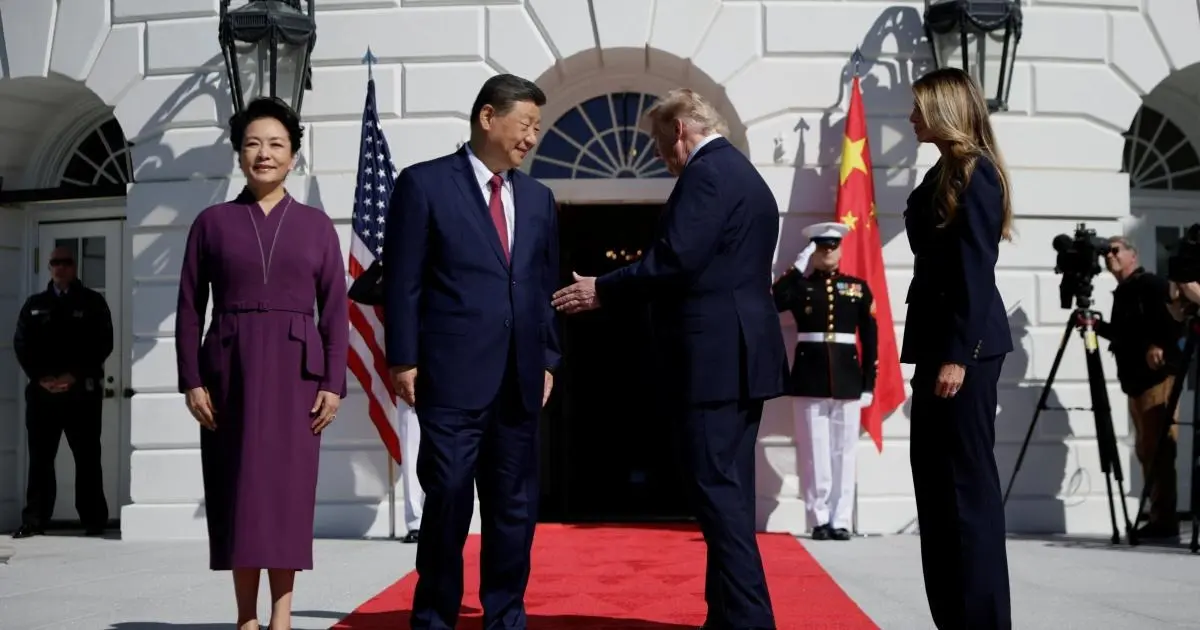
Nearly halfway through his second term in office, U.S. President Donald Trump has significantly altered the landscape of American foreign policy, undercutting both the nation’s capacity to protect its core interests regarding China and its historical role as a dependable provider of regional security in Asia. His administration’s undisciplined approach to managing Beijing—characterized by a heavy focus on cultivating warm, personal ties with Chinese leader Xi Jinping while discounting or outright ignoring long-standing strategic tensions—has steadily eroded Washington’s diplomatic leverage. At the same time, Trump’s sustained rhetoric and policy attacks against traditional allies and partners have inadvertently driven those nations to hedge against American unpredictability and strengthen their bilateral ties with Beijing.
This diplomatic shift has created a vacuum that China has eagerly filled. Beijing has successfully cast itself on the global stage as a steady, reliable counterweight to an erratic Washington. Data from a comprehensive Pew Research Center survey conducted in the spring of 2026 highlights this growing sentiment: across 25 of the 36 countries surveyed—including major Western allies such as Australia, Canada, France, Germany, and Mexico—survey respondents reported a more favorable view of China than of the United States.
Given the clear structural shortcomings of Trump’s second-term strategy, many congressional Democrats and even moderate Republicans are widely expected to try and strike more hawkish postures on China in the aftermath of the midterm elections and as the 2028 presidential campaign begins to heat up. This temptation is entirely understandable within the context of American politics. There is a deeply felt desire among many lawmakers to provide a sharp contrast to a flailing executive approach and to correct what they perceive as Trump’s fundamental miscalculations.
However, succumbing to this reflex would be dangerously short-sighted. If Congress and future presidential candidates reflexively adopt a more aggressive, confrontational stance toward China, they risk severely undermining a future administration’s capacity to preserve vital diplomatic communication channels with Beijing. Furthermore, an overly aggressive posture would further disquiet allies and partners who have made it clear they do not want to be trapped in a new global twilight struggle. Overcorrecting Trump’s China policy is also unlikely to serve as a winning political strategy or boost the public profiles of candidates in the run-up to 2028. Recent polling data reveals that only a small share of Americans living in key battleground states view China as a direct enemy or consider it to be among the top threats to overall U.S. national security.
The primary goal for the incoming Congress and, eventually, Trump’s ultimate successor should be to prioritize steady, institutional competence over performative toughness when dealing with Beijing. Engaging in cheap political point-scoring, coupled with a wistful nostalgia for older containment strategies that discount Beijing’s mounting global power and the growing domestic American appetite for great-power calm, would merely compound Trump’s policy mistakes rather than mitigate them. A smarter, far more coherent China policy—one rooted in disciplined competition, patient efforts to build goodwill with anxious international partners, and vigorous domestic investments to refresh the true internal sources of U.S. strength—remains the most effective path toward making life safer, healthier, and more economically sustainable for ordinary Americans.
NEW FRIEND ON THE BLOCK
President Trump’s foundational views on China have long been iconoclastic within Washington’s broader foreign policy establishment, and they frequently run at odds with senior members of his own administration and political party. Whereas the vast consensus among national security policymakers agrees that China remains the United States’ foremost strategic competitor, Trump has consistently embraced a much narrower conception of competition. His focus is primarily restricted to reducing the bilateral trade surplus and curbing the export of precursor chemicals utilized in the manufacturing of fentanyl. Furthermore, he views Xi Jinping less as a determined geopolitical foe and more as a transactional business rival with whom he can personally negotiate to temporarily stabilize bilateral ties.
This underlying worldview—that managing the relationship with China can and should be conducted in a nonideological, purely transactional manner—was a defining hallmark of Trump’s first term in office. It even managed to survive the disruptions of the COVID-19 pandemic. During that public health crisis, Trump briefly empowered senior administration advisers to implement a hard-line, confrontational approach toward Beijing that directly challenged the political legitimacy of Chinese Communist Party rule and openly called for systemic political change. However, Trump’s core views did not dictate overall U.S. policy then to the extent they do now simply because he commanded less direct institutional control over his own administration during his first term and held less absolute dominance over the Republican Party as a whole.
In his second term, however, Trump has been chastened by geopolitical realities into a more realistic appreciation of Beijing’s actual power. China stands as the only nation globally that successfully stared down Trump’s sweeping April 2025 tariff barrage, ultimately forcing the White House to retreat from its maximalist positions. Later, in 2026, Beijing leveraged Washington’s palpable fear of a fresh economic rupture to successfully deter Trump from targeting major Chinese financial institutions as part of his broader global maximum-pressure campaign against Iran’s economy. Even as the president publicly claims to be ushering in a brand-new era of unbridled American global dominance, he has been forced to officially acknowledge China as a "near-peer"—a formal designation that his administration codified directly into its 2025 National Security Strategy. Similarly, his occasional touting of a potential "G-2" arrangement between Washington and Beijing has deeply unsettled traditional allies and partners, who worry that he is continually prioritizing Beijing’s unique sensitivities over their own regional security concerns.
Despite these overarching concessions, the Trump administration does continue to view China through a competitive lens in certain discrete, targeted areas. For instance, Washington is actively working to reduce critical U.S. dependence on Chinese rare-earth exports through initiatives like Project Vault, a strategic government effort to stockpile essential minerals. The administration is also aggressively pressuring international partners to forswear participation in Chinese-led artificial intelligence initiatives. And even as Trump routinely lambastas treaty allies and partners with claims that they exploit American beneficence, Washington continues to quietly deepen its formal security cooperation with regional allies in Asia, including Australia and the Philippines, while stepping up the specialized training of military personnel in Taiwan.
Yet, on balance, the president has consistently proven to be far more conciliatory than competitive in his actual dealings with China. With his competing foreign policy ambitions—such as exerting dominance over the Western Hemisphere, pushing for aggressive regime change in Iran, and attempting to abruptly end the war in Ukraine—vying for executive priority, Trump has ultimately devoted far less sustained attention to the world’s most consequential bilateral relationship than many foreign policy observers initially expected when he retook the Oval Office. His various tactical retreats on China have ultimately left the United States in a weaker strategic position. He has systematically undermined Washington’s long-term leverage over Beijing while causing core allies and partners to seriously question whether they should continue to align their security closely with a superpower that seemingly prefers a superficial veneer of stability with Beijing over coordinated international efforts to address Chinese assertiveness abroad and domestic repression at home.
OVERCORRECTING THE RECORD
Because Trump’s unorthodox China policy persistently places him at odds with the vast majority of the permanent foreign policy bureaucracy and the overwhelming majority of lawmakers on Capitol Hill, including many prominent figures within his own party, there will undoubtedly be pent-up political pressure to abruptly resume intense, unyielding strategic competition with China. Candidates seeking the 2028 presidential nomination, in particular, will face powerful political temptations to pledge an excessively hawkish approach toward Beijing. This could potentially include calls to severely curtail high-level diplomatic exchanges between senior U.S. and Chinese officials or to adopt sweeping, highly restrictive measures designed to unilaterally halt China’s ongoing technological progress. But attempting to simply restore or make minor, superficial updates to the status quo that existed prior to Trump’s second term—or to go even further in a performative effort to project ostensible strength—would be fundamentally misguided.
The most obvious reality is that the nearly decadelong U.S. effort to systematically slow Chinese innovation through a blunt combination of economic sanctions, sweeping tariffs, and restrictive export controls is currently foundering. In the critical field of artificial intelligence, for instance, Chinese technology companies have repeatedly demonstrated an ability to successfully find workarounds to these economic barriers, advancing their domestic capabilities right alongside those of their American peers. Furthermore, any sustainable, long-term attempt to limit technological access fundamentally requires deep multilateral cooperation. As Washington’s diplomatic ties with many of its closest traditional allies and partners continue to fray, profound questions are mounting over whether any viable international coalition can successfully thwart Beijing’s technological strides, or if those partners would even be willing to bear the heavy economic costs required to try.
At the exact same time, China is visibly widening its competitive lead in foundational future sectors such as electric vehicles, advanced industrial robotics, and the life sciences. Attempting to construct an impenetrable technological moat entirely around the United States is unlikely to help the country regain its lost commercial competitiveness. Instead, Washington will need to carefully strike a much better balance between mitigating the legitimate national security risks of Chinese investment and technical collaboration, and securing vital commercial benefits from Chinese knowledge, research, and industrial capacity. The United States could actually stand to gain from employing some of the very same technology transfer practices that China successfully utilized against American companies starting in the late 1970s, back when the United States led in virtually all cutting-edge technologies. In modern battery manufacturing, for example, U.S. firms would derive significant commercial benefit from acquiring advanced operational know-how from their Chinese competitors, and both economic superpowers would ultimately gain if their premier research laboratories pooled capabilities to accelerate the global discovery of cures for major diseases like cancer.
Furthermore, the United States may simply not be able to pick up precisely where it left off before Trump retook power, largely because even its most loyal international well-wishers can no longer treat his disruptive foreign policy merely as an isolated historical aberration. Trump managed to win a second term after losing the presidency in 2020, and he did so far more decisively than his initial 2016 victory. Although U.S. allies and partners would certainly welcome a more predictable, multilateralist administration after Trump leaves office, they will find it exceptionally difficult to completely overlook the persistent possibility that aggressive unilateralism will periodically reshape Washington’s foreign policy priorities in the future. Merely eschewing Trump’s crude rhetorical bullying will not be nearly enough to rebuild fractured international trust; his eventual successor must fundamentally avoid treating allies and partners as mere disposable instruments of great-power strategic competition.
Paradoxically, however, Trump’s frequent mishandling of China policy has inadvertently opened up valuable political space for a new, far more durable grand strategy to finally emerge. Previously, prominent proponents of sustained, high-level diplomacy between the United States and China were routinely dismissed by hardliners as shortsighted, any Chinese investment inside the United States was automatically viewed as a dangerous Trojan horse, and even mild critiques of zero-sum conceptions of bilateral relations were summarily labeled as naive. But Trump’s erratic actions have effectively shifted the political Overton window regarding what is deemed possible, creating much-needed room for a wider, more pragmatic variety of ways to work productively with Beijing where mutual interests align.
Both Republican and Democratic members of Congress have gradually and quietly resumed bipartisan delegation visits to China. Even Secretary of State Marco Rubio, widely recognized as one of the most formidable congressional hawks during his time in the U.S. Senate, publicly acknowledged in September that it would be "outrageous" for top U.S. and Chinese officials to entirely avoid communicating with one another. Highly respected foreign policy voices in Washington, including former senior officials from the Biden administration, are actively calling for targeted joint ventures with Chinese companies to help American businesses develop and compete globally. Moreover, there is a growing, bipartisan recognition within both Capitol Hill and the White House that China’s steady, institutional accrual of power necessitates a far more focused, calibrated approach to competition rather than broad emotional rhetoric.
There is also clear and growing public support among the American electorate for a fresh, balanced approach to China policy. While many partisan policymakers routinely frame relations with Beijing as an existential zero-sum competition that must be decisively "won," the majority of ordinary Americans instead regard the bilateral relationship as an enduring geopolitical reality that must be carefully managed. In a comprehensive July 2025 survey conducted by the Chicago Council on Global Affairs, 53 percent of surveyed Americans stated that they wanted the United States to pursue "friendly cooperation and engagement with China"—marking the first time since 2019 that a solid majority of respondents had expressed that specific view.
Younger generations are clearly driving this notable demographic shift in public opinion. A Pew Research Center poll conducted in January 2026 found that only 32 percent of Republicans and a mere 10 percent of Democrats between the ages of 18 and 49 categorized China as an enemy, compared with 55 percent of older Republicans and 18 percent of older Democrats aged 50 and above. Reinforcing these generational trends, a March 2026 survey by the Searchlight Institute revealed that an overwhelming 62 percent of respondents aged 18 to 34 actively wanted the United States to "cooperate with China and improve U.S.-China relations."
A STEADY HAND
Formulating a vastly superior China policy must begin by abandoning hollow, performative admonitions to simply "win" the strategic competition with Beijing. While China undoubtedly faces a multitude of complex internal challenges—ranging from slowing productivity growth and a rapidly aging demographic profile to mounting local government debt—it simultaneously possesses formidable structural advantages. Two of these advantages have become completely undeniable over the course of Trump’s second term: China’s near-total dominance of global supply chains that provide vital everyday commodities to American consumers, and its effective stranglehold on the specialized rare-earth minerals that the U.S. automotive sector and the entire national defense industrial base desperately need to function.
The next American president should neither understate nor drastically exaggerate Beijing’s long-term trajectory. Rather, as analysts have frequently argued, Washington should view China for what it is: "an enduring yet constrained competitor." The inescapable reality of the twenty-first century is that neither superpower can deliver any decisive knockout blows against the other without inflicting grievous, self-inflicted economic and strategic damage upon itself. Both nations are destined to remain deeply interdependent and will be forced to operate with a constant, heightened awareness of their mutual vulnerabilities.
If the world’s two foremost nuclear powers are fated to compete over the complex terms of peaceful coexistence, they must redouble their diplomatic efforts to avoid a catastrophic military confrontation. Washington will be required to actively rebuild institutional trust with rightfully wary allies and partners if it hopes to effectively shore up credible deterrence in Asia. At the same time, the United States will need to continue signaling to Beijing a concrete willingness to implement reciprocal risk-reduction steps designed to minimize the catastrophic potential of accidental air or naval collisions. Such clear signaling will become increasingly essential as artificial intelligence rapidly advances across military and civilian sectors. Protecting the U.S. homeland against the misuse and misalignment of advanced AI will require Washington to coordinate directly with Beijing on establishing vital safety guardrails for frontier models, firmly rejecting the flawed argument that such technical coordination is somehow inherently inimical to securing a decisive strategic advantage over China.
The urgent practical need to work together on AI safety is already beginning to visibly shape bilateral relations. During the September summit between President Trump and Xi Jinping, the two governments formally agreed to establish an emergency incident alert system, and a significant number of lawmakers on Capitol Hill have publicly voiced their support for broader bilateral cooperation with China aimed squarely at reducing the risks of AI-enabled security crises.
Concurrently, comprehensive domestic reindustrialization will emerge as a major national project for Trump’s ultimate successor. Making genuine progress on that critical economic front will be utterly essential if the United States is to successfully reduce its dangerous dependencies on China for active pharmaceutical ingredients, critical rare earths, and potential future technological chokepoints. The next Congress and potential 2028 presidential contenders have a unique opportunity to outline realistic, actionable plans for systematically reducing reliance on Beijing while prioritizing foundational industries upon which American national security fundamentally depends, such as AI-powered advanced robotics and domestic shipbuilding. Furthermore, these leaders could clearly explain how they intend to strategically deploy federal funding and technical talent to those vital sectors.
Elsewhere, with public support for the president’s sweeping unilateral tariffs sagging under the weight of consumer costs, his eventual successor could sensibly narrow, place firm sunset provisions on, or outright rescind through executive action those protectionist policies toward China that lower overall domestic productivity and artificially increase input costs for American manufacturers. Such pragmatic policy adjustments would enjoy broad political popularity at home while simultaneously better positioning the United States to work hand-in-hand with international allies and partners to push back effectively against China’s unfair trade and economic practices, including extensive state subsidies, an undervalued currency, and suppressed domestic consumption.
Ultimately, the United States must continually remember that its true external global competitiveness flows naturally from its internal democratic vigor. Leaders in Washington should accordingly embed their policy positions on China within a hopeful, forward-looking vision: actively helping the United States realize its true potential as a pluralistic, self-correcting democracy. Framing the complex contours of U.S.-Chinese relations around America’s own internal capacity to steer its foreign ties in productive, stable directions is far more likely to produce a resilient, enduring approach than casting Washington in the perpetual role of a global victim or attempting to reassert an outdated policy framework that no longer meets the demands of the modern era.
Observers can and certainly should continue to vigorously debate specific policy positions in public forums. However, yet another violent, unpredictable swing in the United States’ fundamental approach to China would only create deeper policy instability while dangerously discounting the extent to which Beijing’s historic rise continues to fundamentally transform the global geopolitical balance. By proactively taking advantage of the political space that Trump has generated—however ineptly—the new Congress taking office after the 2026 midterms and presidential aspirants looking ahead to 2028 will have a rare, invaluable opportunity to present a steadier, more measured approach. By articulating a clear, unwavering focus on national renewal alongside a balanced posture toward Beijing that genuinely reflects the sober mood of the American public, future leaders can forge a path forward. Approaching the formidable challenge of China with this level of mature sensibility would not only be far more prescriptively sound; it would also prove to be vastly more politically sustainable for the long-term future of the United States.