
During the intense late-June weather event, temperatures climbed past 37 degrees Celsius in various parts of the country, prompting weather authorities to issue only the second-ever "red" extreme heat warning in British history. The stifling conditions placed an extraordinary strain on emergency healthcare infrastructure, pushing response systems past thresholds traditionally associated with peak winter pressures and even the height of the Covid-19 pandemic.
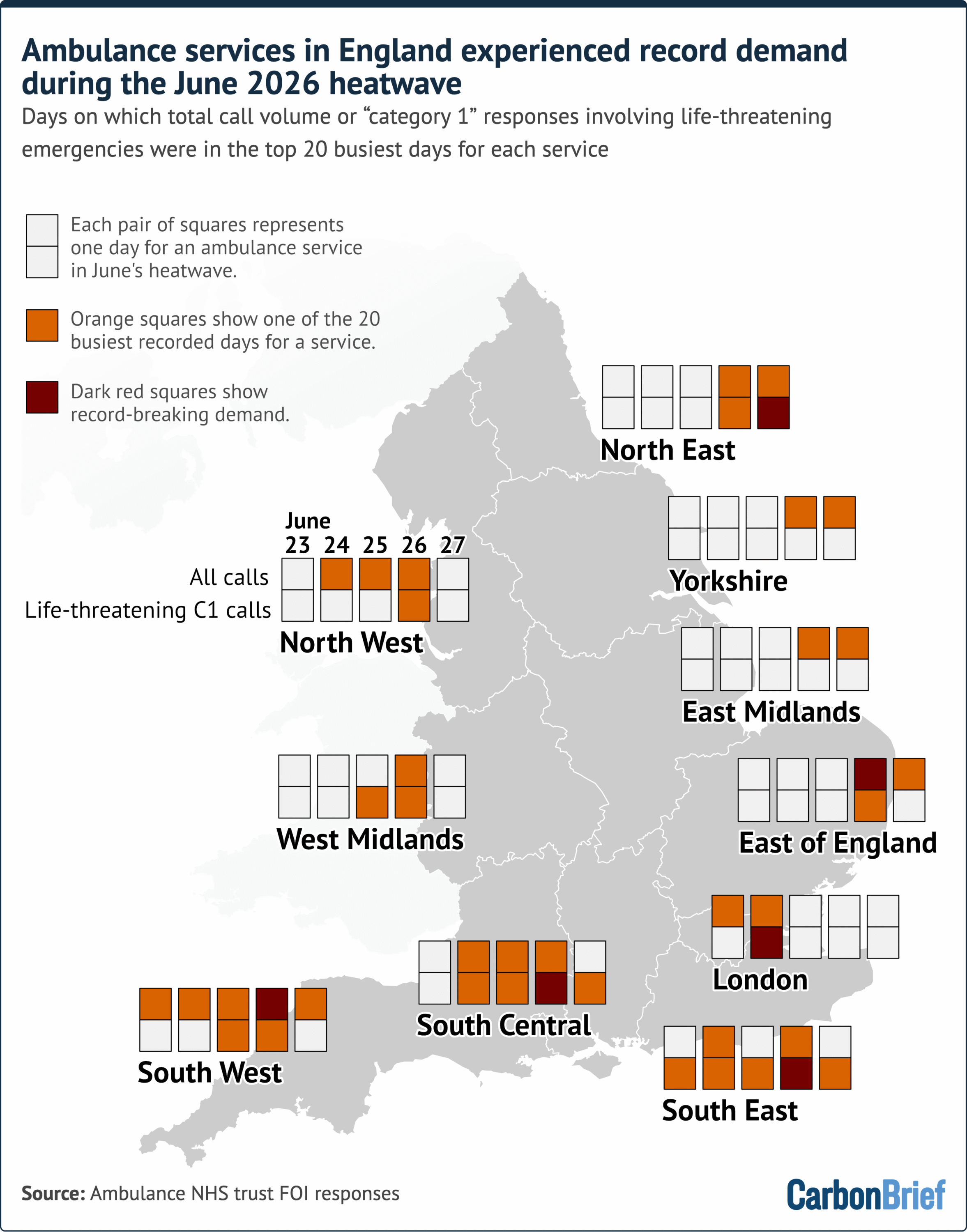
Data obtained by Carbon Brief through freedom-of-information requests sent to all 10 NHS ambulance trusts in England demonstrates the profound toll taken by the extreme weather. The findings show that four out of every ten NHS ambulance services—including the London Ambulance Service—responded to unprecedented numbers of life-threatening emergencies on at least one day between June 23 and June 27. Furthermore, two regional services, covering the south-west and east of England, recorded their highest volumes of 999 calls since official records began.
The data maps out a five-day window in late June that is heavily overrepresented across historical rankings. At least two heatwave days rank within the top 20 busiest days on record for every single ambulance service in the country. This trend was particularly pronounced across the south and east of England, where daytime temperatures frequently exceeded 36C and pushed toward 38C in localized pockets.
The London, South East Coast, South Central, and North East ambulance services all reported daily records for responding to life-threatening emergencies during the height of the heatwave. For the South East Coast and South Central services, which manage a sprawling region stretching from Oxfordshire to Kent, June 25, 26, and 27 all witnessed unprecedented numbers of Category 1 callouts. Meanwhile, the South Western and East of England trusts logged their highest-ever volumes of overall 999 calls on June 26—the exact same day that the highest-ever June temperature in the UK was officially registered in Norfolk.
Health experts note that the extreme heat significantly ramps up the risk of multiple life-threatening conditions, most notably cardiovascular events and severe respiratory problems. Government meteorologists and health agencies issued amber and red heat-health alerts covering the entirety of England as the heat dome settled over the country. The red alert, encompassing the entire Midlands and the south of England, signaled a significant risk to life even for healthy populations, an emergency classification deployed only once before.
Public health researchers calculated that nearly 3,000 heat-related deaths occurred across the UK over the course of the summer. This surge in mortality mirrored an unprecedented wave of demand hitting hospital emergency departments and ambulance trusts alike.
When emergency planners examine the data, the scale of the heatwave’s impact becomes stark. On June 26, the single busiest day of the heatwave, ambulance crews across England responded to 4,084 life-threatening emergencies. By comparison, the average daily volume for such critical incidents normally hovers around 2,500 during a typical summer month.
Stu Holliday, head of emergency preparedness, resilience, and response at the North East Ambulance Service, explained the physiological mechanisms driving the crisis. During prolonged periods of hot weather, ambulance dispatchers typically see a sharp escalation in calls from individuals suffering from acute dehydration, heat exhaustion, and heatstroke. More critically, the sustained high temperatures exacerbate pre-existing health conditions, particularly among vulnerable demographics such as older adults, young children, and pregnant individuals.

While historical data shows that ambulance services are traditionally busiest during the winter months—when cold weather, seasonal influenza, and respiratory viruses combine to drive up severe medical emergencies—the June data indicates that extreme summer heat events are beginning to match or even surpass cold-weather peaks. This shift highlights a broader transformation facing the entire National Health Service as climate patterns evolve.
The mounting pressure on emergency services is also structural and long-term. Demand for UK ambulance services, including top-priority Category 1 calls, has been climbing steadily for many years. This baseline upward trend is driven by an aging population, an increase in patients living with multiple and complex health conditions, and mounting mental health pressures. This steady baseline growth explains why dates preceding the 2020s are virtually absent from the top rankings provided by the trusts, with the vast majority of all-time busiest days occurring in the current decade. Beyond the June heatwave, broader healthcare sector tracking suggests that the year is on track to set new records for overall ambulance demand.
The extreme conditions also placed a severe physical and operational toll on the frontline workforce. The UNISON trade union warned that ambulance crews were forced to operate in stifling heat, often in vehicles with faulty or nonexistent air conditioning, while managing back-to-back emergency callouts with minimal respite.

In compiling the regional data, Carbon Brief requested records detailing the top 50 busiest days from all 10 major English ambulance trusts, encompassing London, South East Coast, South Central, South Western, West Midlands, East Midlands, East of England, North East, Yorkshire, and the North West. While most services were able to supply historical records dating back to various points in the 2010s, the North East and South Central trusts could only provide reliable data starting from 2021 and 2022 respectively. Equivalent requests directed to other parts of the UK revealed that services in Scotland and Northern Ireland, which experienced cooler weather during the period, did not see call volumes reach their historical top 50 rankings, while the Welsh Ambulance Service did not respond to the data request.