For the first time in history, new-energy vehicles (NEVs)—encompassing battery electric cars and plug-in hybrids—accounted for a staggering 67% of all new car sales across China in September, according to the latest market data released by the China Passenger Car Association (CPCA).
The landmark figures illustrate a profound structural shift in the world’s largest automotive market. NEVs achieved this record market share even though absolute sales volumes were lower compared to the same period last year. This dynamic is primarily driven by a steep and continuous contraction in sales of traditional internal combustion-engine (ICE) vehicles. Industry experts and CPCA officials attribute this ongoing decline to rising petrol prices, which have spiked in the wake of the Hormuz crisis and subsequent global energy market disruptions.
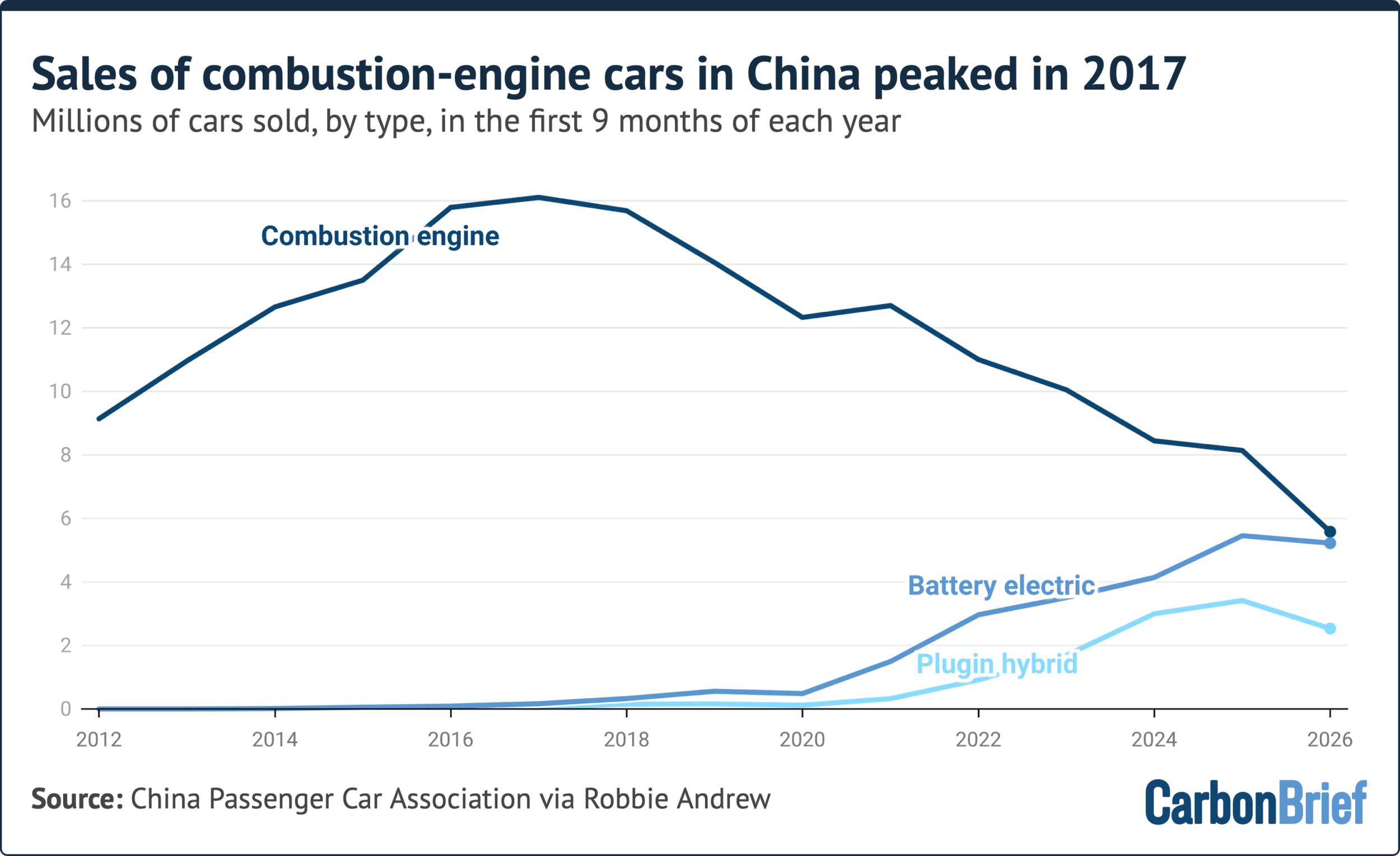
The divergence between traditional fuel vehicles and electrified alternatives has widened significantly throughout the year. Data for the first nine months of 2026 shows that sales of fuel-only cars plunged 31% year-on-year. Plug-in hybrid sales also suffered, dropping 26%, whereas battery electric vehicle (BEV) sales proved far more resilient, declining by a mere 4%. Analysts tracking the intersection of geopolitics and energy transition note that China’s rapidly expanding EV fleet has effectively neutralized the demand for millions of barrels of oil, insulating the nation’s economy against external energy shocks and cementing its transition toward road transport electrification.
NEV Milestone Amid Domestic Market Contraction
The September data cements a remarkable ascent for NEVs, which held just 6% of the new car market in 2020. That share climbed steadily to 58% across 2026 to date before peaking at the record 67% threshold in September.
Despite this historic milestone, the broader domestic passenger car market has experienced a pronounced slowdown this year. Passenger car retail sales across all categories declined in September, with total sales volumes dropping by 28% year-on-year. This downward pressure hit combustion-engine vehicles hardest, with ICE sales plummeting 43% year-on-year in September and 31% across the first nine months of 2026.
Even NEV segments faced headwinds. Sales of plug-in hybrid electric vehicles fell by 36% year-on-year in September and by 26% over the year to date. Battery electric vehicles outperformed hybrids, though they still registered an 8.5% year-on-year decline in September and a modest 4% drop for the broader year-to-date period. Consequently, overall NEV sales contracted by 17% in September and 13% for the first three quarters of 2026.
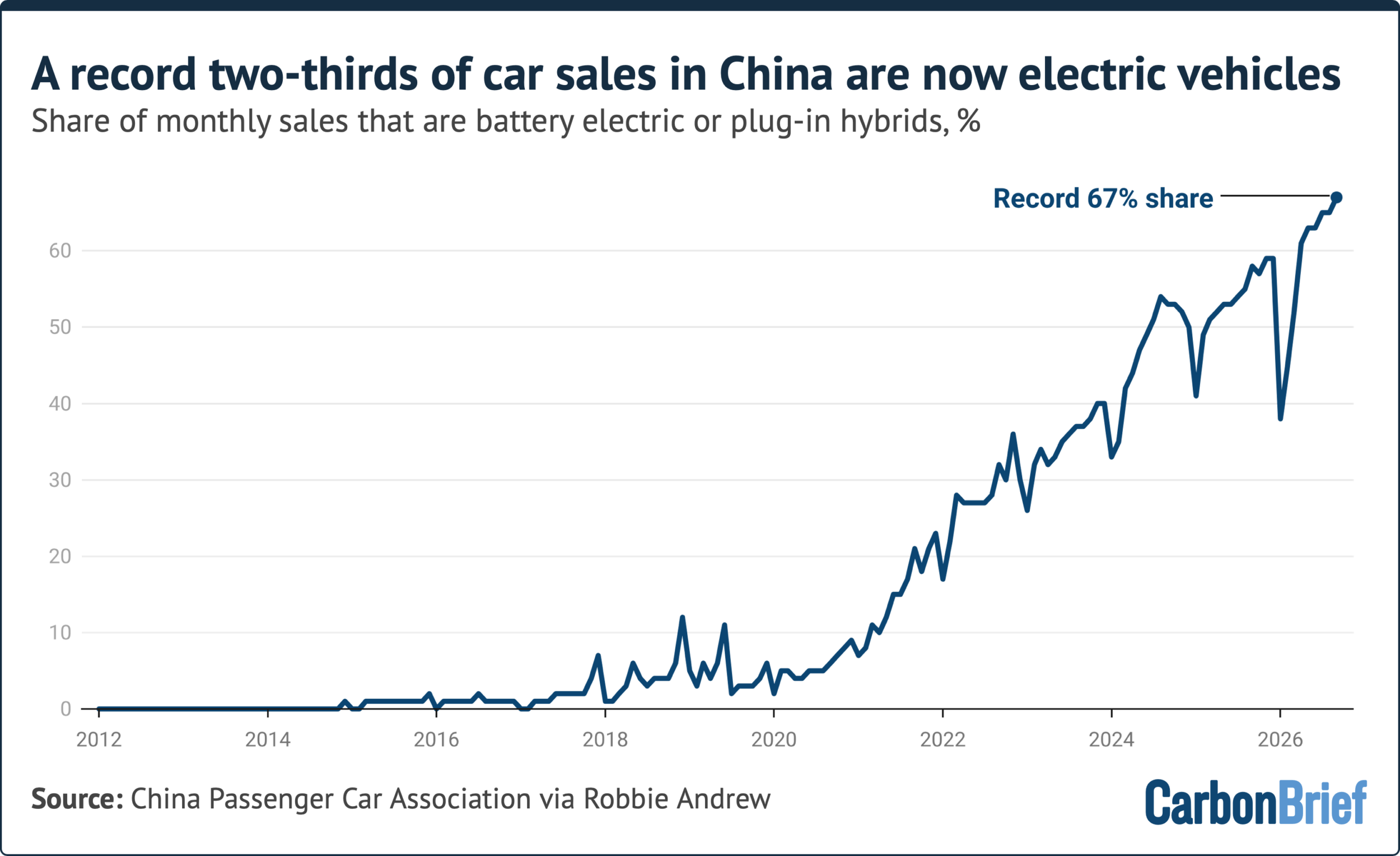
These 2026 adjustments reflect a broader, decade-long structural trend rather than an isolated anomaly. Sales of combustion-engine cars in China officially peaked in 2017 and have been on a downward trajectory ever since. While temporary policy shifts—such as the conclusion of a decade-long purchase tax exemption for NEVs in December 2025—caused NEV sales to dip to a low of 39% in January 2026, the market has since rebounded strongly.
The Hormuz Crisis and Energy Security
Industry observers and technology analysts emphasize that the rapid advance of NEVs in 2026 is deeply intertwined with macroeconomic and geopolitical factors. As petrol cars continually give up market share to electric alternatives, higher fuel costs have accelerated consumer aversion to traditional internal combustion engines.
Cui Dongshu, secretary-general of the CPCA, highlighted rising petrol prices as a primary driver behind September’s weak combustion-car sales in statements to the financial press. Import figures illustrate the broader macroeconomic strain: China’s crude oil imports from January through September fell by 15% compared to 2025—an amount equivalent to approximately 470 million barrels—as ongoing geopolitical conflicts tightened global supply chains and drove prices upward.
Energy analysts point out that China’s heavy investment in electric mobility has provided a crucial buffer against these external shocks. Euan Graham, a senior energy analyst at the think tank Ember, noted that China’s passenger-car NEV fleet has successfully displaced 143 million barrels of oil since the onset of the Strait of Hormuz crisis. Additional estimates provided to the Brookings Institution indicate that electric vehicles accounted for 12% of the total reduction in China’s oil consumption following the energy shock.
Erica Downs, a senior research scholar at Columbia University’s Center on Global Energy Policy, observed that the Strait of Hormuz crisis and the resulting surge in global oil prices are actively reinforcing China’s electrification of road transport. She noted that the severe global oil supply disruption validates China’s early, strategic bet on electric vehicles, which was originally catalyzed by long-standing national concerns over oil-supply security.
Navigating Domestic Headwinds and Future Growth Limits
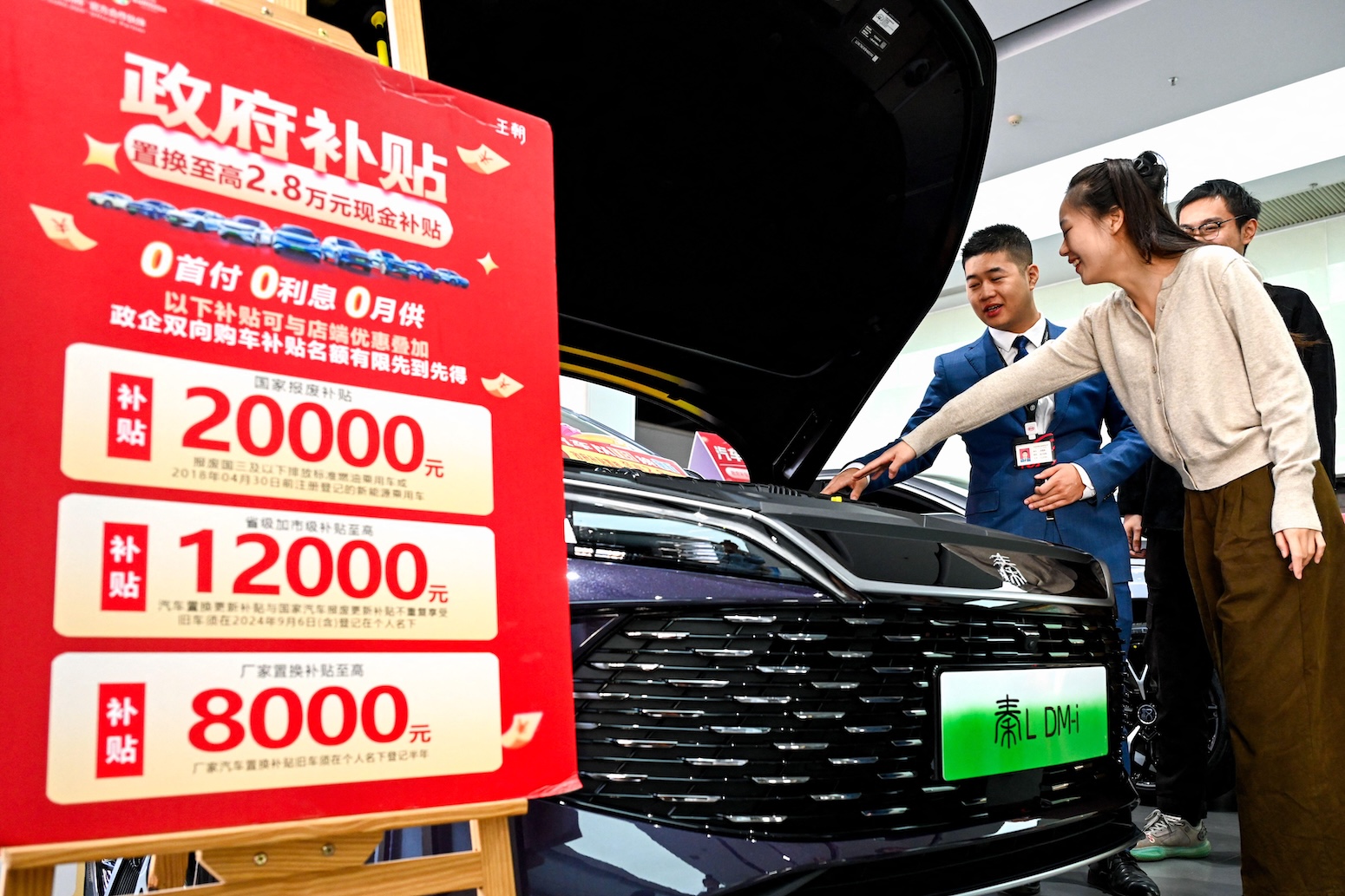
While NEVs continue to capture an unprecedented share of the shrinking domestic market, absolute demand has cooled due to several converging pressures. Zhang Yichao, a partner at consulting firm AlixPartners, explained that NEVs have weathered the broader market downturn better than ICE vehicles thanks to government trade-in policies and a robust pipeline of innovative new models.
However, multiple market factors have constrained overall sales volumes. Cui Dongshu pointed to a high baseline of sales from September 2025, alongside adjustments to trade-in incentive structures and disruptions caused by holiday scheduling, as contributors to the September slowdown. Furthermore, energy and automotive consultancy Wood Mackenzie highlighted weakened consumer demand resulting from a "demand pull-forward" effect in late 2025—prompted by buyers rushing to purchase vehicles before subsidies expired—alongside tighter domestic financing conditions.
Looking ahead, industry experts suggest that the rapid expansion of NEV market share may soon approach a structural ceiling. Zhang Yichao noted that he sees limited room for further exponential growth in domestic market share, expressing a view that NEVs are unlikely to exceed 80% of total sales in China. Certain premium market segments and specialized commercial use cases will likely continue to necessitate internal combustion engines.
Exports Surge as a Core Priority
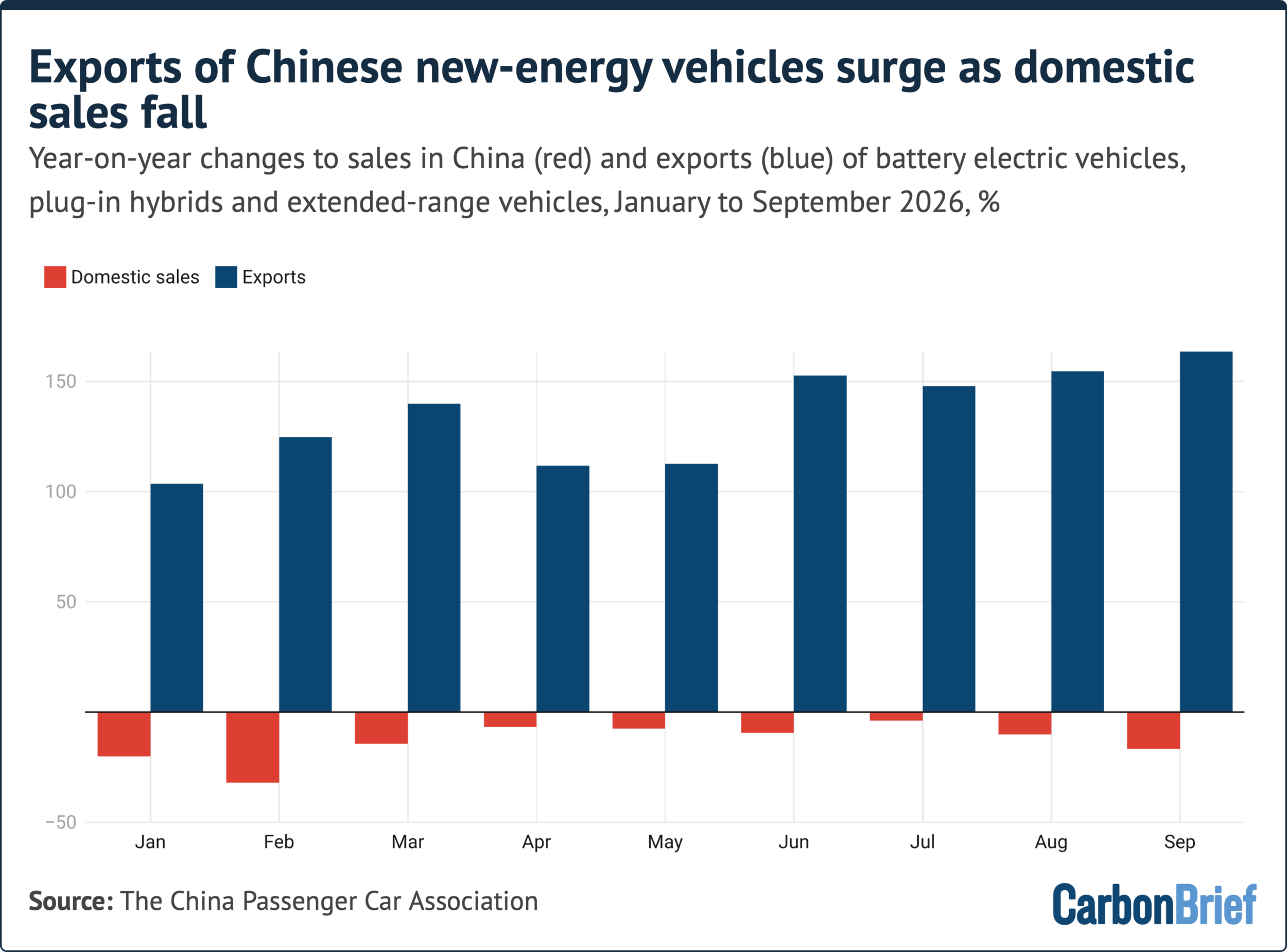
While domestic retail sales experienced contractions, Chinese automakers found a vital outlet in international markets. According to CPCA data, domestic NEV retail sales fell by 17% in September 2026, but vehicle exports more than doubled, surging 164% year-on-year.
This dramatic rise extends a year-long trend characterized by softening domestic demand paired with explosive growth in overseas shipments. In September alone, Chinese dealerships sold 1,084,000 NEVs domestically, while manufacturers exported 558,000 units. Faced with fierce, cutthroat competition at home and narrowing profit margins, major Chinese carmakers have increasingly prioritized overseas expansion as a core business strategy.
This export surge has triggered regulatory pushback and trade friction in key international markets. The European Union has implemented tariffs on imports of electric vehicles from China and recently agreed on plans to restrict hybrid imports as well. Other major economies, including Mexico and Turkey, have similarly introduced tariffs or trade barriers targeting Chinese EV imports.
Concurrently, Beijing has begun recalibrating its own internal policies, implementing measures such as reductions in value-added tax export rebates that could potentially disincentivize aggressive export volumes. While financial analysts remain divided on the ultimate impact of these domestic tax adjustments—with some predicting a minimal effect and others warning of rising export prices—global automakers continue to monitor China’s dual strategy of aggressive electrification and international market expansion.