Artificial intelligence is developing at a rapid pace and is increasingly being used by scientists to better understand climate change. While AI is perhaps best-known for its prominent role in large language models such as ChatGPT, Claude, and Gemini, the technological field is vast and growing rapidly. From advanced weather forecasting to the granular analysis of satellite images, climate scientists are actively employing various types of artificial intelligence to develop faster, more efficient ways to study a warming planet.
However, this technological transformation comes with no shortage of risks and challenges. These include an overreliance on unverified computational results, intensive energy use that can complicate emissions goals, and the potential to exacerbate existing inequalities within global climate science. To explore these dynamics, Carbon Brief spoke with 10 experts working across a wide range of climate-related fields—spanning everything from developing climate forecasts to analyzing changes in complex energy grids—about how AI is genuinely being utilized in the field today.
What are the Benefits and Challenges of Using AI in Weather and Climate Forecasting?
One of the most significant recent developments in the discipline has been the striking success of AI weather-prediction models. These systems learn from massive volumes of historical weather data to predict conditions a few hours ahead, then repeatedly feed those predictions back into themselves to generate forecasts stretching up to two weeks into the future.
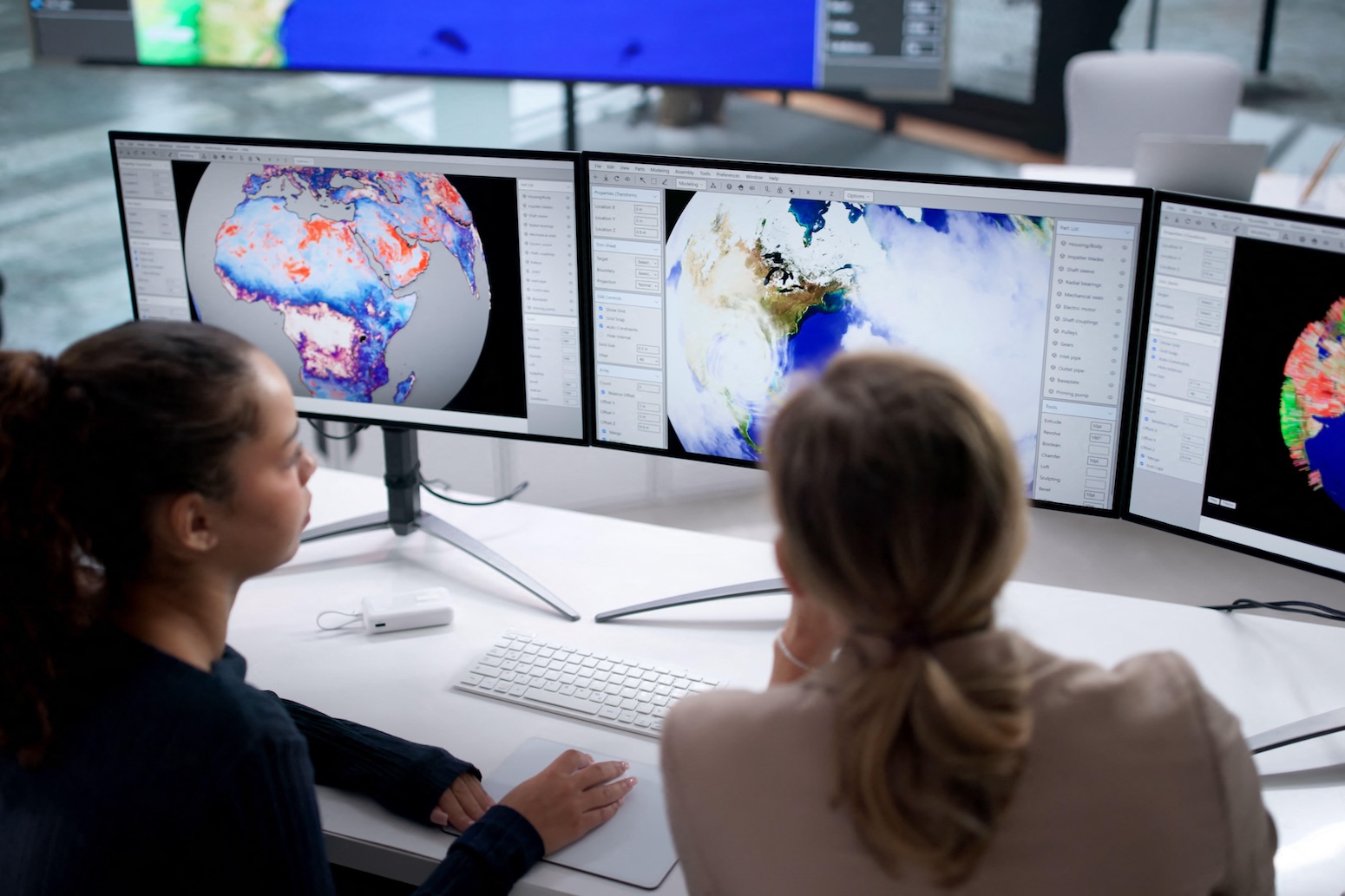
Dr. Doug McNeall, science lead in data-driven climate modelling at the UK Met Office, notes that these models have demonstrated that AI can provide accurate predictions while requiring far less computing power than existing numerical models, which rely strictly on complex mathematical equations to simulate the atmosphere.
"One of the main challenges is that AI weather-prediction models have been developed for relatively short timescales, where large amounts of observational data—such as temperature, rainfall, or sea ice extent data—is available and model performance can be evaluated quickly and rigorously," Dr. McNeall explains.
Climate prediction, however, is fundamentally different. To provide useful long-term information, scientists must make projections for future climates that lie far outside the historical observational record. One promising route forward is using AI to emulate or accelerate existing numerical models, rather than relying solely on purely data-driven approaches. This blended methodology could make climate risk information far more accessible and affordable to produce, while retaining the foundational physical understanding rooted in scientific principles that builds confidence in projections.
Prof. William Collins, a professor of AI for climate science at the University of East Anglia, highlights a remarkable renaissance taking place across weather and climate science. Machine learning, a subset of AI that uses algorithms to allow computers to learn from data without being explicitly programmed, has made an enormous impact on numerical weather prediction.
"The European Center for Mid-Range Weather Forecasts is now deploying an AI forecast system as part of their official communication of weather predictions to the European community, alongside the traditional forecast system," Prof. Collins says. "AI systems have become good enough that they’re absolutely competitive with the world’s leading numerical weather prediction. So that has been quite remarkable."
Yet, the central hurdle remains: much of machine learning involves learning from historical data, whereas the climate represents an unprecedented future for which no observational data exists.
Furthermore, Dr. Amirpasha Mozaffari, a researcher in Earth artificial intelligence at the Barcelona Supercomputing Centre, points out a critical limitation regarding extreme events. While AI forecast models perform well on typical weather patterns, they frequently underperform physics-based models when confronted with record-breaking and unprecedented extremes—precisely the high-impact events that matter most for human adaptation to climate change. Solving this deficiency through hybrid frameworks, physical constraints, or novel validation methods remains the central open problem for the field.
What Are Some Other Current Uses of AI in Climate Science Research?
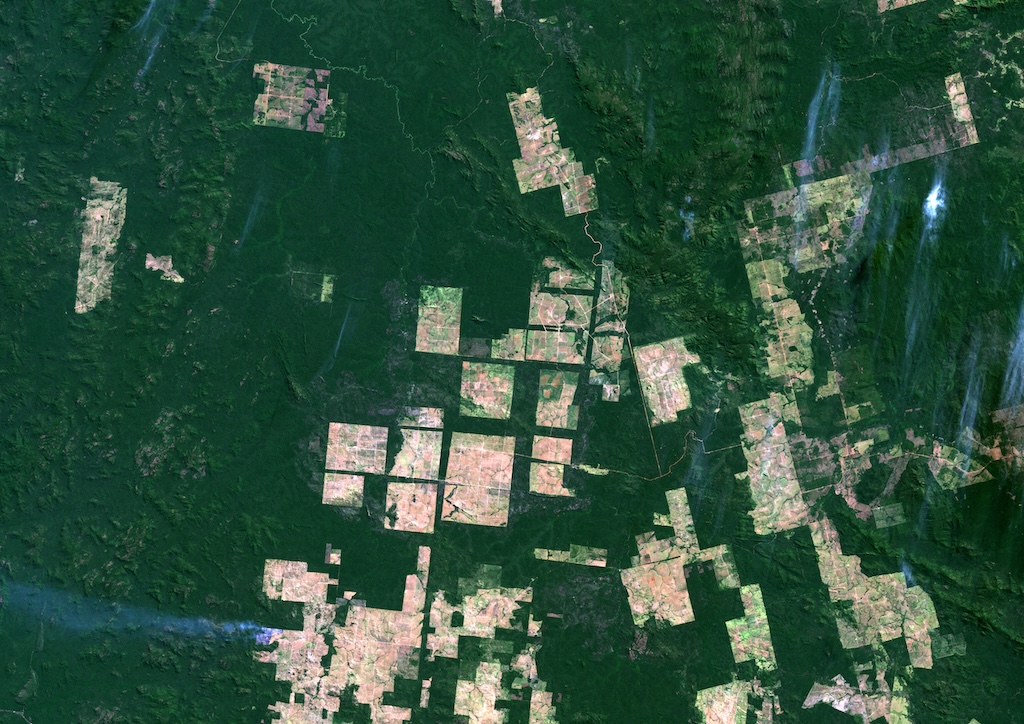
Beyond core atmospheric modeling, the proliferation of Earth-observation satellites has created an unprecedented influx of geospatial data, including high-resolution imagery capturing deforestation or retreating sea ice. Researchers are heavily deploying artificial intelligence to translate raw pixel data into actionable climate intelligence.
Dr. Stefano Materia, a researcher in climate variability and change at the Barcelona Supercomputing Centre, points to methane tracking and ecosystem monitoring as prime examples. Methane is a potent greenhouse gas, but leaks are largely invisible and difficult to track manually. AI algorithms now automatically scan hyperspectral imagery sourced from satellites to pinpoint specific industrial methane leaks across the globe, alerting operators in near real-time. Simultaneously, machine-learning models process thousands of satellite images daily to detect illegal logging, track land-use transitions, and monitor glacier retreat long before humans could manually review the footage.

In polar regions, machine learning has similarly embedded itself into every stage of the workflow. Dr. Clare Eayrs, a polar research scientist at the Environmental Fluid Dynamics Lab at New York University, explains that the most mature application involves extracting deeper information from observations—such as mapping fine-scale sea ice deformation from ship radar and classifying delicate snow layers. Forecasting remains the most visible application, with early systems like Ice Net demonstrating that deep-learning structures can outperform leading physical models in seasonal Arctic forecasts.
At an institutional level, Prof. Cristiana Stan, vice-chair of the World Climate Research Programme (WCRP), notes that AI now appears across all major agency initiatives. For instance, the weather prediction model intercomparison project features physics-based numerical models, hybrid setups, and pure AI weather prediction systems side by side. This operational focus accelerates the deployment of next-generation tools and helps evaluate their relative strengths and weaknesses.
Downscaling is another arena harnessing AI power to refine coarse-resolution model outputs into high-resolution regional insights. Meanwhile, the Intergovernmental Panel on Climate Change (IPCC) has integrated a dedicated model intercomparison project exclusively for AI-based weather and climate forecasting into its upcoming seventh assessment report, marking a major institutional milestone.
How Is AI Being Used to Advance Climate Policy and Action?
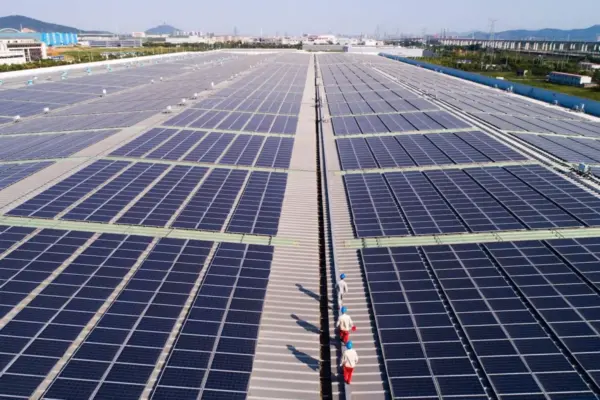
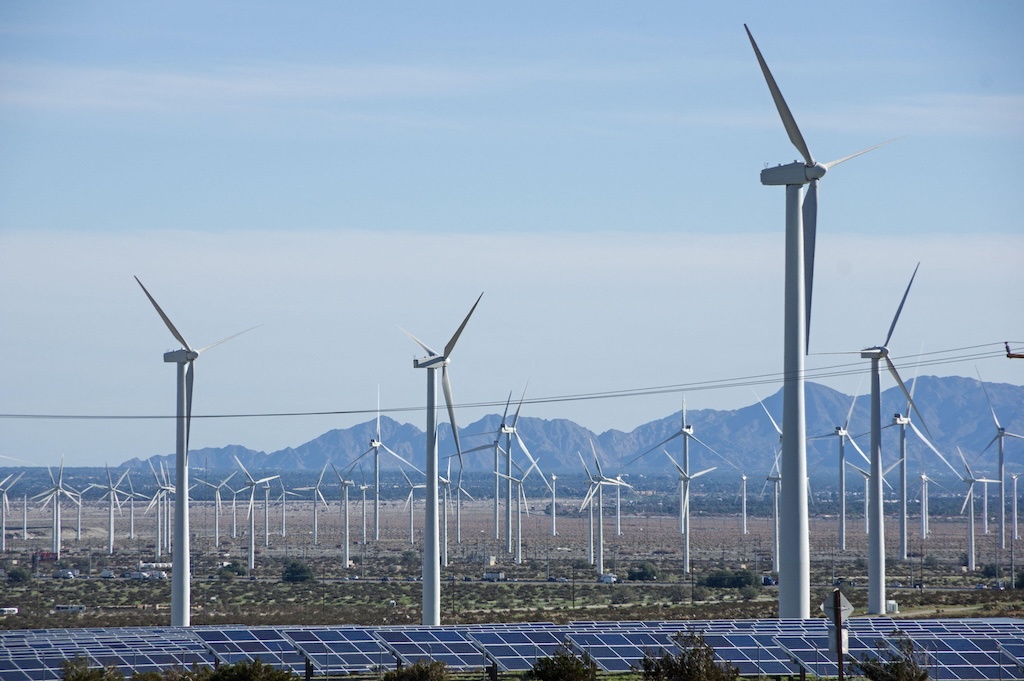
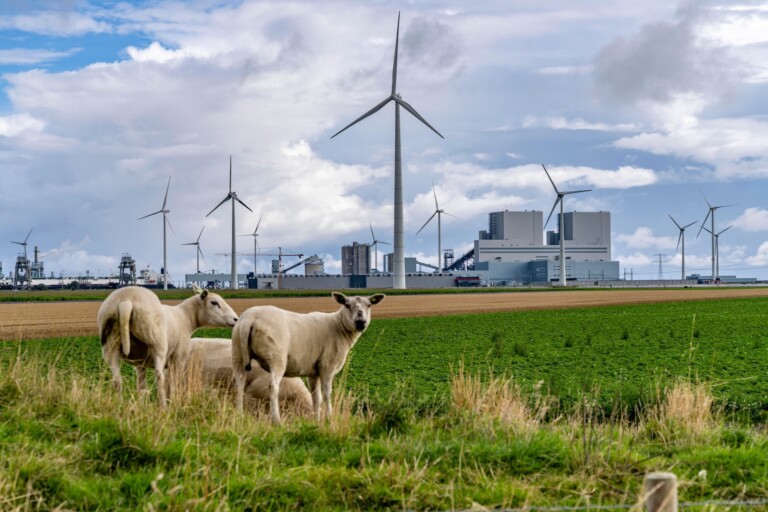
The influence of artificial intelligence extends well beyond theoretical research into practical climate mitigation and policy design. Prof. Priya Donti, assistant professor at the Massachusetts Institute of Technology and co-founder of Climate Change AI, emphasizes the restructuring required as more solar, wind, and renewable sources are integrated into modern power grids.
"As we introduce more solar, wind and other renewable energy into the power grid, we need to rethink how we actually manage the various sources on the power grid," Prof. Donti explains. "AI is used in a few different ways here. One of them is just trying to get better predictions of solar and wind power production in order to reduce that uncertainty and allow us to plan with a little more foresight."
Additionally, AI optimizes and controls diverse grid components, including power generators, batteries, flexible industrial loads, and domestic electric vehicle charging systems.

Dr. Carlos Rodriguez-Pardo, a postdoctoral researcher at Politecnico di Milano and affiliated scientist at the European Institute on Economics and the Environment and the Euro-Mediterranean Center on Climate Change, asserts that AI is already useful at every single stage of the climate policy cycle.
The first stage involves measurement and emissions tracking, air quality monitoring, and mapping a vast scientific literature that has outgrown human reading capacities. The second stage involves modelling futures. Because traditional integrated assessment models are computationally expensive, AI-based emulators can reproduce their behavior at a fraction of the cost, allowing researchers to explore thousands of scenarios and quantify previously unreachable uncertainties. The third stage relies on causal machine learning to rigorously evaluate whether implemented policies actually achieved their intended emission reductions.
Future Horizons, Misconceptions, and Persistent Risks
Looking ahead over the coming years, climate research will likely be reshaped further by hybrid modeling. Rather than entirely replacing physical laws, hybrid modeling merges the mathematical rigor of traditional process-based Earth system models with the pattern-recognition speed and adaptability of machine learning. This approach aims to overcome computational bottlenecks, improve terrestrial biosphere simulations, and pinpoint non-linear tipping points.
Despite these promising frontiers, experts caution against common misconceptions. Dr. David Rolnick, associate professor at McGill University and co-founder of Climate Change AI, stresses that people frequently mistake AI exclusively for massive, energy-intensive generative models built by major tech companies. While the high energy, electricity, and water consumption of large-scale generative and agentic AI systems are valid societal concerns, they do not reflect the specialized, targeted machine learning systems predominantly deployed to tackle climate change.
Equity and inclusion remain critical concerns as well. Dr. Amirpasha Mozaffari warns that frontier AI models are built almost exclusively in the global north, trained on data densest in regions where observations are richest, and validated against matching geographic benchmarks. Without deliberate international efforts to share data infrastructure and center local human well-being, AI risks automating and amplifying existing divides in the global climate information system.
Ultimately, researchers emphasize that artificial intelligence must serve as a tool to augment human judgment in climate decisions rather than replace it. While the technology offers unprecedented analytical speed and precision, it remains only one component of a broader, globally coordinated response to climate change.