Across Latin America, governments increasingly view public procurement as a powerful instrument for driving broader public policy goals. From mitigating environmental degradation to fostering the growth and inclusion of small businesses, leveraging state purchasing power has become a cornerstone of modern reform. Yet, despite the inclusion of sustainable procurement into many legal and institutional frameworks across the region, turning policy intentions into operational reality remains a formidable challenge.
Technical capacity constraints, a lack of clear operational guidance, perceived reputational risks, and an entrenched bureaucratic bias toward short-term financial efficiency often cause reform efforts to stall. Many public procurement systems fall into a familiar trap, drafting progressive policies and identifying high-level indicators, only to see implementation stall while actual results go unmeasured and unverified.
Paraguay, however, is emerging as a regional model for breaking out of this cycle. Over recent years, the country has built one of the most comprehensive sustainable public procurement frameworks in Latin America. Despite this robust foundation, the nation faced a critical blind spot: the absence of a systematic mechanism to measure whether its ambitious sustainable procurement policies were genuinely being implemented or producing tangible results.
To address this challenge, Paraguay’s public procurement agency, the National Directorate of Public Contracting (DNCP), partnered with the Open Contracting Partnership (OCP). Together, they embarked on a phased, collaborative initiative designed to bridge what has come to be known in reform circles as the "valley of death" for sustainable procurement. Through multistakeholder engagement, targeted data collection improvements, and the integration of digital tools, the partnership sought to embed sustainability mandates directly into everyday procurement workflows and track their execution using structured data.

Incorporating Sustainable Clauses into Electronic Government Procurement
The initial step toward measuring sustainable procurement performance required defining and operationalizing sustainability clauses. In public procurement architecture, these clauses function as mandatory rules embedded within tender documents that suppliers must follow throughout the lifecycle of a contract. Whether required during the initial bidding phase, the execution of the contract, or at the final payment stage, these stipulations set explicit conditions. For example, a clause might legally obligate a supplier to source a designated percentage of materials from local family farming cooperatives or comply with rigorous environmental standards during construction. These requirements are typically enforced through pass-fail assessments, with compliance verified during contract execution rather than at the bid evaluation stage.
Working closely alongside the DNCP’s internal sustainability committee, OCP conducted a comprehensive review of standard tender documents. The team compiled and categorized every clause contributing to environmental, economic, or social dimensions of sustainability. While Paraguay had already established these standards via regulatory channels, they had previously lacked integration into the country’s electronic government procurement (e-GP) system. Cross-cutting rules were cataloged first, followed by sector-specific requirements such as accessibility standards for public construction works.
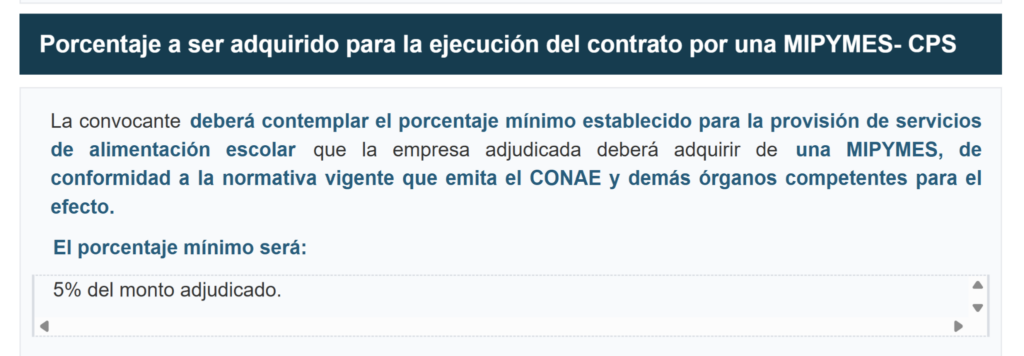
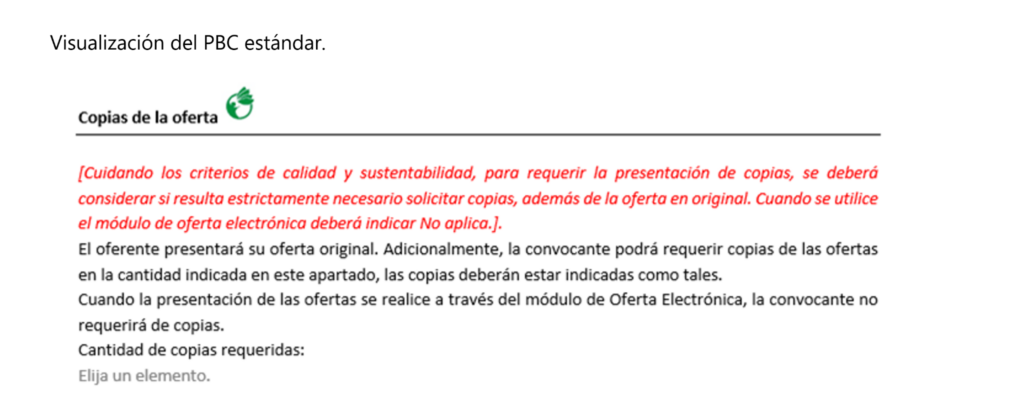
Paraguay’s modern e-GP system, launched in 2024, offered the technical flexibility needed to integrate these features seamlessly. DNCP incorporated the newly structured sustainable clauses directly into digital standard bidding documents. To ensure transparency and external visibility, these clauses were assigned a specific sustainability mark known as CPS, an acronym for Compras Públicas Sustentables. Furthermore, a distinct green badge was added to all electronic tender clauses carrying a sustainability component, allowing purchasing officials to identify and apply them intuitively.
This digital integration transformed policy into actionable data points. Whenever a contracting authority utilizes these standard documents, the e-GP system automatically captures structured data regarding which clauses have been applied. Internally, the database extracts these markers to generate a daily tally of active procurement processes incorporating sustainability criteria, turning abstract regulatory goals into measurable metrics.
An Internal Dashboard for Monitoring Uptake
Once these clauses were successfully embedded within standard bidding documents, the DNCP possessed the infrastructure to query them systematically and monitor their utilization across government procurement processes.
To ensure the monitoring framework aligned with institutional goals, OCP facilitated a series of workshops focused on developing a practical theory of change. These collaborative sessions defined the specific operational steps required from DNCP leadership, evaluated the data fields available within the newly upgraded e-GP system, determined which clauses demanded priority integration, and established a regular update schedule for monitoring tools. This participatory approach built deep institutional trust and ownership within the DNCP team.
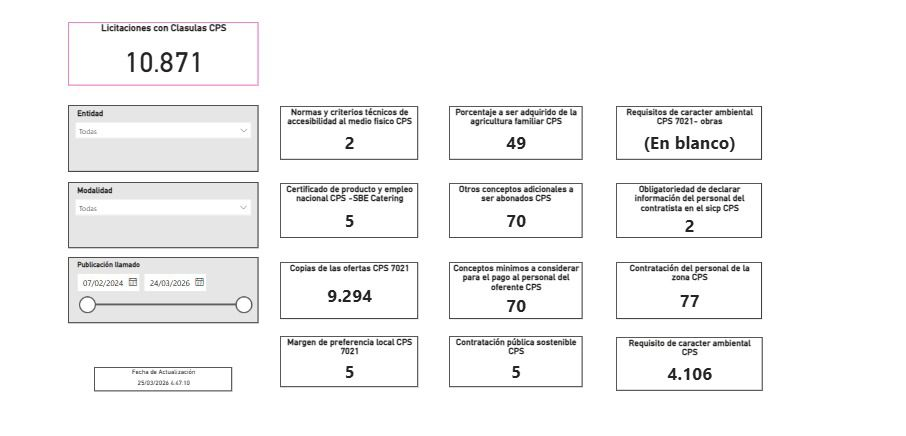
In early 2025, the agency launched an internal monitoring dashboard designed to track the uptake of sustainability clauses in an agile, user-friendly format. Serving as the primary output of the collaborative intervention, the dashboard provided leadership with a clear view of how sustainable procurement adoption was evolving across government bodies. Data collected between February 2024 and March 2026 established vital performance baselines. Given that the DNCP publishes roughly 9,000 tenders annually, the tracking data revealed stark contrasts in adoption rates; while administrative clauses limiting physical document copies saw widespread implementation across thousands of tenders, sector-specific environmental and social requirements exhibited more modest initial uptake.
Currently utilized primarily by members of the sustainable procurement committee and the director of DNCP, agency leadership anticipates making the monitoring dashboard publicly accessible in the future. Additional technical refinements are already underway to capture more granular insights. For instance, the agency is pairing aggregate dashboard metrics with contract-level data using the Open Contracting Data Standard to evaluate specific high-impact initiatives, such as the mandatory family farming sourcing clause utilized within the national school meals program, Hambre Cero. This allows procurement officials to measure not just whether a clause was written into a tender, but the actual subcontracting volume and financial value delivered to small enterprises and local agricultural producers.
Defining Market-Aligned Sustainability Criteria
Beyond embedding clauses into electronic procurement systems and developing tracking dashboards, the joint initiative focused on refining substantive sustainability criteria used during competitive bid evaluations to score and qualify competing suppliers.
Prior to the partnership, DNCP had collaborated with specialized technical organizations to determine which social, economic, and environmental requirements procurement entities could reasonably request without exhausting supplier capacity. Building upon this foundation, DNCP established a strategic distinction between universal criteria applicable to all state purchasing and category-specific requirements tailored to particular goods and services.
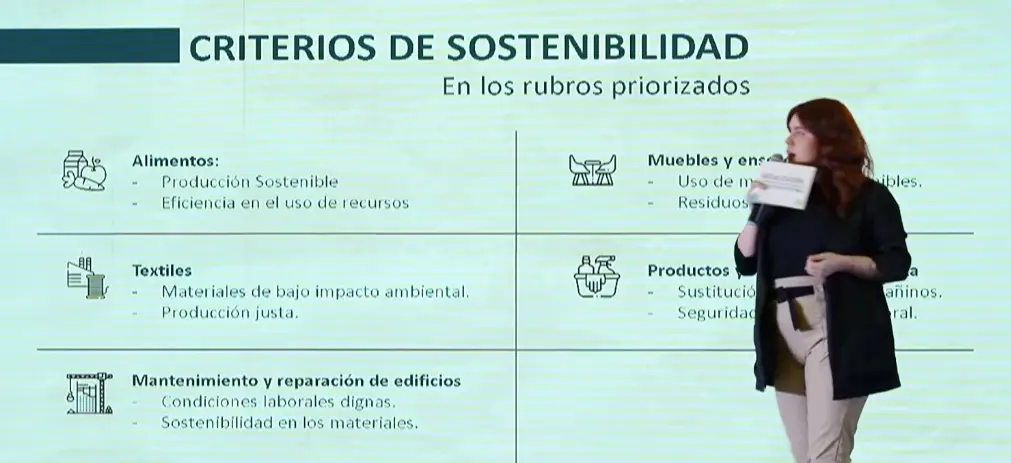
To streamline the selection of priority sectors, the agency deployed a new scoring matrix driven by weighted variables. By evaluating potential categories against standardized scoring metrics, DNCP ranked various industries to identify high-impact areas for immediate intervention. Facilitated by OCP, workshops bringing together the sustainable procurement committee, external ministerial experts, and industry representatives helped refine product and service categories using the UNSPSC classification system.
This collaborative process yielded a shortlist of five priority categories: food, building maintenance and repair, textiles, furniture and fixtures, and cleaning supplies and services. For each designated sector, specialized sustainability criteria were established, balancing ecological and social ambitions with documented market readiness. For office furniture and climate control equipment, for example, mandatory pass-fail environmental requirements regarding energy efficiency and sustainable material sourcing were integrated alongside clear verification mechanisms, such as recognized eco-labels and official certifications.
While operationalizing the monitoring of tender clauses has advanced rapidly, actively integrating these complex qualitative criteria into every competitive tender remains an ongoing transition. OCP continues to provide technical advice to help DNCP systematically track supplier bids complying with sustainability criteria beyond basic text-based queries. By building upon its existing foundation of publishing comprehensive open data in the Open Contracting Data Standard format, Paraguay continues to refine its public purchasing framework, demonstrating how transparent data and collaborative institutional reform can successfully bridge the gap between sustainability policy and everyday government practice.