Across Latin America, governments increasingly recognize public procurement as a transformative lever for advancing broader societal objectives, stretching from aggressive environmental protection mandates to targeted economic inclusion for small and medium-sized enterprises. Yet, moving sustainable procurement ideals from high-level legal frameworks into everyday operational reality remains a formidable challenge. Regional systems frequently encounter a persistent implementation gap driven by technical capacity constraints, guidance deficits, perceived reputational risks, and institutional biases favoring short-term financial efficiency over long-term strategic outcomes. This systemic hurdle often traps procurement agencies at a stage where environmental and social policies are expertly drafted and indicators officially identified, but execution stalls indefinitely and results go completely unmeasured.
Paraguay has recently emerged as a compelling model for how nations can successfully navigate this critical transition. Over recent years, the nation has steadily constructed one of the most comprehensive sustainable public procurement frameworks in the region. Despite laying a strong institutional foundation, the country faced a familiar predicament: the absence of a systematic mechanism to measure whether its ambitious sustainable procurement policy was genuinely being implemented or producing tangible results.

To confront this obstacle, Paraguay’s national public procurement agency, the Dirección Nacional de Contrataciones Públicas (DNCP), partnered with the Open Contracting Partnership (OCP) on a targeted initiative designed to bridge the chasm between policy design and execution. By deploying a phased approach rooted in multistakeholder collaboration, improved data collection architectures, and the creation of specialized digital tools, the partnership sought to embed sustainable criteria directly into routine procurement workflows while tracking performance through verifiable data points.
The initial phase of the intervention focused on defining and operationalizing distinct sustainability clauses within the nation’s electronic government procurement (e-GP) system. Within public contracting, these clauses function as mandatory rules integrated directly into tender documents, outlining clear conditions that suppliers must satisfy throughout the entire procurement lifecycle—whether during the bidding process, contract execution, or payment authorization. For example, a standard clause might legally obligate a supplier to source a specific percentage of its materials from local family farming networks or adhere to strict environmental benchmarks during project delivery. Crucially, these provisions are typically enforced as pass-or-fail assessments, with compliance rigorously verified during the execution phase rather than the initial bid evaluation stage.
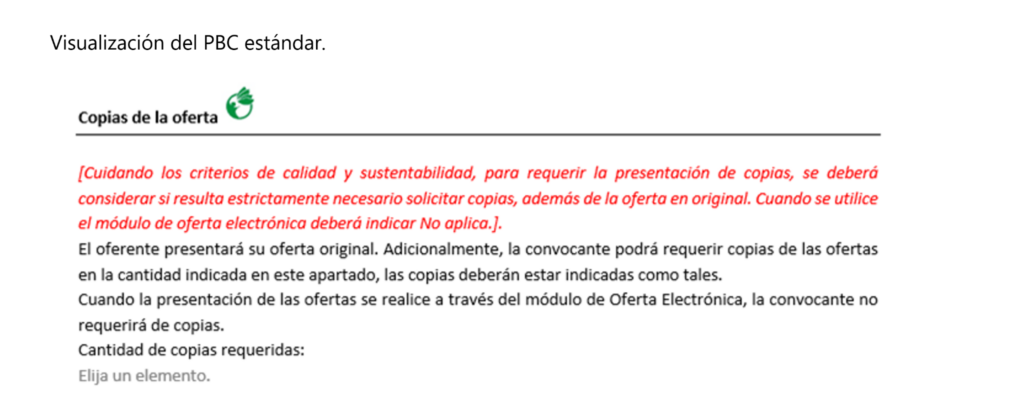
Working closely alongside the DNCP’s internal sustainability committee, project stakeholders conducted a comprehensive review of standard tender documents, compiling every existing clause contributing to environmental, economic, or social sustainability dimensions. Although Paraguay had already established these regulatory standards, they had previously lacked integration into the digital e-GP architecture. The collaborative team first harmonized cross-cutting administrative clauses, such as those capping the required physical copies of tender documents to reduce paper consumption, before advancing to sector-specific requirements, including accessibility standards for public infrastructure works.
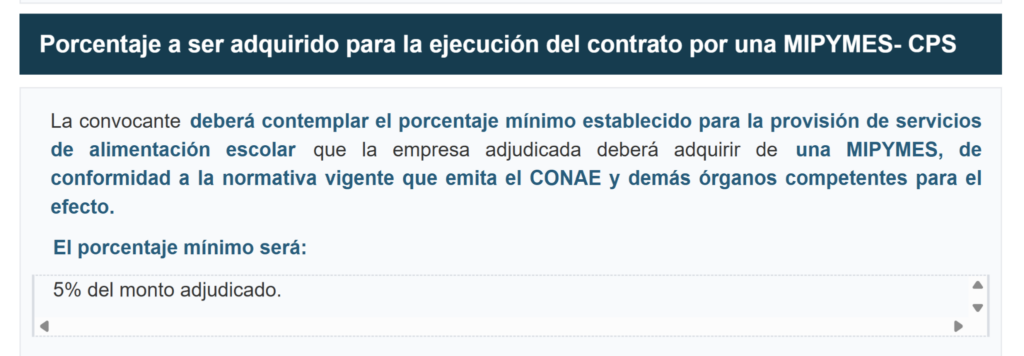
The launch of DNCP’s updated e-GP platform in 2024 provided the necessary digital flexibility to seamlessly integrate these sustainable clauses into standard electronic bidding formats. To ensure external visibility and internal tracking, these incorporated clauses were designated with a specialized sustainability mark known by the acronym CPS, representing Compras Públicas Sustentables. Furthermore, system developers introduced intuitive visual cues, including green badges applied to all digital tender clauses possessing a sustainability component, allowing purchasing entities to identify and utilize them effortlessly.
Through this digital integration, every instance in which a contracting authority utilizes these standardized documents automatically generates structured data capturing precisely which sustainability clauses have been applied. This mechanism successfully converts static policy language into dynamic, actionable data points. Internally, the database extracts these codified clauses to execute a continuous daily tally of all active procurement processes incorporating them.
Building upon this automated data capture, the DNCP collaborated with the OCP to define core indicators capable of rigorously measuring the uptake of the sustainable procurement policy. This analytical framework was shaped through intensive workshops focused on establishing a shared theory of change for the reform initiative. These interactive sessions addressed the operational shifts required from DNCP personnel, evaluated the data fields accessible within the upgraded e-GP system, determined which specific sustainability clauses required immediate embedding into active tenders, and established appropriate update frequencies for monitoring tools.
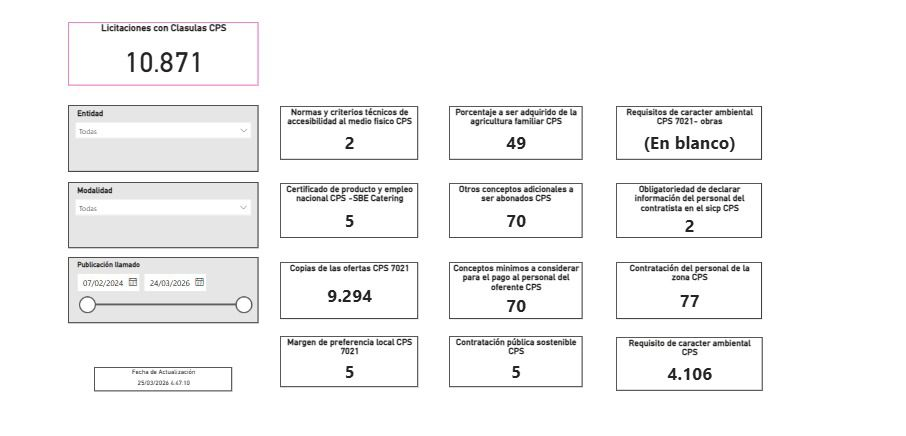
This deliberate consultative process fostered deep institutional trust within the DNCP team, paving the way for the deployment of a dedicated internal monitoring dashboard in early 2025. This dashboard represents the most significant operational output of the collaborative intervention, providing leadership with an agile, user-friendly interface to track the evolution of sustainable procurement adoption. Utilizing baseline data collected across a multi-year period from February 2024 through March 2026, the monitoring system has revealed striking variations in adoption rates across different policy areas. For context, the DNCP typically publishes approximately 9,000 procurement tenders annually, meaning that certain administrative clauses, such as limits on physical bid copies, achieved massive widespread uptake exceeding 9,200 applications across tenders during the monitored timeframe. Conversely, specialized social and environmental criteria demonstrated more targeted implementation curves.
While the internal dashboard is presently utilized primarily by members of the sustainable committee and the director of the DNCP, agency leadership anticipates expanding public access to the platform in future phases. Additional technical enhancements are also underway to unlock more granular analytical insights. For instance, data concerning family farming sourcing clauses—which play a vital role in national school feeding initiatives such as the Hambre Cero program—are being examined at a deeper contract-level using open data standards. By combining dashboard metrics with Open Contracting Data Standard formats already published by Paraguay, analysts can assess not just the overall tender-level uptake of the family farming clause, but also the exact volume of subcontracts and financial values successfully awarded to small enterprises and agricultural producers.
Beyond tracking contractual clauses, the collaborative initiative also empowered the DNCP to better define specific sustainability criteria utilized during the bid evaluation stage to score and qualify competing suppliers. Prior to the project, the procurement agency had engaged specialized technical organizations to evaluate market capacity and determine realistic environmental, social, and economic requirements that buyers could reasonably demand from commercial vendors. Building upon this foundation, the DNCP established a strategic distinction between universal social criteria applicable across all state procurement and targeted, category-specific requirements.
To prioritize which specific categories of goods and services should receive immediate focus, the DNCP deployed a specialized scoring matrix utilizing five weighted variables. Each variable is evaluated on a simple numerical scale, and the resulting combined scores effectively rank product and service categories based on strategic priority. Facilitated by OCP workshops bringing together the sustainable committee, cross-ministerial experts, and private sector industry representatives, this prioritization process helped align market expectations with state targets, refining UNSPSC product coding categories and improving framework agreement designs.
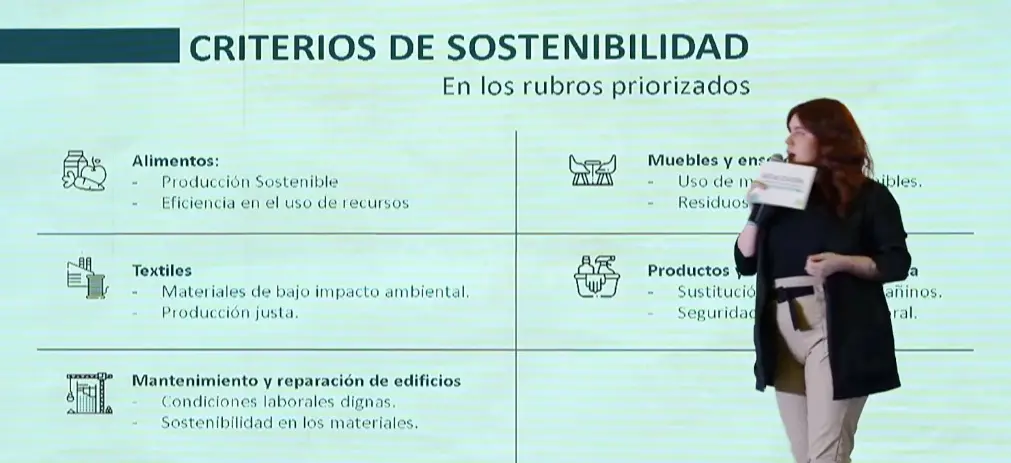
This rigorous consultative process produced a definitive shortlist of five priority procurement categories: food, building maintenance and repair, textiles, furniture and fixtures, and cleaning supplies and services. For each prioritized category, authorities established concrete sustainability requirements, distinguishing carefully between mandatory pass-or-fail thresholds and preferential scoring criteria. Every criterion was meticulously calibrated against prevailing market capacities, local industry supply chains, and the intrinsic characteristics of the goods involved. For example, procurement rules for office furniture, air conditioning units, and related accessories were updated to mandate strict energy efficiency compliance, verified through recognized environmental certifications or official agency documentation.
While operationalizing the monitoring of general contractual clauses has advanced smoothly, actively embedding these nuanced technical criteria into competitive tender evaluations has proven more complex. The OCP continues to provide technical advisory support to the DNCP, helping the agency navigate methods to systematically measure actual bidder compliance with complex sustainability criteria beyond manual text-based queries. Furthermore, stakeholders continue to advocate for the broader public release of detailed sustainable procurement datasets, building upon Paraguay’s already robust national record of publishing comprehensive open contracting information.