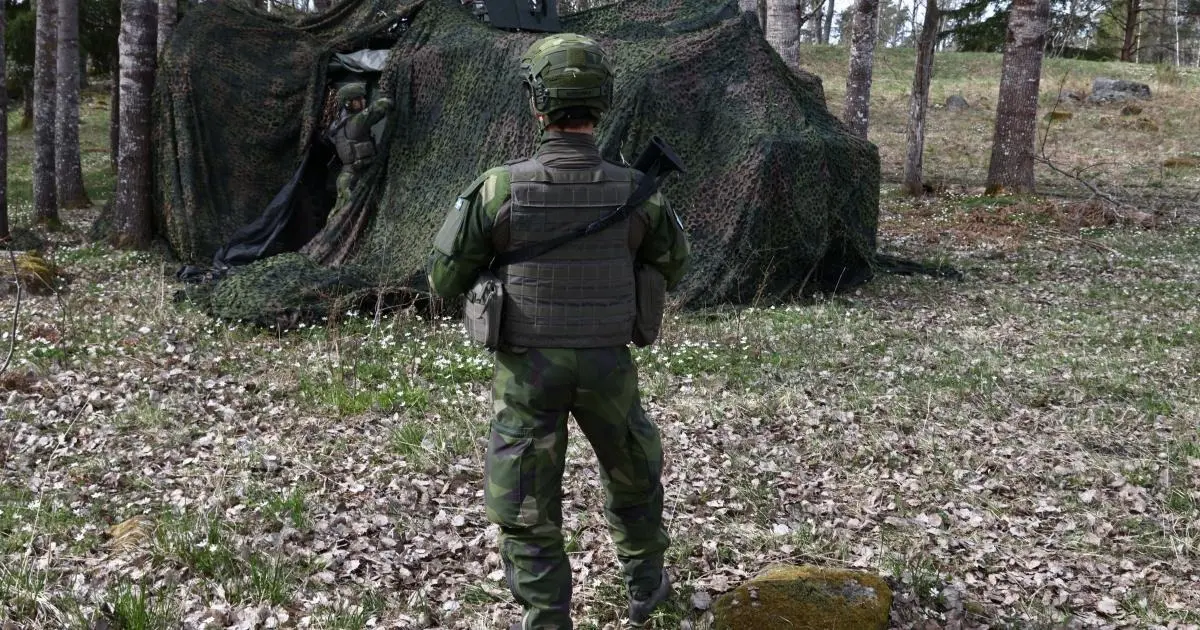
In August, acting at Finland’s explicit request, the Swedish government deployed advanced fighter aircraft and a frontline warship to help patrol Finnish eastern airspace and the strategic waters of the Gulf of Finland. The mission was launched to guard against potential Russian air incursions and stray drones originating from ongoing operations in Ukraine. Crucially, the Swedish military assets involved were placed directly under Finnish command and operated strictly in accordance with Finnish rules of engagement. This operational integration marks only the latest milestone in how Finland and Sweden, the two newest member states to join the North Atlantic Treaty Organization, have rapidly executed qualitative leaps in defense coordination.
Over the past four years, the Nordic countries have expanded their regional military collaboration to unprecedented levels. Between them, Denmark, Finland, Iceland, Norway, and Sweden have established a comprehensive long-term defense strategy, designated a seamless cross-border transit area, increased the frequency of joint military exercises, and achieved remarkable command integration. In effect, these Nordic governments are organically forming their own regional deterrence cluster. This like-minded group of states is systematically deepening its military cooperation to strengthen mutual deterrence and, if necessary, provide a sturdy bedrock for NATO’s broader collective defense architecture.
The emerging Nordic model offers a vital glimpse of the adaptive solutions that may sustain NATO through a period of profound geopolitical uncertainty. Moscow’s appetite for military risk is clearly growing, while its aggressive military buildup and escalating sabotage attacks against critical European infrastructure suggest that Russia poses a sustained, long-term threat to the alliance. Concurrently, the administration of U.S. President Donald Trump is actively pressing its European partners to assume primary responsibility for the conventional defense of the continent. Consequently, European nations find themselves facing a demanding imperative: they must deter a more dangerous and unpredictable Russia with less direct American assistance.
To bolster their deterrence and defense capabilities, member states situated along NATO’s extended frontline—particularly within the Baltic and Black Sea regions—should construct their own regional clusters. These nations need to foster a robust latticework of bilateral and minilateral partnerships with their immediate neighbors. While regionalization has historically remained a sensitive topic among much of the alliance’s political leadership, given that NATO is fundamentally a collective defense organization founded on the principle of indivisible security, practical regional efforts at the military level will make the alliance significantly more effective. Furthermore, such bottom-up initiatives directly advance the long-standing American vision of a more autonomous, self-reliant European NATO.
Nordic-style deterrence clusters thus represent a clear strategic win-win for both sides of the Atlantic. Yet, Washington’s erratic and occasionally aggressive diplomatic posture regarding Greenland and the North Atlantic has risked undermining the very regional allies that are actively delivering the capabilities the United States desires. The U.S. government should utilize the recently concluded Greenland agreement as an opportunity for a strategic reset, fully embracing Nordic defense efforts and creating constructive incentives for other allied nations to follow their lead.
Marriage of Convenience
Modern Nordic defense collaboration took its current institutional form back in 2009, when severe recession-era budgetary constraints forced the region’s five nations to fundamentally rethink their national defense commitments. Finland and Sweden joined established NATO members Denmark, Iceland, and Norway in launching the Nordic Defense Cooperation (NORDEFCO), a framework created primarily with the hope of curbing soaring procurement costs. NORDEFCO initially notched some early successes, including cross-border air force training exercises making use of the uncongested airspace spanning northern Finland, Norway, and Sweden. However, because NORDEFCO bridged the divide between NATO members and non-allied neutral states, persistent bureaucratic hurdles and a relatively lenient post-Cold War threat environment quickly drained momentum from joint procurement initiatives.
It was only after Russia’s illegal annexation of Crimea and military intervention in Ukraine in 2014 that certain Nordic countries began to view security cooperation as an absolute operational imperative rather than a mere cost-saving exercise. Finland and Sweden forged a deep, no-limits military partnership that incorporated joint wartime planning. Meanwhile, Norway, while maintaining its primary focus on traditional NATO structures, gradually embraced practical operational cooperation with its two non-NATO neighbors during periods of heightened crisis. By 2020, when the five nations signed a formal trilateral statement of intent, they were already conducting extensive joint exercises, sharing sensitive intelligence concerning common threats, and harmonizing their national defense plans with an eye toward coordinated crisis response.
Any remaining political or structural limits on Nordic military cooperation evaporated entirely following the full-scale Russian invasion of Ukraine in 2022, which drove both Finland and Sweden to formally join NATO. The region’s five governments quickly agreed that Moscow posed an urgent and direct security threat to their own populations and to Europe as a whole. Even Denmark, which had historically been more reticent about participating in deep regional military integration, warmed considerably to collective defense efforts. In 2023, Copenhagen joined Finland, Norway, and Sweden in developing the Nordic Airpower Concept, a visionary framework designed to enable their combined fleet of roughly 250 advanced fighter jets to fight as a single, unified force.
Denmark also pledged to contribute military personnel to the Swedish-led Forward Land Forces Finland, a multinational NATO battlegroup that rotates dynamically between northern Finland and Sweden. When Denmark assumed the rotating chairmanship of NORDEFCO in 2024, the five governments signed NORDEFCO Vision 2030, an ambitious roadmap outlining their goal for fully integrated joint operations aligned with both national requirements and broader NATO defense interests. To support the logistical underpinnings of ground force cooperation, the initiative successfully established a seamless, borderless Nordic military mobility corridor.
As a result of these developments, a clear and efficient division of labor is now emerging across the region. Finland officially commands regional land operations, Norway hosts the regional headquarters for air operations, and Sweden is rapidly evolving into the primary logistics hub and transit zone for joint military operations across northern Europe. Denmark, for its part, serves as the host for a specialized regional headquarters dedicated to special operations.
This Nordic deterrence cluster functions with remarkable smoothness within NATO’s overarching collective defense framework. Larger NATO allies—including France, Germany, the United Kingdom, and the United States—routinely operate and conduct military exercises within the Nordic space alongside their regional partners, effectively filling critical capability gaps in specialized areas such as intelligence, reconnaissance, and surveillance. The cumulative result is a dramatic enhancement of defense capabilities within NATO’s Joint Operations Area Northwest, a vast sector that covers the North Atlantic and encompasses vital sea-lanes, vulnerable undersea infrastructure, and the sensitive Arctic and Nordic regions bordering volatile Russian strategic hotspots.
Imitation Game
Deterrence clusters may well represent the definitive future blueprint for NATO’s frontline posture. In addition to the North Atlantic sector, NATO’s operational architecture includes two other major regional plans: the Center plan, covering the Baltic states and central Europe, and the Southeast plan, covering Turkey and the Balkans. Each of these zones possesses its own dedicated operations area and a network of command centers. Governments operating within these frontline regions would be wise to follow the Nordic example, taking the initiative to strengthen their own minilateral ties within the broader framework of the alliance.
An obvious and urgent starting point is the southeastern Baltic Sea, which sits directly at the heart of NATO’s Joint Operations Area Center. Although the Baltic states share a profound, acute vulnerability to potential Russian encroachment, practical regional defense cooperation has remained relatively modest since Estonia, Latvia, and Lithuania joined the alliance, with all three preferring to rely heavily on extraregional security guarantors like the United States. Recent policy shifts, however, indicate that regional collaboration is finally gathering pace. Estonia and Latvia have jointly procured the advanced IRIS-T air defense system, while all three Baltic republics are closely coordinating the deployment of their HIMARS rocket systems and constructing the Baltic Defense Line, an ambitious network of fortifications specifically engineered to channel, delay, and block any potential Russian ground invasion.
Nevertheless, Baltic military cooperation would benefit immensely from the implementation of a more comprehensive minilateral layer explicitly modeled after NORDEFCO. In practice, this could entail the systematic coordination of national defense plans, the execution of frequent joint military exercises, and the establishment of shared missile stockpiles for regional air defense systems. It could also involve merging HIMARS launchers to create a unified joint fires capability, better integrating national contributions to the Baltic Defense Line, and jointly operating uncrewed maritime vessels to monitor surface waters and critical underwater infrastructure. The ultimate objective would be to enable the three national militaries to fight together as seamlessly as possible, generating a combined regional deterrence power far greater than the sum of its individual parts.
Any such regional format, if fully realized, must also actively involve Poland—an emerging European military powerhouse that currently plays a surprisingly limited role in formal Baltic defense structures. Although Warsaw maintains a relatively robust bilateral defense partnership with Lithuania that includes joint exercises and specialized working groups, the two neighboring states have repeatedly failed to establish a joint military exercise area in the Suwalki Gap, a vital strategic corridor and vulnerable supply line that physically connects the Baltic states to continental Europe. Establishing a stronger minilateral framework would create a permanent, standing mechanism for joint military planning and political consultation that could help resolve the local objections and divergent strategic priorities that have repeatedly derailed previous negotiations over the gap.
Within such a cooperative framework, Warsaw could significantly reinforce regional defense by connecting its East Shield initiative—Poland’s extensive national program of fortifications, physical barriers, and surveillance systems installed along its borders with Russia and Belarus—with the Baltic Defense Line. Poland could also contribute essential ground-based air defenses to NATO’s ongoing Baltic Air Policing mission. The fundamental strategic aim should be to solidify Poland’s role as a leading regional security provider in the Baltic theater alongside Germany, which is currently in the process of permanently stationing a combat brigade in Lithuania.
The other major frontline arena that would derive immense benefit from the establishment of a dedicated deterrence cluster is the Black Sea region, which falls directly within NATO’s Joint Operations Area Southeast. Bulgaria, Romania, and Turkey have historically struggled to achieve close defense cooperation due to divergent national assessments regarding the precise nature and urgency of the threat posed by Russia. Building a dense minilateral latticework in this theater is undeniably more difficult than in the Nordic or Baltic Sea basins. However, in a transformed European NATO where allies are expected to shoulder more responsibility, Black Sea nations face mounting expectations to contribute more effectively to collective defense, and underlying conditions for cooperation are slowly improving.
The most promising domain for expanded minilateral cooperation in the Black Sea is maritime security. In July 2024, Bulgaria, Romania, and Turkey launched a joint mine-clearing operation, which successfully paved the way for the establishment of a coordinated mission dedicated to protecting vital energy infrastructure, telecommunications networks, and offshore undersea pipelines owned and operated by the three allies. This embryonic naval force could be systematically expanded to handle more ambitious contingencies across the Black Sea, ranging from advanced maritime surveillance to the defense of territorial integrity, much like the Finnish-Swedish naval task force operates in the Baltic.
National air forces represent another potentially fertile area for Nordic-style collaboration, particularly as these regional militaries modernize and expand their capabilities. Bulgaria is currently awaiting the delivery of its new F-16 fighter jets, Romania is set to acquire state-of-the-art F-35 aircraft, and Turkey, already possessing a potent indigenous air power, continues to seek readmission to the F-35 program. Back in 2009, Nordic air forces began conducting weekly cross-border training sessions, which ultimately paved the way for today’s deep operational integration. Establishing more frequent, structured joint exercises among Black Sea allies would represent a logical first step toward enhancing tactical interoperability.
For the Nordic nations, reaching their current high level of institutionalized collaboration required more than fifteen years of steady effort. Other frontline regions simply do not have the luxury of waiting that long. Russia may well emerge from the ongoing war in Ukraine with a hardened, more capable military apparatus and a diminished aversion to risk. Tighter subregional cooperation would not only directly benefit the security of exposed frontline allies by enhancing their collective capacity to respond rapidly; it would also make NATO’s overall frontline defense posture far more effective, actively deterring Russian territorial ambitions from encroaching deeper into Europe—an outcome that member states situated farther from the front should eagerly support. Moreover, by strengthening this intricate minilateral latticework, countries situated in close geographic proximity to Russia will dramatically enhance their ability to act in concert before NATO can mobilize collectively. In extreme circumstances where the broader alliance might find itself momentarily paralyzed, these subregional clusters would offer a vital strategic hedge, enabling frontline states to mount an immediate, unified response.
A Dog in the Fight
The United States also maintains a profound, direct vested interest in the organic development of deterrence clusters across NATO’s extended eastern borderlands. Senior U.S. defense officials have frequently articulated a strategic vision for what they term “NATO 3.0,” envisioning a rebalanced alliance in which European nations assume primary responsibility for their own conventional territorial defense while the United States plays a supporting role, providing extended nuclear deterrence and a select array of high-end enabling capabilities. If European allies are indeed to assume primary responsibility for conventional deterrence, subregional cooperation arrangements characterized by high interoperability, joint defense procurement, synchronized planning, shared command capacity, cross-border mobility, and functional divisions of labor will be utterly paramount.
Nordic defense cooperation currently represents the most mature and successful iteration of such efforts, and the Nordic states have already demonstrated their unwavering readiness to work closely alongside the United States to counter Russian-related security threats. Finland and Norway, for instance, have directed their sophisticated national intelligence capabilities toward monitoring military activities unfolding on the Russian side of their shared land borders. Furthermore, Finland routinely grants U.S. signals-intelligence aircraft access to its national airspace to monitor the strategically vital Kola Peninsula, where the vast majority of Russia’s nuclear second-strike capabilities are concentrated. By successfully preventing Russian military dominance across the broader North Atlantic region, Nordic defense cooperation directly advances the core objectives of the U.S. National Security Strategy, which emphasizes maintaining favorable balances of power in the world’s most critical regions through close collaboration with trusted allies and partners.
There are compelling reasons for Washington to treat the Nordic nations as exemplary allies and to enthusiastically endorse their continuous advancements in regional defense cooperation. And yet, the approach taken by the Trump administration toward the region has frequently appeared disjointed and incoherent. On one hand, U.S. officials have openly commended Nordic efforts to dramatically ramp up defense spending—with Denmark, Finland, Norway, and Sweden all currently exceeding or safely on track to reach three percent of gross domestic product allocated to defense by 2029, while committing to meet the broader Hague target of five percent of GDP by 2035. On the other hand, U.S. President Donald Trump has repeatedly mused publicly about the prospect of taking over Greenland, a scenario viewed as a diplomatic and security nightmare by the Nordic capitals, pitting their deep mutual solidarity against their respective bilateral relationships with Washington.
The Greenland agreement signed by Washington, Copenhagen, and Nuuk should encourage the Trump administration to adopt a much larger, more constructive role in Arctic security governance. Up to this point, Washington has largely treated increased defense spending as the sole key enabler of NATO 3.0. However, a genuinely European-led alliance also requires member states that can utilize their growing military capabilities as efficiently and seamlessly as possible. If the United States were to actively encourage and diplomatically back Nordic-style minilateral latticeworks across other critical subregions, it would effectively empower a far more competent, capable, and commanding NATO 3.0.