Fossils provide an extraordinary, irreplaceable window into Earth’s distant past, offering tangible evidence of the complex animals, towering plants, and diverse ecosystems that existed millions of years before human history began. Yet, despite their immense scientific value, the global fossil record tells only a partial, fragmented story of life on our planet. Fossilization itself is an exceptionally rare natural process, requiring a precise set of environmental conditions that means only a tiny fraction of the organisms that ever lived have been successfully preserved in the geological strata. Furthermore, even when ancient remains do manage to survive the immense pressures of deep time, modern scientists can only discover and study them if the specific rock layers containing them happen to be exposed and accessible on the surface today.
As a direct consequence of these geological and geographical limitations, our collective picture of prehistoric life remains plagued by major gaps. While certain geological periods and specific geographic regions have produced exceptionally abundant fossil discoveries—providing researchers with a highly detailed, almost microscopic understanding of the biological communities that once flourished there—other periods and vast regions of the globe remain largely unexplored, mysterious blanks on the scientific map. Because modern fossil excavations are immensely demanding endeavors that require considerable time, specialized labor, and substantial financial resources, knowing precisely where to search could make a transformative difference in uncovering new, groundbreaking evidence of ancient life.
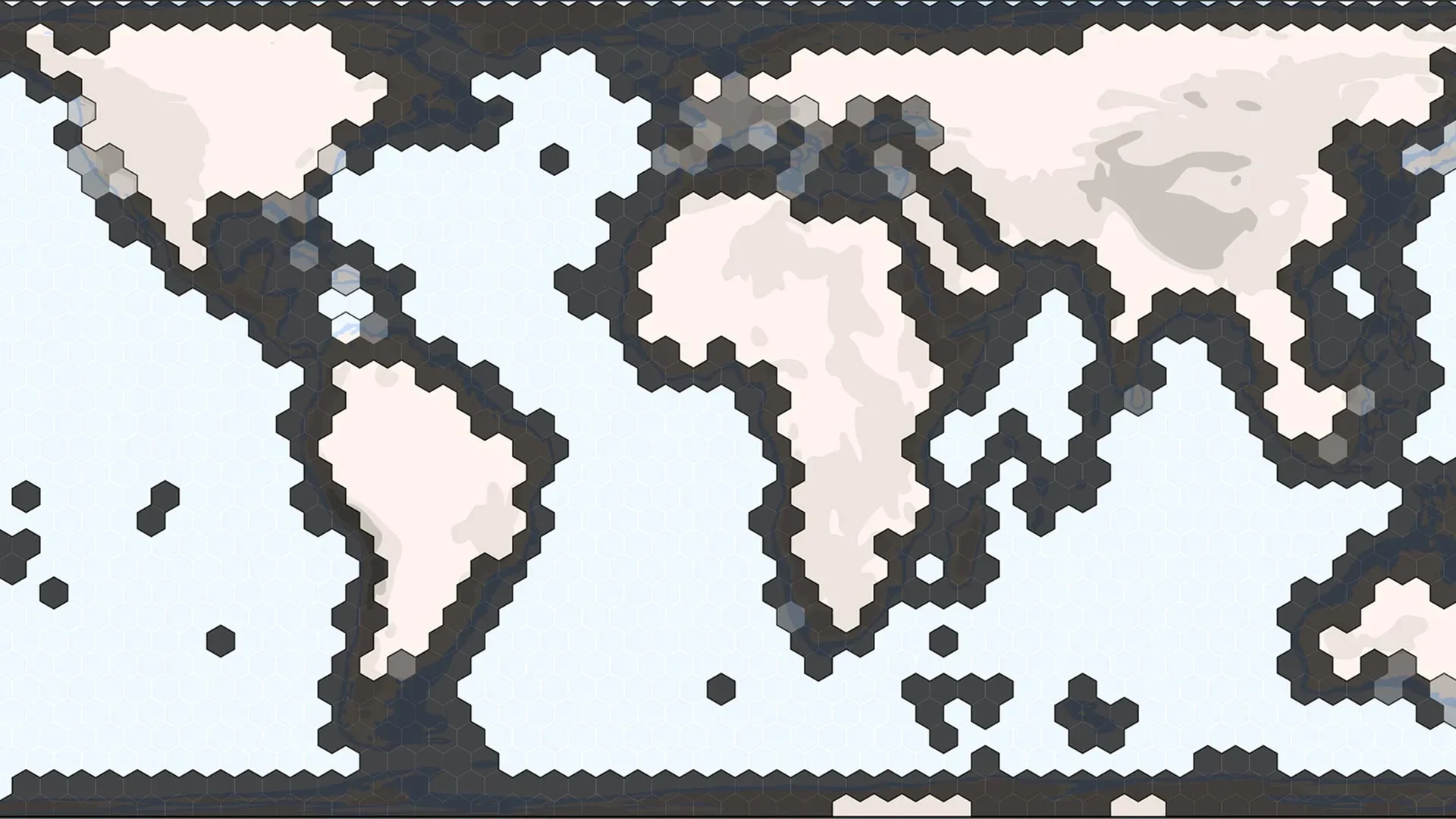
To help solve this persistent problem, Thomas A. Neubauer of the Bavarian State Collections of Natural History (SNSB) and Mathias Harzhauser of the Natural History Museum in Vienna have developed an innovative new tool designed to guide future fossil research. The two seasoned paleontologists undertook a comprehensive analysis of the geographic distribution of fossil discoveries originating from ancient marine animals that inhabited shallow coastal environments over the course of the past 540 million years. For the first time in the history of the discipline, they also systematically mapped the vast regions of the world where vital fossil information is currently missing, thereby providing the scientific community with a much clearer, data-driven picture of where future discoveries may realistically be possible.
Mapping 540 Million Years of Ancient Marine Life
To construct this ambitious and detailed global map, the researchers began by examining millions of records from the Paleobiology Database, widely recognized as the world’s leading freely accessible repository of scientific fossil information. This massive database contains a substantial portion of the published paleontological findings generated by academic researchers, field expeditions, and museums around the world over many decades of scientific inquiry.
Utilizing these extensive historical records, the research team painstakingly reconstructed where fossils from ancient shallow marine environments have been documented throughout the vast expanses of Earth’s geological history. Beyond simply looking at raw locations, they also examined how the broader discipline of fossil research has evolved and expanded over decades and centuries, carefully measuring how frequently scientific investigations in different geographic regions have successfully produced new and meaningful scientific information.
To ensure their geographical model was grounded in solid geology, the researchers then compared these historical paleontological findings with comprehensive geological information sourced from the Macrostat database. This critical cross-referencing allowed the team to assess not only where fossils have already been successfully discovered by past generations of scientists, but also where suitable, undisturbed rock formations currently exist that could provide ideal opportunities to fill important gaps in the global fossil record. By combining historical discovery rates with raw geological potential, the researchers created a dynamic framework for evaluating where the earth still holds untapped paleontological secrets.
Where Earth’s Missing Fossils May Be Hiding
The resulting analysis revealed a surprising and significant imbalance in our contemporary scientific understanding of prehistoric life on Earth. According to the data, the Early Mesozoic—a vast span of time lasting approximately from 252 million to 66 million years ago, famous for the rise and reign of the dinosaurs—and the Palaeozoic Era, stretching from approximately 539 million to 252 million years ago, have already been studied extensively by generations of geologists and paleontologists. Because of this historical research bias, the researchers noted that additional fossil discoveries from these particular deep-time periods are unlikely to produce a substantial, revolutionary increase in overall scientific knowledge in the near future.
Instead, the analysis suggests that the greatest opportunities for expanding and refining the fossil record may lie in more recent chapters of geological history. Although scientists have already collected a vast quantity of evidence from the Cenozoic Era, which began approximately 66 million years ago following the catastrophic extinction event that wiped out the non-avian dinosaurs, the new mapping tool indicates that its shallow marine deposits still contain significant, untapped potential for groundbreaking fossil discoveries.
To help active researchers investigate this specific era, the team successfully identified priority locations around the world where previously unknown fossil species are especially likely to be found buried in the earth. Crucially, these identified regions are also places where the appropriate geological layers are naturally exposed or otherwise accessible to field teams, turning theoretical potential into actual, achievable discovery opportunities.
A Treasure Map for Future Fossil Discoveries
By explicitly highlighting geographic regions where important paleontological evidence may still be waiting beneath the soil, the newly developed approach could help working paleontologists plan significantly more productive field expeditions and make much more efficient use of limited research funding and institutional resources. Rather than continuously concentrating efforts on classic areas that have already been explored and analyzed exhaustively over the past century, scientists now have a data-driven rationale to focus their attention on locations that possess the absolute greatest potential to reveal something genuinely new about Earth’s prehistoric ecosystems and ancient marine biodiversity.
The implications of this research extend far beyond the planning of future field digs, offering a strategic framework for the entire paleontological community. As lead researcher Neubauer points out, the sheer reality that numerous regions of the Earth remain largely unexplored offers profound hope for valuable new scientific discoveries in the years to come.
At the same time, because expanding our knowledge of the fossil record is inherently challenging and tends to progress only very slowly through meticulous fieldwork, having a reliable guide is considered indispensable. Neubauer emphasizes that their work is designed to help researchers worldwide focus their investigations specifically on these still largely unexplored areas, serving as a valuable guide for planning future excavation campaigns. The same strategic principles apply equally to the careful examination of existing museum collections that are currently sitting in archives awaiting detailed scientific analysis, allowing institutions to prioritize their workloads. Through this kind of sensible, data-driven prioritization, the scientific community can systematically fill the lingering gaps in the fossil record.