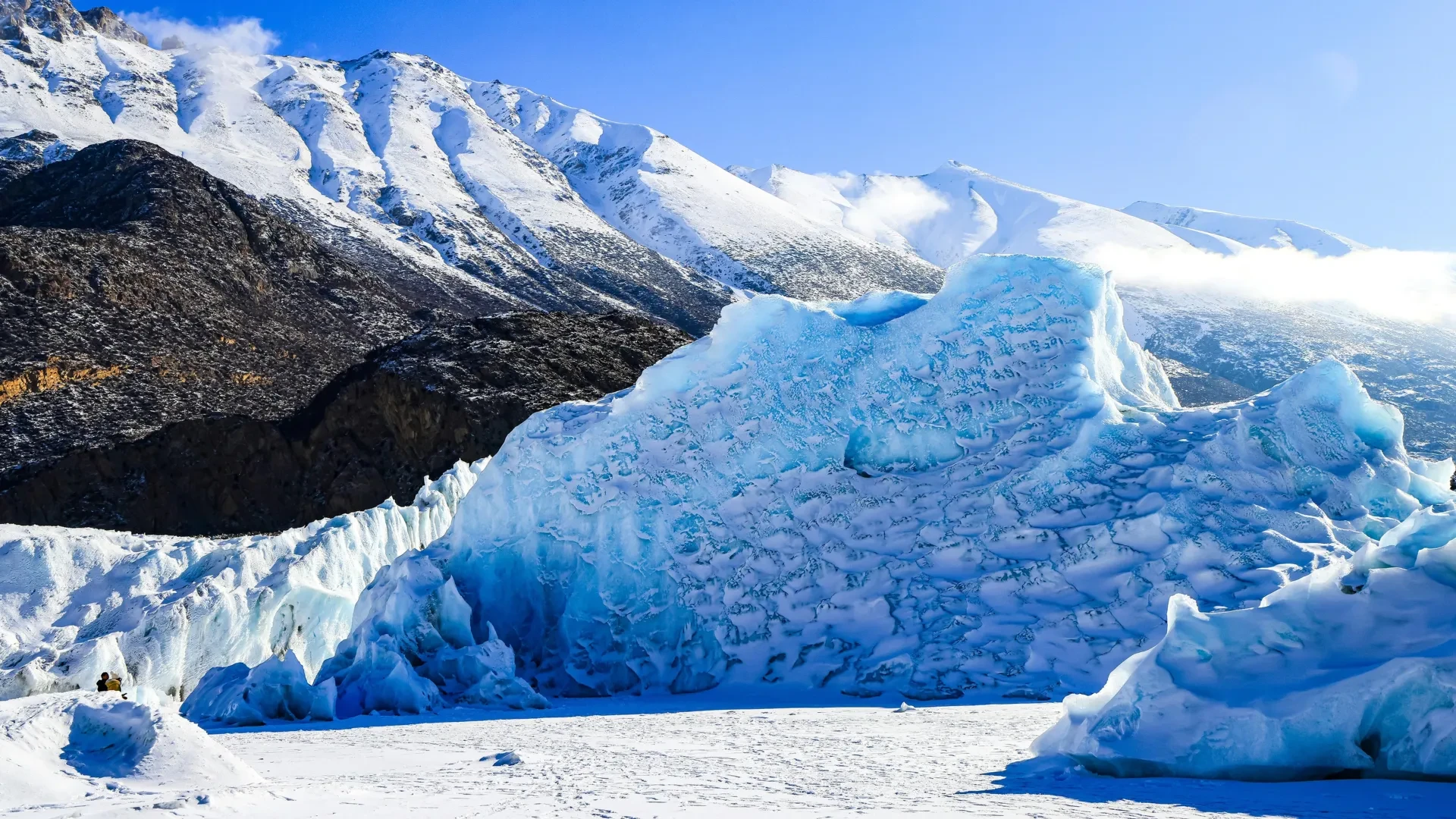
Deep within a remote ice cap in northwestern Tibet, scientists have uncovered evidence of a remarkable frozen record that may stretch back more than 128,000 years. This groundbreaking discovery suggests that ice perched high in the roof of the world has somehow survived since the last ice age, offering an unprecedented, high-altitude window into Earth’s ancient climate history and the resilience of mountain glaciers during periods of profound environmental transformation.
The findings dramatically extend the known glacial record from this critical geographic region by more than 100,000 years. As a result, these samples represent the oldest ice cores ever successfully recovered from this part of Tibet. Beyond their sheer age, the cores provide rare, tangible evidence of how mountain glaciers managed to endure major shifts in Earth’s climate, challenging long-held assumptions about the stability and vulnerability of high-altitude ice masses during past interglacial periods.
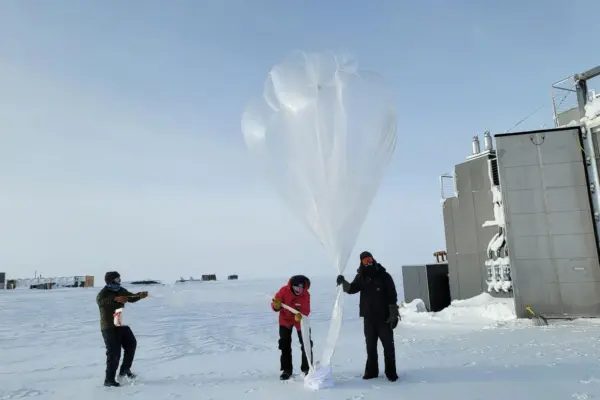
Researchers arrived at these significant conclusions after meticulously examining ice cores collected from the windswept Guliya Plateau during two separate scientific expeditions in 1992 and 2015. Despite being drilled a remarkable 23 years apart by international teams, the samples revealed strikingly similar patterns of oxygen isotopes. Scientists routinely rely on these isotopic ratios as a reliable proxy to reconstruct past environmental conditions, atmospheric temperatures, and precipitation patterns.
The remarkably close match between the cores drilled decades apart indicates that the ice cap has preserved a highly reliable and reproducible record of climate history over millennia. In the realm of paleoclimatology, the ability to replicate findings from the same geographic feature across different decades is a gold standard for data integrity.
"Reproducibility of the records within a given ice cap is extremely important," said Lonnie Thompson, lead author of the study, a professor of earth sciences, and a senior research scientist at the Byrd Polar Research Center at The Ohio State University. "If you get an identical record a quarter of a century later, it can tell you a lot about the behavior of the ice over time."
How Scientists Dated the Ancient Tibetan Ice
Determining the absolute age of ice that has remained frozen for tens of thousands of years is a profoundly complex scientific task. Unlike tree rings, which offer clear annual markers, ancient ice requires sophisticated geochemical techniques to establish a dependable timeline. To build a robust chronology for the Guliya samples, the international research team turned to advanced dating methods involving radioactive isotopes of beryllium and chlorine.
These naturally occurring radioactive forms of elements decay at precisely predictable rates, making them exceptionally valuable tools for identifying major chronological markers deep in Earth’s environmental history. In this investigation, researchers used the isotopic signatures to detect definitive evidence of the Leschamp Geomagnetic Excursion. This dramatic and well-documented disturbance in Earth’s magnetic field occurred more than 41,000 years ago, leaving distinct chemical footprints embedded within the layers of accumulating snow and ice.
Once the magnetic and radioactive milestones were established, the team compared its findings with high-resolution oxygen isotope records preserved in nearby Tibetan cave deposits, such as stalagmites, which independently record shifts in precipitation and climate. Taken together, the converging lines of evidence strongly suggest that the Guliya ice record extends well beyond 128,000 years into the past, securely pushing the timeline back into the late Pleistocene epoch.
"It’s a really critical finding, because outside of the polar regions, this is the only ice core we have from the mountaintops that go back that far," Thompson noted. "Records out of Huascarán only go back over 30,000 years, not over 100,000, so that makes Guliya a very unique record."
The full details of the research and the methodology behind the dating process were published in the peer-reviewed journal Science Advances.
A Frozen Climate Record From the Last Ice Age
Ice cores remain among the scientific community’s most valuable and comprehensive sources of information regarding ancient global climates. As winter snow accumulates year after year on high-altitude plateaus and is gradually compressed into dense glacial ice by subsequent snowfall, it traps microscopic bubbles of ancient air, dust particles, and chemical compounds. This continuous accumulation preserves an immaculate, layered archive of the atmosphere and environmental conditions prevailing at the time each layer was formed. By drilling into these glaciers and examining the distinct chemical properties of varying depths, researchers can piece together how regional and global climates shifted over thousands of years.
However, interpreting these complex natural archives depends entirely on knowing precisely when each layer was formed. Without a reliable, well-constrained timeline, even an exceptionally pristine and well-preserved ice core can prove extraordinarily difficult to understand or contextualize within the broader framework of Earth history.
This inherent uncertainty had complicated earlier interpretations of the Guliya ice cap. Previous research efforts suggested that the ice cap’s continuous record reached back only to the middle of the Holocene, the current geological epoch that began nearly 12,000 years ago following the conclusion of the last ice age. Under that previous assumption, scientists believed the mountain’s older ice had long since melted away.
The new empirical evidence firmly establishes that at least a significant portion of the ice sheet is considerably older than the Holocene, dating back through the tumultuous climate shifts of the last glacial period. This revelation carries profound implications for understanding whether large, sprawling ice masses in High Mountain Asia persisted as the planet gradually emerged from the last major ice age.
"If we only had Holocene-era ice in Tibet, that would mean that the big ice sheets from the last ice age didn’t persist through the early Holocene," Thompson explained. "लेकिन evidence shows that it did." The survival of this ancient ice provides vital clues about the microclimatic conditions that allowed glaciers in the region to weather past global warming phases.
What the Discovery Reveals About Earth’s Glacial History
The Guliya ice cap’s unusual and isolated geography likely holds the key to why it has managed to preserve such an exceptionally old and undisturbed climate record. Its extreme high elevation, combined with the unique surrounding topography of the Tibetan Plateau, created localized atmospheric and thermal conditions that allowed ancient ice to remain frozen in place through major historical environmental upheavals.
Beyond simply establishing the impressive age of the ice, researchers hope that this newly refined and precise timeline will help answer fundamental, long-standing questions about the history and dynamics of Earth’s glaciers. Pinpointing exactly when major periods of glaciation began in the region, how long those glacial phases lasted, and the specific timing of subsequent ice retreats is essential for reconstructing the planet’s natural climate cycles and predicting future trajectories.
"When did ice start forming on the planet and what did those natural processes of loss look like?" Thompson asked. "We need to know those things, and the only way you can really demonstrate it is with accurate time scales on these records."
The revised chronological framework also opens up exciting new opportunities to investigate the Guliya ice cores in much greater detail. Armed with a dependable timeline, researchers now plan to study additional core samples to determine how various other proxies—such as trapped atmospheric gases, organic molecules, and mineral dust—fit into this expanded history. These upcoming analyses could reveal subtle environmental shifts that were previously overlooked or misinterpreted because scientists lacked a full understanding of the true age of the underlying ice layers.
For Thompson and his colleagues, one of the most encouraging and scientifically validating aspects of the discovery is how consistently the diverse analytical measurements support a single, unified interpretation of the data.
"The big picture is that our results tell a very consistent story," Thompson concluded. "If you get the science right, it’s consistent. It’s our understanding of what it’s trying to tell us that has to catch up."
The multi-year research initiative received core financial support and backing from the U.S. National Science Foundation. Alongside Thompson at The Ohio State University, co-authors on the study included researchers Mary Davis and Ellen Mosley-Thompson. International contributors to the project included Juerg Beer of the Swiss Federal Institute of Aquatic Science and Technology; Christof Vockenhuber and Marcus Christl of ETH Zurich in Switzerland; Tandong Yao of the Chinese Academy of Sciences; and Ninglian Wang and Ling Fang of Northwest University in China.