For individuals recovering from foot surgery, a broken leg, ankle sprains, or other lower-body medical conditions, regaining independence can feel like an uphill battle. Traditional crutches often demand significant upper-body strength, cause underarm discomfort, and limit a person’s speed and stability. In recent years, knee scooters—also known as knee walkers—have emerged as a preferred alternative for many patients seeking a safer, more efficient way to move around their homes, workplaces, and communities. However, entering the market for the first time can be a daunting experience. Consumers are immediately met with an overwhelming array of technical specifications, marketing figures, measurements, weight capacities, and material types. Understanding what these metrics mean is the first step toward finding a mobility aid that offers both safety and comfort.
Important Features to Consider
When evaluating the market, prospective buyers must look beyond the initial visual appeal and examine the core engineering of the device. A thorough assessment of several critical features can prevent further injury and ensure long-term reliability.
The foundation of any mobility device is its frame material. It is crucial to understand what materials have been used in manufacturing, as the frame must be durable and strong enough to support the entire weight of the body. Manufacturers typically rely on robust materials like aluminum or steel to guarantee structural integrity and optimum user support. A sturdy frame also proves vital when facing unpredictable weather conditions. Users want a device that will not tarnish, weaken, or rust when exposed to rain or damp environments during outdoor transit.
Equally important to safety is the braking system. No user wants to find themselves rolling down an incline with no way to stop. While various braking mechanisms exist across different models, industry experts frequently recommend systems positioned on the handlebars, mirroring the intuitive design of a bicycle. Reviewing the manufacturer’s specifications provides crucial clarity regarding how a specific model’s brakes operate and how quickly they engage.
Weight capacity is another major factor that demands careful attention. Knee scooters vary significantly in the maximum load they can safely support. While standard models generally accommodate up to 300 pounds, specialized heavy-duty options, such as the BodyMed Folding Knee Scooter, offer higher weight thresholds. Purchasing a device that fails to accommodate a user’s specific weight places them at a severe risk of equipment failure and potential reinjury.
Storage capabilities also play a practical role in daily usability. A well-designed knee scooter often features an attached storage basket or utility box. Because users typically need to transport personal items, medical supplies, or daily essentials while traveling, built-in storage adds a high degree of convenience. Even if a preferred model lacks an integrated basket, compatible aftermarket storage solutions can usually be purchased separately.
Tires dictate how smoothly and safely a scooter navigates various surfaces. Buyers should investigate whether a model utilizes high-quality, durable materials like polyurethane, especially if outdoor use is anticipated. Tires must perform reliably in changing weather conditions. Even for individuals who avoid going out in active rainstorms, damp ground is inevitable, making slip-resistant and durable tires vital for maintaining balance and control.
Finally, ease of assembly and everyday practicality should not be overlooked. Consumers generally prefer devices that can be set up quickly without requiring expensive or specialized tools. The ideal mobility aid minimizes the time and effort required for assembly, routine cleaning, storage, and transport between locations.
Frequently Asked Questions
As the popularity of knee walkers continues to grow, consumers frequently raise questions regarding their operation, practicality, and insurance coverage.
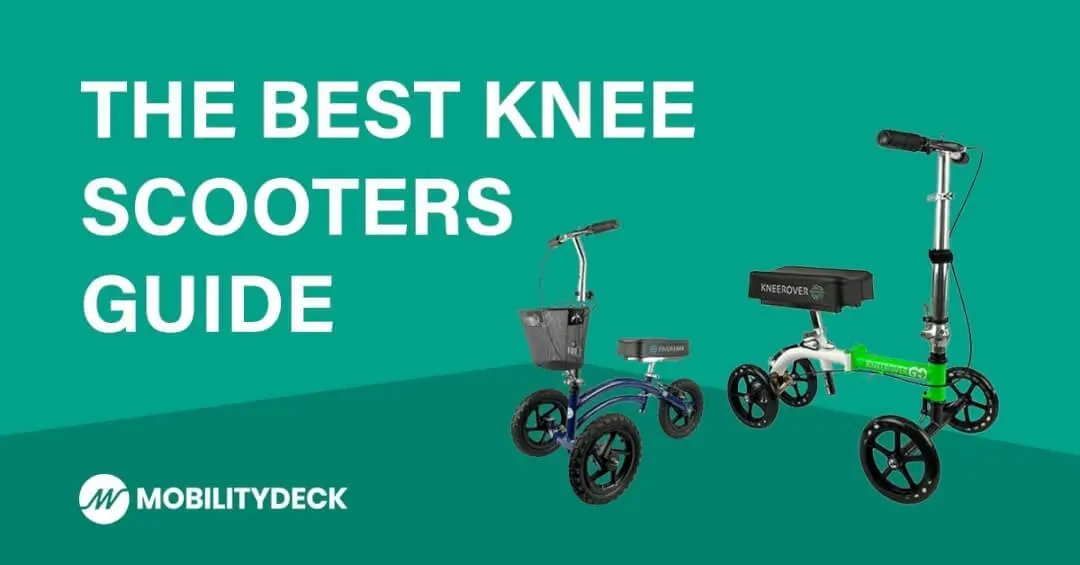
Knee scooters generally operate on a four-wheeled chassis designed to support the injured leg while allowing the uninjured leg to provide independent propulsion. A cushioned platform supports the knee, offering comfort during transit. While configurations vary, visual guides and product diagrams remain the most effective tools for understanding their mechanical layout.
When it comes to portability, the vast majority of modern knee scooters are foldable. Specifications vary by model, but most include a release lever connected either to the handlebars or positioned near the seat. Engaging this lever typically allows the frame to collapse smoothly, facilitating effortless storage in car trunks or closets.
The debate between knee scooters and crutches often boils down to personal preference, though scooters generally offer distinct ergonomic advantages. They eliminate the need for extensive upper-body strength, provide faster and more stable mobility, and are relatively simple to adjust compared to traditional crutches.
Insurance coverage remains a common hurdle for patients. Private insurance providers and public health programs often favor cheaper alternatives such as crutches over knee walkers. However, coverage entirely depends on individual policy terms and qualifications for government aid programs like Medicare or Medicaid. Patients are advised to consult directly with their insurance providers to determine potential reimbursement options.
For those looking to purchase a device, numerous online retail platforms offer quality selections. Budget-conscious shoppers frequently turn to Amazon, while buyers seeking specialized medical supply inventories often explore dedicated distributors like 1800Wheelchair.
Other Knee Scooters We Reviewed
While top-tier models dominate headlines, the broader market includes numerous alternative knee walkers from various brands that may suit specific lifestyle needs or budget requirements.
The KneeRover All Terrain Heavy-Duty Steerable Knee Walker is engineered for maximum durability, making it an ideal tool for individuals recovering from foot surgery or lower-body trauma. Featuring 12-inch pneumatic tires, it handles dust, dirt, grass, gravel, and rough sidewalks with agility. Compatible with both legs, it includes a three-inch thick knee platform, height-adjustable features, and an impressive weight capacity of 400 pounds. Its tie-rod steering system further enhances maneuverability in tight spaces.
For those seeking a lighter build, the Roscoe Knee Scooter weighs approximately 30 pounds post-installation. It features large rear wheels designed to roll smoothly over road bumps, handlebar maneuverability, ample knee padding, and a thumb-release folding mechanism for convenient transport.
The KneeRover HYBRID Knee Scooter introduces an all-terrain front axle upgrade with a detachable pneumatic front axle system. Its four-wheel design incorporates nine-inch pneumatic front wheels to deliver fluid mobility for sensitive injuries, alongside a contoured 3.5-inch knee platform.
The Vive Steerable Knee Walker prioritizes compact durability and modern design. Equipped with eight-inch polyurethane wheels, dual rear brakes, an adjustable steering handle, and a contoured foam cushion designed to distribute weight evenly and promote airflow, it serves as a reliable option for both indoor and outdoor recovery.
For children and smaller adults, the KneeRover Knee Walker Jr. scales down the traditional design without sacrificing quality. It features responsive handlebar brakes, a comfortable foam cushion, and manageable dimensions tailored to younger users.
The Roscoe Economy Knee Scooter offers a budget-friendly alternative that supports up to 250 pounds. Equipped with 7.25-inch wheels optimized for indoor environments, it provides steerable mobility, though its padding is more basic compared to premium counterparts.
The Swivelmate Knee Walker stands out with front wheels capable of turning a full 90 degrees, aided by a patented belt-drive steering mechanism. Weighing 22 pounds with a 400-pound capacity, it includes a stabilizing fifth center wheel and a three-inch thick pressure-distributing cushion.
The Essential Medical Supply Free Spirit Knee and Leg Walker focuses heavily on stability and controlled steering, incorporating large wheels and a unique turning mechanism to prevent over-steering during transit.
The Isokinetics Inc. Steerable Knee Walker utilizes a dual steel frame capable of supporting up to 300 pounds. It features a simplified single-brake system, parking brakes for safe disembarkation, and non-scuff wheels tailored for indoor use.
Finally, the ELENKER Steerable Knee Walker Deluxe Medical Scooter provides a lightweight 23-pound frame supporting up to 300 pounds. Featuring memory foam knee padding, quick-release folding mechanisms, and reliable handlebar brakes, it rounds out the diverse landscape of mobility aids available to recovering patients.