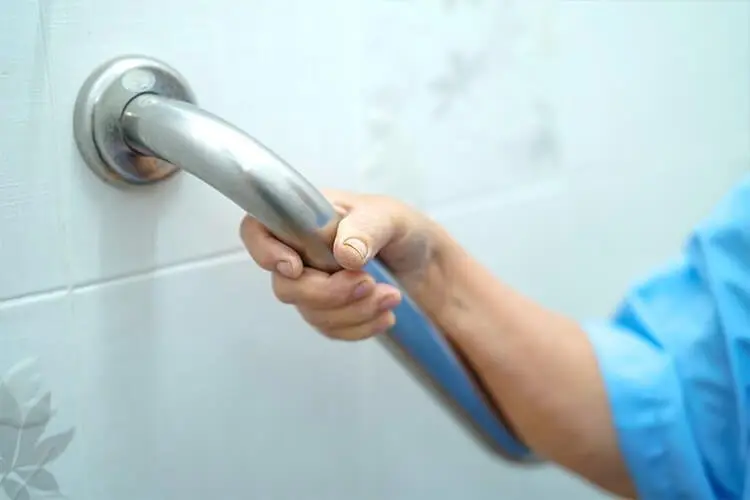
When it comes to accessible home modifications, few additions are as universally recommended, cost-effective, and impactful as properly installed grab bars. For aging adults, individuals with mobility challenges, and anyone looking to future-proof their living space, these simple hardware additions are practically essential for maintaining independence and preventing devastating domestic accidents. Within the modern home, the bathroom consistently ranks as one of the highest-risk zones for accidental slips and falls. Featuring hard porcelain fixtures, glass enclosures, and frequently wet tile floors, the environment presents daily hazards that can easily compromise stability. Correctly positioned and securely anchored grab bars offer the physical reassurance needed when navigating high-risk transitions, whether a user is lowering themselves onto the toilet, stepping over a high tub threshold, or maintaining balance under a slippery showerhead.
Yet, despite their widespread availability and proven track record, homeowners routinely face a critical logistical question when undertaking these vital renovations: Exactly how high should grab bars be installed to maximize safety and utility?
ADA Grab Bar Requirements
While the baseline rule of thumb is that grab bars should always be tailored to the specific ergonomic needs of the primary user, regulatory standards offer an invaluable starting point. The Americans with Disabilities Act (ADA), which establishes the pioneering benchmarks for accessibility in public spaces, strongly recommends that horizontal rear grab bars be installed between 33 and 36 inches above the finished floor of a bathtub, shower, or general bathroom area.
Treating this range as a foundational guide helps ensure structural compliance and functional ergonomics for a broad segment of the population. However, strict adherence to a single measurement can sometimes backfire if the user’s physical profile deviates from the statistical average. A notably petite individual, for instance, will require grab bars positioned lower than a taller user to achieve a natural, secure grip. Similarly, the addition of a raised toilet seat will naturally shift the ergonomic requirements upward, altering the geometric relationship between the user and the support hardware. Ultimately, if grab bars are miscalculated and installed outside of a user’s natural reach or functional range, they risk going unused entirely, defeating the entire purpose of the modification.
Vertical and Angled Grab Bar Height
Beyond standard horizontal configurations, homeowners increasingly turn to vertical or angled grab bar placements to address unique spatial constraints and diverse user needs. Installing grab bars in a vertical or diagonal orientation introduces a remarkable degree of flexibility regarding installation height. This dynamic approach accommodates households with multiple generations or varied physical abilities, as a vertical bar provides continuous support across a broader vertical spectrum, allowing individuals of different heights to find a secure handhold at whatever point feels most natural during their movement.
Entrance Grab Bar Heights
Statistically, the most dangerous moments in the bathroom occur during transitions—specifically when entering or exiting the bathing enclosure. To mitigate this risk, entrance grab bars are typically installed at a height of 16 to 18 inches. In scenarios where a household member utilizes a shower chair, installing a longer, 24-inch grab bar can prove transformative. This extended reach provides essential lower-level support, giving the user the leverage necessary to safely transition from a seated position to standing, or vice versa, right at the threshold of the shower stall.
Back Wall Grab Bar Height
For the back wall of a shower or bathtub enclosure, industry experts generally advise installing a horizontal bar measuring between 24 and 36 inches in length. This hardware should be positioned precisely 33 to 36 inches above the finished floor of the tub or shower. Installers must also pay close attention to structural positioning: if the chosen grab bar measures less than 32 inches, standard best practices dictate shifting the placement away from the exact center and toward the plumbing system wall. This adjustment ensures the bar remains optimally positioned to support individuals standing directly beneath the showerhead, where water spray and soapy conditions create the highest risk of losing one’s footing.
Toilet Grab Bar Height
Navigating the routine of sitting down and standing up from the toilet seat presents a significant hurdle for individuals with lower-body weakness, joint pain, or balance impairments. To establish maximum stability in this zone, installation specialists recommend placing two robust grab bars on either side of the toilet. A horizontal bar measuring between 16 and 32 inches, positioned so that its upper edge sits 33 to 36 inches from the bathroom floor, offers optimal accessibility and leverage for the user.
ADA Compliant Grab Bars
When selecting hardware for a home renovation, opting for products that meet or surpass ADA standards is widely encouraged. Originally designed to govern accessibility in public architectural spaces, these standards ensure that structural supports can endure substantial weight and dynamic physical stress. ADA-compliant grab bars are engineered to accommodate users with diverse physical capabilities, including individuals who navigate their homes via wheelchair. Exploring offerings from reputable manufacturers can also reveal modern design aesthetics that integrate smoothly with contemporary bathroom decors, proving that safety hardware no longer needs to resemble institutional equipment.
Considerations Before Installation
Before picking up a stud finder or drilling into tile, careful observation of the intended user’s daily bathroom routine can prevent costly placement errors. Loved ones and caregivers should take note of the exact moments during washing, grooming, and toileting where physical strain, hesitation, or imbalance naturally occurs. These friction points—such as lifting oneself from the toilet bowl, lowering into a bathtub, or stepping onto a slick surface—highlight the exact coordinates where strategic support is most urgently required.
Even when an individual is still capable of completing their routine independently, noting subtle indicators like momentary dizziness, muscle fatigue, or weakness at specific points in the cycle allows for proactive placement. For those who feel overwhelmed by the variables of height, leverage, and wall construction, consulting a qualified occupational therapist can yield a tailored assessment. An occupationalist can evaluate the unique biomechanics of the user and collaborate on a personalized home modification plan designed to optimize safety, stability, and long-term independence.
In some cases, simple swaps can yield immediate safety dividends without requiring extensive construction. For instance, replacing a traditional, decorative towel bar with a heavy-duty structural grab bar of the same dimensions can instantly upgrade a high-risk transition zone. A sturdy grab bar can double as a functional towel holder while simultaneously providing a reliable handhold for anyone entering or leaving the shower area.
While bathroom safety remains the primary focus of most accessibility discussions, the utility of grab bars extends well beyond the washroom. Homeowners evaluating their overall living environment frequently find that installing similar support hardware alongside staircases, steps, and long hallways can drastically improve household mobility, offering an extra layer of confidence and physical security throughout the entire home.