Nearly everything taught in data storytelling frameworks—across books, workshops, and analytical makeovers—starts from the exact same foundational principle: context. Before an analyst ever chooses a chart type, opens a slide deck, or deliberates over color palettes and visual layouts, they must understand who their audience is and precisely what they need that audience to know or do. This has always been the cornerstone of effective data communication.
By the time a data professional reaches the communication stage, however, a significant amount of analytical heavy lifting has usually already taken place. Analysts have explored raw data sets, identified underlying trends, surfaced key metrics, and perhaps even utilized artificial intelligence to accelerate that exploratory phase. Yet, exploratory work and explanatory work are two entirely different disciplines. Knowing what the data reveals is not synonymous with knowing how to effectively communicate those findings to stakeholders. That critical transition—moving from a data analyst to an intentional storyteller—is precisely where context becomes indispensable.

This juncture represents an area where emerging AI tools can add immense value as a collaborative thought partner, entering the workflow right at the beginning before significant time and resources are invested into building final deliverables. Artificial intelligence can push back against vague thinking, ask probing questions, introduce alternative perspectives that may have been overlooked, and help professionals stress-test their initial framing while adjustments remain effortless. Unlike coordinating schedules to carve out time from a busy colleague, AI is available on demand, serving as a willing sounding board whenever a professional is ready to think through a complex problem.
However, artificial intelligence can only fulfill this role effectively if the user comes to the table prepared. The quality of any strategic conversation with an AI model depends entirely on the context provided by the human operator. That preparation starts with foundational communication principles: understanding the target audience, clarifying what is at stake, and establishing a distinct point of view before communicating any findings. Frameworks like the Big Idea worksheet offer a structured approach to mapping out these elements, with AI acting as a real-time partner to sharpen every component along the way.

Working with AI: Starting with Context
The Big Idea is a concise, single-sentence summary that captures a communicator’s point of view while conveying what is actively at stake for the audience. Structured worksheets provide a reliable methodology for reaching that clarity. When integrating artificial intelligence into this phase, professionals generally have two operational choices. They can complete a strategy worksheet independently and supply it to the AI tool as a comprehensive baseline, or they can work through the framework section by section, engaging the AI to pressure-test their thinking iteratively. Beginning with the audience, moving to the stakes, and finally culminating in the Big Idea allows the structured worksheet to provide the architecture while AI helps refine each individual piece.
Before diving into complex scenarios, practitioners must remain mindful of potential pitfalls when utilizing AI to define context and formulate core messages. The initial stage often involves setting the stage by establishing a persona and operational boundaries for the AI tool, instructing it to act as an objective thought partner rather than merely generating passive text. By framing the project description clearly—detailing who the communication is for and what needs to be achieved—the user ensures that subsequent feedback remains targeted and relevant.
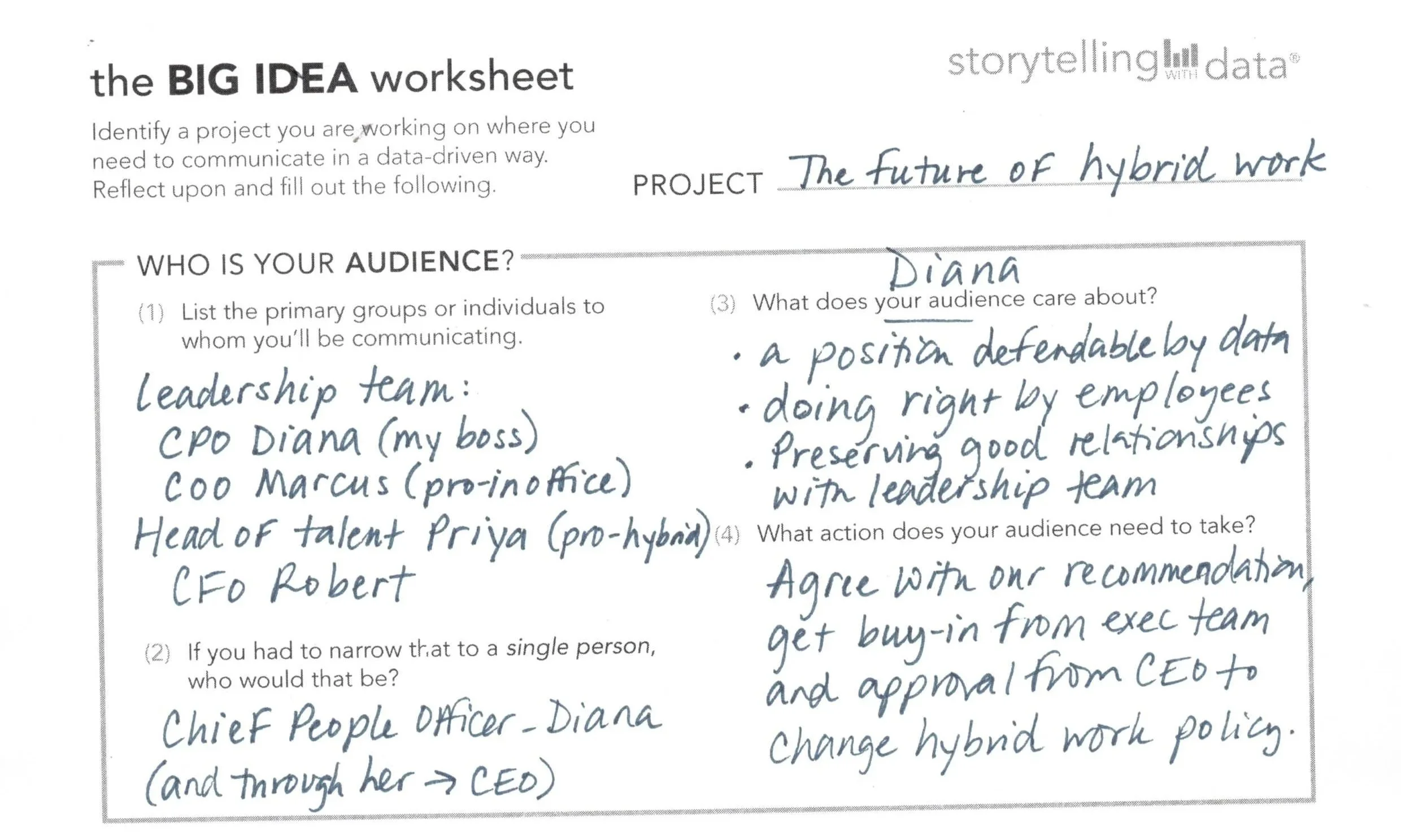
Subsequent stages of the process involve evaluating the primary audience by breaking down demographics, decision-making authority, and individual priorities. AI can be prompted to review these audience breakdowns to identify potential blind spots, evaluate whether requested actions are sufficiently specific, and surface underlying concerns that various stakeholders might harbor. Similarly, examining what is at stake requires mapping out the tangible benefits of a proposed course of action alongside the risks of inaction, ensuring that the final message resonates across diverse leadership groups with competing priorities.
In Practice: Navigating a Workplace Scenario
To illustrate how these concepts function in a real-world environment, consider a professional scenario inspired by actual workplace dynamics. Imagine an individual operating as a people analytics manager at a mid-sized corporate consulting firm. This manager has been tasked with formulating and presenting a data-informed perspective regarding the organizational effectiveness of the company’s hybrid work policy.
The analytics team has undertaken a thorough investigation, correlating employee performance ratings with in-office attendance patterns, examining digital collaboration network data, and tracking attrition trends over time. The empirical findings reveal a reality far more nuanced than a simple binary conclusion. Consequently, the team’s recommendation—advocating a shift away from a rigid, one-size-fits-all policy toward a differentiated approach tailored to specific roles and team structures—must be delivered to a leadership team characterized by differing opinions and competing departmental goals.
This scenario represents a classic high-stakes communication challenge: the audience is multifaceted, and the organizational consequences of a misstep are substantial. Getting the framing right before building any visual assets or slide decks is essential for both procedural efficiency and ultimate success. Rather than immediately opening presentation software to draft charts, the manager begins working through the Big Idea worksheet alongside an AI partner, leveraging structured prompts to test and refine the strategy.
The process begins by establishing context with the AI model, detailing the manager’s role, the scope of the hybrid work analysis, and the core recommendation. After the AI confirms its understanding, the manager spends time working analog—printing out the worksheet and physically writing down initial thoughts on audience dynamics. This offline step is vital, as it ensures that the foundational perspective remains genuinely authentic to the human author, preventing premature anchoring to the AI’s initial suggestions and slowing the thought process down in a productive manner.
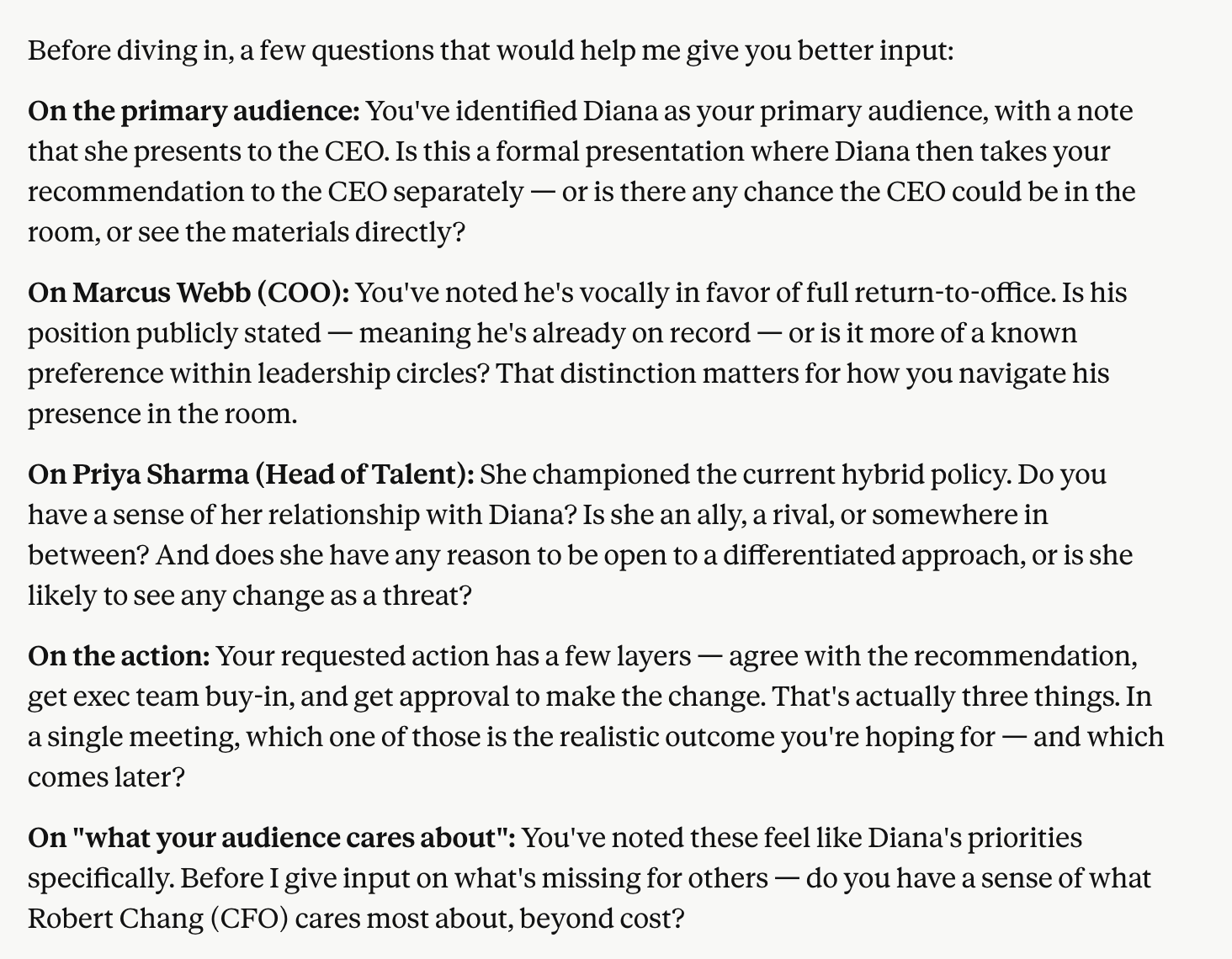
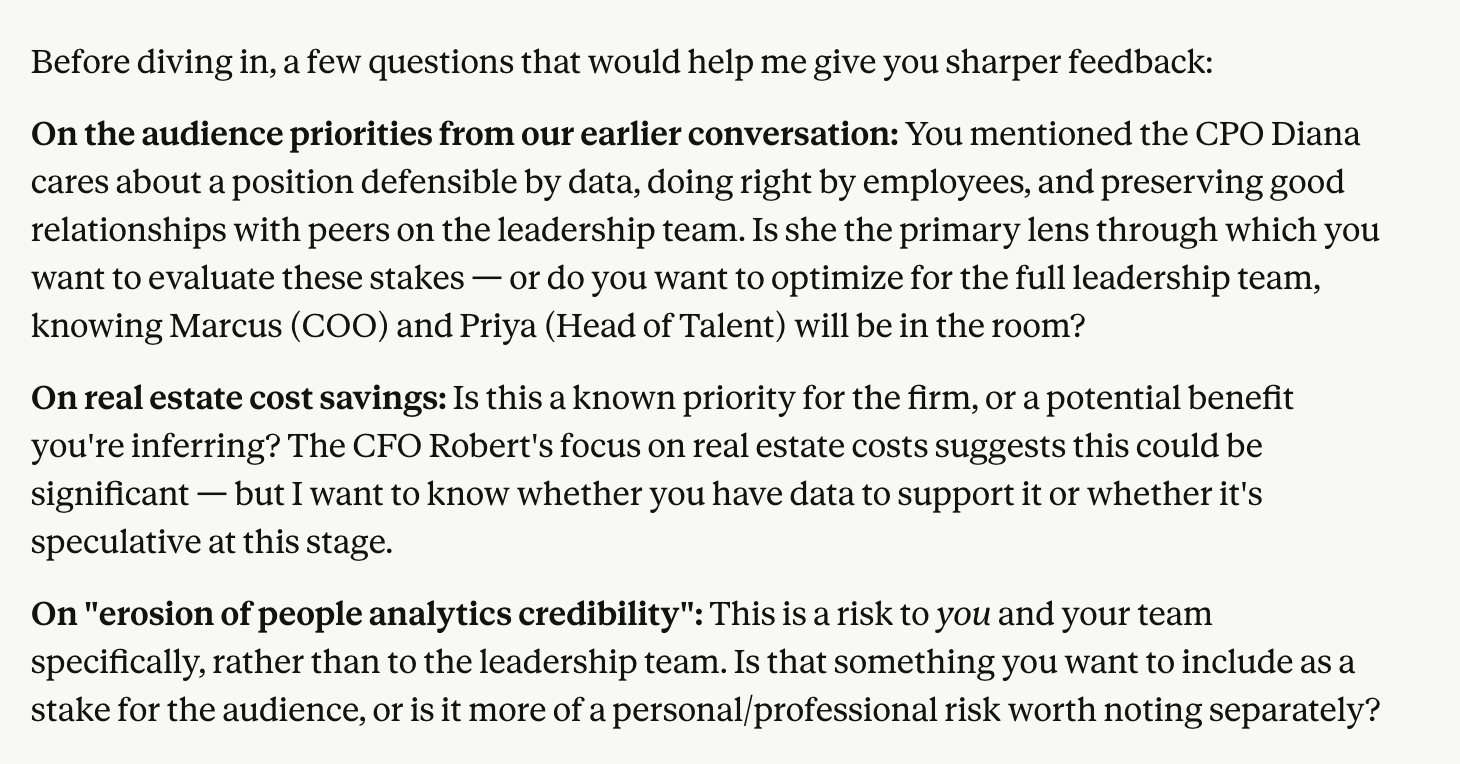
When sharing the initial audience breakdown with the AI, the tool typically responds with clarifying questions that prompt deeper reflection. For instance, an AI partner might ask how leadership dynamics influence the presentation strategy, or whether the primary focus should be tailored exclusively to the executive sponsor or expanded to address the concerns of skeptical peers within the leadership group. Articulating answers to these questions forces the communicator to recognize distinct stakeholder groups, such as department heads worried about talent retention versus finance leaders focused strictly on overhead costs.
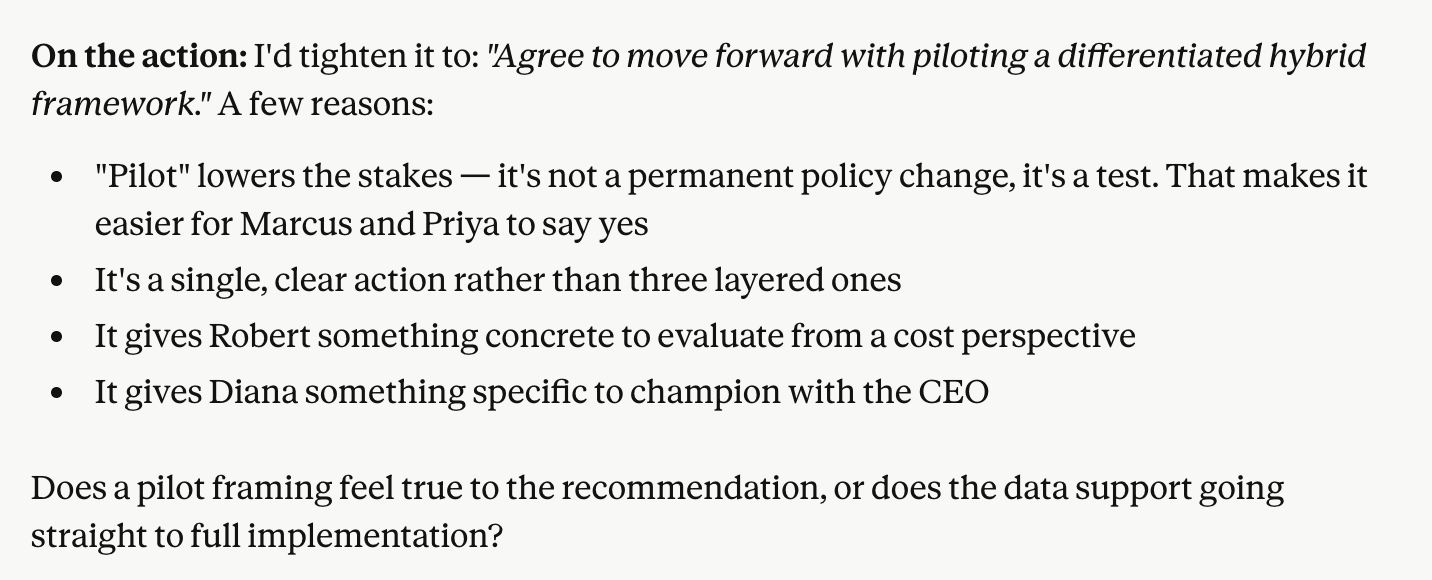
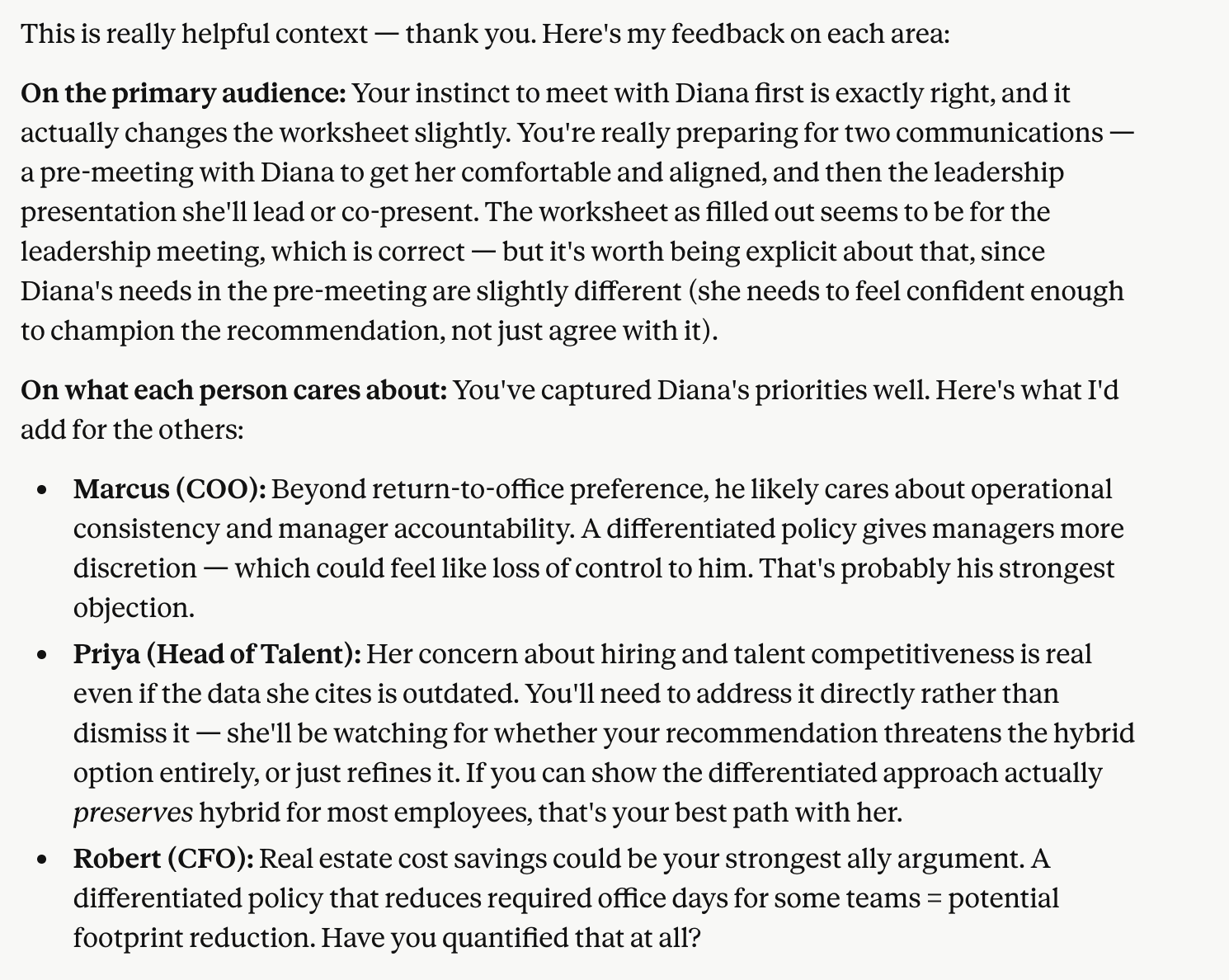
Furthermore, AI feedback often leads to valuable structural reframing. In the hybrid work scenario, an AI partner might suggest positioning the proposed policy shift as an organizational pilot rather than an abrupt, permanent overhaul. While the manager might ultimately reject the pilot framing after evaluating its impact on long-term real estate commitments, the exercise itself clarifies the underlying rationale and strengthens the final argument.
Refining the Big Idea and Finalizing the Strategy
As the process moves from audience identification to evaluating what is at stake, the dialogue with the AI helps surface critical organizational risks. Beyond immediate departmental friction, discussions often reveal broader systemic implications, such as the potential erosion of organizational trust in data-driven decision-making if rigorous analytical findings are commissioned and subsequently ignored by leadership.
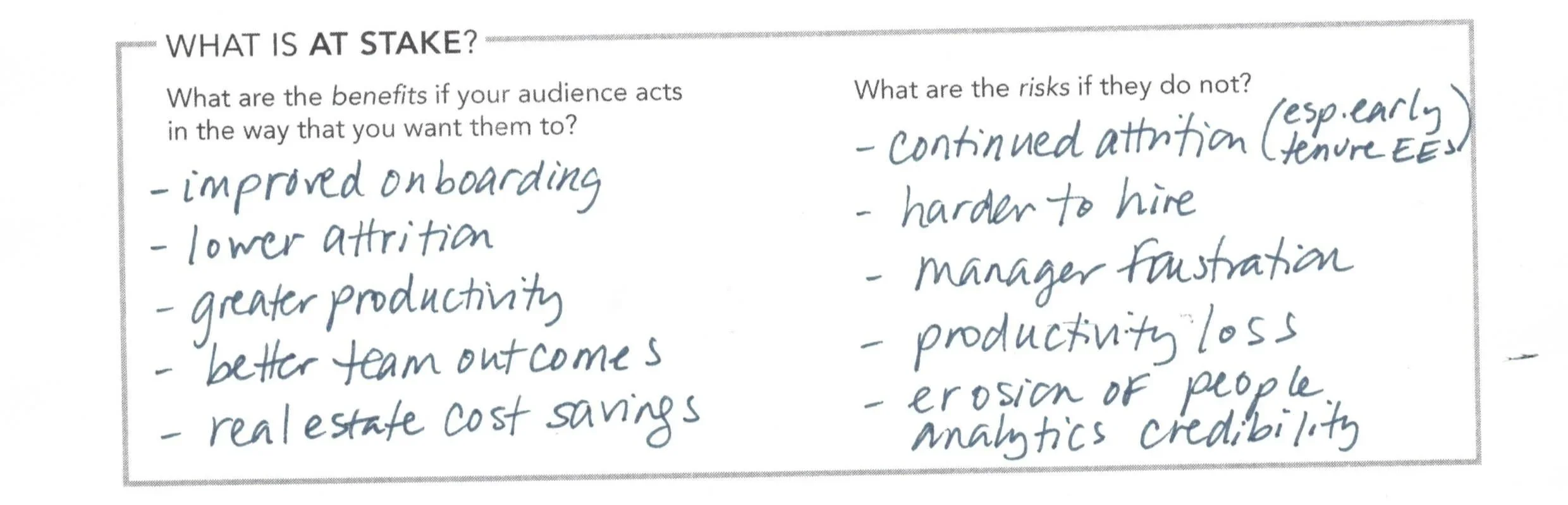
These iterative discussions allow the communicator to evaluate the validity of projected outcomes, distinguishing between metrics that rely on excessive assumptions and those backed by robust, defensible data. For example, while attrition projections may involve multiple variables, real estate cost reductions resulting from optimized office footprints represent a concrete, measurable expectation that appeals directly to financial stakeholders within the executive group.
By synthesizing these insights, the communicator moves toward drafting the final Big Idea. Initial drafts often undergo multiple rounds of refinement, balancing brevity with comprehensive impact. Where an early formulation might focus narrowly on operational changes, a refined Big Idea captures both the structural shift and the ultimate organizational value—such as reducing overhead costs while enabling employees to perform better and remain with the firm longer.
Ultimately, working through context with an AI partner transforms the preparation phase from an isolated brainstorming session into a rigorous, interactive dialogue. By acting as a patient sounding board that asks probing questions without dictating conclusions, AI helps professionals sharpen their strategic focus. Getting the foundational context right ensures that every subsequent step in the data storytelling process flows more smoothly, leading to clearer communication and more effective organizational outcomes.