The software development landscape has undergone a fundamental shift over the past year, moving away from manual line-by-line coding toward a conversational workflow commonly known as "vibe coding." Far from being a mere rebrand of older development methods, the term—originally coined by Andrej Karpathy in early 2025—describes a dynamic software creation process where developers state their intentions in natural language while autonomous AI agents handle the underlying code generation, execution, and iteration.
The phenomenon has captured the tech industry’s attention so thoroughly that the Collins English Dictionary named it the Word of the Year for 2025. By 2026, vibe coding has transitioned from a novel experiment into an established, mainstream methodology for building real-world software applications. Enterprise adoption has surged correspondingly, with major technology companies like Airbnb publicly reporting that artificial intelligence now writes roughly 60 percent of their newly generated codebases.
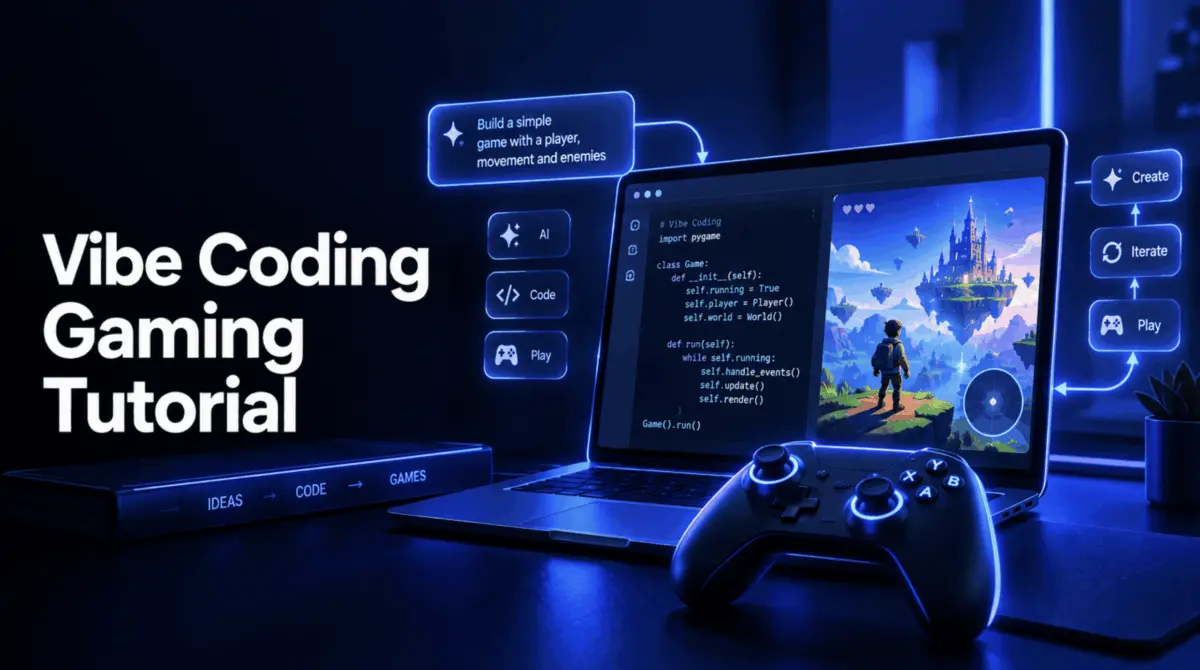
To understand how this workflow operates in practice, developers and industry analysts have increasingly turned to end-to-end practical demonstrations, such as constructing the classic 1976 arcade game Breakout. Rather than relying on theoretical abstractions, these projects highlight how modern AI coding assistants handle complex logic, including collision physics, asset management, and win-loss state loops, through iterative natural language prompts.
What Is Vibe Coding?
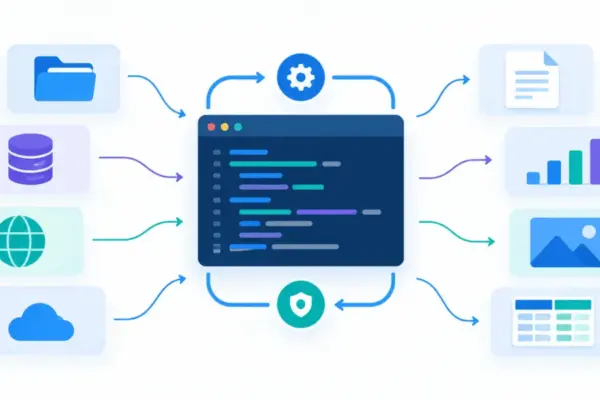
At a mechanical level, vibe coding relies on a continuous feedback loop: a user describes a specific goal, an AI agent generates the corresponding code, the user reviews and iterates on the output, and the cycle repeats until the system performs as intended. What fundamentally differentiates current tools from older generations of autocomplete software is the remarkable sophistication of modern AI agents. Today’s assistants do more than predict the next few characters; they possess the capability to read an entire multi-file project, execute scripts, modify code across various documents, and autonomously debug issues arising from natural-language instructions.
This evolution has transformed how engineering teams approach greenfield development. By delegating routine syntax generation and structural boilerplate to AI assistants, developers can concentrate heavily on high-level architecture, user experience, and rigorous verification. However, this shift does not eliminate technical oversight; rather, it relocates it. Reviewing AI-generated code requires a deep understanding of potential edge cases, logic errors, and integration challenges to ensure the final product operates reliably under real-world conditions.
The Game We’re Building: Breakout
The historical significance of Atari’s Breakout makes it an ideal candidate for examining modern vibe coding workflows. Released on May 13, 1976, and conceptualized by Nolan Bushnell and Steve Bristow as a single-player evolution of Pong, the original game was engineered by a young Steve Wozniak alongside his friend Steve Jobs. Wozniak’s hardware design was so heavily minimized in its integrated circuit count that Atari’s manufacturing division initially struggled to replicate it, eventually requiring a redesigned version with more components. The two Steves founded Apple later that same year, and the underlying hardware logic of Breakout directly influenced aspects of the original Apple II architecture.
From a functional standpoint, the game’s rules remain straightforward yet sufficiently complex to test an AI agent’s logic capabilities. A structured wall of colored bricks occupies the upper portion of the play area, while a ball bounces dynamically across the screen. The player controls a sliding paddle at the bottom, moving horizontally to deflect the ball and prevent it from falling off the bottom edge. Successfully striking a brick destroys it and awards points, clearing the entire grid results in a victory, and exhausting available lives ends the session.
Building such a project through conversational prompts illustrates the practical stages of vibe coding, moving from a basic visual skeleton to advanced physics interactions, boundary clamping, and state management. Rather than requesting an entire application in a single monolithic prompt—which frequently introduces difficult-to-isolate bugs—developers typically guide the AI assistant through incremental milestones.
Shipping the App
Once an application functions according to specifications, deploying it to a public audience has become remarkably streamlined. Platforms like GitHub Pages offer a straightforward solution for static files, allowing developers to push their code to a repository and host it instantly without managing a traditional server. Alternative services like Netlify provide similar static-hosting capabilities through simple drag-and-drop interfaces, enabling rapid deployment for web-based projects. For software specifically developed as interactive games, distribution platforms like itch.io connect creators directly with an audience actively seeking indie games and experimental software projects.
Wrapping Up
The emergence of vibe coding underscores a broader transition in the software engineering profession. While natural-language prompts simplify the physical act of writing code, they place a heightened emphasis on critical evaluation, system design, and comprehensive verification. Knowing how to prompt an AI assistant is only part of the equation; the core engineering skill lies in reading, questioning, and rigorously testing the output to ensure that an application functions correctly in every scenario, rather than merely appearing to work on the surface.
Shittu Olumide is a software engineer and technical writer passionate about leveraging cutting-edge technologies to craft compelling narratives, with a keen eye for detail and a knack for simplifying complex concepts. You can also find Shittu on Twitter.