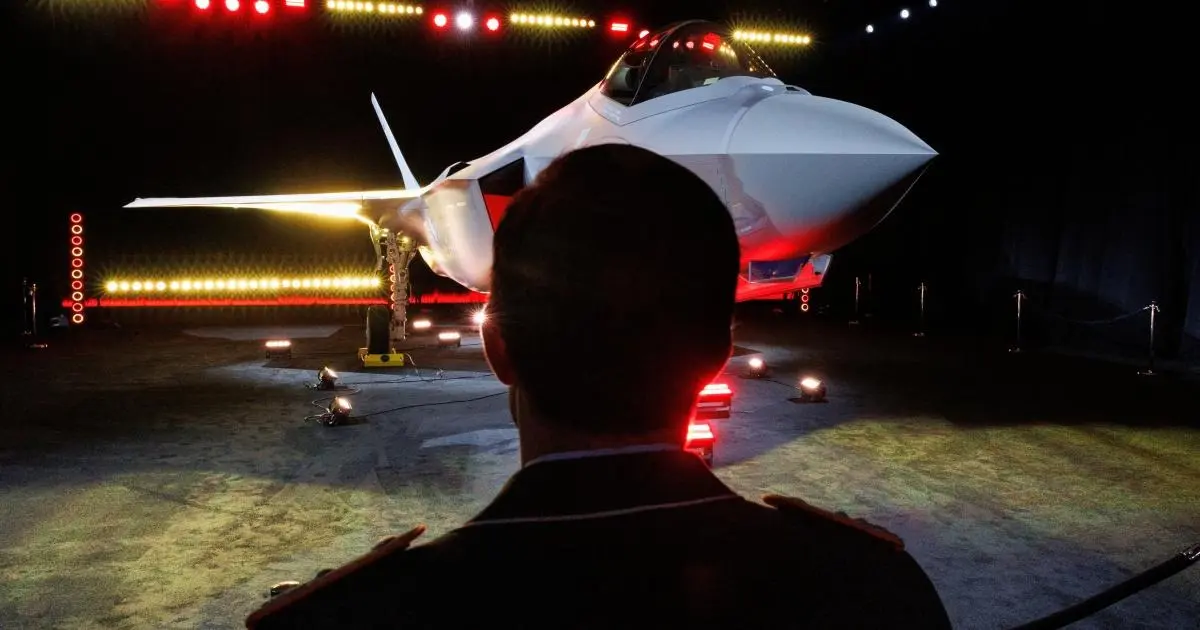
In late May, a routine logistics operation turned into an intelligence nightmare when a critical shipment of F-35 stealth fighter jet parts, en route to the United States from Australia, was mistakenly misrouted to Hong Kong and slipped directly into Chinese hands. For nearly two decades, since 2007, Chinese intelligence operatives and their various proxies had aggressively worked to steal proprietary data regarding the crown jewel of the U.S. tactical air fleet. Suddenly, physical, closely guarded components of the advanced aircraft—including a cockpit canopy and a weapons-bay door—had landed squarely on Chinese soil. This accidental windfall handed Beijing access to stealth manufacturing technologies previously restricted to the United States and its closest allies.
Unsurprisingly, China is expected to thoroughly attempt to reverse-engineer the sophisticated technologies it acquired through this logistical failure. U.S. officials maintain that there was no active foul play involved in the diversion, attributing the delivery to a combination of a shipping delay and a missed email. Yet, even in the absence of foreign interference or malicious cyber-hijacking, the mere logistics of coordinating complex F-35 production and delivery schedules among Washington, Canberra, prime contractor Lockheed Martin, and an external third-party shipping company laid bare sensitive defense secrets to America’s primary strategic rival.
The broader U.S. defense industrial base—the sprawling domestic and international network of corporations, research organizations, and logistics firms responsible for the research, manufacturing, delivery, and maintenance underpinning modern American military operations—is expanding at a velocity not witnessed in decades. As Washington seeks to pivot arms manufacturing toward what U.S. Defense Secretary Pete Hegseth recently described as a "wartime footing," the United States is actively collaborating with international allies, particularly across the Indo-Pacific region, to dramatically scale up military production and insulate supply chains against external shocks. Already, South Korea has initiated maintenance and repair operations for U.S. naval vessels, Japan is preparing to quadruple its production capacity for vital anti-ballistic missiles, and American-designed Precision Strike Missiles are slated to roll off assembly lines in Australia.
While this sweeping industrial expansion is widely viewed as sensible and necessary to counter growing geopolitical threats, it introduces profound and systemic security risks. As the defensive footprint of the United States spreads across oceans and borders, it inherently grows more exposed to sophisticated espionage, intellectual property theft, and targeted industrial sabotage.
Ever since the conclusion of the Cold War, adversaries of the United States have relentlessly targeted the scientific research and manufacturing infrastructure that forms the backbone of American military supremacy. Today, hostile state actors such as Russia, China, and North Korea are no longer forced to limit their operations to domestic targets inside the United States; instead, they can probe American military capabilities by mounting widespread espionage campaigns against U.S. allies abroad. Because the modern U.S. military relies heavily on sprawling, interconnected global supply chains, it has grown increasingly susceptible to the disruptive tactics of hostile powers.
If Washington fails to secure these deepening military partnerships, foreign adversaries will find unprecedented opportunities to simultaneously undermine American defense readiness and fast-track their own military modernizations. To counter this, Washington must actively assist its international partners in raising their internal security baselines, sharing intelligence and best practices more fluidly, and fortifying monitoring programs. When pursued judiciously, this heightened emphasis on security will not stifle cooperation between the United States and its allies, but rather reinforce it. However, if the United States neglects this growing vulnerability, one of its greatest strategic advantages risks transforming into a perilous weakness.
BACK ON BASE
During the 1990s, following deep post-Cold War cuts to military spending, the United States began forging closer ties with international allies to bolster defense production capabilities and secure vulnerable supply chains. Washington established the National Technology and Industrial Base in 1993, a foundational policy framework designed to institutionalize defense-industrial cooperation between American and Canadian firms. Over the subsequent decades, the United Kingdom, Australia, and New Zealand were formally integrated into the agreement. Despite these structural ties, a persistent maze of legal, bureaucratic, and cultural barriers among the five member nations hampered the partnership, preventing it from reaching its full potential.
Over the past five years, however, Washington’s efforts to aggressively expand its international defense base have accelerated significantly. A major milestone arrived in 2021 with the creation of AUKUS, a trilateral security pact binding the United States, the United Kingdom, and Australia into a joint commitment to produce advanced military technologies, most notably nuclear-powered submarines. Building on this momentum, the 2023 National Defense Industrial Strategy formally outlined Washington’s commitment to deepening collaboration with allies, arguing that the global activities of pacing threats increasingly necessitate a truly global approach to defense industrial relationships, concerns, and competition.
The following year, the United States helped spearhead the Partnership for Indo-Pacific Industrial Resilience, a multilateral forum bringing together Western and Asian nations to better coordinate defense manufacturing and protect critical supply chains. Washington has further supplemented these broader multilateral initiatives with targeted bilateral defense production agreements, sealing pacts with Australia, Japan, South Korea, and Taiwan to partner on critical defense systems, advanced missile manufacturing, and shipbuilding. Furthermore, the United States is actively planning to accelerate military-industrial collaboration with India, Indonesia, and the Philippines. While Washington maintains a growing appetite for defense industrial cooperation throughout the Indo-Pacific, these burgeoning partnerships can only thrive if they are adequately safeguarded against foreign infiltration.
SPY HEAVEN
Nation-states have long relied on espionage to gauge enemy vulnerabilities, map out strategic weaknesses, and purloin cutting-edge technologies. They have similarly deployed sabotage operations to disrupt opponent supply chains and degrade battlefield performance. During the mid-20th century, the Soviet Union successfully acquired nuclear weapons in part by penetrating the Manhattan Project; in more recent decades, China managed to steal sensitive secrets related to the F-22 and F-35 stealth fighter jets, as well as the C-17 heavy transport aircraft. Galloping technological advancements naturally invite subterfuge and industrial theft. Upcoming breakthroughs in artificial intelligence and quantum computing carry strategic implications on par with the invention of the atomic bomb, driving U.S. rivals to extraordinary lengths to acquire these capabilities for themselves.
Today, the American defense base operates under what a February report by the Google Threat Intelligence Group characterized as a "state of constant, multivector siege" in cyberspace. Adversaries of the United States work tirelessly to pilfer sensitive data, trade secrets, and proprietary intellectual property at every possible operational level, ranging from the recruitment of disgruntled individual employees to sophisticated cyberattacks targeting the IT networks of defense manufacturers.
Alongside digital offensives, foreign governments including China and North Korea are actively cultivating human sources inside defense-focused firms and academic research institutions. Hostile governments have frequently established seemingly legitimate commercial and academic relationships specifically to gain access to proprietary information. Illustrating this threat, a September 2025 report published by the U.S. House Select Committee on China identified more than 100 active academic partnerships between American universities and Chinese entities that present severe national security risks.
State-sponsored actors have similarly embedded themselves directly inside American firms and research departments. For instance, in 2024, North Korean remote IT workers successfully infiltrated a U.S. defense contractor, absconding with sensitive data regarding export-controlled technologies. Most strikingly, foreign adversaries have utilized strategic foreign investments, corporate mergers, and outright acquisitions of entire companies—frequently masking their involvement through opaque subsidiary networks—to seize control of critical dual-use technologies. As reported by The Times, the 2008 buyout of British-based Dynex Semiconductor by a subsidiary of a Chinese state-owned railway company granted the Chinese navy access to manufacturing technologies crucial for developing electromagnetic aircraft launch systems and rail guns.
As Washington has deepened its defense cooperation across the Indo-Pacific, China and North Korea have increasingly pivoted their intelligence operations toward U.S. allies in the region. In 2024, South Korea’s National Police Agency disclosed that North Korean hackers had waged sustained, all-out cyberattacks against South Korean defense contractors for over a year, successfully breaching corporate networks and siphoning off technical data. Last January, the agency reported a staggering 40 percent surge in illegal technology transfer cases, marked by insiders leaking proprietary information concerning critical semiconductors, advanced batteries, and shipbuilding. Many of these high-level leaks were directly tied to Chinese intelligence networks.
Japan, famously dubbed "spy heaven" by the KGB during the Cold War, remains a primary hub for international espionage. A July investigation by The New York Times revealed that operatives from a Tokyo-based Russian military intelligence unit known as the 20th Directorate have spent years posing as diplomats and businesspeople to help Moscow secure restricted defense technologies. This equipment—including specialized Japanese components utilized to guide Russian Kh-101 cruise missiles—has proven essential to sustaining Russia’s military campaign in Ukraine. Simultaneously, between 2019 and 2024, the Chinese state-sponsored hacking collective MirrorFace launched over 200 cyberattacks targeting Japanese defense, national security, and advanced technology institutions. In February 2025, the Japanese Self-Defense Forces discovered that several service members had unknowingly circulated USB flash drives containing malware deployed by Chinese hacker groups for more than a year.
In Australia, foreign adversaries have systematically attempted to infiltrate the AUKUS framework through multiple vectors. Last year, the Iranian-backed Cyber Toufan hacker group launched a series of cyberattacks against Israeli defense contractors, yielding unauthorized access to sensitive material regarding Australian weapons programs, including the multi-billion-dollar Redback infantry fighting vehicle procurement. Mike Burgess, the director-general of the Australian Security Intelligence Organisation, has repeatedly warned that Australia has transformed into a high-priority espionage target where defense personnel are aggressively targeted both in person and online. In 2024, Burgess revealed that a foreign spy ring colloquially referred to as "the A-team" had successfully cultivated and recruited a former Australian politician. In one prominent scheme, the group lured Australian academics and political figures to all-expenses-paid overseas conferences to establish intelligence-gathering relationships—a tactic frequently employed by Chinese intelligence operations. The network also offered financial payoffs to defense sector employees in exchange for sensitive information concerning AUKUS and classified technologies like submarines and advanced missile systems.
American rivals have also leveraged sabotage to weaken the broader defense base. Since 2022, Russian military intelligence has targeted European weapons manufacturers, critical transportation networks, and supply logistics. Moscow even plotted the assassination of Armin Papperger, the CEO of German defense giant Rheinmetall, in an effort to fracture European political support for Ukraine. U.S. security services harbor mounting concerns that hostile actors may introduce malicious hardware or software into the supply chains of the United States and its allies to steal or alter operational data, disrupt communications, or sabotage active missions. In a wartime scenario, when the defense industrial base is most urgently needed, compromised production lines or defective weapons systems could hand opponents a decisive battlefield advantage.
WEAK LINKS
While the United States and its international partners maintain formalized systems designed to deter spying and sabotage, these safeguards frequently fall short. Domestically, the Defense Counterintelligence and Security Agency serves as the lead organization tasked with implementing the National Industrial Security Program, safeguarding the domestic defense apparatus by managing security clearances, enforcing cybersecurity protocols, and detecting domestic espionage. However, even within the United States, many of the most vulnerable links in the military supply chain—particularly smaller subcontractors providing specialized software, niche components, or ancillary services—operate largely beyond the federal government’s field of vision and often lack the financial resources to install robust cybersecurity protections. Outside American borders, these structural vulnerabilities are exponentially magnified.
Although bilateral security agreements establish formal standards for protecting classified military and industrial information, U.S. partners maintain vastly divergent legal regimes, internal security cultures, and enforcement capabilities. Australia stands as arguably Washington’s most capable Indo-Pacific ally, participating in the Five Eyes intelligence-sharing network, collaborating closely through AUKUS, and maintaining a robust, albeit relatively young, program dedicated to securing its defense sector. Nevertheless, Burgess has cautioned that the nation faces unprecedented levels of espionage that will only accelerate as AUKUS joint initiatives expand.
South Korea and Japan, despite possessing highly advanced technological sectors and capable military establishments, contend with long-standing legal and counterintelligence vulnerabilities that their respective governments are only belatedly attempting to fix. Until South Korea passed an expanded espionage statute last February, a notable loophole in national law meant prosecutors could generally bring formal espionage charges exclusively in cases tied to North Korea, forcing authorities to rely on disparate statutes to penalize spies operating on behalf of other nations. Consequently, South Korean security services have long operated with one hand tied behind their backs when confronting Chinese subterfuge; most Chinese nationals apprehended filming sensitive military installations in recent years, for instance, have faced minimal or no legal repercussions. Similarly, Japanese law still fails to explicitly prohibit individuals from serving as clandestine agents for foreign governments or accepting financial compensation from foreign intelligence services, preserving a permissive environment for foreign operatives.
Tokyo is increasingly cognizant of these deficiencies and is actively reforming its national security architecture, recently establishing two new oversight bodies to coordinate its intelligence agencies while pursuing a comprehensive "anti-spy" law to grant authorities the legal tools required to counter foreign espionage. Still, these legislative measures face domestic political resistance and will require considerable time to take full effect. Although American allies and partners across the Indo-Pacific are making measurable headway, regional security standards continue to lag behind those enforced by the United States.
MAKING THE GRADE
The United States requires the steadfast support of its Indo-Pacific allies to achieve its long-term strategic objectives in the coming years. Yet, severe security deficiencies within any single partner nation create systemic vulnerabilities for the entire coalition. Washington must urgently assist its allies in fortifying their respective defense industries. Although U.S. leadership has previously acknowledged this imperative, past efforts have lacked sufficient urgency and have remained too narrowly focused on digital cybersecurity alone. Absolute security remains an impossibility, and enforcing rigid U.S. security standards on sovereign allies would inevitably stifle technological cooperation. Nonetheless, Washington must ensure that the security programs maintained by partner nations are broadly comparable to its own and that glaring regulatory gaps are addressed as swiftly as possible.
To spearhead these corrective efforts, the United States should develop a comprehensive grading system for defense industrial security—a structured evaluative framework that assesses the ability of partner nations to safeguard critical technologies and identifies concrete areas for operational improvement. The U.S. State Department already utilizes a similar evaluative system to monitor global efforts combating narcotics trafficking and human trafficking. A parallel grading system for defense industrial security would continuously gauge the strength of allies’ entire security apparatuses, including the efficacy of their legal frameworks, cybersecurity practices, personnel vetting procedures, classified information handling, foreign investment screening mechanisms, and overall supply-chain resilience against foreign interference.
At the operational level, Washington should expand existing programs that oversee international defense industrial security. Counterintelligence special agents from organizations such as the Naval Criminal Investigative Service and the Air Force Office of Special Investigations already enforce stringent security standards both domestically and abroad by safeguarding critical infrastructure, enhancing digital security, and neutralizing foreign intelligence threats in close coordination with host-nation partners. As the international defense industrial base continues to expand, substantially greater resources will be required to sustain these critical operations at scale and ensure that security protocols keep pace with joint manufacturing and technological innovation.
The United States should also broaden its intelligence-sharing initiatives to alert partner nations about emerging threats and supply-chain vulnerabilities. Currently, foreign partners maintain only limited access to Department of Defense cybersecurity information-sharing programs. Washington should consider granting international defense organizations direct access to these networks, or alternatively, partner with allies to co-develop multilateral information-sharing platforms specifically dedicated to securing defense production pipelines.
Finally, Washington should leverage the Partnership for Indo-Pacific Industrial Resilience to establish a dedicated work stream focused explicitly on defense industrial security, providing a dedicated forum for regional partners to formulate common security standards and exchange intelligence best practices. While nonbinding, policy recommendations emerging from this cooperative framework would furnish authoritative guidance on how to harden defense supply chains against intrusion.
The recent F-35 parts debacle serves as a stark reminder of the inherent vulnerabilities plaguing globalized supply chains, which adversarial nations are increasingly eager to exploit. While the United States must rely heavily on international partnerships to revitalize its defense industrial base, true burden-sharing is only feasible if U.S. partners possess the capability to keep critical technologies secure. The United States and its allies must redouble their efforts to reinforce the security of their military research, manufacturing, and supply networks, ensuring that cooperative gains are protected against foreign encroachment.