As global leaders and climate negotiators prepare for the upcoming COP31 climate summit in Antalya, Turkey, one of the most anticipated and fiercely contested outcomes on the agenda is the formal launch of a “just transition mechanism.” This pivotal development follows years of persistent advocacy from civil society groups, labor unions, and marginalized communities demanding robust support as nations globally shift away from fossil fuels and transition toward low-emissions energy systems.
The groundwork for this upcoming milestone was laid at the COP30 UN climate talks held last year in the Brazilian city of Belém. During those negotiations, participating parties formally agreed to establish a dedicated institutional framework to support the human and social dimensions of climate action, commonly referred to as the Belém-Antalya mechanism, or BAM. Advocates who have championed the creation of the BAM envision it acting as a central hub for just transitions worldwide, providing critical resources, technical assistance, and vital support for vulnerable workers and communities whose livelihoods are impacted by structural economic shifts.
However, despite the breakthrough agreement in Brazil, the precise operational details and structural composition of the much-touted BAM remain vague. Developed and developing countries have frequently clashed over its core functions, ultimate purpose, and governance. These diplomatic disagreements spilled over into the mid-year UN climate talks held in Bonn, Germany, in June 2026, where negotiators found themselves deadlocked over several crucial questions—most notably, how the new mechanism will be financed and structured.
How a ‘Just Transition’ Became a Cornerstone of UN Climate Talks
A “just transition” is founded on the fundamental principle that workers, industries, and local communities must be adequately supported and protected during the complex global shift toward a low-carbon economy. As a foundational concept of broader climate justice, the term is frequently associated with workers tied to the traditional fossil-fuel industry, but it applies equally to ongoing transitions across heavy industry, agriculture, and other vital economic sectors.
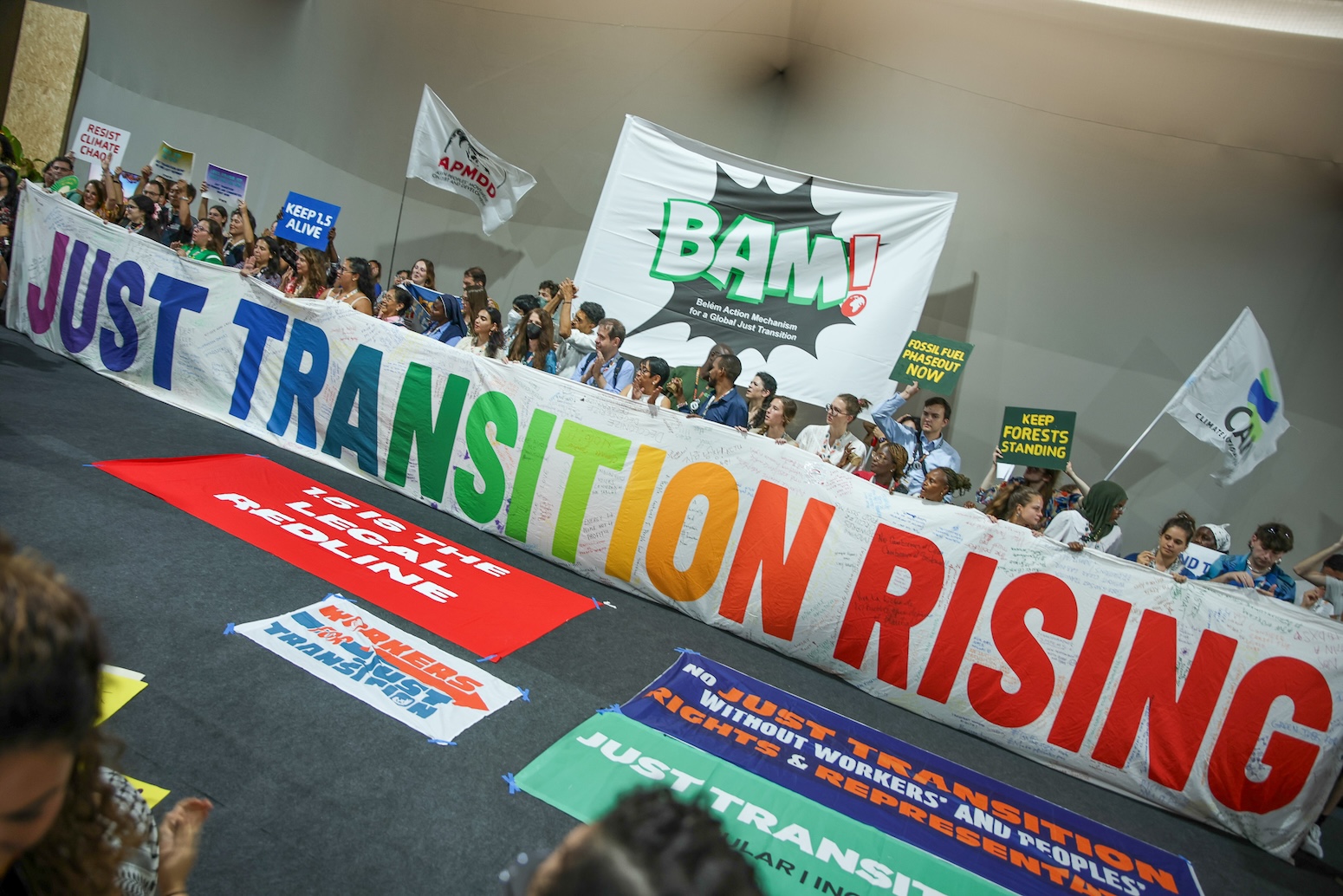
The roots of the concept trace back to the 1980s, when American labor unions forged strategic alliances with environmental justice organizations to protect workers from the socioeconomic fallout of environmental regulations. Over the subsequent decades, the idea steadily gained traction, ultimately breaching the arena of international climate diplomacy.
A major milestone for the labor movement arrived with the adoption of the 2015 Paris Agreement. The preamble of the landmark accord explicitly includes a commitment to “taking into account the imperatives of a just transition of the workforce and the creation of decent work and quality jobs in accordance with nationally defined development priorities.”
Bert De Wel, a policy officer at the International Trade Union Confederation (ITUC), notes that the labor movement has been exceptionally pleased with the broad political support the concept has gathered since its inception. While the movement’s demands have expanded over the years, De Wel emphasizes that the core labor dimension remains central to the philosophy.
Momentum continued to build three years after the Paris Agreement at COP24, hosted in the historic Polish coal-mining city of Katowice. During the summit, the Polish presidency championed the issue, resulting in the “Silesia declaration.” This declaration called for carbon-cutting policies to ensure a just transition of the workforce that generates quality jobs. Although signed by only about a quarter of the parties at the summit, the declaration was formally noted in the final COP text, cementing its place on the international agenda.
This sustained pressure eventually culminated in a formal agreement at COP27 in Egypt to launch the “work programme on just transition,” known as the JTWP. According to De Wel, establishing the JTWP represented a major step forward, enabling negotiating parties to discuss the just transition in concrete, operational terms.
Nevertheless, the JTWP proved to be a challenging negotiating space. Disagreements quickly emerged regarding its scope: developed nations generally pushed for a focus on domestic workforces, while developing nations advocated for a global outlook that included international support. These frictions boiled over at the COP29 summit in 2024, which concluded without a cohesive agreement. Yet, despite these setbacks, parties at COP30 in Brazil managed to agree on the establishment of a new institutional mechanism, a move that civil society organizations celebrated as a major victory.
The Grassroots Origins of the Just Transition Mechanism
In the lead-up to COP30, civil society coalitions intensified their advocacy, pushing for an institutional arrangement that would successfully transition the JTWP from theoretical dialogue into tangible action on the ground. Initially dubbed the “Belém action mechanism” by advocacy groups, the title was later updated to the Belém-Antalya mechanism following the COP30 outcomes. In the formal JTWP text agreed upon in Brazil, it is simply described as a mechanism or a just transition mechanism.
Anabella Rosemberg, senior advisor on just transition at the Climate Action Network (CAN) International, explains that the idea emerged from a broad coalition of civil society actors, trade unions, feminist organizations, youth groups, and Indigenous peoples within the UN Framework Convention on Climate Change. Recognizing that the existing structure of the JTWP—limited to a couple of dialogues and a ministerial meeting per year—was insufficient to deliver on-the-ground strategies, these groups developed a novel approach to turn words into action.
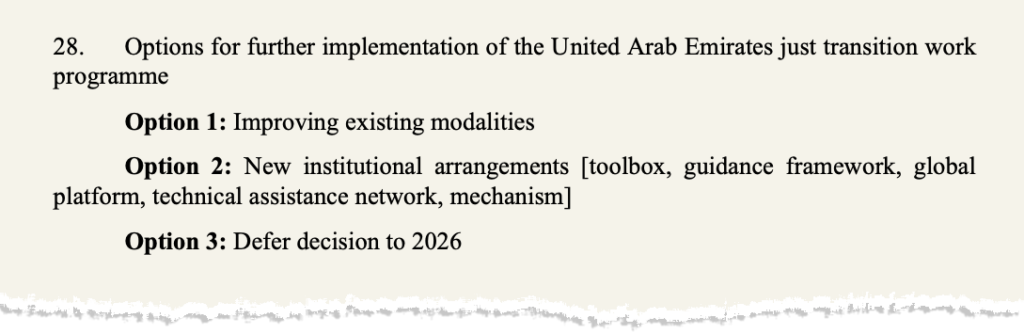
Campaigners deployed a wide array of tactics to push the concept up the international agenda, ranging from formal policy proposals and joint letters to creative campaigns featuring custom logos, memes, and even songs. These relentless efforts bore fruit during the June 2025 Bonn climate negotiations, where a draft text explicitly included options for a new institutional arrangement, such as a technical assistance network, guidance framework, global platform, toolbox, or mechanism.
As negotiations moved toward COP30, protests, banners, and badges advocating for the mechanism were ubiquitous. Early in the summit, the G77 and China—a massive coalition representing developing nations—put forward a formal proposal for a just transition mechanism to provide technical assistance, foster international cooperation, and bridge implementation gaps.
This proposal faced immediate pushback from several developed nations, including the UK and Norway, who expressed concerns over potential bureaucratic duplication and additional funding requirements. Developed countries also resisted the term “mechanism,” with the European Union suggesting an “action plan” as an alternative. Despite these hurdles, the creation of a mechanism was successfully embedded in the final JTWP text, which was approved during the COP30 closing plenary to widespread applause.
Structuring the Mechanism for Maximum Impact
According to civil society advocates, the newly established mechanism can help resolve the currently fractured just-transition landscape by centralizing resources and overcoming systemic barriers. Rosemberg points out that the existing architecture lacks coordination and remains disconnected from broader climate action imperatives, arguing that the BAM can bridge these gaps and accelerate support for practitioners.

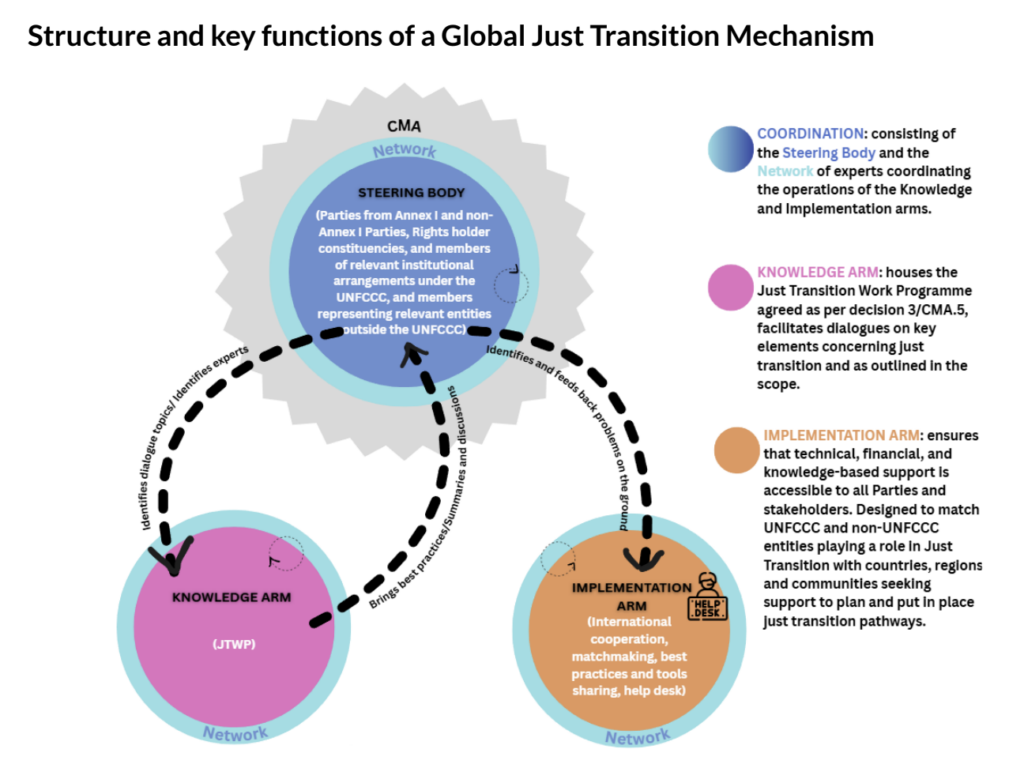
Proposals from non-governmental organizations suggest structuring the mechanism with a tripartite design that builds upon the ongoing work of the JTWP. One prominent proposal from a coalition of five NGOs recommends a steering body, a knowledge arm, and an implementation arm. The steering body would oversee and coordinate the work of the two operational arms, while guiding ongoing negotiations under the JTWP whenever political direction is required.
The implementation arm would function as a collaborative hub, delivering financial, technical, and knowledge-based assistance to regions undergoing economic transitions. Rosemberg envisions a matchmaking platform that enables faster support delivery, alongside dedicated groups designed to identify and mobilize financial resources from diverse sources.
Alternative proposals, such as one put forward by the Global Campaign to Demand Climate Justice, emphasize coordination and coherence, knowledge generation, and international cooperation. Meanwhile, a submission from the Grantham Institute at the London School of Economics suggests a dual-arm structure split between policy and operational functions, focusing on capacity-building and technical assistance.
While a broad consensus exists regarding the general functions of the mechanism, negotiators continue to push in varying directions regarding how these structures will ultimately be implemented on the ground.
Navigating Financial Realities and Funding Concerns
Within the halls of UN climate negotiations, several parties have raised valid concerns regarding the financial implications of establishing a new mechanism. This budgetary caution comes at a sensitive time, as the UNFCCC faces an acute funding gap following the withdrawal of the United States from the convention. Compounded by other member states delaying or reducing their financial contributions due to shifting domestic priorities, the UNFCCC has been forced to scale back events and leave administrative positions vacant.
Consequently, some nations have hesitated to endorse another UNFCCC-administered body that requires operational funding. However, proponents of the BAM maintain that the administrative costs required to run the mechanism would be minimal. Rosemberg argues that the mechanism offers an opportunity to streamline public resources efficiently by leveraging existing climate finance channels and philanthropic funding rather than building an expensive, standalone institution. She points to the Climate Technology Centre and Network as a comparable body that operates on less than ten million dollars annually, proving that such funding is achievable given sufficient political will.
Furthermore, labor representatives emphasize that the mechanism is not intended to create a brand-new climate fund. Instead, the overarching goal is to ensure that all existing climate finance is explicitly “just-transition proof.” Campaigners argue that the minor administrative cost of the mechanism’s secretariat pales in comparison to the immense socioeconomic benefits of coordinated global climate action.
Setting the Stage for COP31 in Antalya
Despite the diplomatic victory achieved in Belém regarding the creation of the mechanism, subsequent climate negotiations in Bonn quickly encountered familiar stumbling blocks. Although delegates managed to agree on a skeleton draft text to forward to COP31, numerous critical details remain unresolved, casting uncertainty over how the BAM will function in practice.
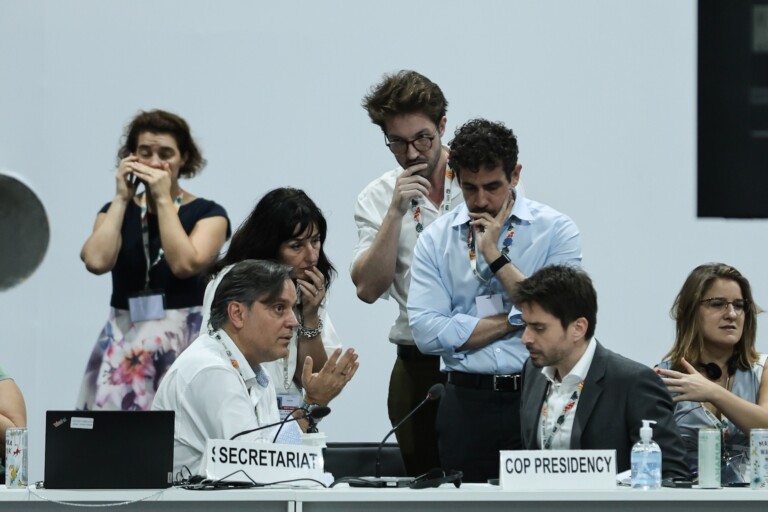
Observers stress that a swift approval of the COP31 agenda is essential to allow delegates to begin substantive negotiations immediately. Major country blocs are urged to adopt a constructive approach, as procedural delays or tactical maneuvering could jeopardize the progress achieved so far. Civil society organizations have submitted formal recommendations calling for the swift scheduling of the first face-to-face meeting of a dedicated just-transition committee to accelerate operationalization.
Ahead of the Antalya summit, negotiating groups representing small island developing states, the least developed countries, and African nations have voiced strong support for the mechanism, emphasizing the urgent need to focus on concrete means of implementation and financing. While the European Union has similarly expressed support for the launch, it continues to stress that the mechanism must remain strictly complementary to the existing JTWP.
As the international community converges on Turkey, expectations remain high among grassroots advocates who hope that COP31 will finally transform long-standing political promises into an adequately resourced, fully functioning institutional reality. At the same time, civil society leaders caution that the ultimate success of the summit depends heavily on the ambition of the COP presidencies to actively engage reluctant parties and deliver a framework that is truly fit for purpose.