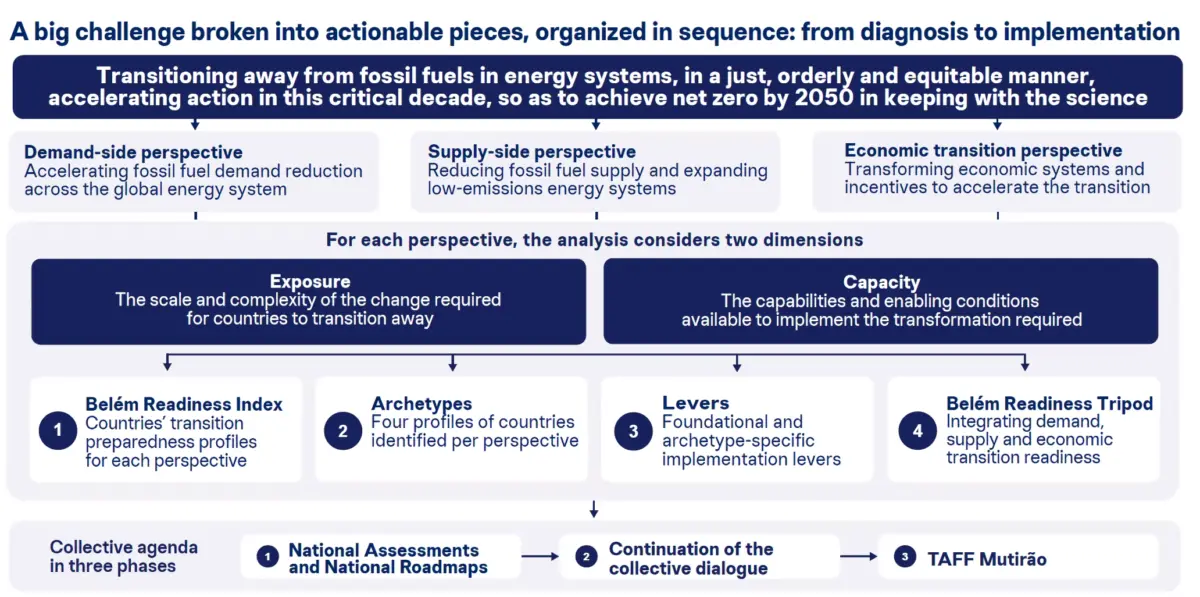
Moving away from fossil fuels is urgent, inevitable, and yet entirely possible, according to a first-of-its-kind global roadmap introduced by Brazil. Building on its role as the host of last year’s COP30 climate summit, the Brazilian presidency has laid out a comprehensive, voluntary plan designed to help countries navigate the complex transition away from coal, oil, and gas.
The newly launched framework emphasizes that there is no universal, one-size-fits-all approach to ending fossil fuel dependency. Instead, the roadmap asks governments to begin by diagnosing their own readiness to undertake the transition. After mapping out their specific national circumstances, countries are encouraged to pursue tailored policy levers to take concrete action.
According to the plan, these coordinated efforts should culminate by 2033, exactly a decade after the landmark COP28 climate summit in Dubai, which first called on all nations to contribute to a global transition away from fossil fuels. As diplomats and climate experts prepare for the upcoming COP31 climate talks—which kick off next week in Antalya, Turkey—this newly minted framework is already shaping international debates over energy policy, economic development, and climate finance.
Why Has Brazil Produced a Fossil-Fuel Roadmap?
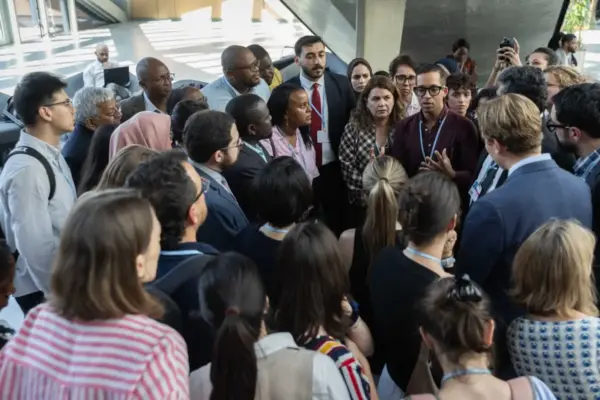
The release of the roadmap follows a period of intense global diplomacy that dominated discussions at COP30, held in the Amazonian city of Belém. During the summit, a coalition of 85 countries pushed strongly for a formal reference to a new fossil-fuel transition roadmap to be included in the official negotiated outcome. This push was seen as a vital next step following the initial global stocktake of climate action achieved at COP28 in 2023.
However, a separate bloc of nations strongly opposed the inclusion of the roadmap in the formal text. While initial reports claimed this opposing group consisted of 84 countries, a detailed analysis of the informal list by climate policy researchers revealed various inconsistencies and errors, suggesting that the actual number of opposing nations was significantly smaller.
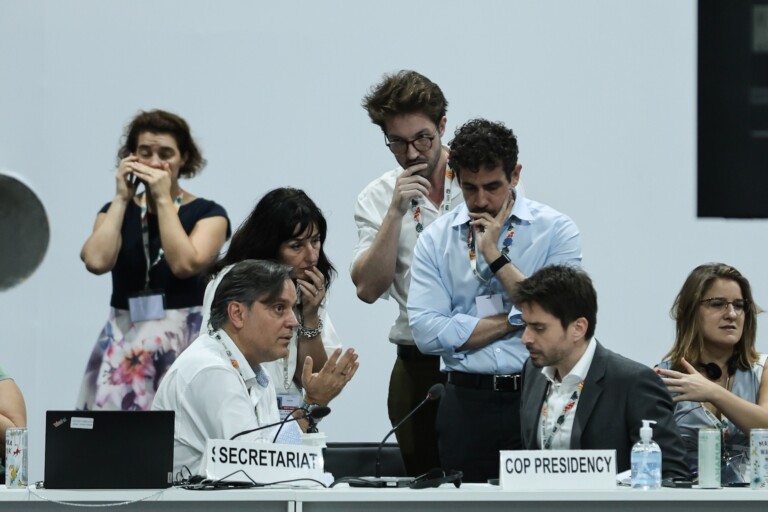
Following two weeks of fierce debate and political friction, Brazil announced that the formal roadmap would not form part of the official COP30 negotiated text. Undeterred, the Brazilian presidency resolved to develop the framework independently outside the strict confines of the UN climate negotiation process. Consequently, the resulting roadmap is entirely voluntary, leaving countries free to engage with its findings on their own terms.

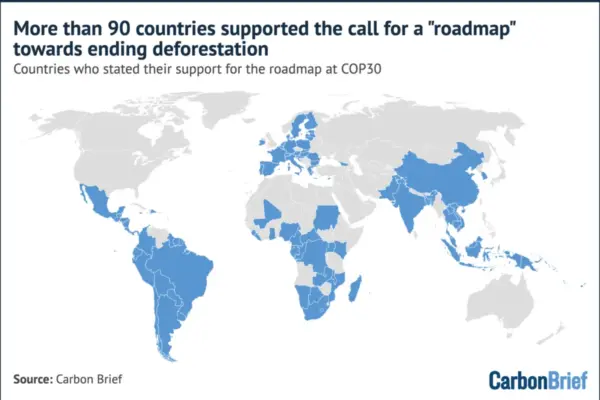
To inform the development of the roadmap, the COP30 presidency also organized a pioneering conference on the fossil-fuel transition held in Santa Marta, Colombia. Co-hosted by Colombia and the Netherlands, the April gathering brought together government ministers and international climate envoys for informal discussions regarding the structural, financial, and political barriers they face in moving away from fossil energy. In tandem with the fossil-fuel framework, Brazil also produced a parallel roadmap focused on halting global deforestation.
What Does the Fossil-Fuel Roadmap Say?
The roadmap acknowledges a sobering reality: after decades of delayed global action, the international community is no longer on track to limit global warming to 1.5 degrees Celsius without first overshooting the target. At the same time, the document highlights that the broader global transition toward clean energy is already well underway, supported by existing policies and technologies that are readily available for deployment.
Crucially, the roadmap frames the shift away from fossil fuels as much a development challenge as an environmental one, particularly for emerging markets and developing economies heavily reliant on resource revenues. To address this complexity, the plan introduces what it terms the "Belém readiness index." Described by COP30 CEO Ana Toni during a press briefing as the critical "diagnosis" stage of the process, this voluntary self-assessment tool allows countries to calculate their individual dependency on fossil fuels alongside their institutional capacity to manage a transition.
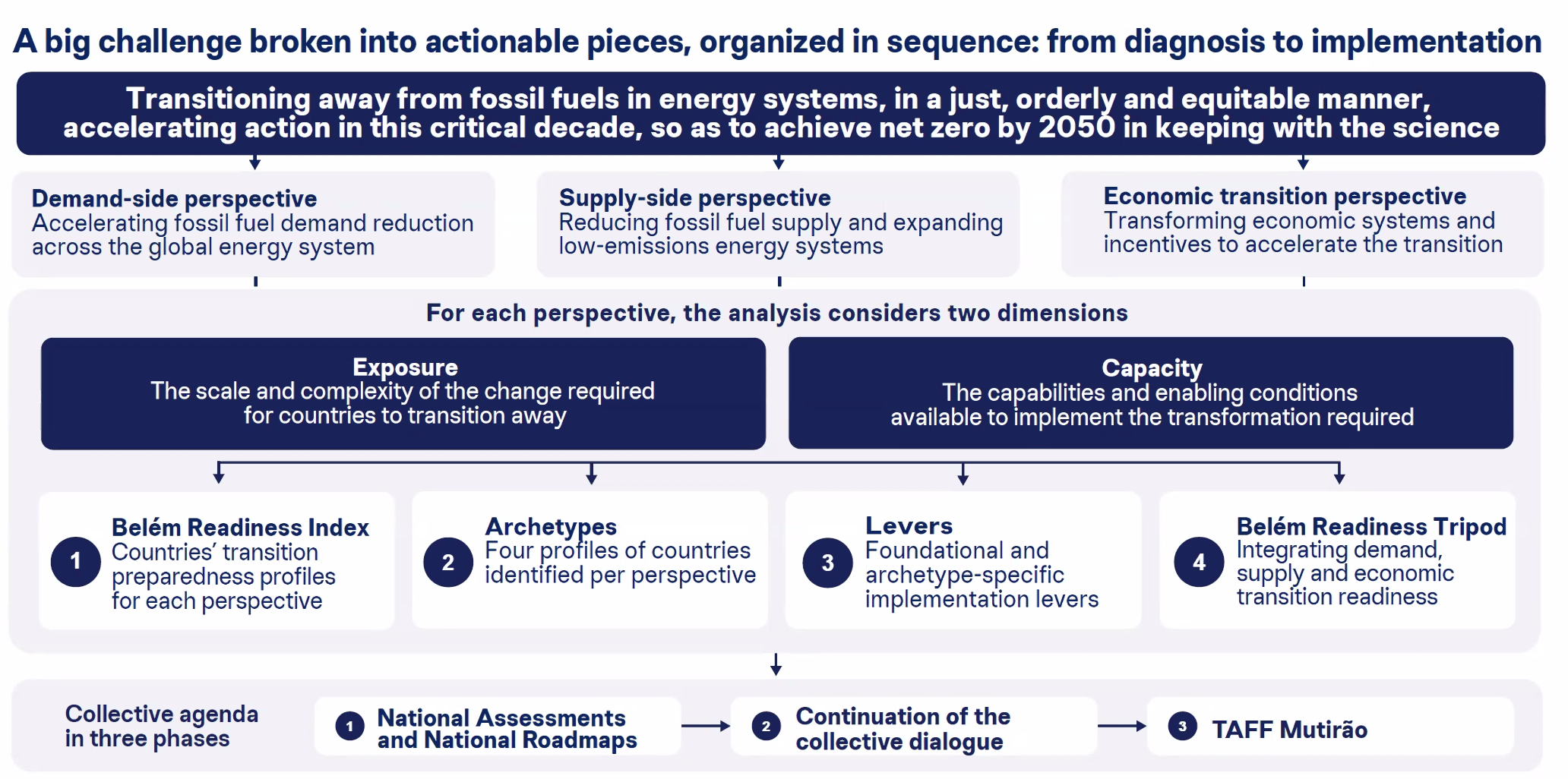
Once nations identify their readiness levels, they are sorted into four distinct analytical archetypes. This classification helps governments pinpoint specific policy levers tailored to their unique economic and industrial profiles. The roadmap outlines a structured, three-phase timeline for action.
The first phase spans from the present day until 2028, coinciding with the conclusion of the second global stocktake under the Paris Agreement at COP33. During this initial window, efforts are expected to focus heavily on strengthening institutions and establishing long-term policy signals.
The second phase runs from 2028 to 2030, overlapping with the timeline for the next round of national climate pledges, known as nationally determined contributions. This middle phase is designated for the physical transformation of domestic energy systems.
The final phase covers the years 2031 to 2033, marking ten years since the historic call at COP28 for all nations to contribute to the phase-down of fossil fuels. This concluding period is intended to focus on scaling up the transition globally.
The pragmatic structure of the framework has drawn widespread praise from international civil society organizations and climate policy experts. Dr. Natalie Jones, a senior policy adviser at the International Institute for Sustainable Development, noted that the roadmap delivers an essential political signal proving that the fossil-fuel transition remains firmly anchored at the center of the international agenda. She emphasized that the document provides governments with practical guidance to manage the shift while safeguarding energy security and public livelihoods.
Avantika Goswami, a climate policy expert at the Centre for Science and Environment in New Delhi, described the roadmap as a unique and deeply consultative model of multilateralism. She noted that the analytical framework successfully captures the complex nature of the energy transition, offering a path for countries to align their domestic pathways with historical responsibilities and current capacities.
Similarly, Ploy Achakulwisut, a former UN adviser on fossil fuels, praised the integration of the readiness index. She observed that categorizing countries into distinct exposure-capacity archetypes helps generate targeted implementation needs, thereby aligning international finance, technology transfer, and technical assistance with real-world capabilities.
How Will the Fossil-Fuel Roadmap Be Discussed at COP31?
Brazil’s roadmap arrives just one week before delegates gather in Antalya, Turkey, for the COP31 climate summit. The incoming COP31 co-presidents, Turkey and Australia, have already outlined an ambitious set of priorities for the conference, including a prominent target to increase global electrification. Under this proposal, the share of global final energy consumption met by electricity would rise from nearly 24 percent in 2023 to 35 percent by 2035.
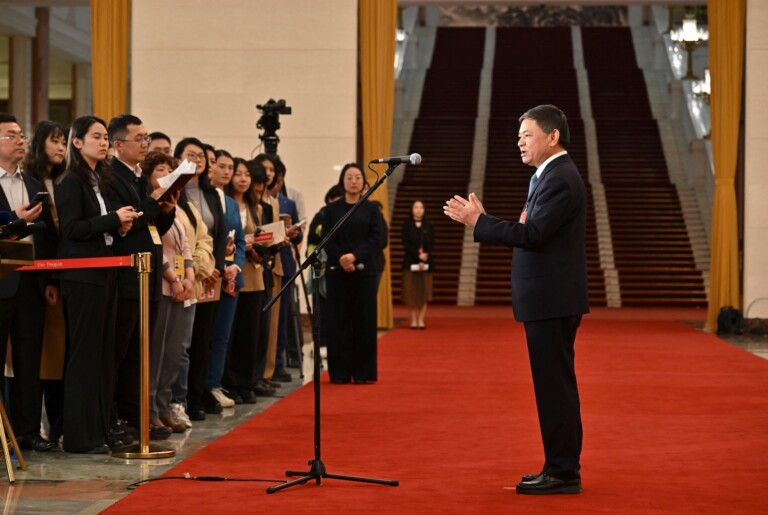
During the joint press briefing, former COP30 president André Aranha Corrêa do Lago asserted that this electrification target is entirely complementary to the broader objectives outlined in the fossil-fuel roadmap. While both Brazilian officials expressed hope for constructive discussions, they remained cautious about predicting how the voluntary roadmap will be received during the formal and informal proceedings in Turkey. When asked how the presidency hoped opposing nations would react, Corrêa do Lago reiterated that the international community already possesses a solid consensus and the necessary instruments, pointing back to the foundational agreements reached in Dubai.
As the summit approaches, policy experts argue that the international community must transition from high-level commitments to concrete implementation. Dr. Jones emphasized that at COP31, more governments should come forward with national transition roadmaps and clarify how those plans will feed into their broader climate strategies. She added that the conference should formally recognize the global roadmap and integrate its findings into the ongoing global stocktake. For vulnerable nations economically dependent on fossil-fuel revenues, matching credible transition plans with international financial support remains essential to diversifying economies and protecting public services.