For many professionals across industries, hearing the phrase, "This is a great start, but…" can instantly trigger a sinking feeling in the chest. Whether an employee is frantically pulling together high-stakes client presentation slides or attempting a complex data analysis for the very first time, standard workplace critiques often carry an unintended emotional weight. While a manager or senior colleague typically delivers these assessments with constructive intentions, the recipient often hears a much harsher underlying message: this simply isn’t good enough.
This psychological hurdle is precisely what Ryan and Alli, two new additions to the team at storytelling with data (SWD), confronted upon entering their new professional environment. In their first collaborative blog post for the organization, the pair shared deep insights into how professionals can reframe their thinking when entering a feedback-rich workplace. Their transition highlights a broader corporate challenge: how the exact same words can land dramatically differently depending on the surrounding organizational context, psychological safety, and cultural norms.
An Immersive Welcome to a Culture of Continuous Iteration
After officially joining the SWD team, both Ryan and Alli experienced a professional wake-up call almost immediately. On their very first day on the job, the new team members were asked to introduce themselves to the rest of the organization during a weekly virtual team meeting. Rather than treating the introductions as a one-off event, the team spent the remainder of the week actively practicing, refining, and incorporating peer feedback into those presentations.
Far from being an intimidating trial by fire, this exercise served as a standard introduction to the company’s operating rhythm. It did not take long for this immersive culture to begin fundamentally altering how both employees thought about critique, transforming what was once a source of anxiety into an engine for professional growth. As they began to internalize and embrace this supportive environment, they noticed a distinct shift in how they processed commentary compared to their prior career experiences. This shift revealed how small changes in perspective can entirely alter the reception of managerial and peer input.
Redefining the Timeline: Early Drafts as Tools for Direction
In previous roles, employees frequently find themselves overwhelmed by compounding workloads, rushing through deliverables just to meet an impending deadline while another project looms on the horizon. This pressure often fosters a counterproductive habit: waiting until a project is nearly complete before requesting any feedback at all. Frequently, professionals ask for thoughts only moments before a deadline arrives, inadvertently creating a lose-lose situation for everyone involved.
Under these rushed conditions, feedback providers often feel cornered into avoiding true constructive criticism to spare the creator’s feelings, or they feel compelled to be entirely honest, recommending sweeping changes at the eleventh hour. The latter scenario inevitably results in late nights at the office, as the creator scrambles to execute major edits under intense time pressure.
During their eight-week onboarding program at SWD, Ryan experienced a starkly different approach when he shared his work-in-progress introduction with his peers. Instead of labeling the work as incomplete or demanding heavy revisions, colleagues chimed in with balanced praise and targeted edits at every step of the journey. Their ongoing input provided a steady compass, helping Ryan hone his verbal introduction into its finest possible version long before he had even fully internalized his early drafts.
This experience delivered a lasting lesson about the value of soliciting input early and often, turning what was once a source of dread into an eager willingness to accept offers for early reviews. While bringing a project to colleagues closer to a deadline remains occasionally necessary, professionals learn to frame those requests appropriately, reserving broader structural questions for earlier stages in the creative process.
Shifting Perspectives on Classic Critique Openers
The classic feedback opener, "This is a great start, but…" has long been a staple of professional communication, yet it frequently carries negative baggage. Alli shared an illuminating anecdote from earlier in her career, recalling a seasoned colleague who would routinely begin his feedback with that exact phrase, only to proceed and completely rewrite everything she had produced. While the colleague’s comments were ostensibly meant to be kind, Alli ultimately came to interpret the phrase as corporate shorthand for "let me just do it myself."
In contrast, the culture at SWD proved to be iterative, deeply honest, and fundamentally kind. When Alli shared her in-progress files with a colleague named Amy during a recent client chart makeover, she braced herself for a fully redone version of her work. Instead, Amy returned a file filled with thoughtful comments while deliberately preserving Alli’s agency to make those changes in her own unique way. The response was not a rigid, prescriptive list of mandatory edits; rather, Amy genuinely meant that the work was a strong beginning, trusting that with a bit of guidance, the next iteration would naturally edge closer to the final product.
In an environment where continuous feedback is woven directly into the fabric of the daily workflow, hearing that something is a "great start" translates to an expression of trust—specifically, trust that the creator possesses the capability to carry the project across the finish line. Recognizing this distinction transforms the phrase from an intimidating cue to step aside into a welcome invitation to iterate.
To help reframe how professionals perceive and process unexpected input, Alli found unexpected utility in a classic improvisational comedy game known as "bad gifts." Alongside colleague Cole, she explored this concept further on episode 99 of the SWD podcast, where they practiced the game together and shared additional strategies for becoming more receptive listeners and receivers of outside commentary.
Directing the Conversation Through Targeted Inquiries
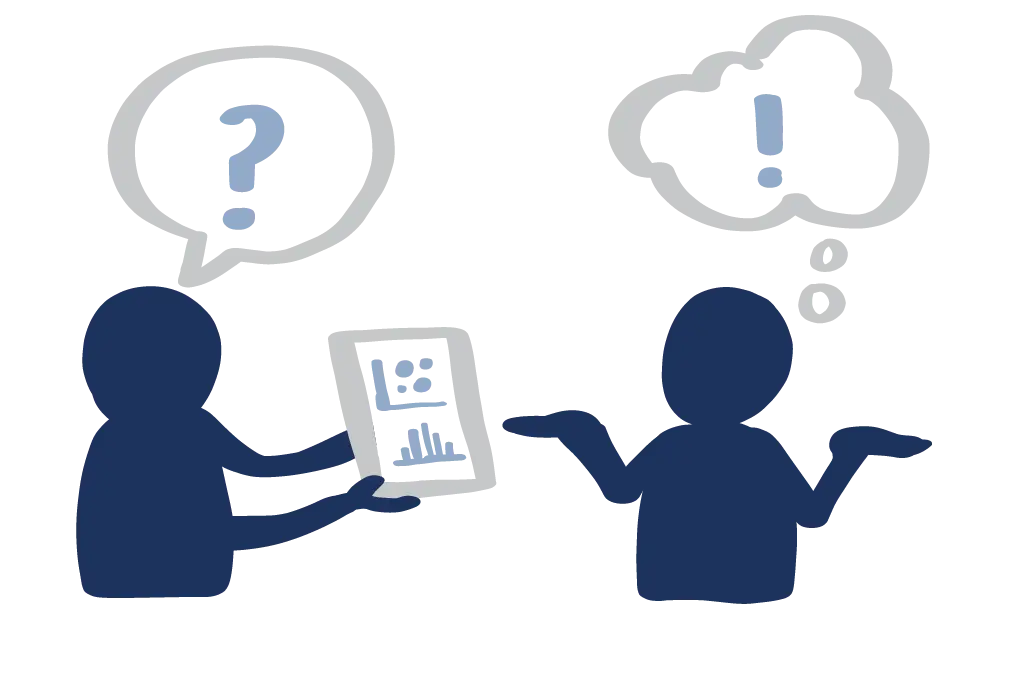
Another common pitfall in professional communication involves casting too wide a net when inviting critique from managers or peers. Sending an in-progress project to a colleague with a vague request like "any thoughts?" or "please review when you have a chance" routinely yields frustratingly generic responses, such as "great work," "it’s missing something," or "cut it down."
These generalized answers frequently leave the creator with more questions than answers. If a piece of work is supposedly great, should anything actually be changed? What specific element is missing? Does a slide need to be deleted entirely? It becomes difficult to reconcile how a presentation can simultaneously be described as too long, missing something, and great all at the same time.
At SWD, learning to ask precise, targeted questions as part of the input cycle brings much-needed clarity to the creative process. Clear-cut questions provide feedback providers with the confidence that their commentary will genuinely assist the creator without wasted effort. For instance, asking a colleague specifically whether an introduction feels too long before delivering it acts as a clear cue for the listener to actively scan for unnecessary sections that can be trimmed.
The core lesson derived from this practice is the importance of preparing a short list of specific questions before requesting a review. This preparatory step forces creators to critically assess their own in-progress work and prioritize their actual needs, ensuring that the resulting feedback is productive, actionable, and directly applicable to the task at hand.
Cultivating a Productive Feedback Environment
Adapting to a healthier, more collaborative feedback ecosystem requires organizations and individuals to embrace these foundational mindset shifts and put them into active practice. By fostering psychological safety, soliciting input early in the creative timeline, reinterpreting traditional critique phrases as tokens of trust, and asking precise questions to guide the conversation, workplaces can successfully dismantle the traditional dread associated with performance reviews and peer evaluations. Implementing these lessons helps establish a positive, feedback-rich environment where professional growth is continuous, collaborative, and entirely mutual.