
The U.S. Department of Energy (DOE) has officially launched a major new national consortium aimed at radically improving domestic battery manufacturing capabilities. The high-stakes initiative is designed to address a critical vulnerability for the United States technology and defense sectors: building a reliable, cost-effective, and highly competitive domestic battery supply chain. For the rapidly expanding U.S. drone industry, this federal push could mark a turning point, providing the foundational manufacturing infrastructure needed to secure domestic power sources for everything from commercial delivery platforms to advanced defense systems.
Announced on October 28, the newly formed Battery Manufacturing Accelerator, known as BattMan, brings together a formidable coalition of four national laboratories and five universities. This collaborative research and development engine is led by the Pacific Northwest National Laboratory (PNNL) and is actively working to integrate key industry partners into its ecosystem. By combining the rigorous research capabilities of the federal laboratory system with academic innovation and commercial pragmatism, BattMan seeks to tackle the persistent hurdles that have historically kept advanced battery production heavily anchored overseas.
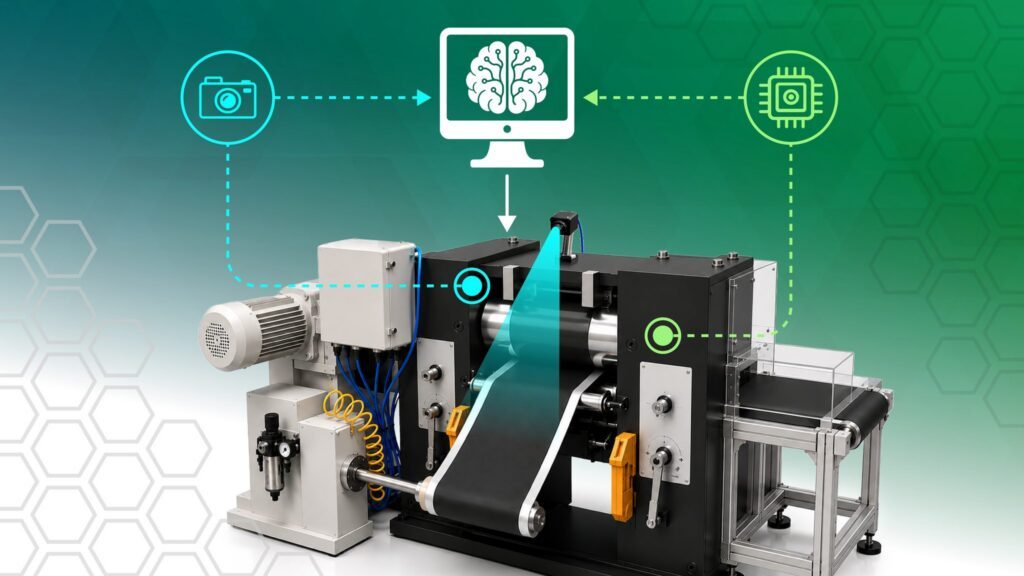
The consortium plans to harness cutting-edge technological tools—including artificial intelligence, advanced sensors, and automated manufacturing systems—to aggressively drive down production costs and accelerate the commercialization of next-generation batteries. While the initiative has broad implications for transportation electrification, grid-scale energy storage, and national defense applications, its impact on the unmanned aerial systems (UAS) sector is expected to be profound. High-performance, lightweight energy storage is the lifeblood of modern drones, and ensuring a stable, secure domestic supply of these components is a top priority for both government planners and commercial operators.
Reducing Waste and Transforming Battery Production Processes
At the heart of the BattMan initiative is a targeted mission to eliminate inefficiencies and significantly reduce waste during the intricate process of battery electrode manufacturing. Traditional battery cell production is notoriously resource-intensive and prone to high error rates, factors that inflate costs and hinder the United States’ ability to compete with established international manufacturing hubs.

According to data from the Oak Ridge National Laboratory (ORNL), conventional electrode production can generate staggering scrap rates as high as 40 percent. This high level of wasted material directly translates to inflated production costs and slower commercial scaling. Researchers participating in the BattMan consortium have set an ambitious goal: to reduce that scrap rate to less than 5 percent through the implementation of advanced, real-time monitoring and automated process controls.
To achieve this, the initiative will deploy smart manufacturing technologies capable of detecting microscopic defects and process deviations as they occur on the production line. Rather than discovering flaws at the end of a lengthy manufacturing run, automated equipment will be able to adjust production parameters on the fly. This real-time adaptability is expected to dramatically cut down on wasted raw materials, improve overall cell consistency, and drive down the per-unit cost of producing advanced battery cells at scale.
A significant portion of this vital research and development work will be conducted at Oak Ridge National Laboratory’s state-of-the-art Battery Manufacturing Facility located in Tennessee. Researchers there will examine and refine manufacturing processes for conventional lithium-ion batteries while simultaneously laying the groundwork for emerging, next-generation battery chemistries. The ultimate objective is to bridge the notorious "valley of death" that often traps innovative energy storage technologies in the laboratory, successfully guiding them from initial scientific discovery into high-volume commercial production.
Building a Domestic Drone Battery Supply Chain
The unveiling of the BattMan consortium arrives at a pivotal moment, as both the federal government and private enterprise intensify efforts to untangle domestic supply chains from foreign dependencies, particularly concerning critical drone components.
While American engineers and technology firms consistently lead the world in designing advanced battery technologies, domestic manufacturing capacity has historically lagged far behind demand. Consequently, U.S. drone manufacturers have frequently found themselves forced to rely on overseas suppliers, leaving them vulnerable to geopolitical tensions, supply chain bottlenecks, and volatile shipping costs. Furthermore, domestic startups attempting to build local production lines have faced an uphill battle competing with established international suppliers on cost, manufacturing scale, and production maturity.
To counter these systemic challenges, a wave of recent federal initiatives and private sector investments has begun reshaping the landscape of American battery manufacturing. These efforts are gradually laying the groundwork for a self-sustaining domestic ecosystem capable of supporting the unique power requirements of modern commercial and defense drones.
In September, developments highlighted by industry reporting underscored this momentum when Amprius Technologies received a federal funding award of up to $75 million to support the expansion of domestic drone battery manufacturing. That proposed production line is slated to possess the capacity to manufacture up to 12 million high-performance battery cells annually, providing a massive injection of domestic supply for unmanned systems.
Shortly thereafter, in October, Badland Batteries officially opened a dedicated manufacturing facility in Fargo, North Dakota. This new plant is laser-focused on producing specialized battery cells tailored specifically for the rigorous demands of commercial drones and defense systems, signaling that private capital is increasingly moving to fill the domestic manufacturing gap.
While initiatives like those at Amprius and Badland Batteries focus on establishing the physical plants and production lines, the DOE’s BattMan consortium addresses an equally critical piece of the puzzle: optimizing the underlying manufacturing science. By improving the processes, efficiency, and cost-effectiveness required to make domestic production commercially viable, BattMan aims to ensure that American-made batteries can compete effectively on the global stage.
Although the consortium has not yet released a definitive timeline for achieving full-scale commercial production or named specific commercial drone manufacturers as formal partners, the long-term implications are clear. The research emerging from BattMan is designed to support the broader national strategy of expanding U.S. battery manufacturing capacity, enhancing economic and national security, and securing a reliable technological foundation for the future of American drone innovation.