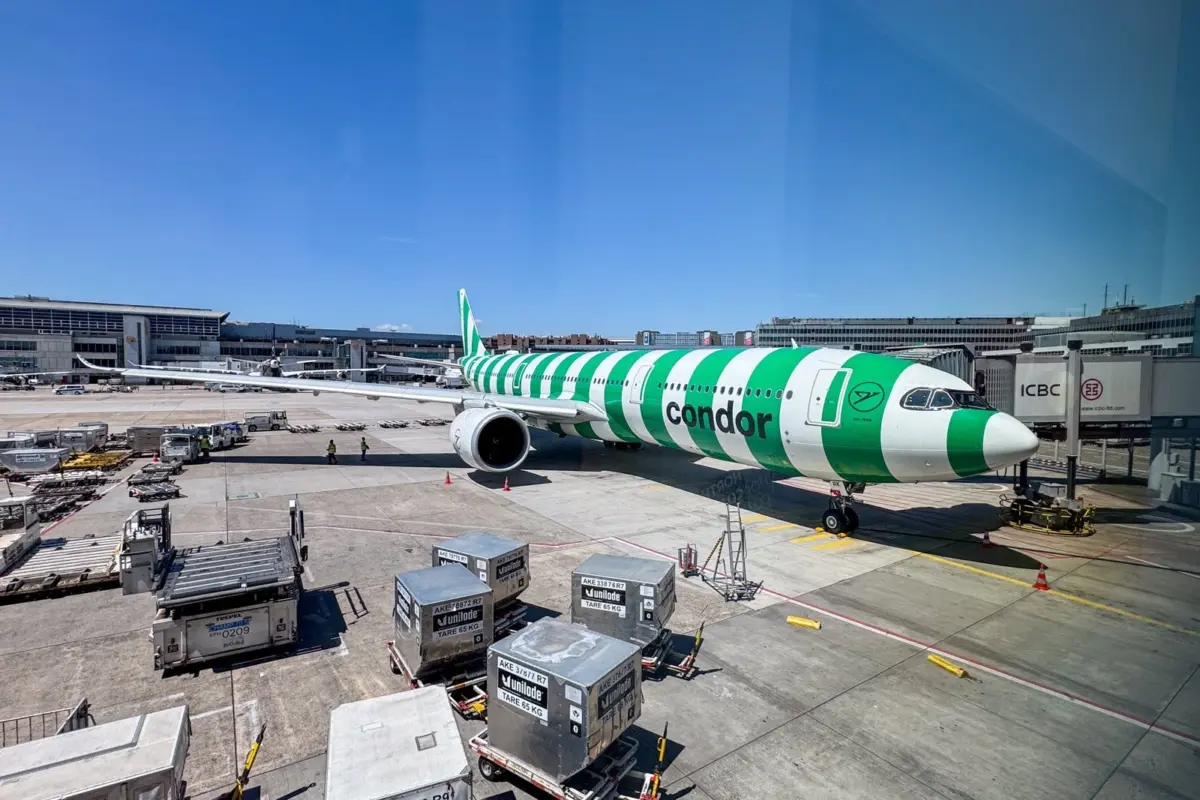
As the landscape of international aviation continues to evolve, leisure and business carriers alike are investing heavily in passenger comfort, and German leisure airline Condor is no exception. With its striking signature striped livery and a sweeping modernization of its long-haul fleet, the carrier has been turning heads across the aviation industry. Travelers looking to cross the Atlantic in style are increasingly turning their attention to Condor’s competitive business class product, a significant step forward from the carrier’s historical positioning as a traditional charter and vacation airline.
The aviation sector has seen a fundamental shift in recent years, with passengers placing a much higher premium on space, privacy, and modern amenities during long-haul flights. Condor has responded directly to this demand by updating its aircraft cabins, introducing state-of-the-art seats, and rethinking the entire onboard service flow. For travelers navigating the complex world of airfare and loyalty programs, understanding how these product updates fit into the broader airline ecosystem has become increasingly important, particularly as carriers refine their offerings to capture high-yielding leisure and corporate travelers alike.
Behind the scenes, the mechanics of booking premium travel often involve specialized financial products, travel rewards, and strategic partnerships. As highlighted by industry disclosures, travel publications and review platforms frequently partner with financial institutions to offer credit card recommendations. These partnerships allow publishers to sustain their operations through compensation when consumers are approved for financial products through referral links. While these relationships influence which credit cards are prominently featured on certain platforms, editorial integrity remains a cornerstone of professional travel journalism, ensuring that reviews, analyses, and opinions regarding airline products come strictly from editorial teams rather than commercial partners.

This separation of church and state in travel publishing is vital for consumers who rely on unbiased evaluations of hard and soft products in the sky. When an aviation journalist steps onto a Condor flight to evaluate the business class cabin, the assessment of the seat, the catering, the entertainment system, and the overall service delivery is conducted independently. Editorial disclaimers across major travel media outlets consistently reinforce this principle, explicitly noting that opinions expressed by writers and reviewers are entirely their own. They do not reflect the viewpoints of banks, credit card issuers, airlines, or hotel chains, and promotional content is never reviewed, approved, or otherwise endorsed by the commercial entities mentioned in editorial coverage.
The strategic positioning of carriers like Condor relies heavily on independent reviews to build consumer trust, especially as the airline competes against legacy network carriers on major transatlantic routes. By upgrading its fleet with modern aircraft equipped with contemporary business class cabins, Condor has transformed from a purely utilitarian vacation carrier into a compelling alternative for travelers seeking a comfortable journey to Europe and beyond. The passenger experience, once defined primarily by basic seating and standard charter-style service, now features lie-flat beds, direct aisle access, and modern touchscreens that rival those found on major network flag carriers.
Navigating the nuances of modern airline booking requires a clear understanding of terms, conditions, and promotional offers. Financial institutions and travel brands frequently attach specific terms to their promotions, requiring consumers to carefully review advertising policies and product review methodologies before making financial or travel commitments. Transparency in these disclosures ensures that readers can distinguish between independent editorial content and sponsored partnerships. For travelers planning their next international getaway, staying informed about both the hard product in the sky and the financial tools used to book it provides a distinct advantage in maximizing value and comfort.
As the industry moves forward, the intersection of aviation journalism, financial rewards, and airline product development will continue to shape how passengers discover and experience the world. Whether passengers are analyzing the latest cabin upgrades on carriers like Condor or evaluating credit card rewards to offset the cost of international travel, the availability of transparent, independent information remains essential. Through meticulous reviews and adherence to rigorous editorial standards, aviation media continues to provide travelers with the objective insights needed to navigate an increasingly complex travel landscape.