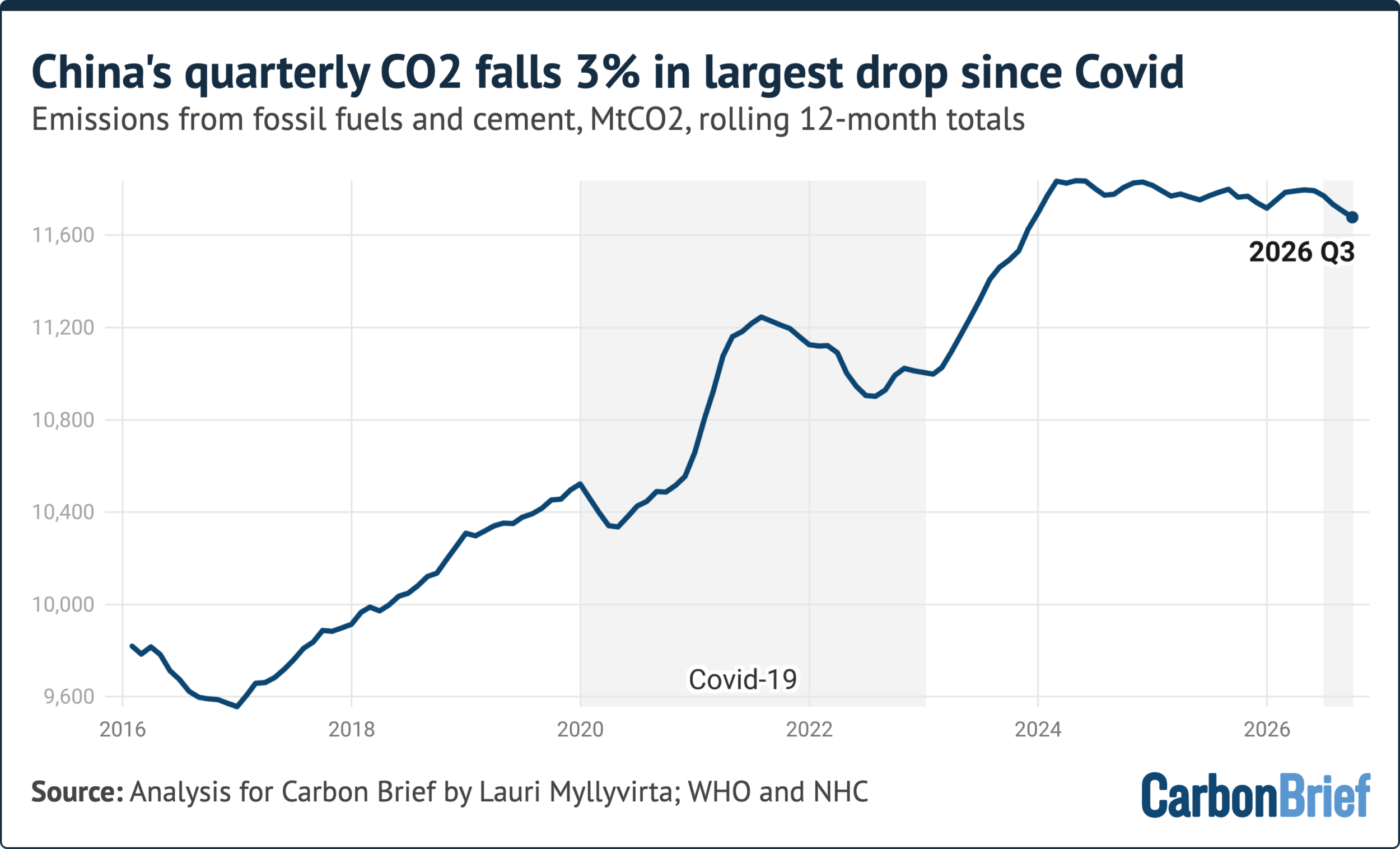
China’s carbon dioxide (CO2) emissions fell by 3.1% in the third quarter of 2026, driven lower by the lingering impacts of the Hormuz crisis on oil demand alongside a notable drop in domestic coal consumption. According to new analysis published by Lauri Myllyvirta, lead analyst at the Centre for Research on Energy and Clean Air (CREA), this marks the largest quarterly reduction in emissions since the unprecedented Covid-19 lockdowns of 2022.
The significant downturn in the third quarter has pulled China’s overall carbon emissions down by an estimated 0.5% for the year to date. Based on a comprehensive review of official government figures and commercial energy data, the new findings reveal that coal use dropped by 3% year-on-year during the third quarter of 2026, while oil consumption contracted by 4%.
The primary catalysts behind this downward trajectory include a structural decline in power-sector coal consumption, a sustained and sharp reduction in transport-sector oil usage, and a noticeable slowdown in the expansion of the coal-to-chemical industry. This latest quarterly slump extends a broader "flat or falling" trend in China’s national carbon emissions that first took root in March 2024. Having persisted for more than two years, this plateau and subsequent contraction highlight a profound structural shift in the world’s second-largest economy, even as questions remain regarding future energy demand, clean-energy integration, and official economic stimulus responses.
Decline Drivers
A closer examination of the third-quarter data highlights several key sectors where emissions contracted sharply. Most notably, coal-fired power generation dropped by 3.3% compared to the same period in the previous year. This reduction occurred as overall electricity demand growth moderated and the amount of curtailed, or "wasted," wind and solar power decreased due to improvements in grid absorption and regional balancing.
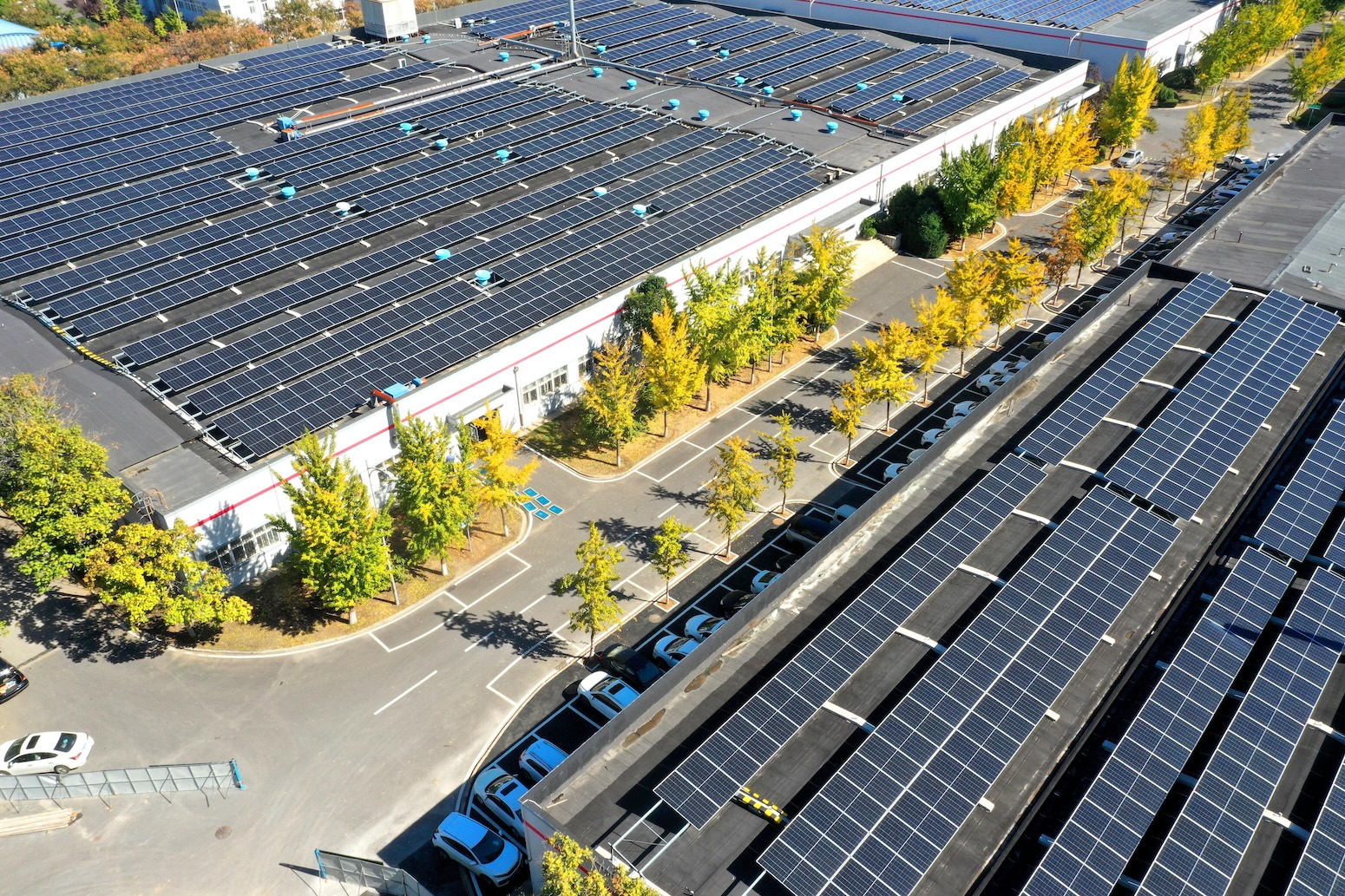
During the third quarter, electricity generation from solar, wind, and nuclear sources surged by a combined 110 terawatt-hours (TWh) year-on-year. This expansion in zero-carbon generation was more than twice as large as the growth in total electricity demand over the same timeframe. To put the scale of this clean-power surge into perspective, the additional generation added in just three months was roughly equivalent to the total electricity output of Germany over the same period.
This drop in coal-power output and associated CO2 emissions unfolded despite the fact that China continues to construct new coal-fired power plants at near-record rates, a trend that accelerated in the lead-up to national climate deadlines. Because new capacity is coming online while actual generation from coal declines, the average utilization and running hours for existing and newly commissioned coal plants are falling rapidly. This dynamic is steadily eroding the profit margins of traditional thermal power operators across the country.
At the same time, transport-related oil consumption continued a steep descent, registering a 9% year-on-year drop in the third quarter of 2026. This contraction has been heavily accelerated by the rapid market penetration of electric vehicles (EVs). Battery-powered vehicles captured a record-breaking 67% market share of new passenger car sales, while also accounting for 50% of heavy truck sales by September.
Data regarding electricity consumption further underscores this transport transition. Power usage by EVs jumped by 53% year-on-year—a rate significantly higher than the growth in the overall number of registered EVs on the road. Analysts note that this disparity indicates higher utilization rates for the existing electric fleet as drivers increasingly favor electric options over traditional internal combustion engine vehicles for daily transit and commercial logistics.
Industrial sectors also contributed to the overall decline. Growth in the coal-to-chemical industry, which has historically served as a significant driver of emissions growth, continued to decelerate throughout the third quarter. High thermal prices for coal squeezed profitability within the sector, while higher output prices subsequently depressed downstream demand. Furthermore, carbon dioxide emissions originating from cement and steel manufacturing maintained their downward trend as China’s ongoing real estate and construction contraction continued to accelerate.

Outlook for Emissions
The broader trajectory of China’s carbon emissions going forward will depend heavily on the delicate balance between rising baseline energy demand, the continued rapid deployment of clean energy technologies, and the implementation of government fiscal and monetary policies aimed at countering broader GDP growth slowdowns.
Energy consumption growth has moderated significantly following a period of exceptionally high demand that immediately followed the pandemic recovery, while clean-power manufacturing and deployment have remained robust. This dynamic makes it increasingly likely that the growth in zero-carbon power generation will outpace total energy demand growth for the entire year, cementing a structural decline in fossil-fuel consumption.
Sustaining this downward trend, however, will also rely on ongoing efforts to resolve infrastructural bottlenecks that prevent new solar and wind farms from efficiently integrating into the national grid. Mitigating the issue of curtailed or wasted clean electricity remains a top priority for policymakers seeking to maximize the displacement of fossil fuels.

While the recent moderation in energy demand growth is partly attributable to unusually mild weather conditions experienced across various regions in the third quarter, it also
reflects a broader, more permanent cooling in heavy industrial activity tied to weaker gross domestic product growth. Despite this economic softening, official GDP figures have remained largely within the government’s targeted parameters, which has helped reduce immediate pressure for aggressive, carbon-intensive stimulus packages.
Where economic stimulus measures have been introduced, their focus has largely centered on the "six networks" initiative, which prioritizes upgrades to the national power grid and modern transportation infrastructure. Because these targeted sectors are already heavily governed by regulatory frameworks emphasizing green development and zero-carbon solutions, analysts suggest that upcoming fiscal injections are less likely to trigger a rebound in traditional fossil-fuel-reliant heavy industries. As the country navigates these economic and environmental shifts, the structural forces driving down emissions appear firmly entrenched as China works toward its long-term climate commitments.