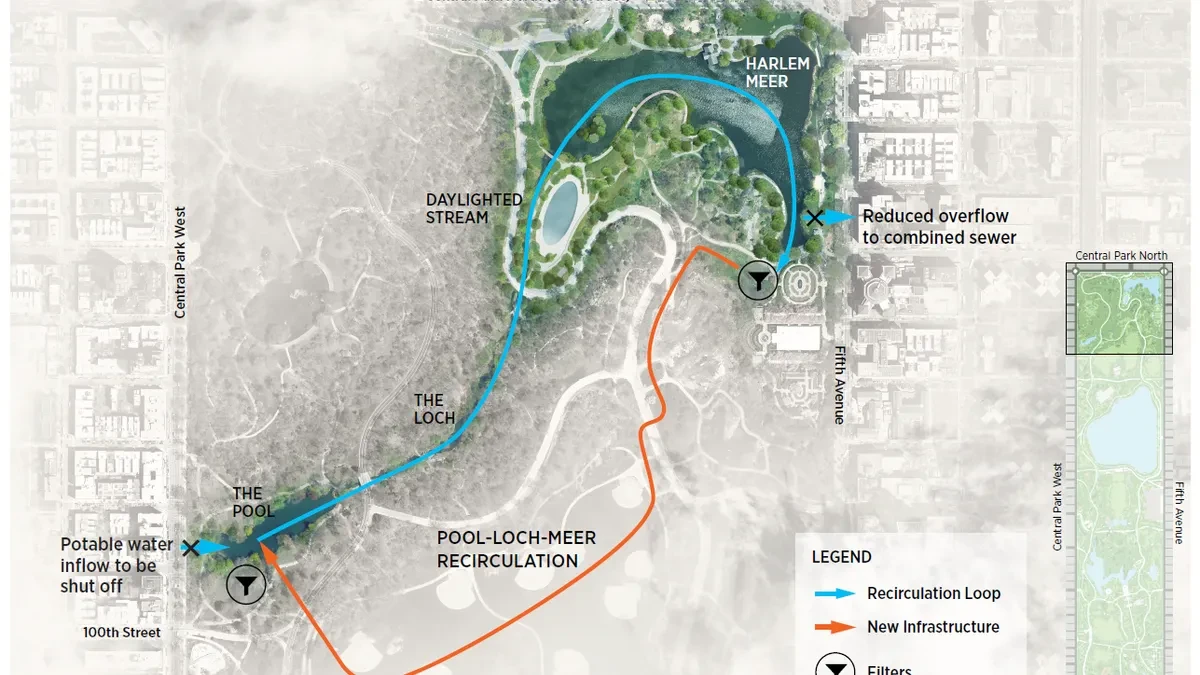
New York City has broken ground on a major infrastructure initiative aimed at transforming how its most famous urban green space manages water. The Central Park Conservancy has officially announced the launch of the North End Recirculation Project, a $35.7 million engineering endeavor designed to capture stormwater, drastically reduce sewer overflows, and conserve millions of gallons of potable water annually. Scheduled for completion in the fall of 2028, the ambitious undertaking represents a critical step forward in the city’s broader efforts to climate-proof its aging infrastructure against intensifying storms.
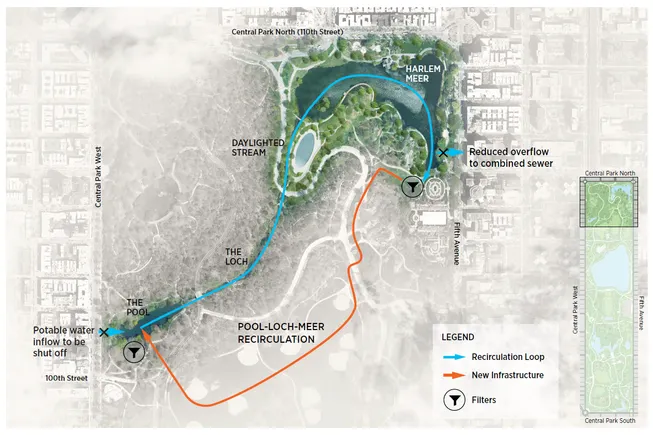
The project centers on creating an advanced, automated water filtration and recirculation loop connecting the Harlem Meer with a historic stream and pool within Central Park. By continuously recycling water during dry weather periods, the system will significantly curtail the park’s reliance on New York City’s municipal drinking water supply. At the same time, the continuous movement and filtration of the water will help prevent the stagnant conditions that frequently lead to unsightly and environmentally damaging algal blooms across the park’s interconnected northern water bodies.
Describing the scale and ambition of the undertaking, Central Park Conservancy President and CEO Betsy Smith noted that the initiative stands as the organization’s most complex and significant infrastructure undertaking to date. While parks are traditionally viewed as passive landscapes for recreation, urban parks in dense metropolitan areas like New York are increasingly being repurposed as active, high-performing components of municipal stormwater management networks.
A Smart, Forecast-Driven Defense Against Heavy Rains
What sets the North End Recirculation Project apart from traditional park maintenance projects is its integration of real-time data and predictive technology. According to representatives from the conservancy, the automated recirculation system will not operate on a fixed schedule. Instead, it will actively ingest up-to-the-minute weather forecasts and detailed watershed data to anticipate incoming storm events.
When heavy rainfall is projected, the system will automatically lower the water level of the Harlem Meer in advance. By preemptively creating empty storage capacity within the water body, the park can effectively capture massive volumes of incoming stormwater before it has a chance to overwhelm municipal infrastructure. This preventative drawdown is expected to reduce overflows into the combined sewer systems serving the adjacent Harlem and East Harlem neighborhoods by an impressive 90 percent, preventing the discharge of untreated wastewater into local waterways during peak storm surges.
Additionally, the system is engineered to capture and retain massive amounts of stormwater that would otherwise contribute to street-level flooding. By shifting the reliance away from potable water for maintaining the park’s aquatic features and simultaneously utilizing the landscape to hold stormwater runoff, the project delivers a two-fold environmental benefit: water conservation and flood mitigation.
Confronting the Reality of a Changing Climate
The timing of the North End Recirculation Project aligns with a growing urgency surrounding climate change and extreme weather across the Northeast. According to data from the Fifth National Climate Assessment, extreme precipitation events in New York City and the wider regional area have surged by approximately 60 percent since the 1950s.

Looking ahead, the projections remain equally concerning. A comprehensive climate assessment conducted by the New York City Panel on Climate Change indicates that average annual rainfall in the five boroughs is expected to increase by as much as 14 percent by the 2050s, with that figure climbing to 22 percent by the 2080s. Furthermore, meteorological models suggest that not only will total annual precipitation increase, but the frequency and intensity of extreme rainfall events will also escalate.
During a press conference officially announcing the project, New York City Mayor Zohran Mamdani emphasized the stark reality facing the city’s infrastructure. Pointing to the mounting pressures of the climate crisis, Mamdani noted that the city’s combined sewer system was historically designed to accommodate, at best, about 1.75 inches of rainfall per hour. When storms exceed that threshold—as they do with increasing frequency—the system reaches its limit, leading to widespread street flooding and sewer backups.
"The amount of rainfall the city is facing has only increased year after year, and that is something that’s intensifying with the climate crisis," Mamdani stated during the press conference. He stressed that municipal leadership is moving away from past attitudes of passive acceptance toward recurring urban deluges.
A Multi-Pronged Approach to Urban Sponge Infrastructure
The Central Park initiative does not exist in a vacuum. Instead, it forms a vital piece of a broader, citywide strategy aimed at mitigating stormwater flooding in neighborhoods across all five boroughs. City agencies are increasingly deploying a diverse array of nature-based and engineering solutions designed to absorb excess water, slow down runoff, and buy the urban landscape valuable time during severe weather events.

Among these strategies is cloudburst management, along with the expansion of Bluebelt systems and the installation of permeable pavement. Mamdani described these initiatives collectively as any approach capable of absorbing excess rainfall and allowing the city a moment to breathe. For decades, a prevailing sentiment existed that urban flooding was simply an inevitable consequence of heavy storms in a densely built environment. City officials are now working to dismantle that resignation, pivoting aggressively toward proactive resilience planning.
Recent months have seen several related projects break ground or advance across the city. In Brooklyn, New York City is constructing its very first Bluebelt system within Prospect Park. That project involves upgrading a freshwater lake’s drainage infrastructure while constructing new ponds and rain gardens specifically designed to intercept and collect rainwater before it can overwhelm local streets.
Meanwhile, in Queens, municipal planners are taking a different approach by transforming three concrete roadway medians into green infrastructure "sponges." These converted spaces are engineered to absorb significant volumes of stormwater, keeping water out of basements and off roadways during intense downpours. By marrying these neighborhood-level interventions with massive projects like the North End Recirculation System in Central Park, New York City is steadily weaving a more resilient, water-smart infrastructure network.
As engineering teams finalize the design and preliminary preparations for the Central Park project, construction is slated to progress steadily over the next few years. When the system finally goes live in the fall of 2028, it will not only safeguard the park’s northern water features and preserve 175 million gallons of drinking water every year, but it will also serve as a working model of how historical urban landscapes can be successfully modernized to meet the unprecedented environmental challenges of the twenty-first century.