The California High-Speed Rail Authority is navigating a turbulent chapter following the departure of Chief Executive Officer Ian Choudri, compounding a series of formidable hurdles that already include dwindling federal backing, looming fiscal deadlines, and an impending gubernatorial transition.
Choudri’s exit removes a key figure who had been actively spearheading efforts to court private-sector investment for the multi-billion-dollar transit project. In response to the leadership vacancy, the authority’s board acted swiftly, naming Joe Stephenshaw, the director of the California Department of Finance, as interim chief executive officer on October 29.
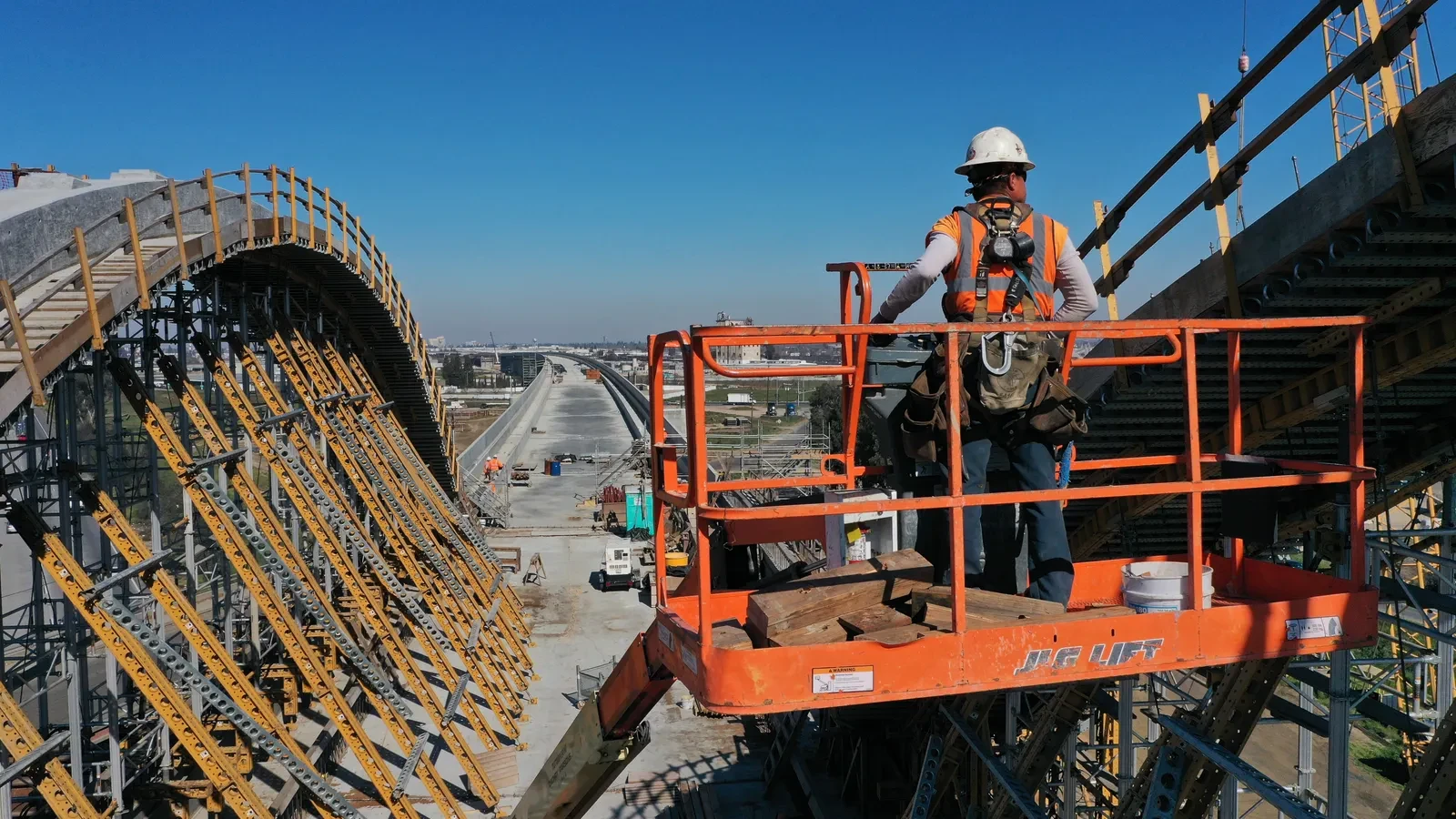
The leadership change comes at a precarious time for the nation’s most ambitious high-speed rail initiative, which has faced decades of engineering, political, and financial hurdles as it works to connect the San Francisco Bay Area to the Los Angeles basin through the Central Valley. Construction activity remains visible across the initial Central Valley segment—marked by concrete viaducts and ongoing civil engineering works—yet the long-term viability of the broader vision is increasingly clouded by monetary constraints.

Uncertainties have dominated the project’s fiscal landscape for years, exacerbated on the federal front when the administration in Washington canceled approximately $4 billion in unspent federal grants previously allocated to the California high-speed rail undertaking. With federal streams heavily restricted or rescinded, the authority’s financial scaffolding relies heavily on state-level commitments.
Currently, the project’s only guaranteed funding source beyond existing reserves is California’s ongoing pledge to dedicate $1 billion annually from the state’s cap-and-invest program through 2045. However, turning that future stream into immediate construction cash requires the state to permit the authority to issue bonds against the projected income. While borrowing against future revenues would make funds available sooner, it introduces significant interest costs.
Financial projections outlined in the authority’s 2026 business plan estimate that borrowing against future cap-and-invest funds will incur roughly $3.6 billion in interest costs. Conversely, the Office of Inspector General (OIG) has issued more conservative and alarming warnings, projecting that those borrowing costs could spiral as high as $6.6 billion, severely squeezing the project’s purchasing power.
Despite these sobering financial warnings, procurement has marched forward. On a Friday prior to Choudri’s departure, the authority awarded Siemens Mobility a substantial $772 million contract. The agreement covers three high-speed train sets, necessary spare parts, a decade of maintenance provisions, and built-in clauses for cost escalation, foreign exchange rates, and taxes.

This major capital commitment comes directly on the heels of a July 31 report from the authority’s OIG, which explicitly warned leadership that the project could run out of available money by December 2027. The juxtaposition of a nearly $780 million procurement contract and a rapidly approaching fiscal cliff has heightened scrutiny from lawmakers, fiscal watchdogs, and the public alike.
Compounding these operational and financial anxieties is an impending shift in executive political leadership. With a new governor set to take command next year, the political alignment of the statehouse could drastically reshape the project’s trajectory. Recent polling from the Los Angeles Times indicates that Democrat Xavier Becerra leads the gubernatorial race with 61% support among likely voters, while Republican challenger Steve Hilton trails with 34%.
While Becerra has voiced support for the concept of high-speed rail, he has also signaled that the status quo is unacceptable. Speaking to local media outlet KCRA, Becerra addressed the imperative for structural reform, stating that the project has "got to look really different if we’re going to continue this project." He emphasized that the initiative must actively work to rebuild public trust, noting that the electorate is rapidly losing faith in the enterprise.
Before his departure, Choudri had focused heavily on bridging the funding gap by looking outside traditional government coffers to secure private-sector partnerships. In a tangible step toward that strategy, the authority entered into a $25 million co-development agreement in June with a specialized consortium of high-speed rail operators, infrastructure developers, and global investment firms. Designed with an initial term of 30 months, the partnership was constructed precisely to attract outside private capital and share the financial burdens of development.

With Stephenshaw now stepping in as interim CEO, the authority must manage the delicate balancing act of maintaining momentum on ongoing construction, integrating new rolling stock commitments from Siemens, steering private investment talks, and preparing for a new gubernatorial administration that may demand a fundamental redesign of California’s iron highway.