The United States and China are currently locked in a high-stakes global competition to determine who will dominate the future of artificial intelligence, raising fundamental questions about whether democracies or autocracies will set the technological standards, norms, and values of the new digital age. While the United States firmly leads the world in the sophistication, capability, and raw power of its foundational artificial intelligence models, and its innovation base and massive investments in research and development remain entirely unparalleled, the modern AI race extends far beyond algorithmic modeling alone.
Instead, true leadership in artificial intelligence requires mastering a sprawling technology ecosystem. This complex web encompasses everything from reliable power generation and advanced server manufacturing to large-scale deployment in real-world applications. Jensen Huang, the co-founder and chief executive officer of Nvidia, has frequently described the contemporary artificial intelligence industry as a metaphorical five-layer cake, with foundational energy needs at the base, followed upward by advanced chips, physical infrastructure, software models, and end-user applications. To successfully outpace China in this generational technological race, the United States must establish or maintain a decisive advantage across every single one of these layers. According to geopolitical and economic analysts, achieving that ambitious objective requires a steadfast alliance with Taiwan.
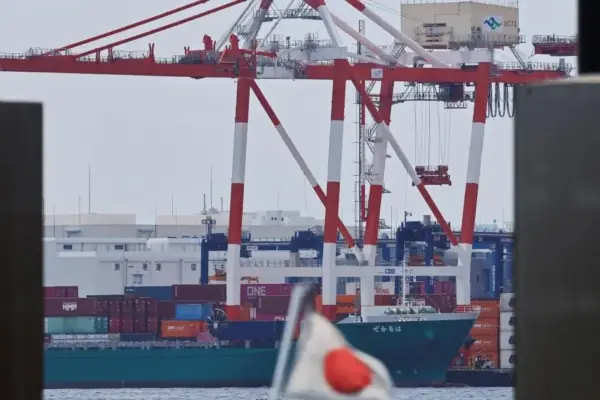
Taiwan currently produces more than 90 percent of the world’s most cutting-edge semiconductors, cementing its status as an indispensable anchor for the United States’ burgeoning artificial intelligence industry. Beyond manufacturing the microscopic brains that power modern computing, Taiwanese companies also assemble approximately 90 percent of the high-density servers that form the backbone of the global AI economy. Featuring complementary economic strengths—with Taiwan specializing in advanced manufacturing and precision hardware, and the United States leading the world in creative design and software architecture—the two economies have forged a mutually reinforcing partnership. This bilateral relationship has long underpinned American leadership in the sector. Alongside a broader coalition of democratic countries worldwide that wish to avoid vulnerable dependencies on China for their critical technology needs, the U.S.-Taiwanese partnership has made a secure, resilient global AI supply chain possible.
Despite these clear strategic advantages, some domestic policymakers in Washington have occasionally blamed Taiwan for the historical offshoring of American semiconductor manufacturing capacity. Although it is objectively true that the United States no longer manufactures as large a share of the world’s chips as it did during the mid-twentieth century, this simplistic narrative obscures a much larger and more positive historical reality. Taiwan did not weaken the American semiconductor industry; rather, Taiwan has been fundamentally crucial to maintaining the United States’ technological superiority on the global stage. By carving out a highly specialized niche in advanced manufacturing and meticulous supply chain management, Taiwan has actively empowered the United States to focus its resources on maintaining its dominant edge in innovation and research and development. As the geopolitical and economic stakes of the global artificial intelligence race continue to escalate, Taipei, Washington, and the broader democratic world will need to deepen their collaboration to prevail.
FOUNDING FOUNDRIES
First and foremost, the modern artificial intelligence revolution relies entirely on unhindered access to advanced semiconductors. For much of the 1950s through the 1970s, the United States dominated the entire semiconductor industry spectrum, seamlessly integrating chip design and physical manufacturing under domestic rooflines. As noted by the Center for Strategic and International Studies, the United States created the modern-day semiconductor industry and has historically led in the technology’s pioneering development. However, as microchips became exponentially more complex, difficult, and expensive to produce, the global industry underwent a natural process of specialization. While Silicon Valley firmly held on to its commanding lead in advanced chip design, it progressively outsourced its capital-intensive manufacturing capacity to partners in East Asia. Today, as Washington attempts to spark a renaissance in domestic manufacturing, understanding the root economic sources of this historical shift is essential for determining how to most effectively and sustainably rebuild U.S. production capacity.
In practice, Taiwan’s thriving modern semiconductor industry was born directly out of decades of close U.S.-Taiwanese cooperation. With the onset of globalized trade and the expansion of free market principles starting in the 1970s, U.S. technology companies accelerated their efforts to outsource chip manufacturing to overseas partners seeking economic development. Meanwhile, the Taiwanese government, eager to move upward along the global value chain, established the Industrial Technology Research Institute—a specialized organization dedicated to nurturing new technology ventures and channeling targeted research and development resources to domestic industries. Taiwan also acquired crucial technology licenses from the United States, established the renowned Hsinchu Science Park in northwestern Taiwan, and invested heavily in specialized higher education and rigorous training programs for engineers. As the global semiconductor sector developed, major Taiwanese technology enterprises such as Taiwan Semiconductor Manufacturing Company (TSMC) expanded their global operations. Countless small and medium-size enterprises simultaneously contributed to these expanding supply chains, creating a powerful virtuous cycle that encouraged local entrepreneurship, strengthened regulatory standards, and promoted international technological cooperation.
The ultimate result of this multi-decade effort was an industrial ecosystem that became remarkably specialized, deeply collaborative, and exceptionally difficult for rival nations to replicate. This ecosystem systematically freed up the United States to concentrate on what it does best: designing incredibly complex, world-changing chips. Taiwan’s massive financial and infrastructural investments in manufacturing not only lowered the overall cost of critical U.S. technology but also ensured that whatever visionary concepts Silicon Valley dreamed up, Taiwan was immediately capable of building at scale.
Taiwan’s remarkable success as a global semiconductor powerhouse has therefore never come at the direct expense of the United States. Instead, it has been built upon a foundation of decades of close collaboration, a sensible international division of labor, and deep mutual trust between Washington and Taipei. Today, the United States continues to lead the world in semiconductor innovation, software design, and foundational research and development, whereas Taiwan remains uniquely at the global forefront of advanced wafer fabrication, sophisticated packaging, and complex supply chain integration. Leading U.S. technology firms such as Nvidia, Apple, and Qualcomm heavily depend on Taiwan’s manufacturing sector to successfully turn their creative digital ideas into physical, usable commercial products. Rather than replacing the United States, Taiwan serves as the indispensable bridge that enables American innovation to reach global markets efficiently.
Nonetheless, Taiwan fully understands Washington’s strategic determination to strengthen domestic semiconductor production and has demonstrated a willingness to actively support that national effort. TSMC has committed an unprecedented $265 billion in capital investments to build advanced semiconductor fabrication plants in Arizona. Furthermore, more than 20 other major Taiwanese technology companies have collectively invested billions of dollars into the broader U.S. semiconductor ecosystem, creating thousands of high-paying jobs and significantly expanding domestic manufacturing capacity within the United States.
For Taiwan, these landmark investments serve to reinforce and deepen the existing supply chain partnership with the United States. They will become even more vital as the domestic U.S. semiconductor ecosystem continues to grow, because the United States will inevitably need to rely upon Taiwan’s deep institutional knowledge, specialized network of suppliers, and veteran engineers—assets built up over many decades—to sustainably develop its own domestic industry. Ultimately, there is no inherent contradiction between what is economically and strategically good for the United States and what is good for Taiwan. With global demand for advanced chips continuing to rise exponentially, both sides stand to benefit immensely from a deeper, institutionalized partnership, the routine sharing of technical expertise, and enhanced supply chain security.
HARDWARE POWER
The multifaceted U.S.-Taiwanese partnership extends far beyond microscopic silicon chips. While the United States boasts world-leading artificial intelligence platforms and dominant cloud service providers, Taiwan stands undisputed as the world’s leading manufacturer of the heavy-duty AI servers upon which those platforms run. Taiwanese manufacturing giants such as Foxconn—which accounts for approximately 40 percent of the entire global AI server market—and Quanta Computer, which builds high-density AI servers and complex physical infrastructure for major cloud service providers, manufacture the essential hardware products and components that quietly underpin the daily operations of major U.S. technology titans, including Alphabet, Amazon, and Meta.
While the United States can certainly work to expand its domestic AI-related manufacturing capacity over time, it would take many years and immense capital to match the sheer scale, intricate supplier networks, specialized engineering expertise, and manufacturing agility of Taiwan’s established industrial base. In practical economic terms, it is far faster, easier, and more cost-effective for Taiwan to manufacture the physical infrastructure that enables U.S.-designed AI chips and software platforms to be deployed rapidly and at massive scale. Even if the United States were to drastically and successfully expand its domestic manufacturing capabilities, it would still likely only be able to produce a fraction of the hardware volume required to keep pace with soaring global artificial intelligence demand.
The next critical phase of the global AI competition will center on how effectively nations can apply these technologies in the real world. The United States and China are currently engaged in a high-stakes race to fuse advanced artificial intelligence with physical robotics, autonomous drones, and sophisticated defense systems, as well as to seamlessly integrate AI into advanced manufacturing, modern health care, and urban transportation networks. Indeed, this transformative process is already well underway in major metropolitan areas, where autonomous robotic taxis are currently operating in cities ranging from San Francisco to Shenzhen, while industrial companies in both China and the United States aggressively jockey for global leadership in the sector.
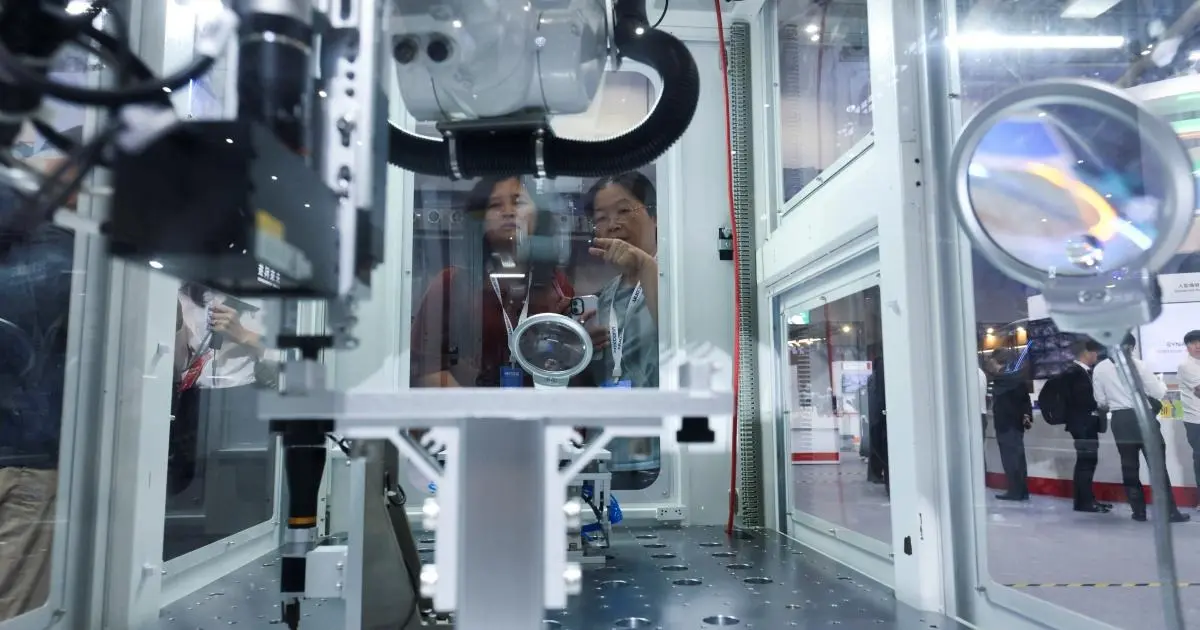
In the practical application of artificial intelligence technology, Taiwan’s industrial strengths again serve to perfectly complement those of the United States. The island’s world-class semiconductor ecosystem, advanced communications equipment sector, and precision machinery industries are precisely the capabilities required to build the physical systems capable of utilizing sophisticated American AI models. Taiwanese enterprises such as Thunder Tiger are already actively developing AI-driven defense drones, demonstrating the rapidly growing commercial and strategic potential for integrating artificial intelligence, precision engineering, and advanced electronics into both civilian and military applications. As artificial intelligence continues its evolution from a purely digital software technology into an essential physical component of modern factories, autonomous robots, and commercial vehicles, Taiwan’s advanced hardware production base will become even more valuable to the United States.
ON THE SAME TEAM
As the international race for artificial intelligence supremacy intensifies, it is rapidly transforming into a broader contest over core values, data governance, and international trust. If the United States and its democratic allies and partners intend to stay ahead in the technological realm, they must work closely together to create secure, resilient, and trustworthy artificial intelligence ecosystems that faithfully reflect their shared democratic principles.
Supply chain collaboration will remain absolutely crucial because no single geographic region can possibly dominate every single complex layer of the modern AI ecosystem. The United States excels in software innovation and hosts the world’s major digital platforms; Japan maintains a global leadership position in specialized material refining, recycling, deep-sea resource research, and precision semiconductor manufacturing equipment; the Netherlands supplies the ultra-advanced lithography machines necessary to produce the world’s most sophisticated microchips; and Taiwan specializes in precision wafer fabrication and advanced packaging. Only through active international coordination and burden-sharing can these democratic nations successfully build efficient and secure AI supply chains while substantially reducing their strategic reliance on China for essential technological components.
Recent international disruptions have forcefully reinforced the absolute necessity of robust supply chain cooperation among democratic nations. The COVID-19 pandemic, for instance, starkly exposed the structural vulnerabilities of global supply chain networks, a harsh lesson that was further reinforced by widespread disruptions to international trade flows following Russia’s invasion of Ukraine and rising global energy prices amid chronic instability in the Middle East. Seeking to address these vulnerabilities proactively, Taiwan proposed a global semiconductor democratic supply chain partnership initiative aimed at jointly constructing reliable industrial systems capable of withstanding future international shocks. Through this ongoing initiative, Taiwan actively seeks to harness cooperation among democratic countries to usher in a new era of secure economic growth in industries connected to high-end microchips.
Taiwan and the United States have already made significant, tangible strides in bilateral technology cooperation. The U.S.-Taiwan Economic Prosperity Partnership Dialogue, a high-level bilateral platform inaugurated in November 2020, has hosted frequent strategic discussions focused on AI supply chain security, resilient digital infrastructure, critical minerals management, secure drone supply chains, and high-tech talent development. These ongoing diplomatic and economic exchanges have successfully helped U.S.-Taiwanese cooperation evolve far beyond traditional trade relations, paving the vital groundwork for establishing a comprehensive technological ecosystem capable of bringing together democratic partners and allies from around the globe.
Furthermore, Taiwan stands fully prepared to help ensure the safe, secure, and ethical usage of artificial intelligence systems worldwide. True technological safety depends not only on the architectural makeup of the software AI model itself, but equally upon the security, integrity, and reliability of the physical hardware upon which it operates—an area where Taiwan can bring its peerless technical expertise directly to bear. Taiwan and the United States can work collaboratively to heighten cybersecurity defenses, establish rigorous testing standards, and build highly reliable manufacturing systems to ensure that artificial intelligence develops safely and remains fully trusted by the United States and its global allies.
When it comes to the foundational technology underpinning the artificial intelligence revolution, Taiwan is not a strategic adversary of the United States, but rather its most reliable and capable partner. Across every single layer of the metaphorical AI cake, Taiwan and the United States have successfully developed—and retain the capacity to further expand—a deeply productive and mutually beneficial partnership. Taiwan functions as an essential force multiplier for the United States in the artificial intelligence arena, possessing the operational capability, institutional reliability, and shared democratic values necessary to support America’s highest technological ambitions. If Washington intends to compete and win effectively in the global AI era, Taiwan remains entirely indispensable.