Public procurement represents one of the largest and most influential markets in any nation, serving as a critical financial lever through which governments can actively stimulate local economies, foster job creation, and improve livelihoods. Yet, for countless capable enterprises—particularly those led by women, young people, individuals with disabilities, and elders—the public contracting market frequently remains an intimidating and out-of-reach landscape. Even when business opportunities exist and regulatory rules are publicly accessible, they are rarely presented in plain, easily digestible language. Often published too late for effective action, these tenders are typically hosted on digital systems that require advanced technical literacy or high-end desktop hardware, putting them completely beyond the reach of entrepreneurs who rely on basic mobile devices in rural districts.
This persistent divide between what public procurement is theoretically designed to achieve and how it is actually experienced by everyday suppliers forms the central challenge addressed by modern open contracting initiatives. As highlighted in global studies such as the Open Contracting Partnership’s (OCP) Opening Doors and Opening Markets report, true open procurement extends far beyond the routine publication of raw data. It requires a fundamental, proactive commitment to making public markets genuinely transparent, user-friendly, and commercially viable for all segments of the business community.
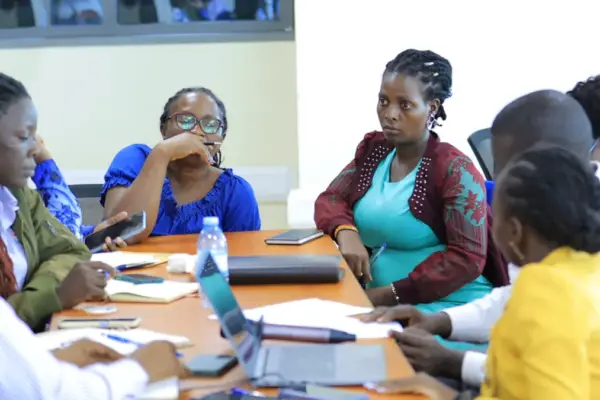
When the Ufahamu Women Group first began entering the competitive arena of public contracting within Tanzania’s construction industry, the systemic odds were heavily stacked against them. Women-led enterprises within the sector continue to face entrenched biases that treat them as statistical anomalies, while complex procurement bureaucratic procedures often feel tailor-made for entrenched insiders who already understand the unwritten rules. Despite these formidable barriers, the group persisted. Over time, they successfully secured 12 public tenders, met their financial obligations by repaying loans, and steadily reinvested in their internal operational growth.
Reflecting on these hard-won milestones, Kusunkwa Hussein, an engineer with the Ufahamu Women Group, offers pragmatic advice forged through direct experience. "We should never give up just because we failed once," Hussein notes, emphasizing the importance of resilience. "Keep applying and make sure your documents are always ready. The more we participate, the more we learn."
While such tenacity is commendable, civil society advocates and policy experts argue that individual perseverance should never be the primary prerequisite for a qualified business to win a public contract. The reality, however, is that navigating public markets often feels like traversing an obstacle course where a single misstep causes an opportunity to vanish entirely.

Public Does Not Always Mean Accessible
There exists a passive form of procurement transparency that technically satisfies legal definitions of openness without offering any practical benefit to the average independent supplier. Vital information is frequently published with inadequate lead time, forcing potential bidders into frantic scrambles. Tenders are routinely uploaded to web portals optimized for high-speed desktop environments while failing to function properly on shared mobile phones utilized by entrepreneurs operating outside major metropolitan hubs. Furthermore, bid documents are frequently written in dense, specialized procurement jargon that demands years of specialized experience to interpret accurately. By the time a small business enterprise manages to decode the specific requirements, submission deadlines have often expired, or prohibitive bid bond requirements have already disqualified them from consideration.
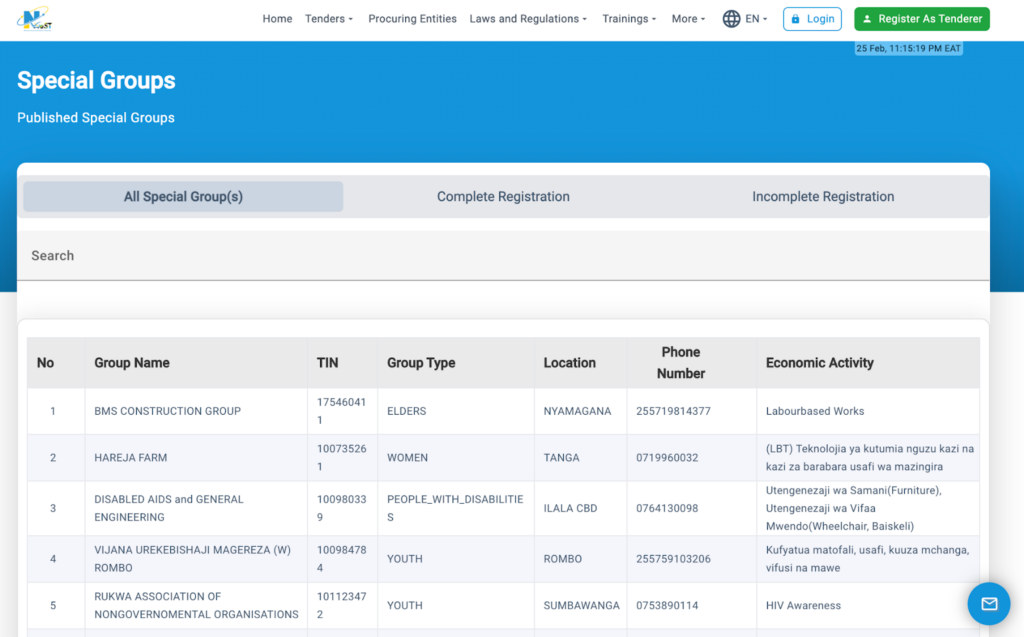
Recent structural reforms implemented in Tanzania represent a concerted, practical effort to dismantle these longstanding systemic barriers. Prior to the formal introduction of the National e-Procurement System of Tanzania, widely known as NeST, the nation’s previous digital procurement platform suffered from severe limitations. It only integrated fragmented portions of the overarching contracting lifecycle and remained fundamentally incompatible with wider public financial management infrastructure. The modernization championed through NeST aims to centralize and streamline these processes, offering a clearer dashboard for suppliers attempting to track and bid on government projects.
A Regional Challenge Across East Africa
Tanzania’s ongoing reform journey resonates strongly because an identical pattern of exclusion characterizes public contracting across the wider East African region. In Uganda, for example, women-owned and women-led enterprises account for nearly 40 percent of all registered businesses nationwide, yet they historically capture a meager one percent of total government procurement contracts. In response to this stark disparity, the Open Contracting Partnership has collaborated closely with national government agencies and local civil society organizations to address structural gaps, focusing specifically on strengthening legal frameworks, improving data quality, and enhancing the practical competitive capacity of women entrepreneurs. This stark mismatch between the demographic makeup of the business community and the actual distribution of public contracts is not a random coincidence; rather, it is the direct outcome of commercial systems that were historically designed without these enterprises in mind.
Neighboring Kenya has similarly attempted to tackle this structural exclusion through targeted policy mechanisms. The Kenyan government’s Access to Government Procurement Opportunities program formally reserves 30 percent of all public procurement contracts for businesses owned and operated by marginalized groups. Concurrently, national open contracting reforms have concentrated on rendering procurement data significantly more accessible and interoperable across government databases. Kenya’s open government action plans have sought to build upon these foundations by actively raising public awareness regarding the reservation scheme and simplifying administrative compliance for the exact demographic groups the policy was established to protect. Nonetheless, the persistent challenge remains: while the formal reservation policy exists on paper, ensuring that the intended beneficiaries can realistically reach and secure those opportunities requires continuous institutional effort.

Evidence gathered across Uganda, Kenya, and Tanzania demonstrates conclusively that inclusive procurement policies cannot deliver equitable outcomes in isolation. Real inclusion must be intentionally engineered into the daily machinery of public procurement, woven directly into the rules, digital systems, feedback loops, and support mechanisms that determine who gets to participate in the economy.
The Distance Between Policy and Opportunity
Tanzania’s national reservation scheme—which sets aside 30 percent of public procurement opportunities for designated special groups encompassing women, youth, persons with disabilities, and elders—represents a serious policy commitment by the state. However, a recent comprehensive study supported by GIZ reveals a significant gap between legislative ambition and practical execution. During the evaluated period, special groups successfully secured 1,468 contracts valued at approximately 39 billion Tanzanian shillings, equivalent to roughly 15 million US dollars. While this figure demonstrates tangible progress, it accounts for only 7.6 percent of the total public contract value, falling well short of the stated 30 percent target.
The underlying reasons for this shortfall provide crucial insights for reform. Nearly half of the special group members surveyed—precisely 47 percent—reported a complete lack of awareness regarding the existence of the reservation scheme itself. Among those who were aware of the policy, more than half identified procedural hurdles severe enough to discourage them from applying. These barriers included tender documents laden with criteria designed for legacy contractors, qualification thresholds that automatically excluded newer or smaller businesses, and fragmented registration systems lacking any functional integration.
These issues are far from niche administrative complaints. They paint a vivid picture of a procurement architecture constructed for established, highly capitalized suppliers, which has yet to be fully adapted for the diverse populations that government policies intend to empower. For an independent small-scale supplier, market access operates as a fragile chain: discovering the tender notice, understanding the precise compliance requirements, completing registration without drowning in bureaucratic paperwork, preparing a competitive bid, securing financing to deliver the goods or services, and ultimately receiving payment on time. If any single link in this chain breaks, the business opportunity evaporates, regardless of how progressive the policy reads at the top.
What Turns Openness into an Opportunity
While open contracting initiatives can make the public marketplace significantly more visible, raw visibility alone cannot purchase raw materials, draft professional bids, or assist a first-time supplier in determining whether a specific tender is commercially realistic. The Tanzania study underscores the vital necessity of targeted, hands-on support networks that actively meet entrepreneurs where they are. Effective interventions identified by researchers include mobile outreach clinics deployed directly to regional districts, dedicated customer service desks, train-the-trainer programs, interactive WhatsApp learning communities, tailored online educational modules, and targeted reductions in bureaucratic registration burdens.
In Tanzania, the Open Contracting Partnership has supported collaborative efforts hosted by the Public Procurement Regulatory Authority and the civil society organization WAJIBU Institute of Public Accountability. These initiatives are designed to encourage local government authorities to engage directly with local business owners, explain complex procurement procedures in straightforward language, and systematically remove the friction that frequently causes aspiring suppliers to abandon their bids prematurely.
Access to working capital represents another critical missing link in the ecosystem. Securing a winning bid is only half the battle; without upfront financing to cover material costs and labor expenses before the first government disbursement arrives, many small suppliers find themselves entirely unable to fulfill their contractual obligations. The study revealed that 69 percent of surveyed respondents had failed to access local council loans specifically created to provide working capital, while 13 percent had never even heard of the financing facility. A financial support mechanism unknown to the vast majority of its intended beneficiaries functions less as an economic safety net and more as a missed opportunity to ensure reservation policies succeed in practice.
The Bid for Success initiative, developed in cooperation with Tanzania’s Public Procurement Regulatory Authority to assist women in penetrating public markets, provides a compelling illustration of the transformations possible when technical support is direct and practical. The program successfully trained 200 participants, enabling them to secure 29 million Tanzanian shillings, or roughly 11,000 US dollars, in public tenders. While these monetary figures may appear modest in the grand scale of national budgets, the underlying principle is profound: when targeted, practical capacity-building meets a genuine opening in the commercial market, local businesses step forward and deliver.
From Open Data to Open Markets
The collective experience across Tanzania and the wider region demonstrates unequivocally that opening public procurement is not achieved by flipping a single administrative switch, but rather by reforming an entire chain of interdependent processes. Government data must be published openly, digital systems must remain functional for non-specialist users, suppliers must receive practical capacity-building support, and public authorities must maintain responsive feedback loops capable of evaluating whether market competition is genuinely broadening or if certain groups are still being left behind. Each of these components is entirely achievable, yet none of them occurs organically without deliberate institutional commitment.

The ongoing collaborative work between the Open Contracting Partnership and UN Women focused on empowering women through public procurement reinforces a broader economic truth: transparent, accountable, and data-driven procurement systems can only fulfill their societal promise if they are intentionally engineered to embrace the commercial entities historically excluded from participation. The operational mechanics matter immensely, but mastering them is ultimately about a much larger principle—determining who is empowered to participate in and benefit from national economic life.
Kusunkwa Hussein’s practical guidance to keep applying, maintain readiness, and treat every setback as an educational opportunity embodies the hard-earned wisdom of frontline entrepreneurial experience. Yet, such extraordinary resilience should never remain the primary qualification required to secure a public contract. The ultimate objective of open procurement reform is to reach a future where persistence serves as a competitive advantage rather than an absolute prerequisite—where administrative processes are sufficiently clear, institutional support is genuinely robust, and public markets are open enough to give every capable business a fair chance to succeed. For women, young people, persons with disabilities, elders, and small enterprises across Tanzania and beyond, that remains the defining purpose of the work ahead.