By most accounts, U.S. World Cup host cities and transportation agencies successfully navigated unprecedented travel volumes this summer, managing historic crowds with careful planning, interagency cooperation, and targeted infrastructure investments.
More than 26 public transit agencies across 11 host cities coordinated closely with municipal, state, and federal officials to prepare for and manage the massive influx of soccer fans. The Federal Transit Administration played a crucial role by making over $100 million available to U.S. host cities specifically to expand transit options around the stadiums where matches took place.
"I was very proud of how we saw our transit systems operate across the country in response to the historic level crowds," Henrika Buchanan, transit and rail market sector leader for infrastructure design firm HNTB, told Smart Cities Dive.
The successful execution seen this summer was years in the making. Planning began long before the first whistle blew.
"Three years ago, we were already coordinating internally around how we help our clients in different cities who were tasked with being prepared for the World Cup," Buchanan said.
Serving Visitors and Local Residents
The logistical challenge required far more than simply adding extra buses and trains to existing schedules. The operation demanded a comprehensive approach to getting international visitors and out-of-town fans seamlessly to and from airports, hotels, fan engagement events, and high-capacity stadiums.
"These were really regional connectivity events," Buchanan explained. To bridge the gap for travelers unfamiliar with local layouts, transit agencies in major hubs like Atlanta, Los Angeles, and other host cities deployed dedicated transit ambassadors to help international and out-of-town visitors navigate local transportation options.
Among the various municipal strategies implemented, Buchanan singled out Kansas City, Missouri, for establishing a common control center. This centralized hub brought decision-makers from multiple agencies and organizations together under one roof, allowing them to communicate in real-time and rapidly respond to unexpected challenges on the ground.
At the same time, transit planners had to balance the needs of tourists with the daily routines of local residents. Amid the frenzy and excitement of the matches, everyday citizens still needed reliable transportation to get to their jobs, access health care facilities, and buy groceries.
"You don’t want the event to be so disruptive that those people don’t have the mobility that they need," Buchanan noted.
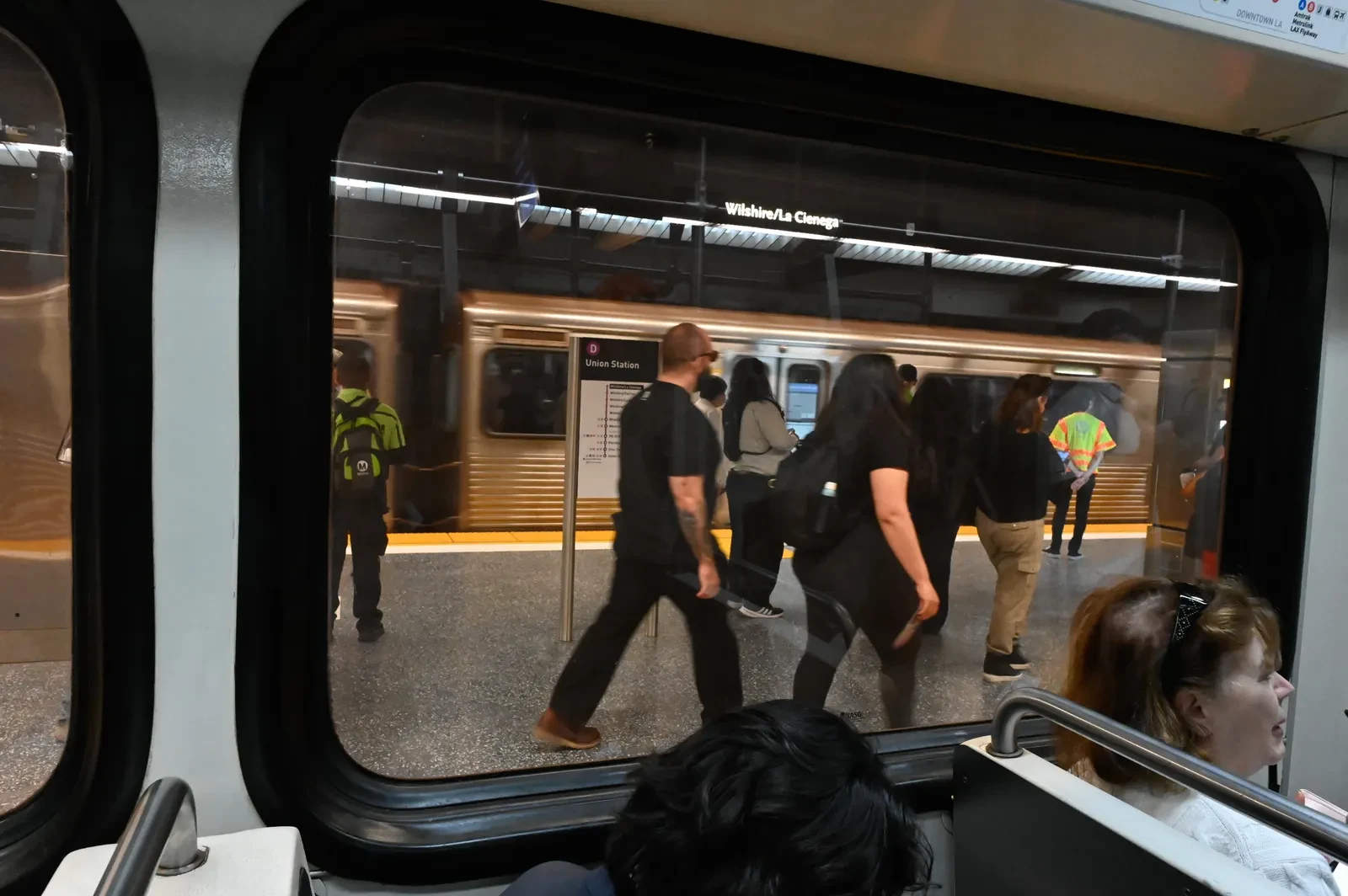
To maintain baseline mobility while absorbing tourist surges, transit networks across the nation leveraged newly completed infrastructure projects. In Seattle, Sound Transit opened the final 7-mile segment of its light rail line across Lake Washington on March 28. In Southern California, LA Metro opened a major extension of its D Line subway on May 8. On the East Coast, the Southeastern Pennsylvania Transportation Authority added critical capacity on its Broad Street Line, while the Metropolitan Atlanta Rapid Transit Authority staged approximately 30 standby buses to respond swiftly to any potential rail service disruptions on match days.
LA Plans for "No-Car" Olympic Games
With the World Cup concluded, the focus of the nation’s transit and infrastructure planners is already shifting toward the next major global spectacle: the 2028 Olympic Games in Los Angeles.
The LA28 organizing committee currently projects total attendance to range from 10 million to 15 million spectators. Furthermore, Los Angeles expects to welcome about 5 million visitors specifically for the Games, according to estimates cited by MSN.
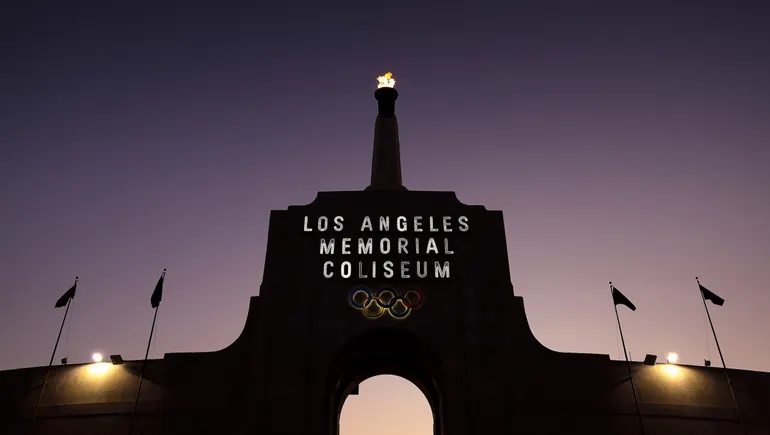
To prepare for this monumental influx, LA Metro began laying the groundwork far in advance, launching the Twenty-Eight by ’28 Initiative in 2017. This ambitious blueprint outlines a comprehensive series of bus, rail, station, roadway, bike, and pedestrian infrastructure projects designed to transform regional mobility. According to the transit agency, roughly 40% of these projects have been completed, while the remainder remain actively in progress. Crucially, LA Metro has emphasized that these transportation enhancements are not temporary one-offs constructed solely for the Olympics; rather, they represent long-term, permanent investments aimed at fundamentally improving daily mobility throughout the entire Los Angeles region.
Global engineering consulting firm Arup has also come on board to assist LA organizers, bringing valuable expertise from previous mega-events. Kaitlin Coari, a senior consultant at Arup who previously worked with the New York New Jersey Host Committee for the World Cup, shared her perspective with Smart Cities Dive.
"We saw a lot of success around that… which will be something we definitely take forward in LA as well," Coari said.
She emphasized that major international gatherings serve as powerful catalysts for lasting urban transformation.
"Major events are a catalyst of creating long-term, sustainable change in cities," Coari said. Arup is currently collaborating directly with LA Metro and the LA28 Host Committee on critical areas such as venue access planning, advanced crowd modeling, and comprehensive traffic management services.
Because Olympic events will be geographically scattered across multiple cities and diverse areas throughout Southern California, coordination must be systemic and far-reaching.
"You have to have a high level of awareness of the totality" to ensure that an localized issue in one part of the sprawling city or county does not create cascading transportation failures elsewhere, Coari explained.
Additional operational complexities include rigorous security, health, and public safety concerns. During the summer months, temperatures across the broader LA region have regularly run about 5 to 10 degrees above historical averages, according to local news station KTLA5. Coari noted that extreme heat conditions could require proactive shade management and hydration strategies to protect spectators and workers alike.
Furthermore, the Paralympic Games, scheduled to be held in August immediately following the conclusion of the Olympic Games, will present an entirely distinct set of logistical hurdles.
The Paralympics "will require a different operational plan, different staffing," Coari said. Seamlessly accessible transportation—spanning everything from airport transfers and fleet buses to on-site venue navigation—will be absolutely essential to properly accommodate the participating Paralympic athletes and spectators with disabilities.
Adding to the ambition of the regional strategy, Los Angeles Mayor Karen Bass, who is up for re-election, declared in 2024 that she intends to pioneer a "no-car Games" when the city officially hosts the 2028 Olympics.
"It’s a real opportunity to use momentum over these next two years to change that [car-centric] behavior," Coari said, reflecting on the potential cultural shift toward public transit, active transportation, and shared mobility.
The opening ceremonies for the 2028 Summer Games are scheduled to take place on July 14, 2028, in Los Angeles. While Southern California will serve as the primary epicenter for the global event, several specialized sporting events will also be hosted in partner cities across the United States, including Columbus, Ohio; Oklahoma City, Oklahoma; New York City; St. Louis; Nashville, Tennessee; and the California cities of San Diego and San José.