The escalating cost of global fossil fuels has triggered a massive divergence in travel expenses across the United Kingdom, leaving drivers of traditional combustion-engine vehicles facing unprecedented financial pressure while electric vehicle (EV) owners enjoy dramatically lower running costs.
According to comprehensive new analysis released by Carbon Brief, it is now up to nine times cheaper to drive an electric vehicle in the UK than a comparable petrol or diesel car. The stark economic divide has been forged by a relentless surge in road fuel prices, which have climbed aggressively following a succession of geopolitical flashpoints and conflicts across key energy-producing regions.
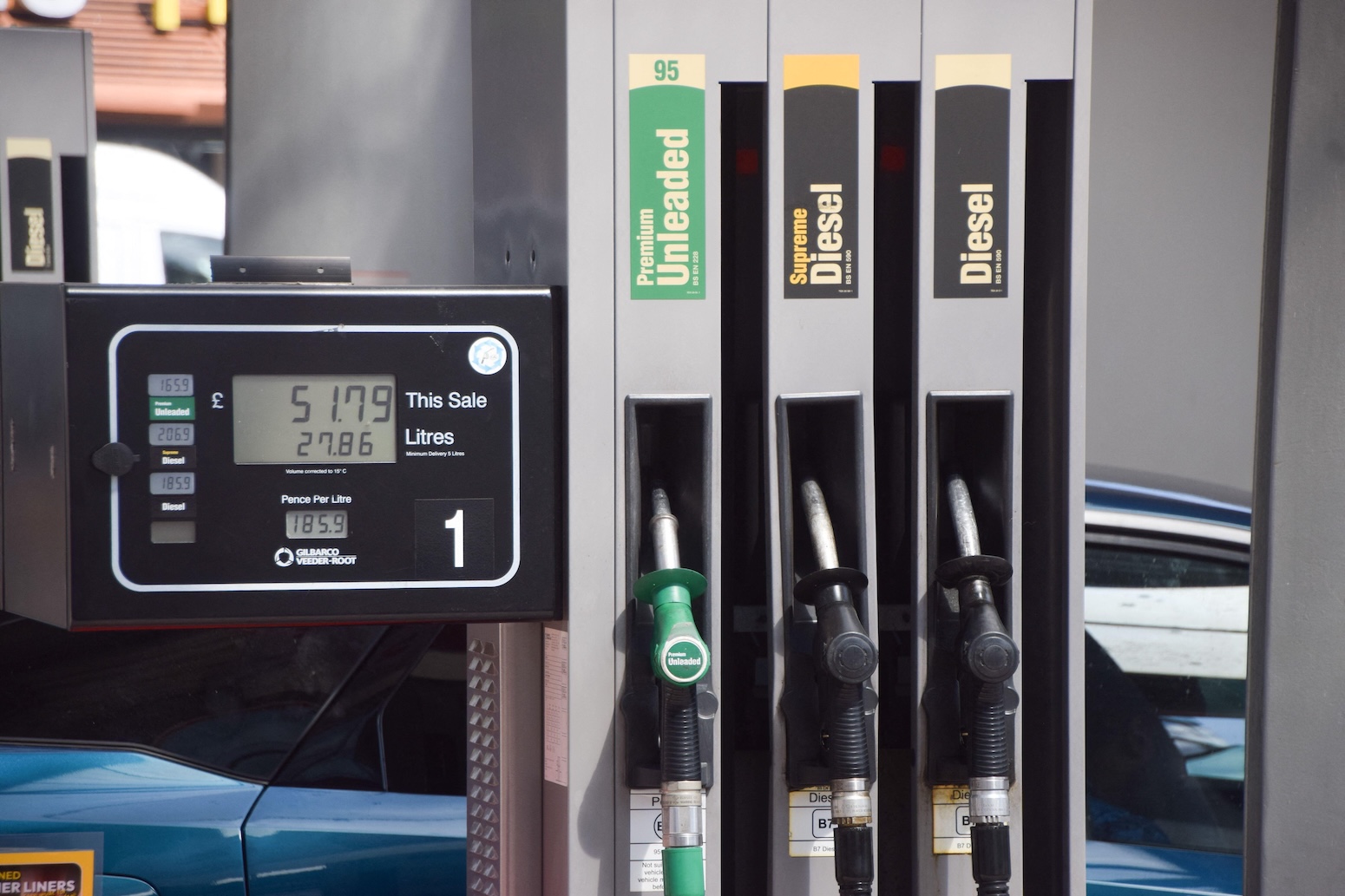
Government figures analyzed by Carbon Brief reveal that the average price of diesel has jumped by 38% since February—when the United States first launched military strikes against Iran—pushing costs up to £1.96 per litre. The upward trajectory shows no signs of slowing. Following a targeted attack on the Kapotnya oil refinery in Russia on September 20, combined with rapidly escalating tensions across the Middle East, fuel industry analysts fully expect diesel prices to breach the historic threshold of £2 a litre.
Russia historically stood as the second-largest exporter of diesel in the world. However, its refining infrastructure has faced mounting devastation, with Russian refineries targeted by drone strikes on average every three days during the first six months of 2026. This sustained disruption to global supply chains has reverberated through international markets.
Petrol prices have followed a similarly punishing path, surging by 31% since February to reach an average of £1.72 per litre based on official government statistics. In several regions across the country, pump prices have already crept close to the £2 per litre mark, according to reports from BBC News.
These acute inflationary pressures are fundamentally rooted in soaring global crude oil prices, which have broken past the $100 per barrel ceiling. The price spike coincides directly with an intensifying conflict between Yemen’s Houthis and Saudi Arabia, representing a dramatic roughly 50% increase in crude values since June.
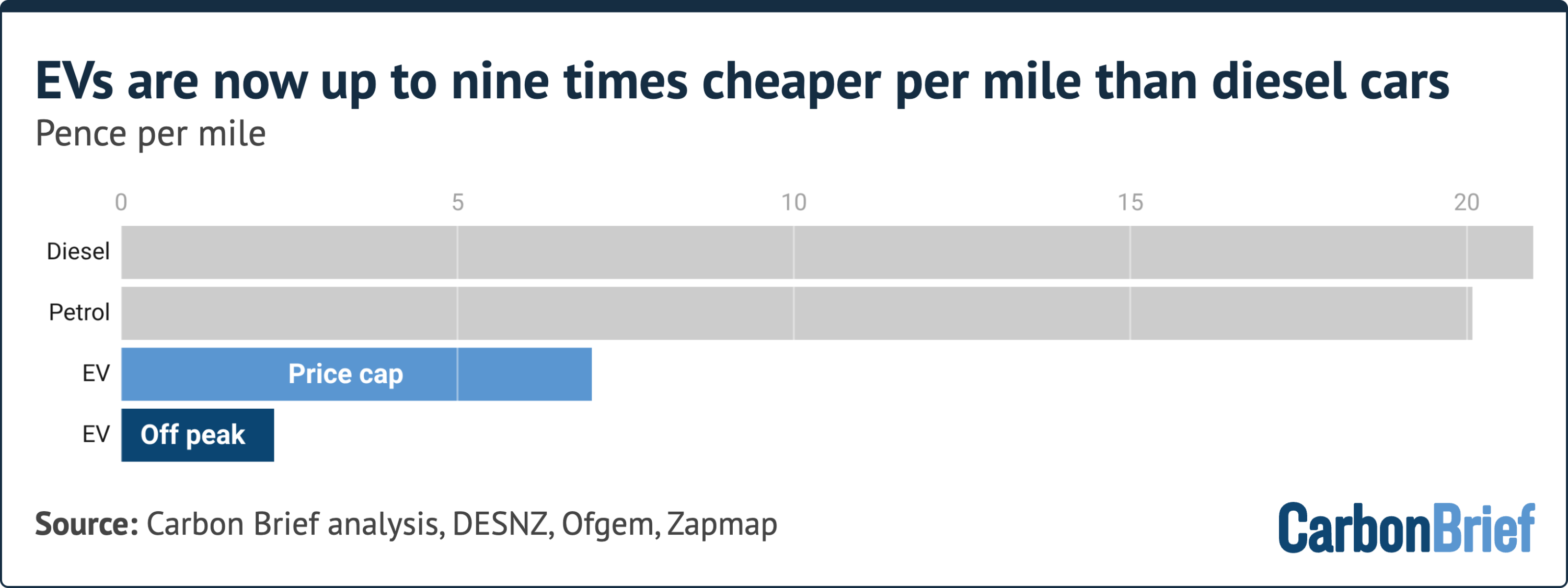
Consequently, everyday motorists are experiencing a severe financial squeeze at the pumps. Carbon Brief’s analysis of the latest weekly road fuel price figures from the Department of Energy Security and Net Zero (DESNZ) indicates that it now costs an estimated 21p per mile to drive a diesel car. Petrol car owners are in a similarly difficult position, paying roughly 20.1p per mile.
By stark contrast, motorists who have transitioned to electric vehicles are insulated from the worst of the international energy crisis—provided they utilize smart home-charging habits. Driving an EV charged via an off-peak domestic electricity tariff currently costs a remarkably low 2.3p per mile.
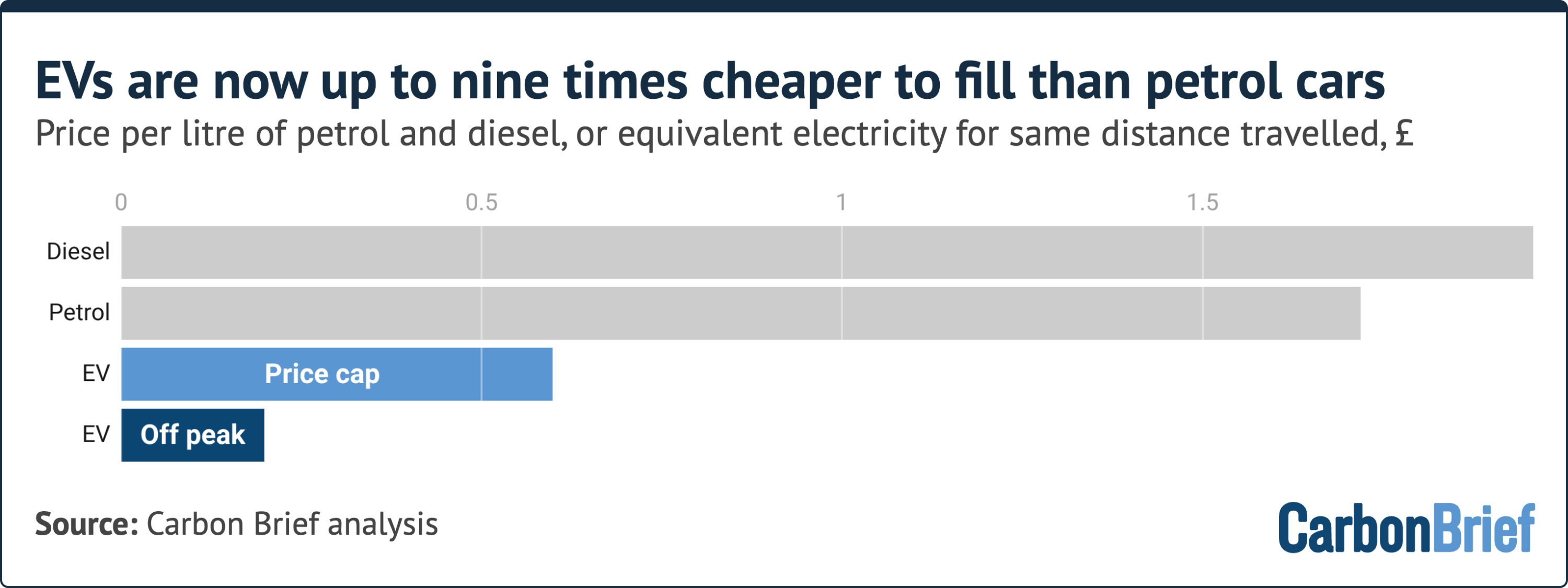
Even for consumers who must rely on electricity purchased at the standard domestic price cap—the maximum limit that energy suppliers can charge per unit of energy and standing charge, regulated by Ofgem every three months—an electric vehicle costs only around 7p per mile to operate. This means charging at the standard price cap remains roughly three times cheaper than running a petrol or diesel vehicle.
Although the domestic energy price cap is scheduled to experience an upward adjustment in October, regulatory data indicates that nearly the entirety of that specific increase is driven by rising gas costs. The unit rate for electricity is anticipated to rise by less than 1%, moving modestly from 26.1p per unit to 26.3p.
A more substantial increase in electricity unit rates under the price cap—projected at around 20%—is anticipated to arrive in January 2027. This later adjustment is expected as higher wholesale gas costs progressively filter through to wholesale electricity markets. Nevertheless, even with these anticipated shifts, independent data models demonstrate that EVs will retain a massive cost-per-mile advantage over their fossil-fuel counterparts.
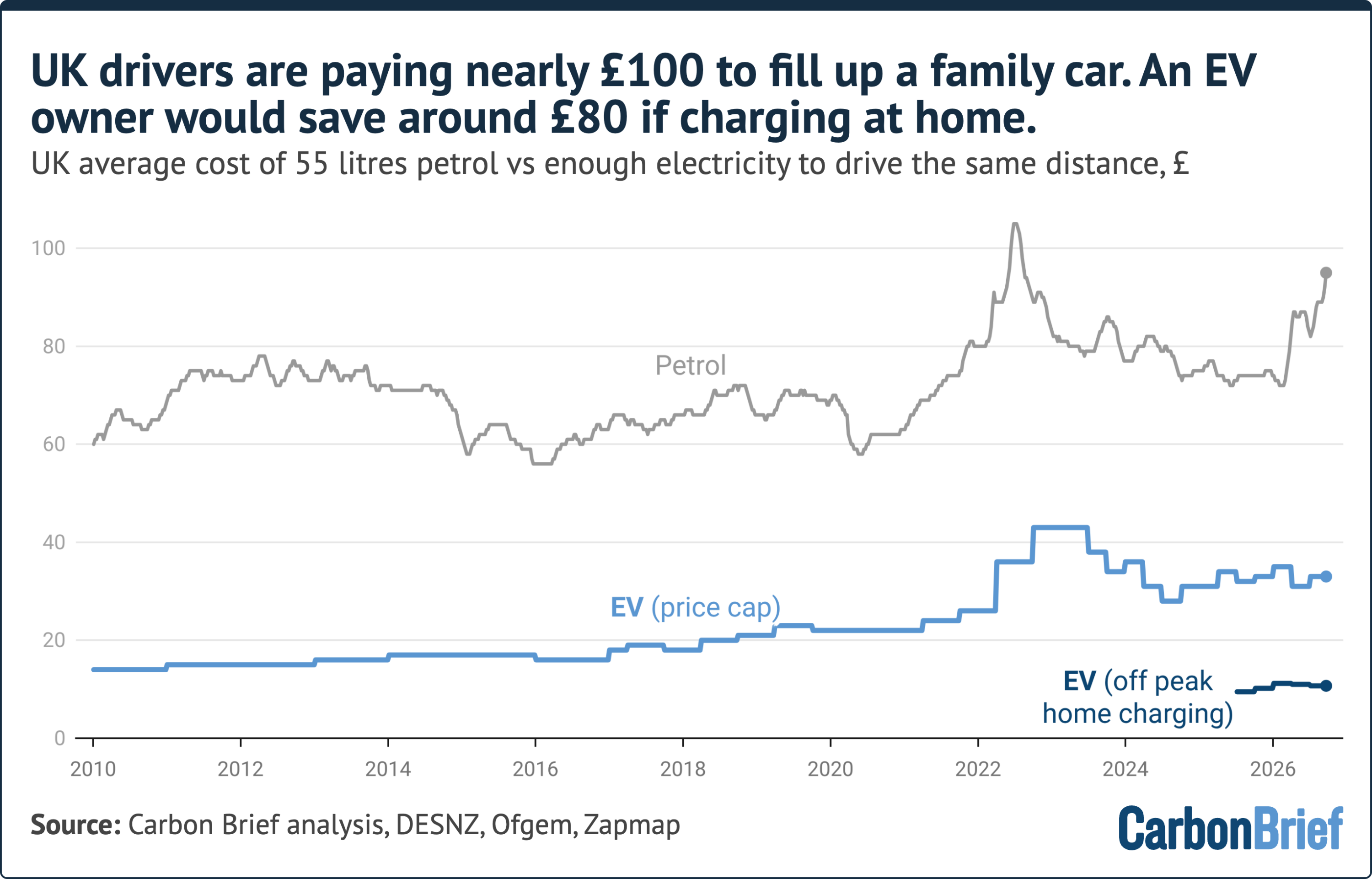
The everyday savings translate into substantial household figures. UK drivers stand to save approximately £80 simply by charging an electric vehicle at home rather than filling up a conventional family petrol car at the local forecourt. This direct cost comparison evaluates the price of an average 55-litre full tank of petrol against the exact quantity of electrical energy required to drive the identical distance.
Despite the profound financial advantages of electric motoring, fossil-fuel vehicles continue to maintain a dominant presence on UK thoroughfares. Petrol-powered automobiles currently account for roughly 55% of all cars on the road. Fully electric battery EVs represent only 6% of the nation’s estimated 35 million registered cars, while plug-in hybrids—which possess the capability to run on either liquid fuel or battery power—comprise an additional 3%.
Even so, consumer adoption patterns indicate a steady structural shift toward electrification. Recent vehicle registration data published by the Society of Motor Manufacturers and Traders (SMMT) reveals that battery electric vehicles accounted for approximately 30% of all new car sales in August, marking a clear rise from the 26.5% market share recorded in August 2025.
Earlier research published by Carbon Brief in June estimated that the UK’s existing EV drivers were already pocketing annual savings of around £1,100 in fuel costs compared to drivers sticking with petrol vehicles. Following the subsequent waves of crude oil price spikes and domestic fuel inflation, those annual savings have widened further to approximately £1,200 per driver.

When evaluated against average pump prices of £1.72 per litre for petrol or £1.96 per litre for diesel, an equivalent amount of electrical energy obtained via off-peak domestic charging costs as little as 20p—making the electric alternative roughly nine times cheaper than petrol. Even for households unable to access specialized overnight tariffs, charging at the standard household price cap equates to spending the equivalent of just 60p per litre, preserving a profound economic incentive for electric motoring.
Public charging infrastructure remains notably more expensive than domestic electricity rates, presenting a distinct financial hurdle for drivers who lack off-street parking. However, official government estimates indicate that approximately 76% of all EV charging events occur at home, supported by the reality that roughly 90% of electric car owners maintain access to private domestic charging facilities.
Looking toward the longer term, the UK government has outlined plans to implement a pay-per-mile road tax specifically targeting electric vehicles beginning in April 2028. This upcoming policy framework is projected to add roughly 3p per mile to the operational cost of driving an EV. However, due to the fundamentally wide margin in underlying energy expenses, electric vehicles are projected to remain significantly cheaper to operate than petrol or diesel vehicles for the foreseeable future.