A temporary breach of the critical 1.5C global warming threshold has become entirely inevitable following decades of insufficient international climate action, according to a sobering new assessment released by the UN Environment Programme (UNEP).
In its annual flagship report on the global emissions gap, titled "The point of return," UNEP warns that exceeding the Paris Agreement’s aspirational 1.5C limit is now imminent and unavoidable. The primary challenge facing the international community is no longer preventing a breach altogether, but rather minimizing the magnitude and duration of a temporary temperature overshoot and establishing a credible, science-based return path to 1.5C by the end of the century.
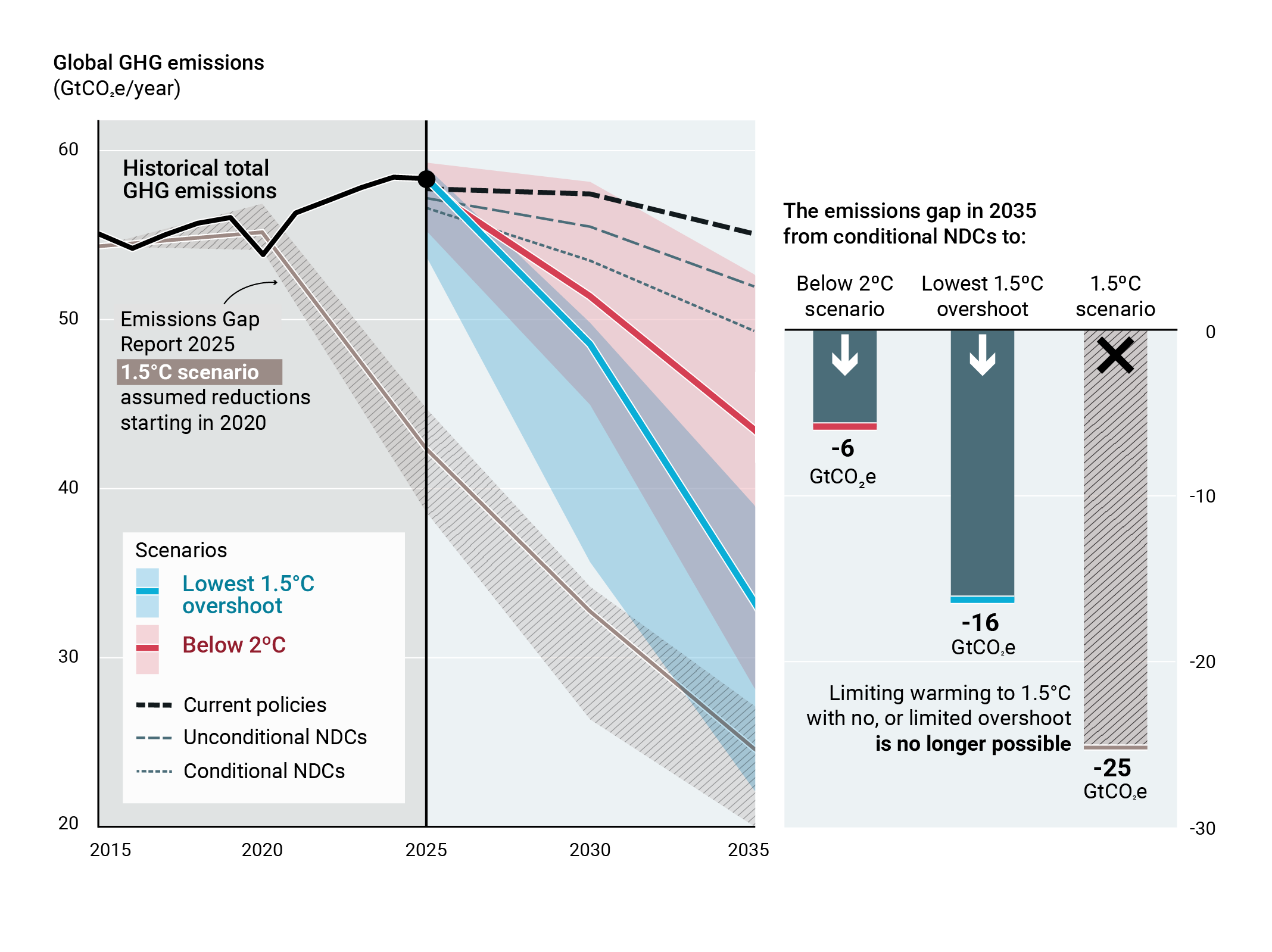
Even under the most optimistic and lowest possible overshoot scenarios evaluated by the report, global warming would first peak at approximately 1.7C to 1.8C around the middle of the century before beginning a gradual decline. Achieving this trajectory, which remains technically aligned with the long-term temperature goals of the Paris Agreement, demands steep global emissions reductions of 18% by 2030 and 45% by 2035, alongside a massive, sustainable expansion of carbon dioxide removal technologies.
By contrast, the current climate pledges submitted by countries worldwide—even if implemented fully and on schedule—would achieve a reduction of only 5% to 8% by 2030 and 11% to 15% by 2035, relative to 2025 levels. Despite this stark shortfall, the UNEP assessment emphasizes that ample opportunities remain for governments to accelerate decisive action, curb peak warming, shorten the period of overshoot, and keep the foundational goals of the Paris Agreement within reach.
Global Emissions Remain Flat Between 2024 and 2025
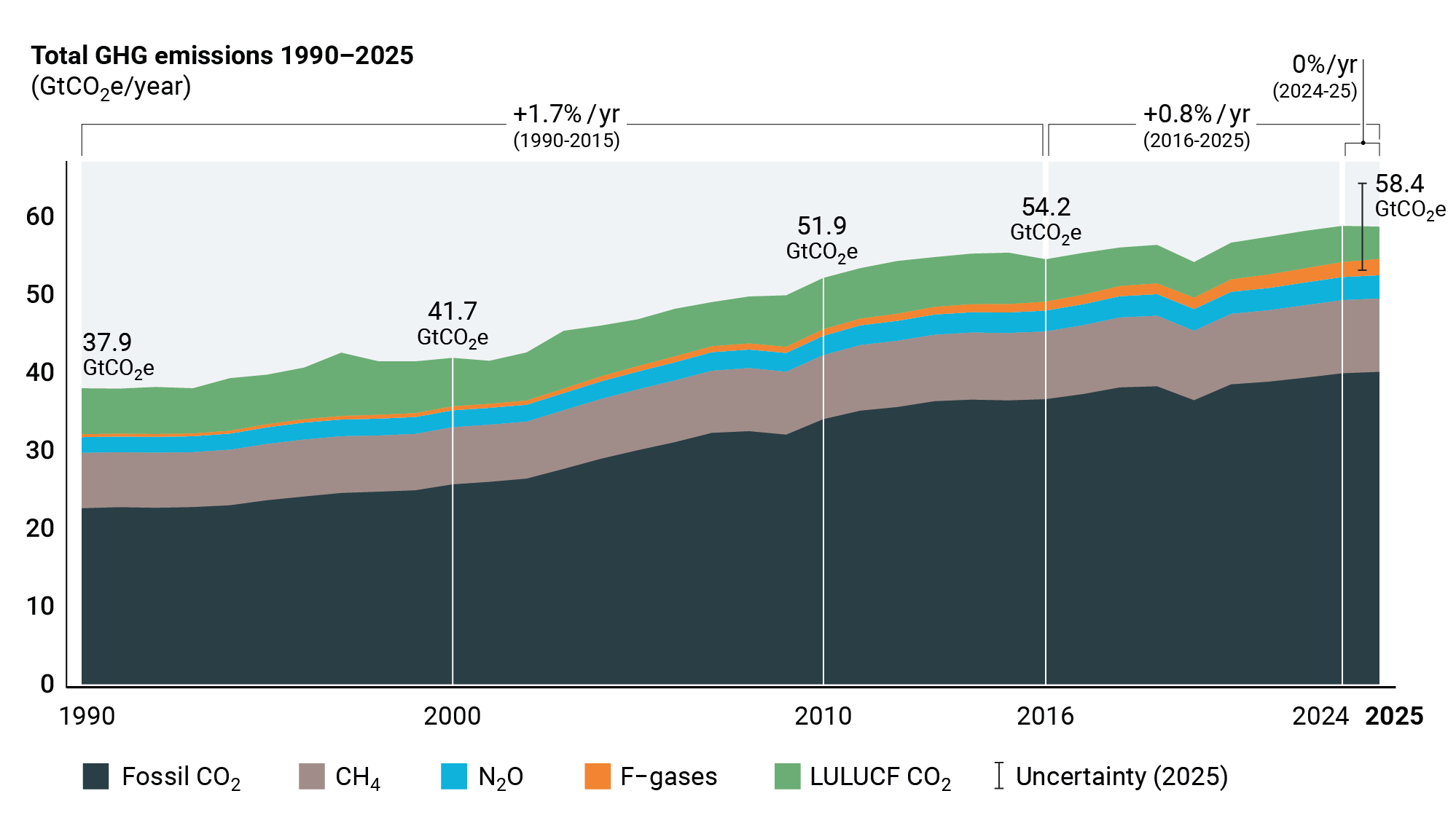
Evaluating short-term trends, the report finds that global greenhouse gas emissions in 2025 were broadly comparable to those recorded in 2024. Total human-driven emissions reached an estimated 58.4 billion tonnes of CO2 equivalent (GtCO2e) in 2025, marking a marginal decrease of roughly 0.16 GtCO2e compared to the previous year, though officials noted significant uncertainties surround the provisional figures. Because the data remains preliminary, analysts cautioned that it is not yet possible to definitively establish the overall trajectory of emissions for 2025.
Longer-term trends indicate that the rate of emissions growth has slowed considerably over recent decades. Between 1990 and 2015, global emissions grew at an average rate of 1.7% per year, whereas growth has slowed to an average of 0.8% per year since 2016.
A closer examination by gas shows that fossil-fuel CO2 emissions increased slightly in 2025 by between 0.4% and 1.1%. Emissions of nitrous oxide and fluorinated gases also grew at higher rates, though their smaller overall share of the greenhouse gas total limits their immediate macroscopic impact, while methane emissions remained relatively steady.
These modest increases were slightly counterbalanced by a reduction in CO2 emissions stemming from land use, land-use change, and forestry (LULUCF). This decline in land-use emissions was partially driven by a drop in global wildfire activity, particularly across regions in Africa, South America, and parts of southeast Asia. Analysts attribute this decrease to the fading influence of El Niño conditions, warning that subsequent weather patterns could reverse these temporary gains.
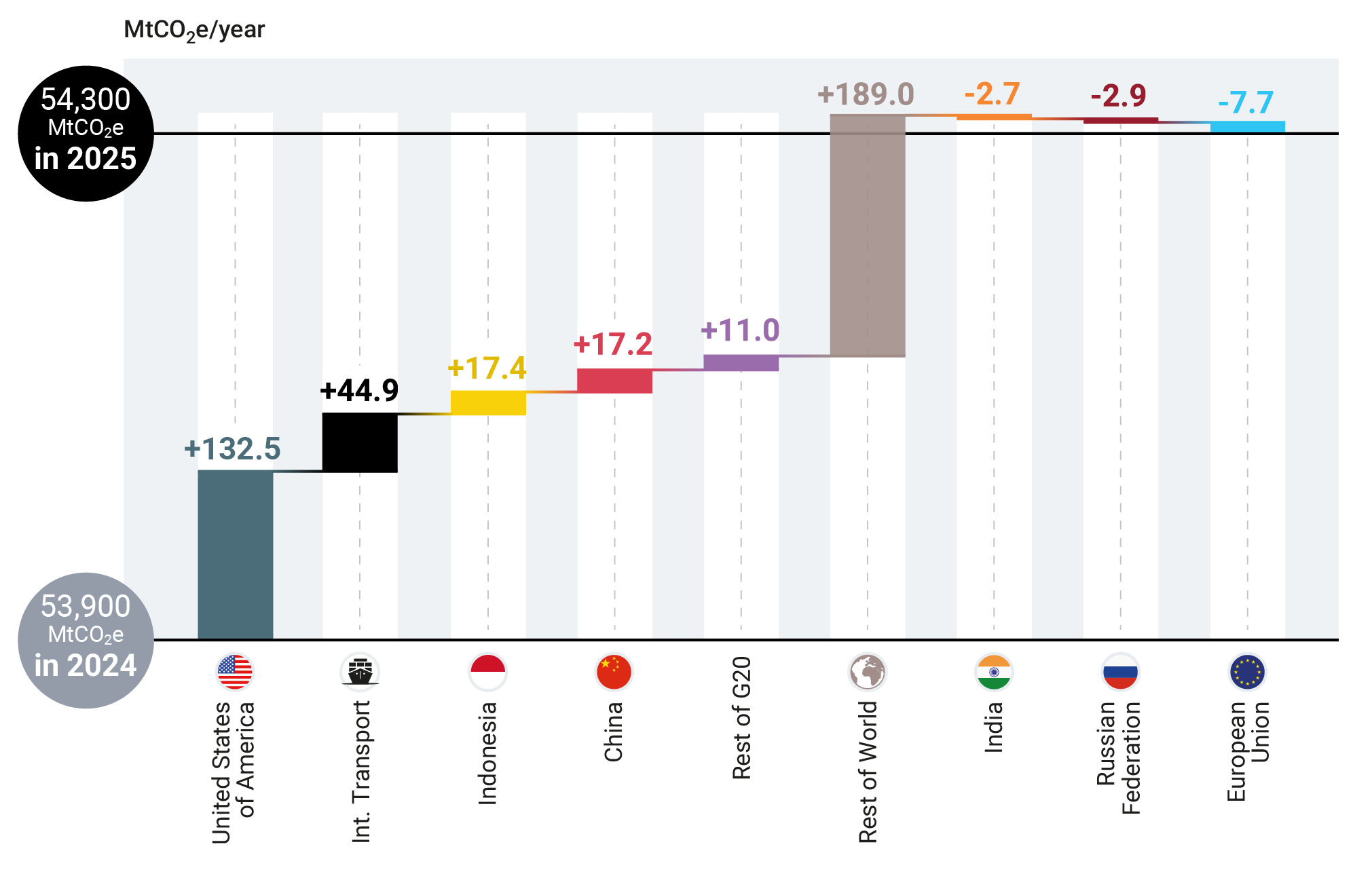
When assessing the contributions of major economies, excluding land use due to reporting lags, the United States was the only top emitter to record a notable increase in emissions during 2025. US emissions grew by 133 million tonnes of CO2e, driven by rising electricity demand, a colder winter heating season, higher gas prices, and a localized rebound in coal-fired power generation. Meanwhile, emissions across China, the European Union, India, Russia, and Indonesia remained relatively flat.
Decarbonization progress across broader economic sectors remains modest. The most pronounced emission decreases occurred within the power and transport sectors, fueled by the rapid global expansion of solar energy and electric vehicles. However, overall transport emissions continued to climb due to rebounding demand for international aviation and maritime shipping. While data center electricity demand is projected to double by the end of the decade, these facilities currently account for less than 1% of total global emissions.
New NDCs Fall Short of Global Requirements
Under the framework of the Paris Agreement, nations were required to submit updated climate pledges for 2035—known as their third nationally determined contributions (NDCs)—by February 2025. Approximately 95% of countries missed this initial deadline. Subsequent submissions rolled out during a high-level UN summit in New York in September 2025 and at the COP30 climate talks in Brazil that November.
By the conclusion of COP30, 63% of countries had produced their third NDCs, a figure that climbed to 124 countries covering 75% of global emissions by September 2026. While this provides a more robust foundation for assessing collective ambition, the report notes that the new targets have failed to meaningfully broaden the scope of covered sectors and greenhouse gases. Only eight nations included multi-gas targets for the first time, bringing the total number of parties doing so to 155.
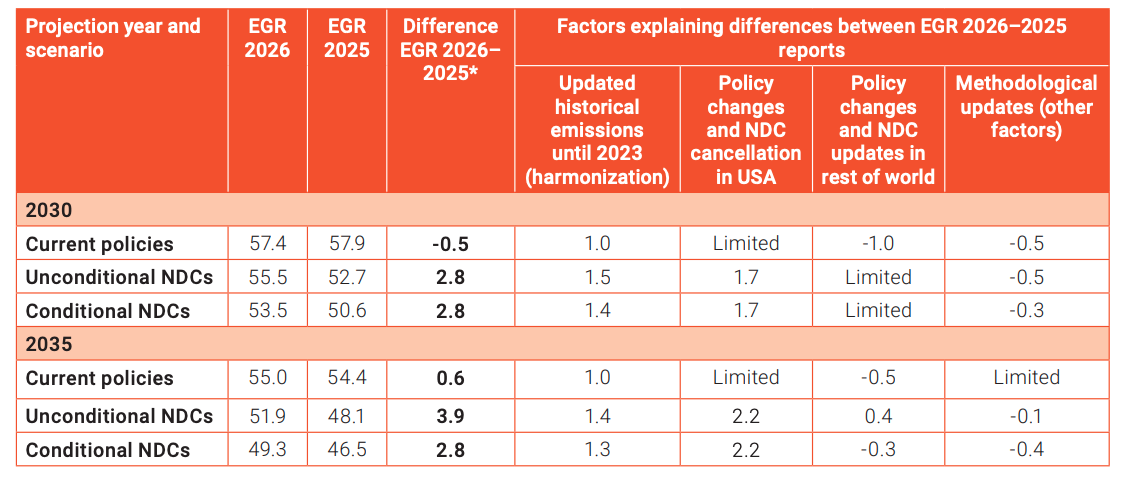
If implemented in full, these third NDCs would lower global emissions in 2035 by 3.5 GtCO2e compared to 2030 targets. However, this progress falls far short of the reductions necessary to maintain alignment with the Paris Agreement’s long-term temperature goals. Furthermore, projected global emissions for 2035 are roughly 3 GtCO2e higher than estimated in previous reports, largely reflecting the formal withdrawal of the United States from the Paris Agreement and updated historical emissions baselines.
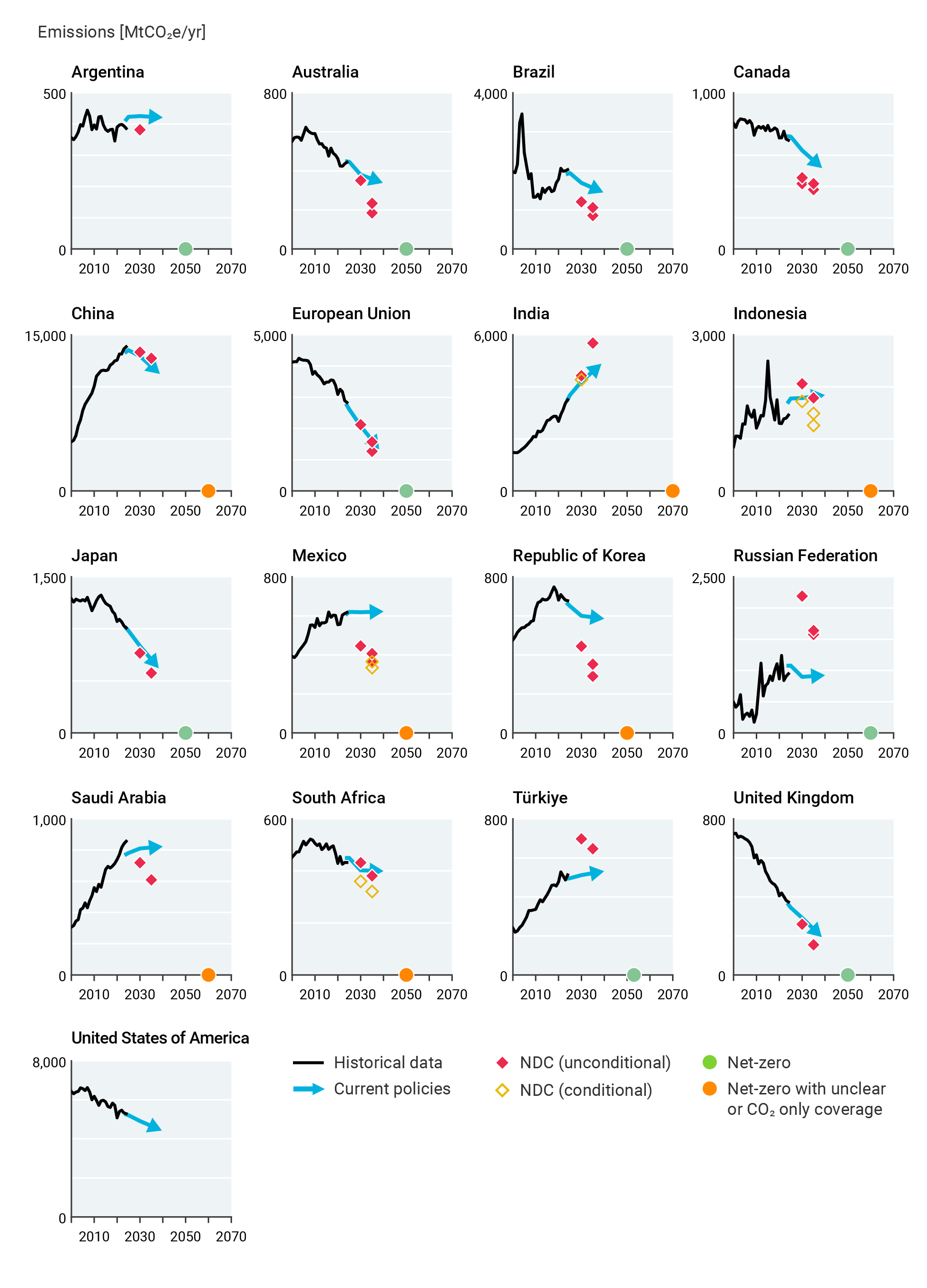
The report notes that while the "implementation gap" for 2030—the difference between projected emissions under current policies and full NDC implementation—has narrowed, this shift is primarily an artifact of US withdrawal rather than accelerated domestic policy progress. Most G20 nations remain misaligned with their stated net-zero trajectories, with the vast majority needing to dramatically accelerate current reduction rates to meet their long-term commitments.
The Persistent Emissions Gap and Updated Mitigation Pathways
To account for decades of delayed action, the UNEP report updates its analytical baseline. Previous modeling relied on pathways developed around 2015-2020 that assumed immediate, aggressive emission cuts starting in 2020. Because emissions have continued to rise, those older temperature pathways have become obsolete, making a 1.5C limit with little or no overshoot mathematically unfeasible.
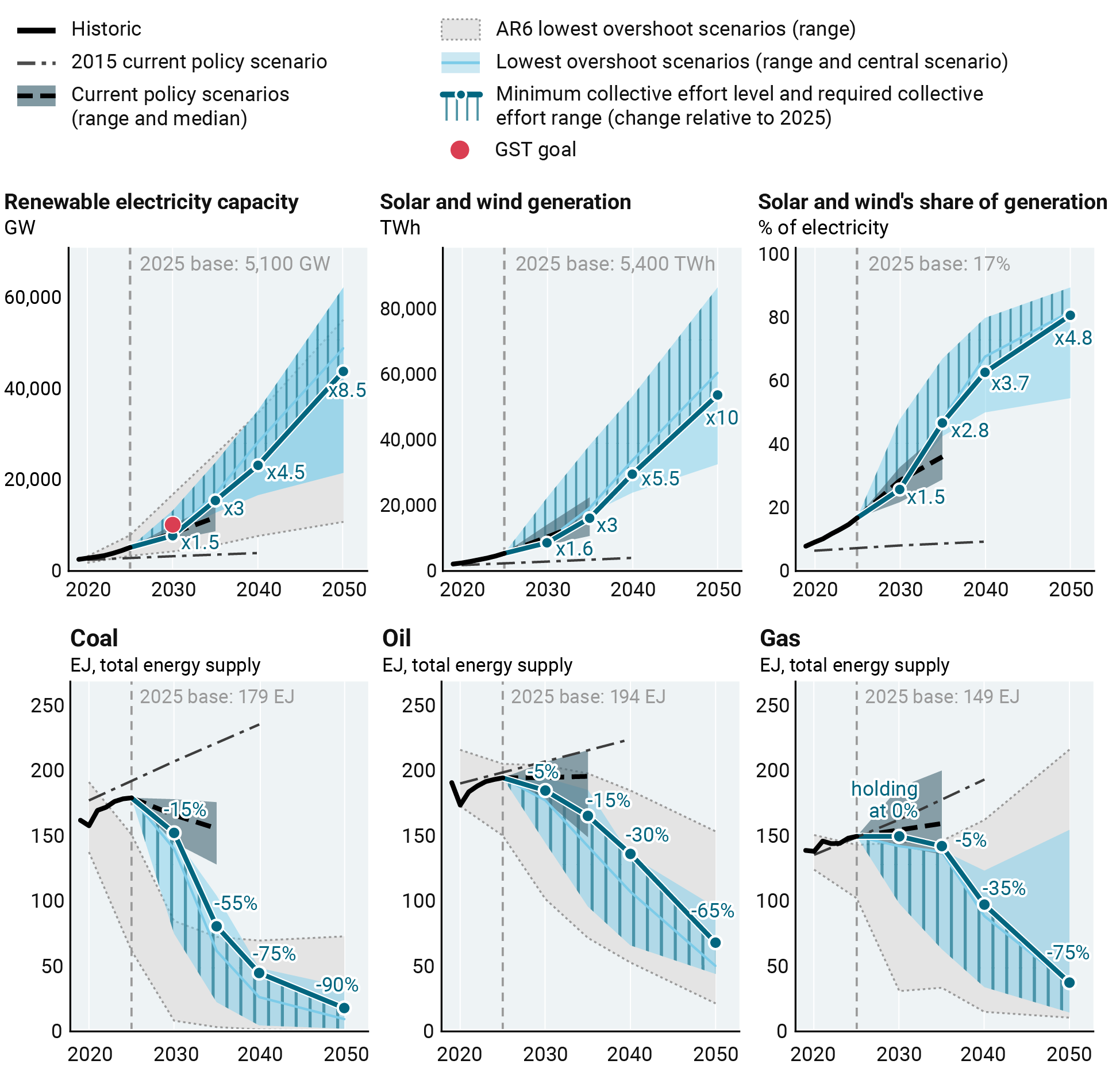
Consequently, the 2026 assessment introduces a new generation of pathways that assume ambitious mitigation actions begin in 2025. The lowest 1.5C overshoot scenario maps out a trajectory where global emissions drop by 18% by 2030, 45% by 2035, and 69% by 2040 relative to 2025 levels, achieving net-zero CO2 emissions around 2050. This requires an annual emissions reduction rate of 5.7% over the coming decade—a pace even steeper than what would have been required if cuts had begun in 2019.
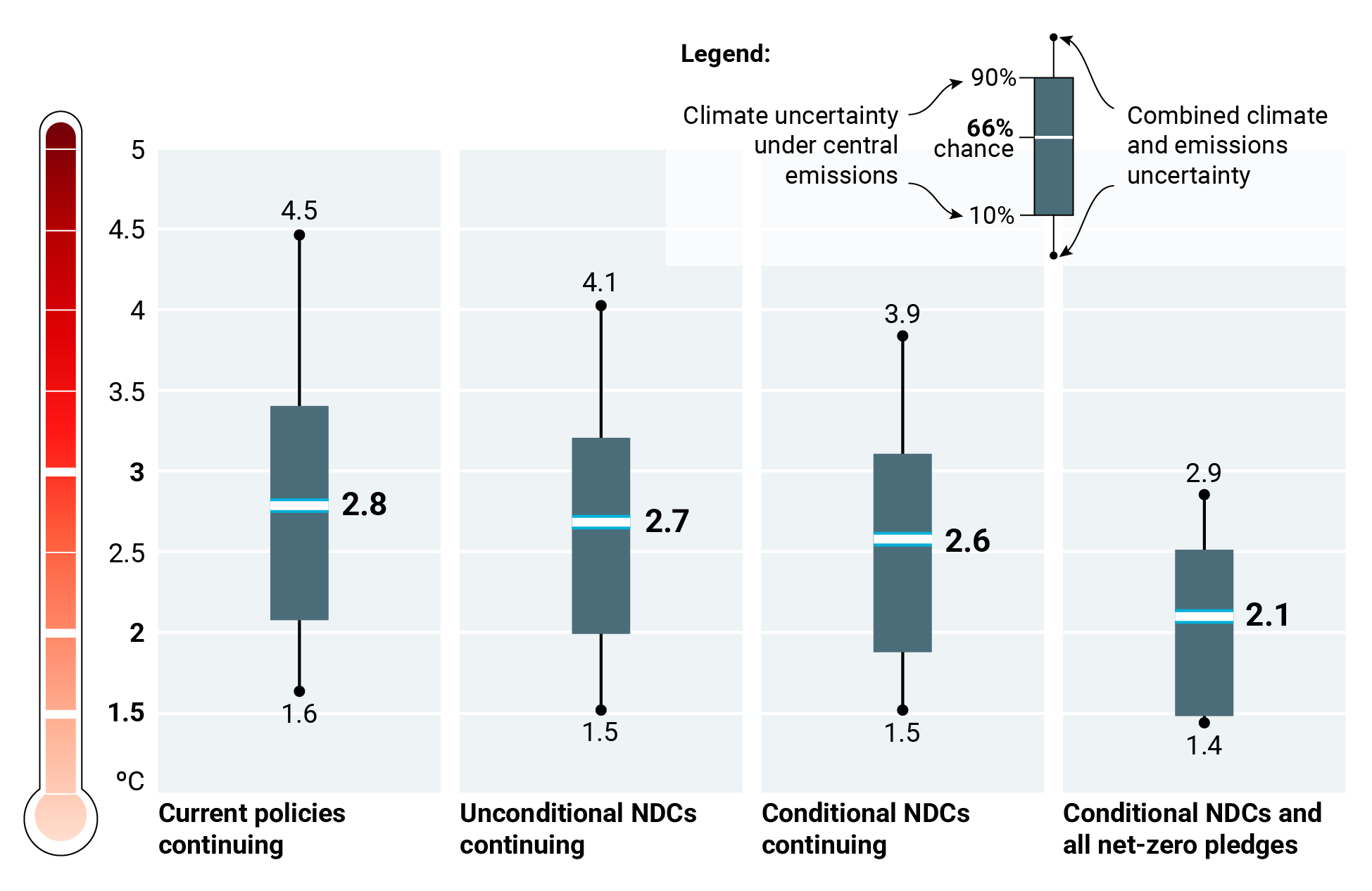
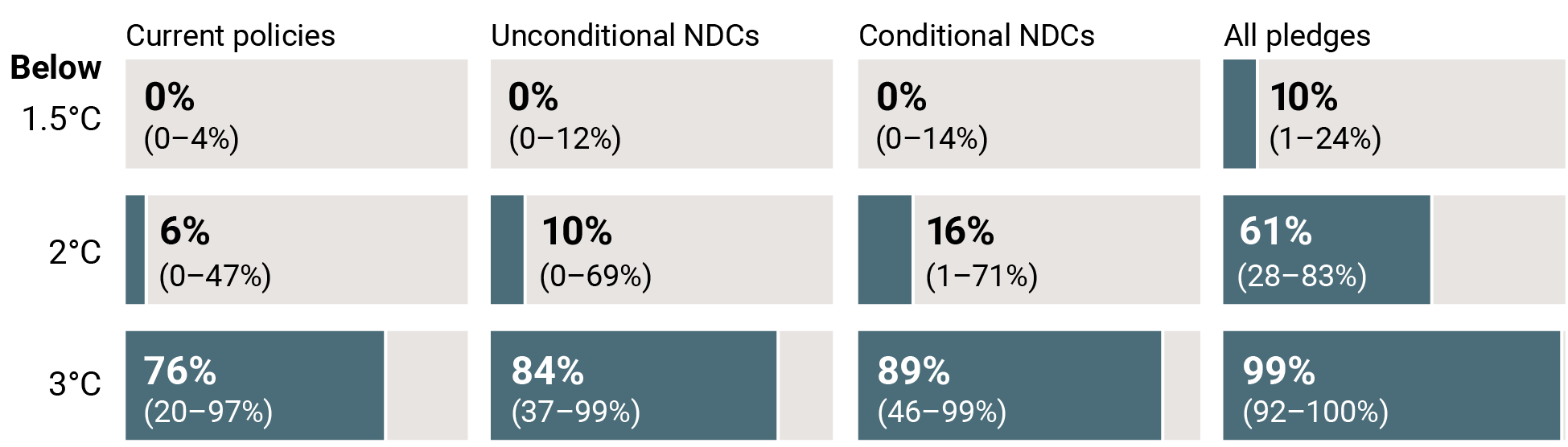
Using climate emulators to project future temperatures, the report estimates that current national policies put the world on a trajectory toward 2.8C of warming by 2100, with a 66% probability. Fully implementing unconditional NDCs lowers this figure to 2.7C, while implementing all NDCs drops it to 2.6C. In the most optimistic scenario, where nations achieve both their NDCs and their long-term net-zero pledges, warming could be limited to 2.1C by the end of the century.
However, researchers warn that every five years of delay in cutting global emissions locks in an additional 0.1C of warming, threatening to make a 2C increase inevitable.
Uneven Progress on Global Stocktake Actions
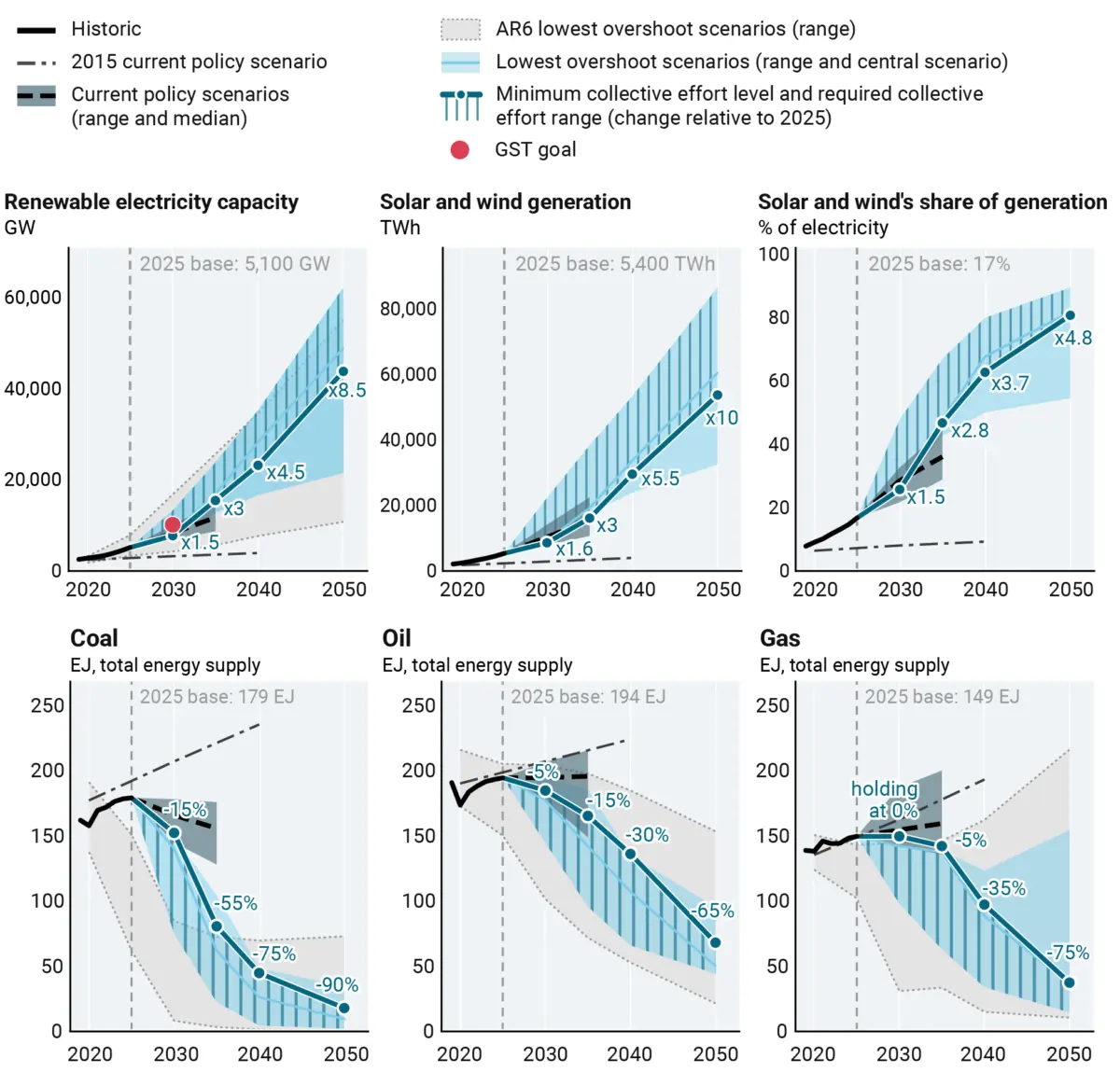
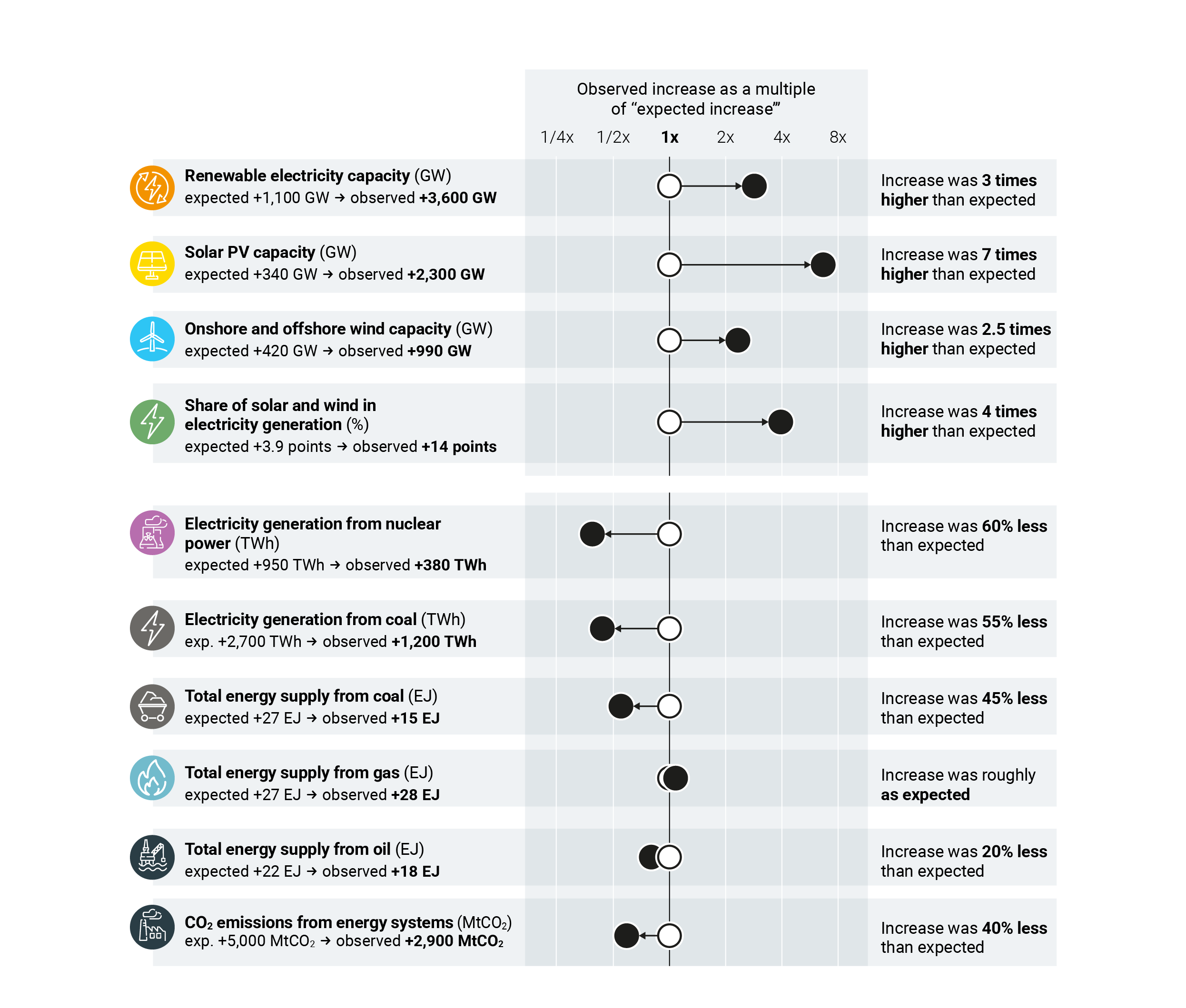
Evaluating the nine mitigation action areas established under the first global stocktake agreed at COP28, the UNEP assessment characterizes global progress as uneven and insufficient. The singular bright spot remains the renewable energy sector, where solar and wind deployment has outpaced 2015 projections by a factor of three, resulting in energy-related CO2 emissions growing 40% slower than anticipated. Renewable energy is currently the only sector fully on track for 2030 targets.
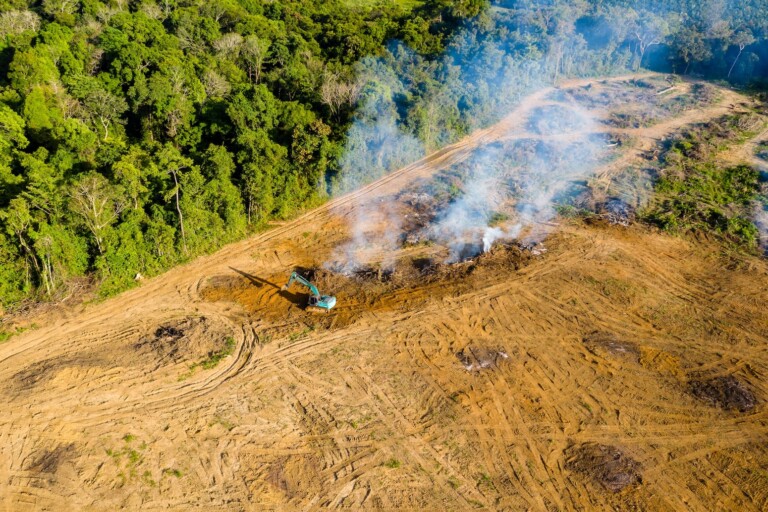
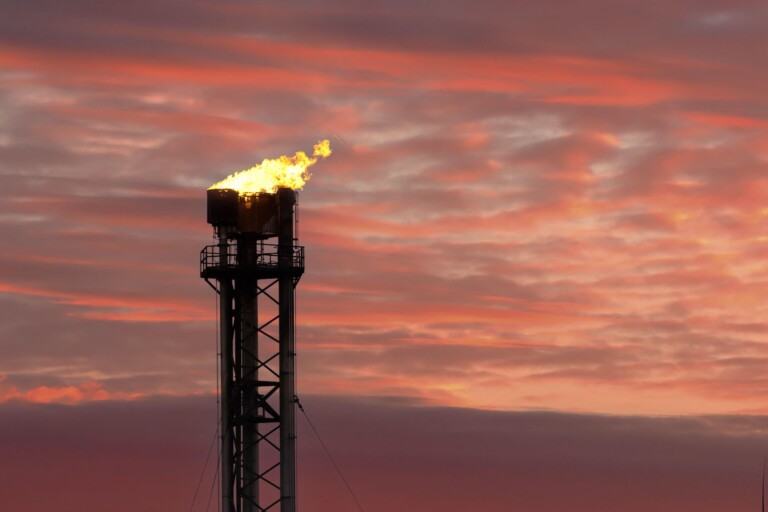
Conversely, the world is lagging severely behind in transitioning away from fossil fuels and halting deforestation. While the global growth rate of fossil fuel consumption has slowed, coal use is not projected to peak until 2030, and oil and gas consumption continue to rise under current policies. Similarly, efforts to eliminate deforestation by 2030 remain significantly off track, requiring a tenfold acceleration in the rate of forest protection.
To achieve the lowest overshoot scenario and successfully return global temperatures to 1.5C by 2100, the report stresses that the international community must rapidly scale up its ambitions, overcoming years of institutional delay to prevent permanent and irreversible climate disruption.